Cycling Apparel

8 Best Cycling Leg Warmers of 2026: The Ones That Actually Stay Up

Stop pulling up sagging leg warmers. Find the pair that stays put through your ride, from budget to premium.

Cold mornings force a choice between shivering legs or wrestling with slipping sleeves. Most leg warmers under $30 rely on simple elastic bands that lose grip mid-ride, turning a crisp dawn into a constant pull-up routine.

The real difference isn't warmth — almost every pair handles 40°F fine. It's how well they stay put. Silicone grippers and pre-curved shapes fix the problem, but they cost more. The question is whether you want to spend $20 and tolerate adjustments, or invest a bit more and forget about them entirely.

This guide covers both paths, from a flawless no-slip option to budget warmers that trade grip for savings. The right choice depends on how much fiddling you'll accept.

1

GripGrab Winter Leg Warmers

Top Pick
GripGrab Winter Leg Warmers

Serious cyclists

Our Score 8.8/10
Check Price

Worth Noting

Warmth
Brushed fleece
Read the full review

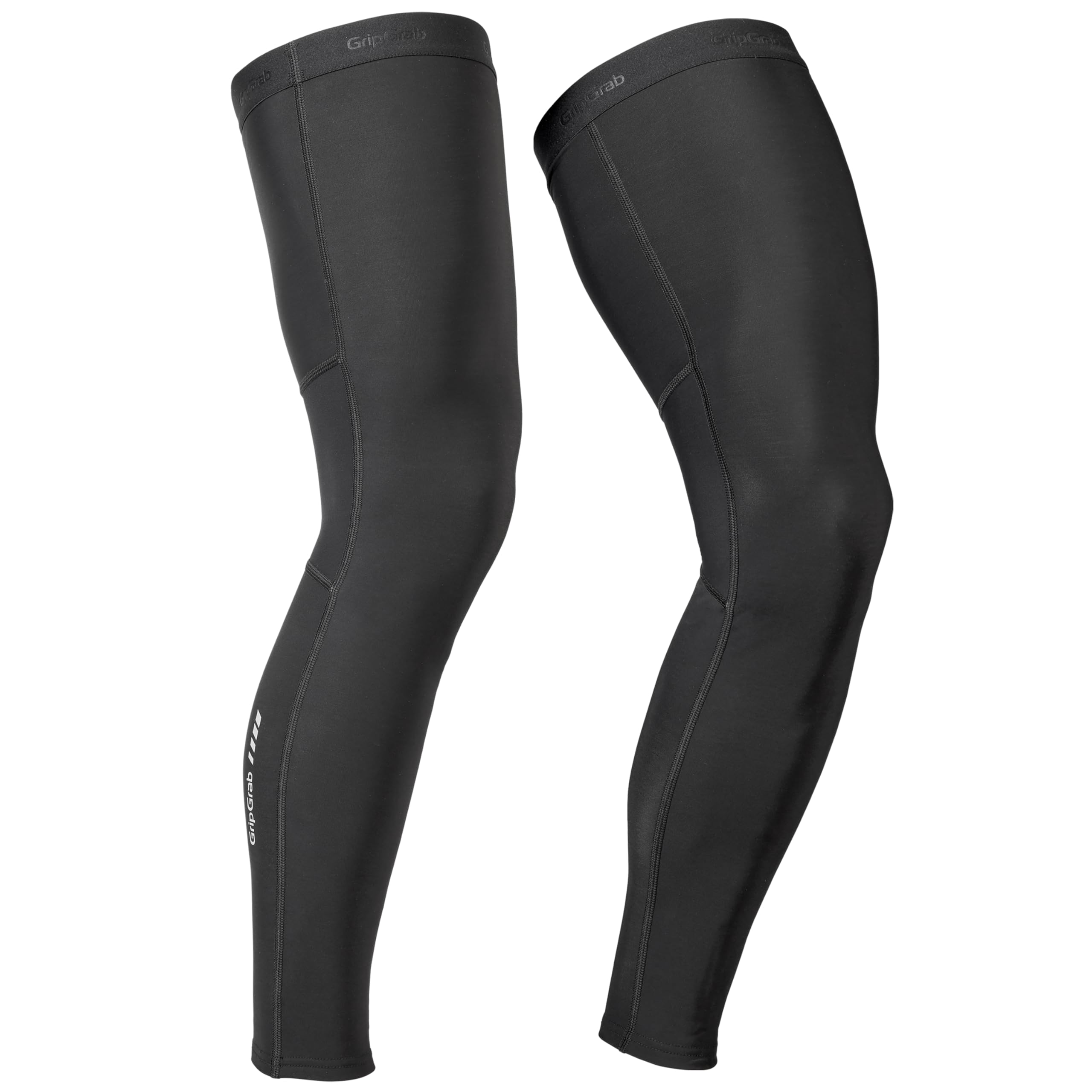
The GripGrab Winter Leg Warmers use a pre-contoured shape and wide silicone grippers to eliminate the constant tugging that plagues most budget options. The brushed fleece lining traps warmth effectively on rides near freezing, while still breathing well enough for steady efforts. Stitching and fabric hold up ride after ride without pilling or losing elasticity.

Serious cyclists who prioritize fit and no-slip performance over budget will find these leg warmers ideal. At a mid-range price, they cost more than basic options but deliver a refined fit that stays put all ride. Riders with larger thighs should note the silicone band is snug but not constricting — the pre-curved shape accommodates motion well.

Bottom line: If you want leg warmers that never need pulling up, this is the pair to buy — the fit and build quality justify the higher price.
2

ROCKBROS Compression Leg Warmers

ROCKBROS Compression Leg Warmers

Compression seekers

Our Score 8.8/10
Check Price

Worth Noting

  • Fabric may not provide enough insulation below 30°F
  • Top elastic band can be restrictive for those with larger thighs
Warmth
Thermal
Read the full review

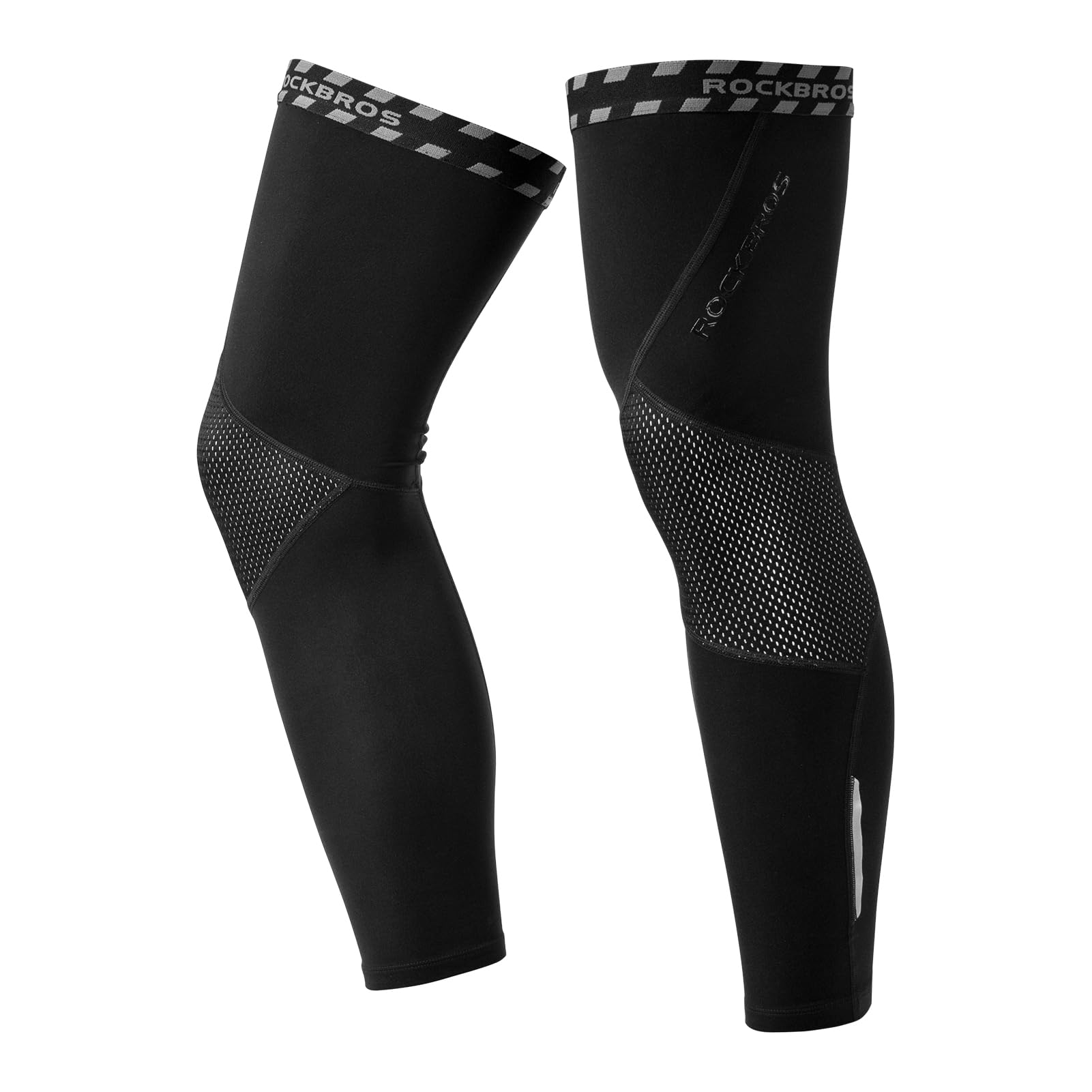
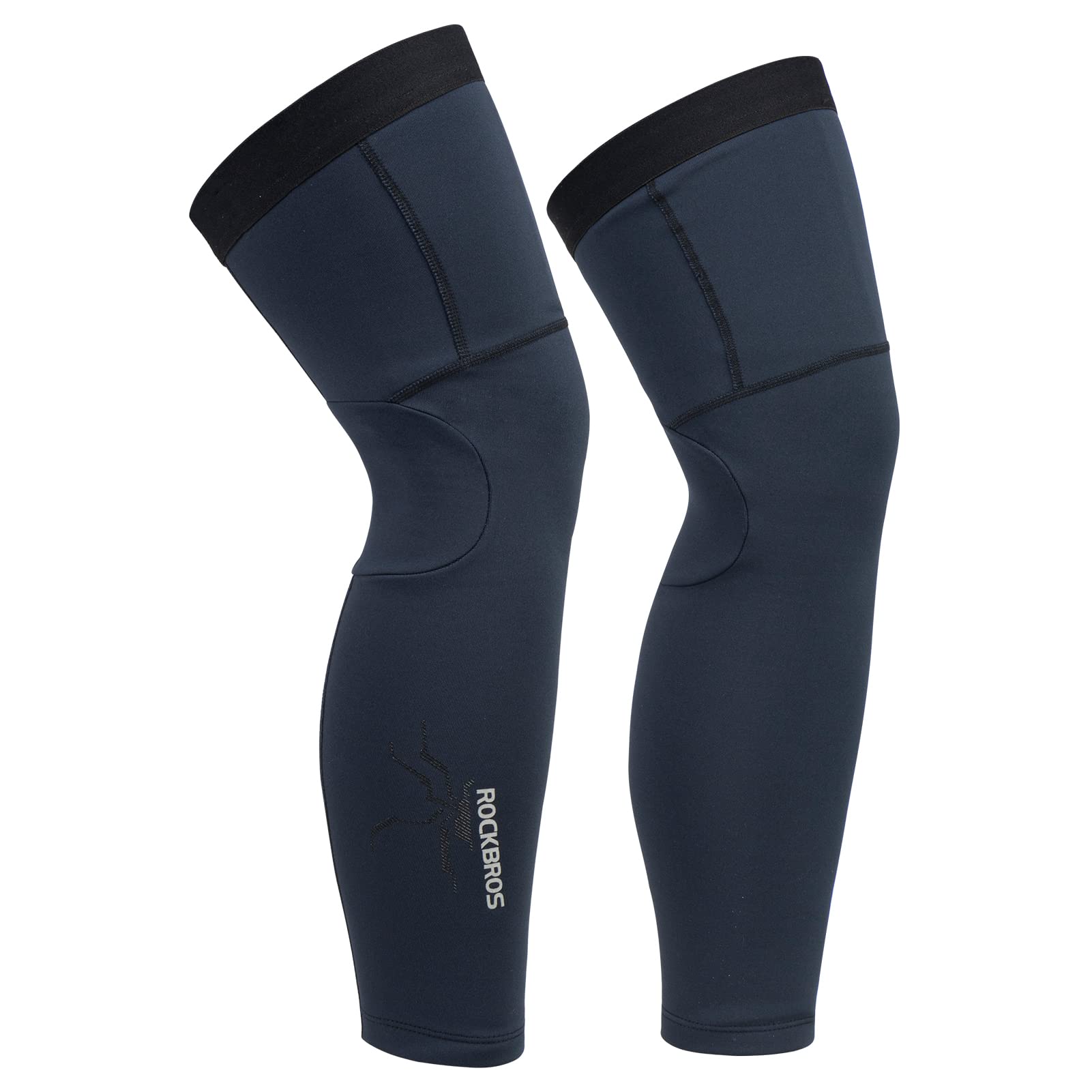
These warmers use compression to stay in place during rides, with thermal insulation that handles cool days between 30-50°F. The snug fit works well for cyclists with average leg sizes who want warmth plus some compression benefit. Riders with larger thighs should note the top elastic band may feel too tight, and the material is thin for temperatures below freezing.

If you have muscular thighs, consider sizing up or looking for warmers with silicone grip bands.

Bottom line: A solid choice if you have average legs and ride in cool (not extreme) conditions — the compression does the gripping work.

3

GripGrab Spring/Autumn Leg Warmers

GripGrab Spring/Autumn Leg Warmers

Mild weather riders

Our Score 8.8/10
Check Price

Worth Noting

  • No silicone gripper; may slide down on slender legs during rides.
Warmth
Lightweight
Read the full review

These leg warmers use a thin, breathable fabric that works well for spring or autumn riding when you need a light layer. The lack of silicone grip means they can slip on lean legs during longer efforts. They’re best suited for mild climates where warmth isn’t the priority.

Bottom line: Best for mild-weather cyclists who want a minimal leg cover without winter insulation.

4

ROCKBROS Thermal Leg Warmers

ROCKBROS Thermal Leg Warmers

Budget cyclists

Our Score 8.6/10
Check Price

Worth Noting

  • Elastic band may slide down after extended wear; plan to adjust during longer rides.
  • Sizing runs small for some riders
Warmth
Thermal fleece
Read the full review

The ROCKBROS Thermal Leg Warmers deliver dependable warmth for cool mornings (40-50°F) with fleece lining that keeps legs comfortable during rides. Build quality holds up well given the price — the main tradeoff is that the elastic band grip can slide down over extended use, and the fit runs small for larger thighs. These suit budget-conscious cyclists and commuters who don't mind occasionally pulling them up. If you have muscular legs, sizing up helps reduce slipping.

If thighs are larger, sizing up can reduce sliding; expect to pull them back up after extended pedaling.

Bottom line: For riders who can manage occasional fit adjustments, these offer impressive warmth at a budget-friendly price.

5

CYCEARTH Thermal Leg Warmers

CYCEARTH Thermal Leg Warmers

Budget MTB cyclists

Our Score 8.6/10
Check Price

Worth Noting

  • Thigh area can be tight on riders with muscular legs or larger build
Warmth
Thermal fleece
Read the full review

Windproof fleece construction at a low price makes these leg warmers a practical choice for blocking cold air on MTB rides or commutes in breezy conditions. The thermal lining traps heat effectively, keeping legs warm without bulk during moderate exertion.

These work best for riders with average to slim legs who value warmth and wind protection over perfect fit flexibility. The thigh area can feel snug on muscular builds, so checking the size chart and ordering a size up is wise for those with larger legs. Breathability is limited for long, sustained climbs, but for shorter cold-weather rides the tradeoff is acceptable at this price point.

Size up if you have muscular thighs; otherwise the snug fit may restrict movement during pedaling.

Bottom line: If you have average to slim legs and want windproof warmth without spending much, these deliver. Just confirm your thigh measurement against the size chart and consider going up a size.

6

GOREWEAR Shield Leg Warmers

GOREWEAR Shield Leg Warmers

Brand loyalists

Our Score 8.6/10
Check Price

Worth Noting

  • Real-world warmth and fit cannot be verified due to lack of user feedback
Warmth
Read the full review

The GOREWEAR Shield Leg Warmers carry the brand's reputation for quality, but the absence of detailed customer feedback means real-world warmth, fit, and durability remain unconfirmed, leaving performance uncertain despite strong brand trust.

Bottom line: Best suited for buyers who trust Gore implicitly and are comfortable relying on brand alone rather than user experiences.

7

Skylety 4-Pack Leg Warmers

Skylety 4-Pack Leg Warmers

Multi-pack use

Our Score 8.6/10
Check Price

Worth Noting

  • Leg warmers may slide down during cycling, requiring frequent adjustment
Warmth
Read the full review

This four-pack delivers warmth for cold-weather rides at a low cost, making it suitable for short trips or layering. However, the material is thin and see-through, and the leg warmers tend to slip down during movement. Sizing runs very small, so order up significantly. Best reserved for emergency use or riders with smaller legs who don't mind occasional repositioning.

Bottom line: Acceptable for short, casual rides or as a backup layer when you need multiple pairs, but not for serious cycling.

8

qualidyne Fleece Leg Warmers

qualidyne Fleece Leg Warmers

Warmth-first commuters

Our Score 8.2/10
Check Price

Worth Noting

  • Leg warmers can slide down during rides, requiring readjustment.
  • Elastic may degrade over time, reducing grip.
Warmth
Fleece lined
Read the full review

The qualidyne Cycling Leg Warmers deliver outstanding warmth in cold conditions, with a soft fleece lining that keeps legs comfortable on brisk rides. The budget-friendly price makes them an accessible option for riders who prioritize thermal performance over a perfect grip. The main tradeoff is a fit that can slide down, requiring occasional readjustment. Durability is also a consideration, as the elastic may lose tension over time.

These are best suited for riders who can tolerate minor adjustments and want a warm, cost-effective solution for commuting or recreational cycling.

Pulling them up once mid-ride is typical; some riders use a dab of grip gel to hold them in place.

Bottom line: A warm, affordable option for riders who don't mind occasional adjustments — the top pick in this set offers a more secure fit for those who prioritize staying put.

How to Choose

Warmth Level

Fleece or brushed thermal linings trap heat effectively for 40-50°F rides. Thinner materials work for spring/autumn but let cold through below 40°F.

The trade-off: thicker fleece reduces breathability, leading to sweat buildup on long climbs. For sustained efforts, look for moisture-wicking fabrics rather than just thick pile.

Fit and Grip

Silicone grippers embedded in the hem grip bib shorts or skin, preventing slippage. Elastic bands rely on sheer compression and often roll down after 30 minutes.

The hidden cost: silicone can irritate sensitive skin, and some users find the grip too aggressive for bare legs. Pre-curved shapes reduce bunching at the knee.

Breathability

Fleece-lined warmers trap moisture if the outer fabric isn't breathable. Look for mesh panels or fabrics with a high cfm rating for aerobic efforts.

For casual commuting, breathability matters less. For race-pace rides, a non-breathable warmer turns legs clammy and cold once sweat accumulates.

Durability

Elastic bands degrade after repeated washing and stretching. Silicone grippers last longer but can peel if exposed to fabric softener.

Seams at the top hem are stress points — reinforced stitching prevents tearing when pulling them on. Cheaper warmers may fray or lose shape within a season.

Length

Full-length leg warmers cover from ankle to mid-thigh, matching bib shorts. Too short leaves a gap at the knee; too long bunches behind the knee.

Measure from ankle to the top of your bib shorts hem. Most brands list a height range, but the actual length varies — check user height references.

Frequently Asked Questions