E-Bikes

13 Best Electric Bike for Kids of 2026: Real Speed and Range for Your Budget

Find the kids electric dirt bike that actually delivers the speed and range it promises, matched to your child's size and terrain.

The gap between advertised specs and real-world performance is wider in kids electric bikes than almost any other category. A bike that claims 14 mph and 60 minutes of run time often delivers half that when ridden by a 60-pound child on grass. That gap isn't deception — it's physics. Rider weight, tire pressure, and terrain dramatically affect both speed and battery life.

The fix is choosing a bike designed for your child’s actual size and riding environment. A lightweight balance bike with a kick-start throttle gives a 3-year-old a safe introduction, while a full-suspension dirt bike with disc brakes suits an 8-year-old on trails. This guide matches each bike to a specific age, weight, and use case so you get predictable performance — not a marketing number.

1

STACYC 12eDRIVE

Top Pick
STACYC 12eDRIVE

Toddlers, premium

Our Score 9.4/10
Check Price

Worth Noting

  • Battery life may run short
Age Range
3-5 years
Top Speed
~8 mph
Safety Features
Adjustable power modes
Weight Capacity
75 lbs
Read the full review

The STACYC 12eDRIVE stands out as the lightest and most thoughtfully built electric balance bike for toddlers, with a 17-pound aluminum frame and three power modes that start from zero. This design mimics the gradual learning curve of a pedal bike — no sudden jumps in speed.

Ideal for families who want a premium learning tool that prioritizes build quality and a natural progression to pedaling. However, battery life is around 15 to 30 minutes per charge, so sessions will be short, and replacement parts are expensive if needed.

A full charge takes about one hour; ride times suit short backyard sessions or supervised play in the driveway.

Bottom line: If you want a premium, lightweight electric balance bike that teaches throttle control from zero, the STACYC is the best option — just plan for short riding sessions and factor in the cost of replacement parts.

2

Razor MX350 Dirt Rocket

Razor MX350 Dirt Rocket

Ages 7-9, off-road

Our Score 9.2/10
Check Price

Worth Noting

  • Battery run time can be limited to around 30 minutes at full speed, depending on terrain and rider weight.
  • Chain may require adjustment after riding on rough terrain.
Age Range
7-9 years
Top Speed
14 mph
Safety Features
Twist-grip throttle
Weight Capacity
140 lbs
Read the full review

The Razor MX350 is a well-regarded choice for kids ready to move beyond pedal bikes, offering a consistent 14 mph top speed and solid build quality. Its chain-driven motor provides enough torque for gentle off-road use, and parent reviews consistently highlight its good value for the price.

Best suited for kids aged 7 to 9, the MX350's size fits this age group well, though taller or older children will find it cramped. The battery run time is limited to about 30 minutes at full speed, and the chain may need adjustment if ridden on rough terrain — typical for chain-driven electric bikes. For neighborhood play or backyard trails, these limitations are easy to work around.

If your child rides on bumpy trails, check the chain tension after the first few rides — it's a quick adjustment that keeps things running smoothly.

Bottom line: For parents seeking a dependable starter dirt bike for a 7- to 9-year-old, the MX350 delivers the right balance of speed and durability without breaking the bank.

3

Hyper GoGo Dirt Bike

Hyper GoGo Dirt Bike

Feature-packed fun

Our Score 9.2/10
Check Price

Worth Noting

  • Solid tires limit traction on grass or dirt, so keep this one on pavement.
Age Range
5-10 years
Top Speed
10 mph
Safety Features
LED lights, Bluetooth
Weight Capacity
143 lbs
Read the full review

This dirt bike packs a fog effect, LED lights, and a Bluetooth speaker that plays music - unique features that make for an impressive unboxing. The solid tires limit traction on loose terrain, so it's best on pavement. The flashy add-ons are exciting initially, but may lose appeal with regular use.

Bottom line: Great as a gift for kids who enjoy light shows and music, but not for off-road adventures.

4

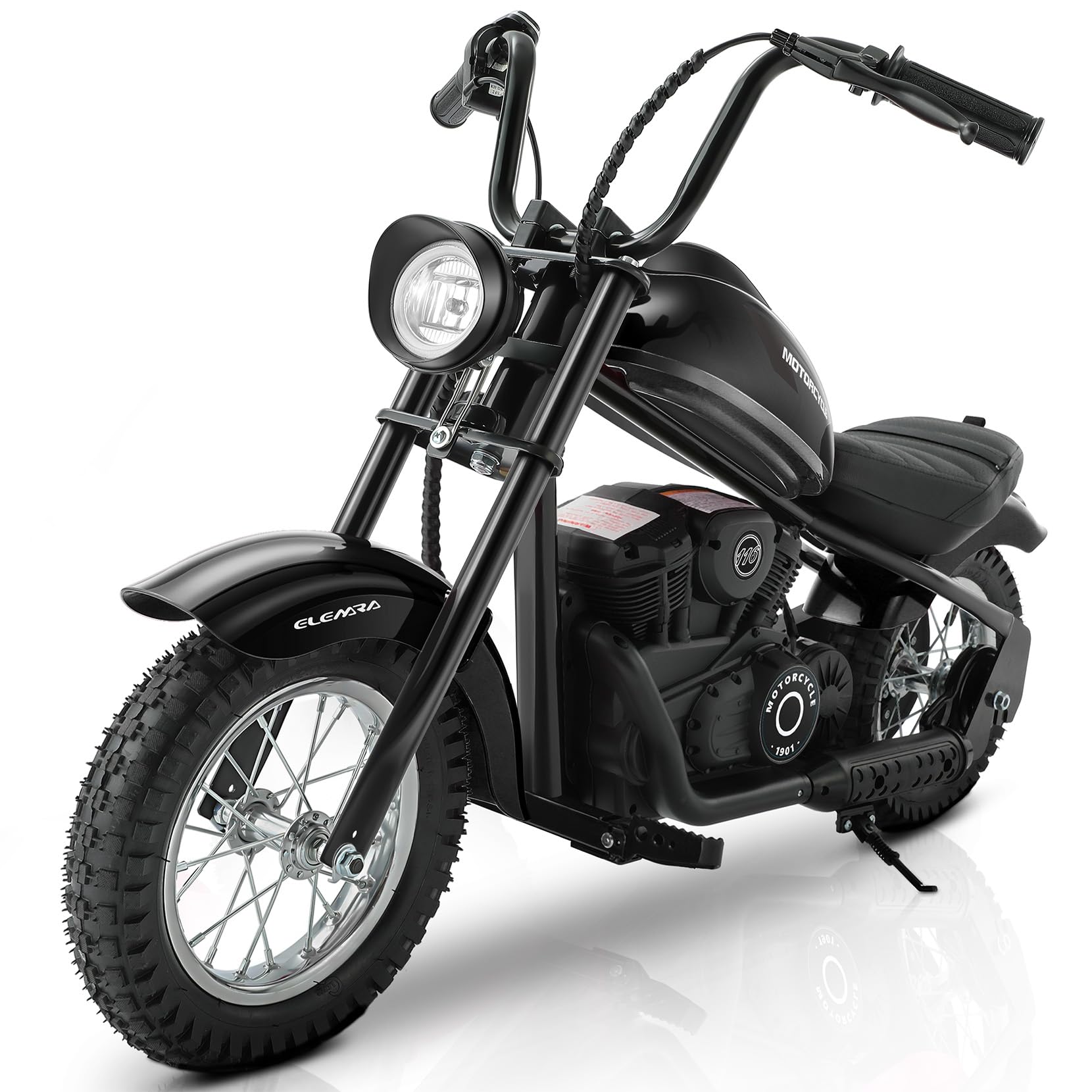
ELEMARA Electric Dirt Bike

ELEMARA Electric Dirt Bike

Ages 6-10, street

Our Score 9.0/10
Check Price

Worth Noting

  • A small number of units may have charging problems
Age Range
6-10 years
Top Speed
15 mph
Safety Features
Handbrake, LED lights
Weight Capacity
150 lbs
Read the full review

The ELEMARA electric dirt bike matches the top pick's 15 mph speed and 10-mile range while adding a chain-driven motor, twist-grip throttle, and 12-inch air-filled tires for a more realistic ride. Build quality is sturdy, and assembly is straightforward.

This bike is best for kids ages 6 to 10 who want a fast, stylish dirt bike for neighborhood riding. A small number of owners have reported charging issues, so it's wise to test the charger right away.

Test the charging function immediately upon receipt to catch any issues early.

Bottom line: For families seeking a modern alternative to the Razor MX350 with similar performance and better styling, the ELEMARA is a compelling option if you confirm the charger works.

5

K1 36V Electric Dirt Bike

K1 36V Electric Dirt Bike

Speed, range value

Our Score 9.0/10
Check Price

Worth Noting

  • Chain may detach during sharp turns or bumpy rides, which can interrupt play.
Age Range
5-10 years
Top Speed
16 mph
Safety Features
Three speed modes
Weight Capacity
176 lbs
Read the full review

The K1 offers 16 mph and 14-mile range from a 36V lithium battery — the best speed and battery specs at this price point. The 176 lb weight capacity accommodates growing kids, and three speed modes let beginners start slow. However, the chain may slip or pop off during more aggressive riding, making this bike better suited for paved paths and gentle trails than rough off-road use. It fits kids ages 5-8 who want more speed and range without a premium price tag.

Check and tighten the chain before each ride — a few seconds of maintenance prevents most derailments.

Bottom line: A strong value for speed and range if you stick to smooth surfaces and check chain tension regularly.

6

Hiboy BK1 Balance Bike

Hiboy BK1 Balance Bike

Toddlers, balance

Our Score 8.8/10
Check Price

Worth Noting

  • Battery may lose charging capacity over time in some units.
  • Motor can operate inconsistently in some units.
Age Range
3-5 years
Top Speed
9 mph
Safety Features
Kick-start, two modes
Weight Capacity
77 lbs
Read the full review

At 20.06 lbs, the Hiboy BK1 is the lightest electric balance bike in this roundup, making it easy for a 3-year-old to handle. The kick-start operation (no thumb throttle) lets kids learn power application naturally—they push off, then the motor engages. Designed for pavement and ages 3-5 up to 77 lbs, it is a focused tool for early balance and coordination. However, some units have shown battery charging issues or motor inconsistencies, so checking the return policy is wise.

Long-term battery performance may vary; keep the return window in mind.

Bottom line: Best suited for parents who want the lightest possible electric balance bike for a toddler's first riding experience, with the understanding that component reliability can vary.

7

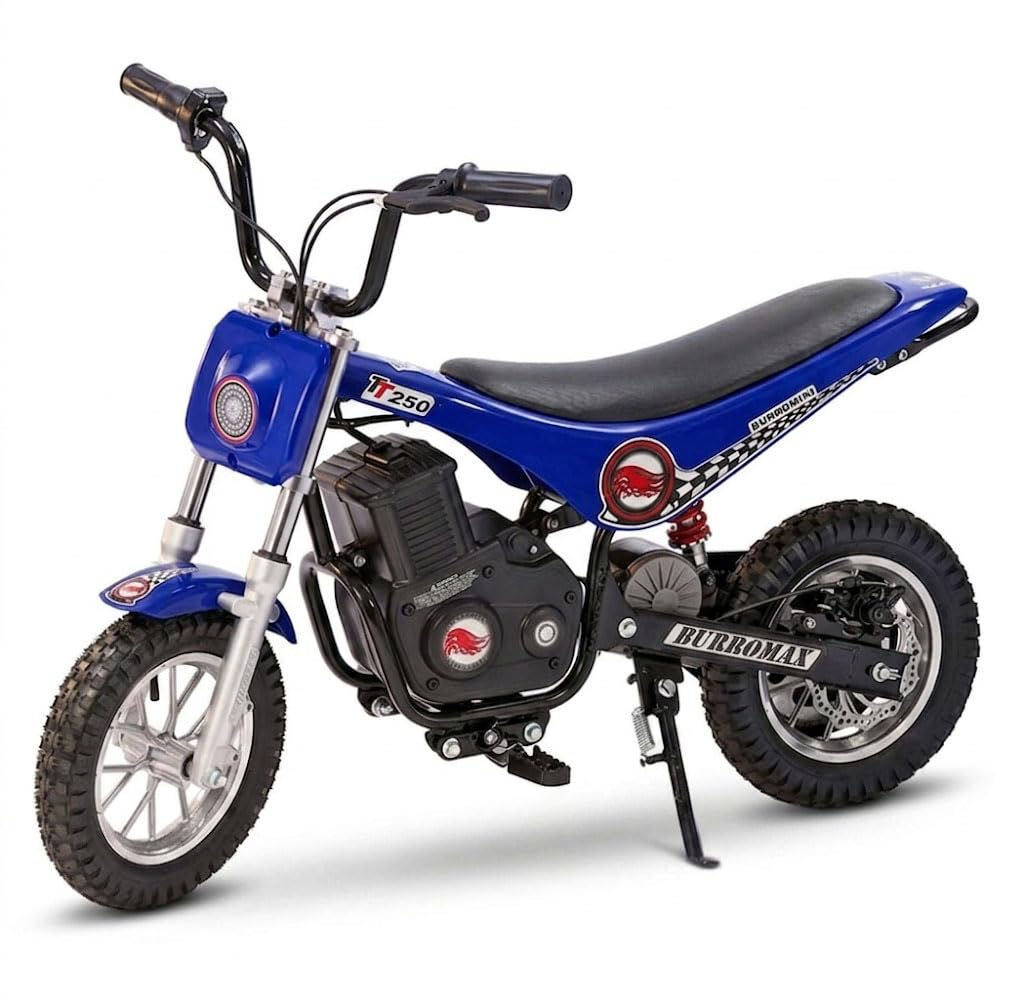
Burromax TT250

Burromax TT250

Off-road, older kids

Our Score 8.8/10
Check Price

Worth Noting

  • The SLA battery can lose charging capacity after several months of use, reducing run time.
Age Range
7-10 years
Top Speed
14 mph
Safety Features
Disc brake, suspension
Weight Capacity
150 lbs
Read the full review

Unlike most kids' electric dirt bikes that prioritize pavement speed, the Burromax TT250 is built for actual off-road terrain. A hand-operated rear disc brake and full front/rear suspension give it genuine motorcycle feel — something the top pick (Razor MX350) lacks entirely.

This bike suits riders aged 7-10 who want to tackle dirt trails and grassy hills, not just cruise the sidewalk. The 60 lb weight means parents should be ready to lift it into a car or storage. The SLA battery can lose charging capacity after several months, so regular charging habits help extend its life.

Charge the battery after every ride to maintain capacity over time.

Bottom line: For families who want a real off-road feel for their child, the TT250 delivers motorcycle-like suspension and braking at a mid-range price — just plan for regular battery charging to keep it running.

8

Razor MX400 Dirt Rocket

Razor MX400 Dirt Rocket

Older kids, upgrade

Our Score 8.8/10
Check Price

Worth Noting

  • Chain tension may need adjustment to prevent slippage under heavy use on rough terrain.
Age Range
8-10 years
Top Speed
14 mph
Safety Features
Twist-grip throttle
Weight Capacity
140 lbs
Read the full review

The MX400's 350W motor delivers noticeable torque for hills and riders up to 140 lbs. But the premium price doesn't eliminate the same 30-minute run time and chain maintenance found in the MX350, making it best for families who specifically need that extra power.

Bottom line: Choose the MX400 if your child is pushing the weight limit of the MX350 or needs extra power for hills – but expect the same chain maintenance and limited run time as its cheaper sibling.

9

Aosom 12V Motorcycle

Aosom 12V Motorcycle

Budget toddler

Our Score 8.8/10
Check Price

Worth Noting

  • Under regular outdoor play, training wheels and plastic body can show wear within months
Age Range
3-4 years
Top Speed
5 mph
Safety Features
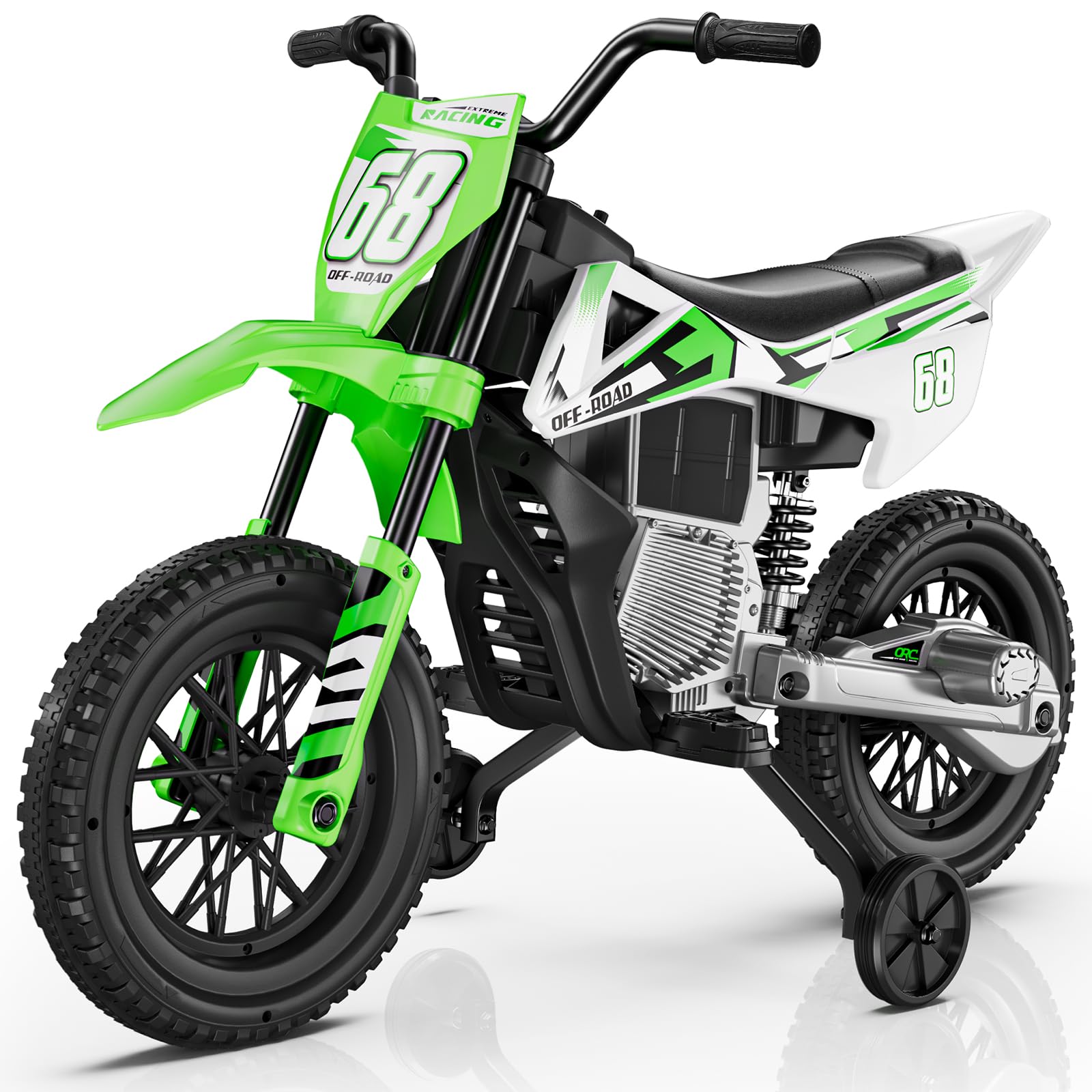
Training wheels, suspension
Weight Capacity
66 lbs
Read the full review

For toddlers aged 3-4, this motorcycle offers a slow, safe introduction at a budget price. Assembly is easy, with around 45 minutes of run time. However, plastic parts and training wheels may not survive more than a year of use, and battery life can vary. Best as a short-term starter on pavement — not for rough terrain.

Bottom line: A solid choice for a 3-year-old growing into their first electric bike, but plan on upgrading within a year.

10

XCAR 12V Motorcycle

XCAR 12V Motorcycle

Budget newcomer

Our Score 8.8/10
Check Price

Worth Noting

  • Frame and plastic components may not withstand years of active play
Age Range
3-5 years
Top Speed
3.1 mph
Safety Features
Training wheels, music
Weight Capacity
66 lbs
Read the full review

The XCAR 12V Motorcycle offers a budget-friendly way for toddlers to get their first ride-on experience, with easy assembly and a clever tilting training wheel design. However, its long-term reliability hasn't been extensively validated, so it's best viewed as a short-term toy rather than a multi-year investment.

Bottom line: Ideal for budget-conscious parents seeking a first motorcycle for toddlers aged 3-4, as long as expectations are set for limited longevity.

11

Razor MX125 Dirt Rocket

Razor MX125 Dirt Rocket

Small beginners

Our Score 8.4/10
Check Price

Worth Noting

  • On inclines or for riders near the 110 lb capacity, the 100W motor may struggle to maintain speed.
Age Range
5-7 years
Top Speed
8 mph
Safety Features
Low speed mode
Weight Capacity
110 lbs
Read the full review

The MX125's 8 mph top speed and low-speed mode (up to 80 minutes) make it a gentle starting point for children ages 5-7 who are new to electric bikes. Its limited power and speed mean it won't suit older or heavier riders — the top pick MX350 offers more punch for growing kids. Battery life can vary between units and some bikes may stop holding a charge over time; for cautious beginners riding on flat pavement, these limitations rarely become an issue.

Bottom line: A reasonable starting point for the youngest riders on flat pavement, but not a bike that grows with a child — consider the MX350 when speed and hill performance matter.

12

AIII Electric Dirt Bike

AIII Electric Dirt Bike

Adjustable all-rounder

Our Score 8.4/10
Check Price

Worth Noting

  • Battery life and long-term reliability have shown variability between units.
Age Range
5-12 years
Top Speed
12 mph
Safety Features
Disc brake, adjustable seat
Weight Capacity
90 lbs
Read the full review

With 16-inch inflatable tires and disc brake in a 25.4 lb adjustable frame, this bike suits kids 5-10 at 12 mph. Battery life varies (40-70 min) and some units may exhibit early issues, preventing it from matching more consistent alternatives.

Bottom line: Worth considering for families who want an affordable adjustable bike for kids 5-10 and can accept potential battery and reliability variability.

13

JOYSTROLL 12V Motorcycle

JOYSTROLL 12V Motorcycle

Bluetooth toddler

Our Score 8.4/10
Check Price

Worth Noting

  • 1-3 mph top speed limits use to very young toddlers on flat surfaces
Age Range
3-4 years
Top Speed
3 mph
Safety Features
Training wheels, Bluetooth
Weight Capacity
66 lbs
Read the full review

For toddlers who enjoy music and gentle rides, the JOYSTROLL motorcycle offers dual 25W motors and Bluetooth playback at a budget-friendly price. Its 1-3 mph top speed and unproven long-term durability make it best suited for the youngest children on flat pavement — not for serious riding or older kids.

Bottom line: This is a fun, low-cost option for a 3-year-old who wants a Bluetooth-enabled ride-on, but expect it to be outgrown quickly.

How to Choose

Top Speed

Speed is the first spec parents look at, but it's rarely achieved on grass or inclines. A 14 mph bike may only hit 10 mph with a 70-pound rider on a lawn. Choose a speed that matches your child's skill: 8-10 mph for beginners, 12-14 mph for intermediates, 15+ mph only for confident riders on flat paths.

Higher speed also means shorter battery life at full throttle. Manufacturers often quote the top speed in ideal conditions, which is useful for comparison but not a guarantee.

Battery Run Time

Real run time depends on rider weight, terrain, and throttle use. A lightweight child on pavement may get close to the claimed time; a heavier child on grass might get half. Lead-acid batteries (common in budget models) lose capacity faster than lithium-ion, especially in cold weather.

Look for user-reported run times in reviews rather than the box. If your child will ride on grass or hills, expect 30-40% less than advertised.

Weight Capacity

The weight limit isn't just about frame strength — it directly affects acceleration, hill climb, and battery drain. A child near the capacity will experience slower speeds and shorter run times. Choose a bike with at least 20-30 lbs of margin above your child's weight for consistent performance.

Age Range

Age ranges are guidelines based on average height and motor skill. A tall 6-year-old may fit an 8+ bike, while a cautious 8-year-old may prefer a slower model. Focus on max rider weight and seat height adjustability rather than the age label. Bikes with adjustable seats extend usable years.

Tire Size & Terrain

Pneumatic (air-filled) tires provide cushioning and grip for grass and dirt, but require inflation and are prone to flats. Solid rubber tires are maintenance-free but offer less traction and a rougher ride on uneven ground. For paved surfaces, solid tires are fine; for any off-road, choose pneumatic knobby tires.

Tire size affects stability: 12- to 14-inch tires are standard for ages 3-7, while 16-inch tires suit older kids and provide better rollover clearance on trails.

Motor Voltage & Power

Higher voltage (24V vs 12V) generally means more torque and hill-climbing ability, not just top speed. A 12V bike struggles on even modest slopes with a heavier child. Chain-driven motors are common but require periodic tension adjustment; direct-drive hub motors are quieter but heavier.

For children under 5, a 12V motor with low gearing is adequate. For ages 6 and up, a 24V or 36V system provides usable power for hills and acceleration.

Safety Features

Training wheels help toddlers learn balance but are often the first part to break — look for metal-reinforced brackets. Hand-operated brakes (disc or drum) are essential for older kids riding at speeds over 10 mph. Twist-grip throttles can be abrupt; some models offer a push-button or gradual power curve.

A speed limiter or multiple riding modes let you increase power as your child gains confidence. No electric bike should be ridden without a properly fitted helmet.

Frequently Asked Questions