Helmets

5 Best Full Face Mountain Bike Helmet of 2026: Lightweight Protection Without the Premium Price

Which full-face MTB helmets actually deliver light weight, MIPS, and downhill certification without breaking the bank? A guide for trail, enduro, and DH riders.

Many riders reach for a full-face helmet only to find it either lacks critical safety features like MIPS or weighs more than a traditional half-shell. Budget options often skip downhill certifications entirely, while premium models advertise featherlight builds but sometimes introduce creaking liners or finicky fits.

The real choice isn't between expensive and cheap — it's between weight, ventilation, protection, and livability. A sub-700g helmet with MIPS and ASTM F1952 certification exists, but so do lighter, more ventilated helmets that sacrifice fit padding or add noise.

This guide cuts through the trade-offs to help you match the right helmet to the type of riding you actually do — whether that's park laps, enduro stages, or a budget-friendly introduction to full-face protection.

1

iXS Trigger FF

Top Pick
iXS Trigger FF

Enduro & DH Riders

Our Score 9.4/10
Check Price

Worth Noting

MIPS
Yes
Weight
595g
Ventilation
Internal channels
Read the full review

At 595 grams, the iXS Trigger FF is lighter than many half-shell helmets, yet it carries full downhill certification and MIPS. Internal ventilation channels keep airflow moving even on steep climbs, and riders report minimal fogging across varied conditions.

This helmet suits enduro and trail riders who want the lightest possible full face without compromising protection. The cheek pads are designed to hold the head securely, but riders with wider cheekbones may find the standard pads too snug — swapping to a thinner set resolves the fit. Occasional QC issues with pad labeling have been reported, so it is wise to check left and right orientation on arrival.

Bottom line: For riders who prioritize weight and certified protection at a reasonable price, the iXS Trigger FF delivers an uncommon balance.

2

Troy Lee Stage

Troy Lee Stage

Aggressive Trail/Enduro

Our Score 9.4/10
Check Price

Worth Noting

  • Padding adhesive may separate from the MIPS liner in very rare cases.
  • Fit can be off for riders with oval or unusually shaped heads; chin bar clearance may be insufficient.
MIPS
Yes
Weight
690g
Ventilation
25 vents
Read the full review

With 25 vents and a magnetic Fidlock buckle, the Troy Lee Stage delivers ventilation that stands out among premium full-face helmets. Its 690g weight is light for a certified downhill helmet, though the top pick iXS Trigger FF is lighter still. This helmet suits aggressive trail, enduro, and downhill riders who prioritize airflow and convenience over the last grams. Fit can be tricky for some head shapes, and rare pad adhesion issues have been reported, so trial fitting is recommended.

Take time to test fit with included pads — adjustments can resolve chin bar closeness issues.

Bottom line: For riders who prioritize cooling airflow and a premium magnetic buckle over the absolute lightest weight, the Troy Lee Stage is a solid option — provided the fit works for your head shape.

3

Smith Mainline

Smith Mainline

Downhill Racers Only

Our Score 9.4/10
Check Price

Worth Noting

  • Fit may not suit rounder head shapes
  • MIPS liner creates a loud creaking noise during head movement
MIPS
Yes
Weight
1.45 kg
Ventilation
21 fixed vents
Read the full review

The Smith Mainline is the only mountain bike helmet in this lineup to combine Koroyd with MIPS and carry ASTM F1952, CPSC, and NTA8776 certifications – a safety spec that matches the demands of professional downhill racing. However, this protection comes with a cost: the MIPS liner produces an audible creak when you turn your head, a tradeoff that riders focused on quiet, casual trail rides will find distracting. This helmet is best for aggressive downhillers and park riders who prioritize certification over cabin noise, and who are willing to accept the occasional creak as part of the package.

The creak is most audible during slow head movements; at speed on rough terrain, wind and trail noise largely mask it.

Bottom line: For downhill racers who need the highest safety certifications and can overlook the MIPS creak, the Smith Mainline delivers on its promise of protection – but it's a specialty tool, not an all-rounder.

4

Demon United Podium

Demon United Podium

Budget & New Riders

Our Score 9.4/10
Check Price

Worth Noting

  • Interior shape favors oval heads
MIPS
No
Weight
907g
Ventilation
13 vents
Read the full review

The Demon United Podium delivers a lightweight 907g shell and 13 vents that keep you cool on climbs, all for under $80. This budget-friendly full-face is aimed at trail and cross-country riders who don’t need MIPS or ASTM downhill ratings – its oval-biased fit may not suit rounder heads. For the price, it’s a solid entry point into full-face riding without the weight penalty of cheaper alternatives.

Bottom line: If your budget is tight and your trails don’t demand downhill certifications, the Podium delivers a lightweight, well-vented full-face experience that punches above its price.

5

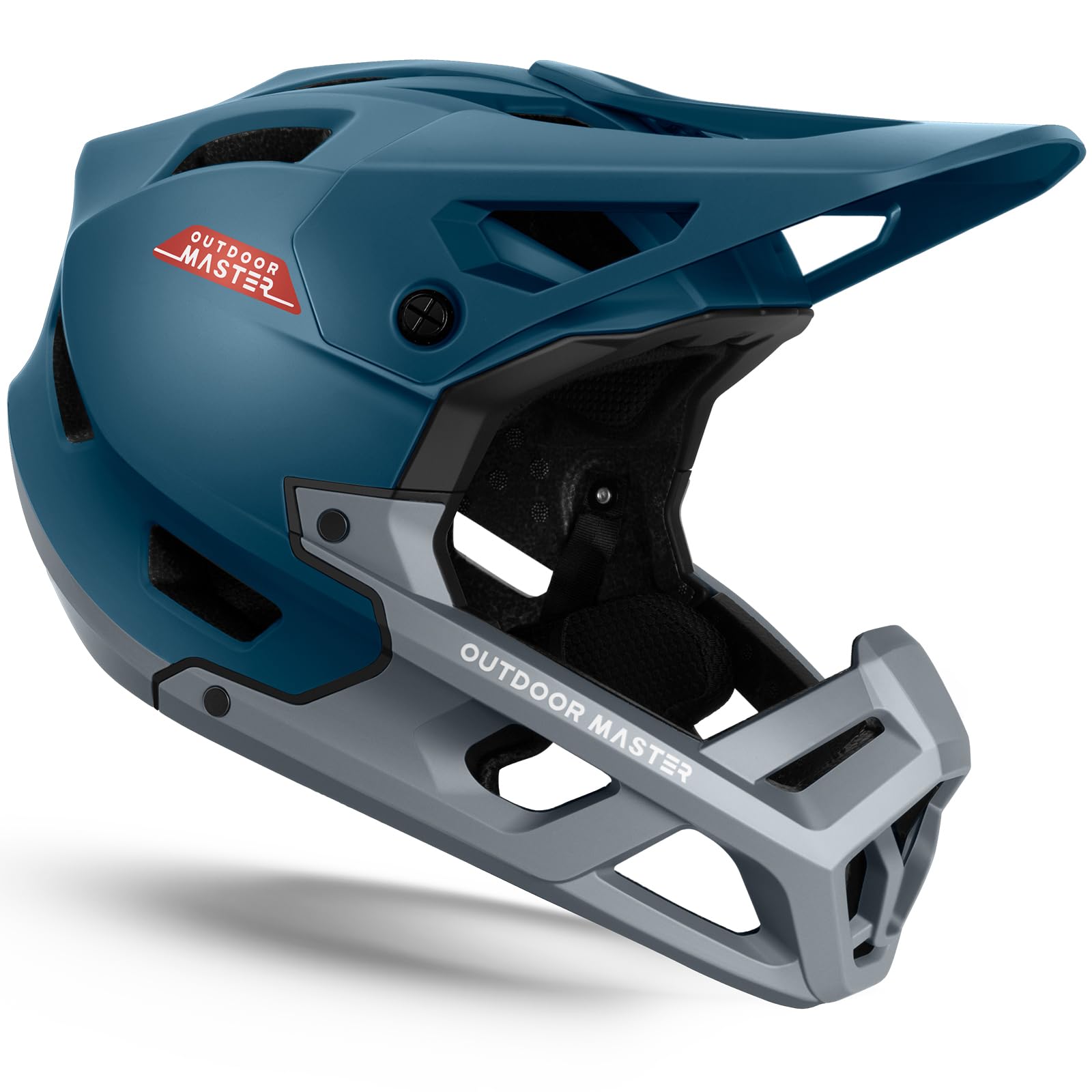
OutdoorMaster Rhino

OutdoorMaster Rhino

Casual Riders

Our Score 8.8/10
Check Price

Worth Noting

  • Plastic visor screws and ear pads can wear quickly under regular use
MIPS
No
Weight
750g
Ventilation
27 vents
Read the full review

At under 1.65 lbs and with 27 vents, this helmet feels airy on casual rides and the removable liner keeps things fresh. But the lack of MIPS or ASTM F1952 certification means it falls short for aggressive downhill or enduro. Durability concerns with the plastic visor screws and ear pads, plus inconsistent sizing, make it better suited for occasional use rather than regular mountain biking.

Bottom line: A passable choice for occasional park or scooter sessions where weight and cost matter more than advanced safety certifications.

How to Choose

MIPS Rotational Impact System

MIPS stands for Multi-directional Impact Protection System. It allows the helmet's outer shell to rotate slightly on impact, reducing rotational forces transmitted to the brain. This feature is especially important for mountain biking where falls often involve twisting motions.

However, MIPS can add a small amount of weight and, in some designs, create a creaking or rattling noise when you turn your head. Try the helmet on and move your head side to side in the store — if the noise bothers you, consider a non-MIPS helmet or one with a quieter implementation.

Weight

A lighter helmet reduces neck fatigue on long climbs and all-day rides. Sub-700g is considered lightweight for a full-face, and sub-600g is exceptional. But weight reduction often comes from thinner padding or fewer vents, which can affect comfort and airflow.

Don't fixate solely on grams. A helmet that sits securely and comfortably at 750g will feel better than an ill-fitting 595g model. Balance weight with fit and features for your riding style.

Ventilation

More vents and larger openings increase airflow but can weaken the shell's structure. Helmets with internal air channels offer a good compromise, directing air over your head without compromising strength.

For park riding or short descents, 13-15 vents are adequate. For enduro or trail riding with pedaling, 20+ vents or channeled designs keep you cooler. Fixed vents are lighter but can't be closed in cold conditions.

Safety Certifications

ASTM F1952 is the standard for downhill mountain biking. Helmets without this certification are designed for less demanding riding. Many budget 'full-face' helmets lack it entirely.

If you ride lift-accessed downhill, bike parks, or aggressive enduro, an ASTM F1952 certified helmet is non-negotiable. For XC or light trail, a non-certified helmet may suffice, but you sacrifice proven impact protection.

Adjustable Fit System

A dial retention system (like BOA) lets you fine-tune fore-aft and vertical fit. Magnetic buckles (Fidlock) make clipping one-handed easier. These features improve comfort and security.

Cheek pads and liner thickness also affect fit. Helmets that offer multiple pad sets allow customization for different face shapes. A helmet that doesn't fit well is less safe — adjustability is worth paying for.

Frequently Asked Questions