Lights & Electronics

9 Best Mountain Bike Light of 2026: Real Lumens and Secure Mounts

Which mountain bike lights deliver honest brightness and stay put on rough trails? This guide cuts through inflated claims to find the best MTB lights for night riding.

Most budget bike lights claim 2,000 or 3,000 lumens, but real output is often half that. A 400-lumen light might work for a lit path, but on singletrack it leaves riders in the dark. The bigger surprise is how many lights fail at the mount — a loose bracket or broken strap can send your light flying mid-descent.

The trick is to look past the peak number. A light with 850 genuine lumens, a wide flood beam that shows trail edges, and a metal clamp that stays tight on bumps will serve you better than a flashy 3,000-lumen number that can't hold its position. That's what this guide focuses on: lights that match their specs and survive real rides.

We've sorted through the options to find the ones that balance brightness, mount security, battery life, and price — because a light that falls off or dies early is no light at all.

1

BrightRoad BR-800

Top Pick
BrightRoad BR-800

Technical singletrack MTB

Our Score 9.2/10
Check Price

Worth Noting

  • Mount can tilt or loosen on very bumpy terrain if not checked periodically.
  • Battery runtime on high drops to about 1 hour in freezing conditions.
True Lumens
850
Mount Security
Adjustable aluminum clamp
Water Resistance
IPX4
Battery Life (High)
1.5–2 h
Read the full review

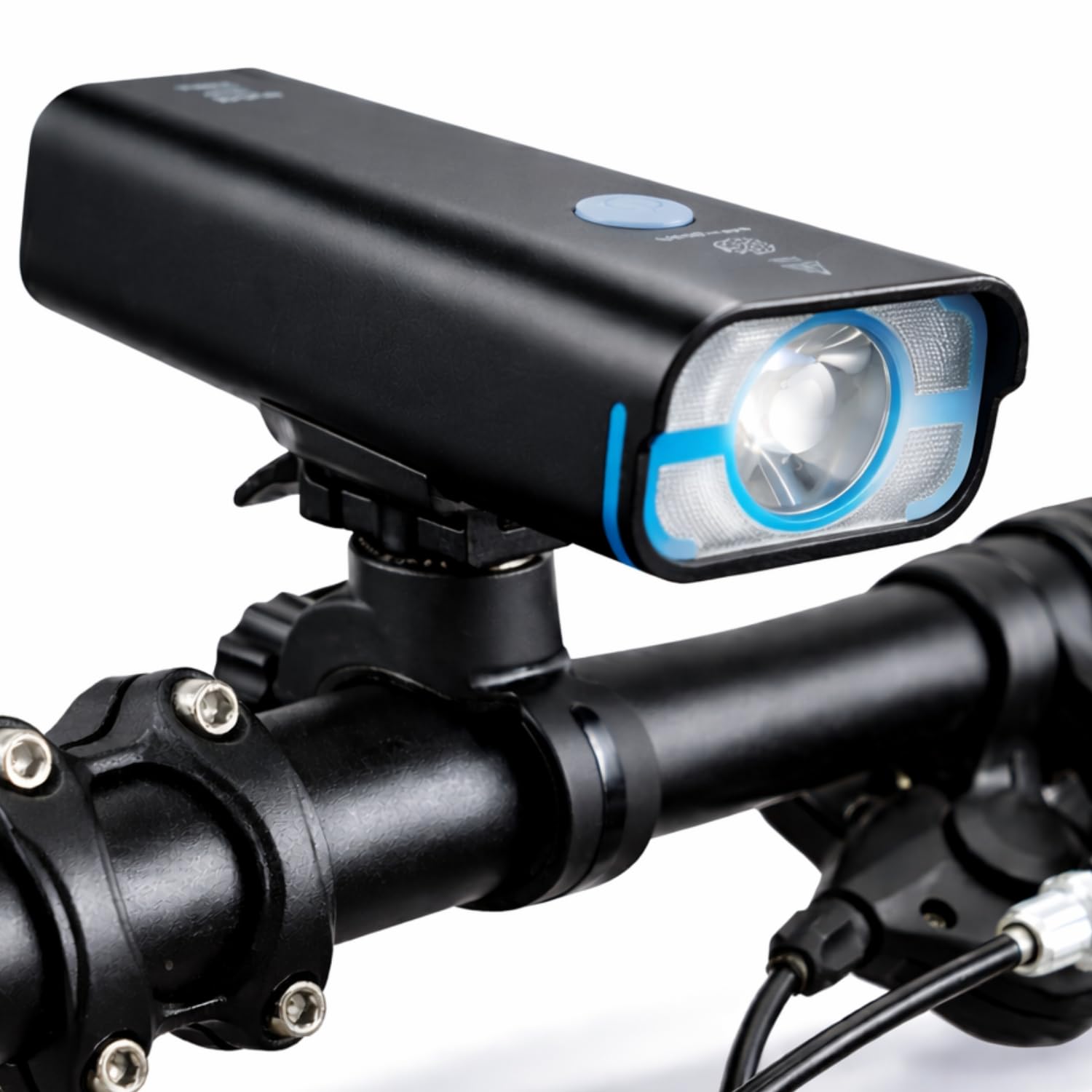
Real 850 lumens and an 85-degree wide flood beam mean the trail ahead is lit side to side, not just a narrow spot. The aluminum housing and handlebar clamp feel substantial – this light doesn’t rattle loose on most rides.

Five modes cover steady high, medium, low, a flashing pattern, and a pulse. The USB-C charging is convenient, and the IPX4 rating handles light rain, though sustained downpours are better suited to the Cygolite alternative.

This is a strong fit for mountain bikers who ride singletrack after dark and need a wide beam to see corners and obstacles. The battery holds up for 1.5–2 hours on high in mild weather, but expect that to drop to around an hour in sub-35°F conditions. Riders who need longer runtimes or a bundled tail light should look elsewhere.

Periodically check and tighten the handlebar clamp before long or bumpy rides.

Bottom line: The BR-800 is the light to grab when you need honest lumens and a wide beam without overspending – just keep an eye on the mount and plan extra battery for cold nights.

2

APECYC Set

APECYC Set

Casual paved trails

Our Score 9.2/10
Check Price

Worth Noting

  • Long-term durability may degrade over extended use
  • Plastic mount is not secure for off-road riding
True Lumens
1200
Mount Security
Handlebar+seatpost clamp
Water Resistance
IPX6
Battery Life (High)
Read the full review

The APECYC set delivers 1200 lumens of genuine brightness — a remarkable output for a budget-friendly front+rear combo. Unlike the more secure aluminum clamp of the BrightRoad BR-800, the plastic mount may loosen on bumpy terrain.

This set is best suited for budget-conscious riders who stick to paved paths or need an emergency backup light. The plastic mount and uncertain long-term durability mean it's not the right choice for regular off-road use or riders who demand years of service.

If you ride rough terrain, upgrading to a sturdier mount will prevent unexpected light loss.

Bottom line: A spectacular value for the lumens, but the mount and longevity tradeoffs make it a backup light or paved-commuter choice rather than a trail workhorse.

3

GearLight S400 Pro

GearLight S400 Pro

Kids/commuter safety

Our Score 9.2/10
Check Price

Worth Noting

  • 400 lumens is insufficient for unlit trails or fast descents
  • Rubber strap mount may shift or detach on bumpy terrain
True Lumens
400
Mount Security
Quick universal rubber strap
Water Resistance
IPX4
Battery Life (High)
Read the full review

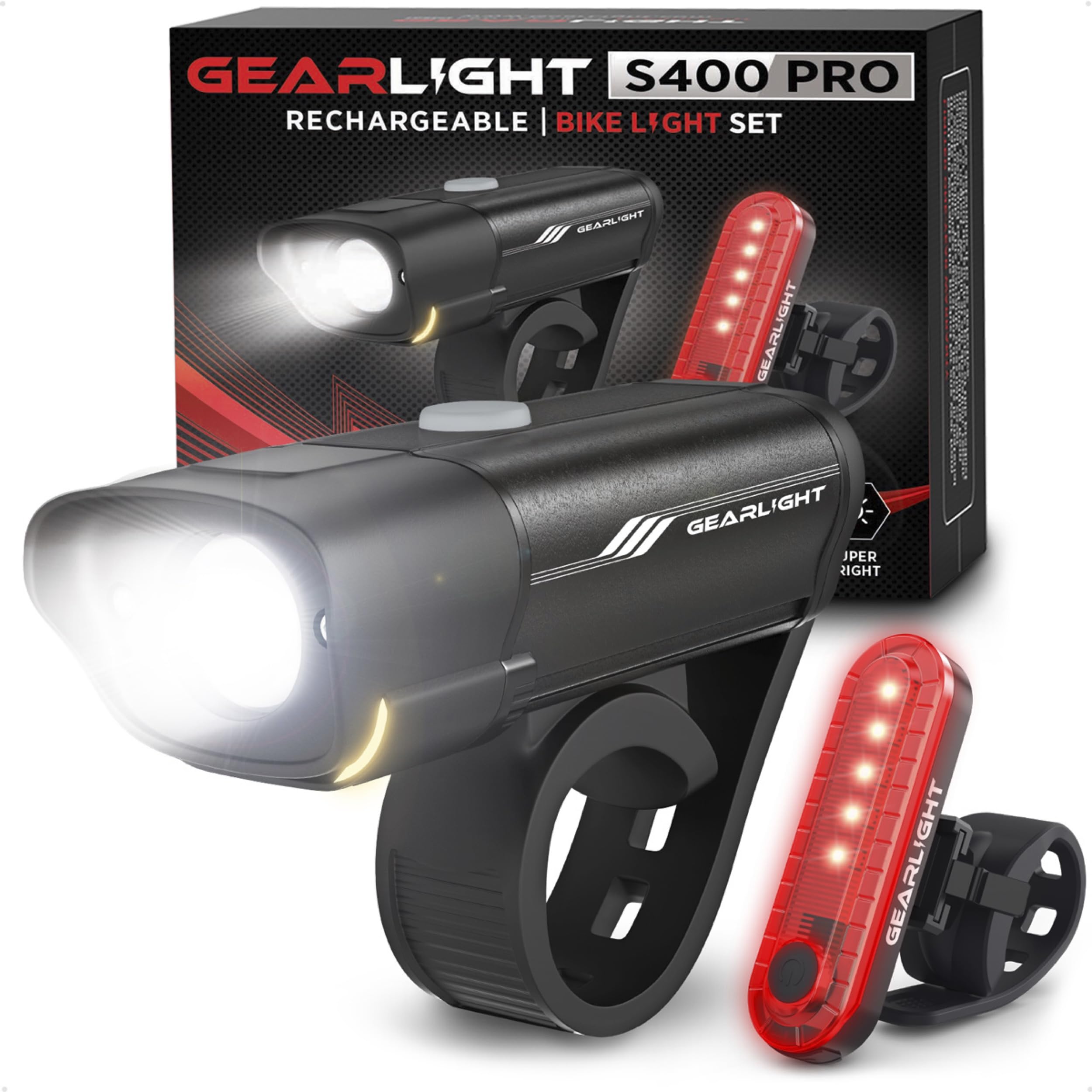
The GearLight S400 Pro delivers a bright beam for its size and is simple to install, making it a practical choice for commuters or kids' bikes on lit paths. However, the 400-lumen output falls short of the 800+ lumens typically needed for off-road visibility, and the rubber strap mount can lose grip on rough terrain – it is not built for mountain biking. For casual road use where budget is the priority, this set offers adequate illumination without demanding a premium.

Bottom line: A good pick for paved commutes or kids’ bikes where cost matters most – leave it at home when the trail gets rough.

4

Swittn 3000

Swittn 3000

Casual paved rides

Our Score 9.2/10
Check Price

Worth Noting

  • Lumen rating is unrealistic; real output is much lower than advertised
  • Mount is not secure on bumpy terrain
True Lumens
Mount Security
Rubber strap with clip
Water Resistance
IPX5
Battery Life (High)
Read the full review

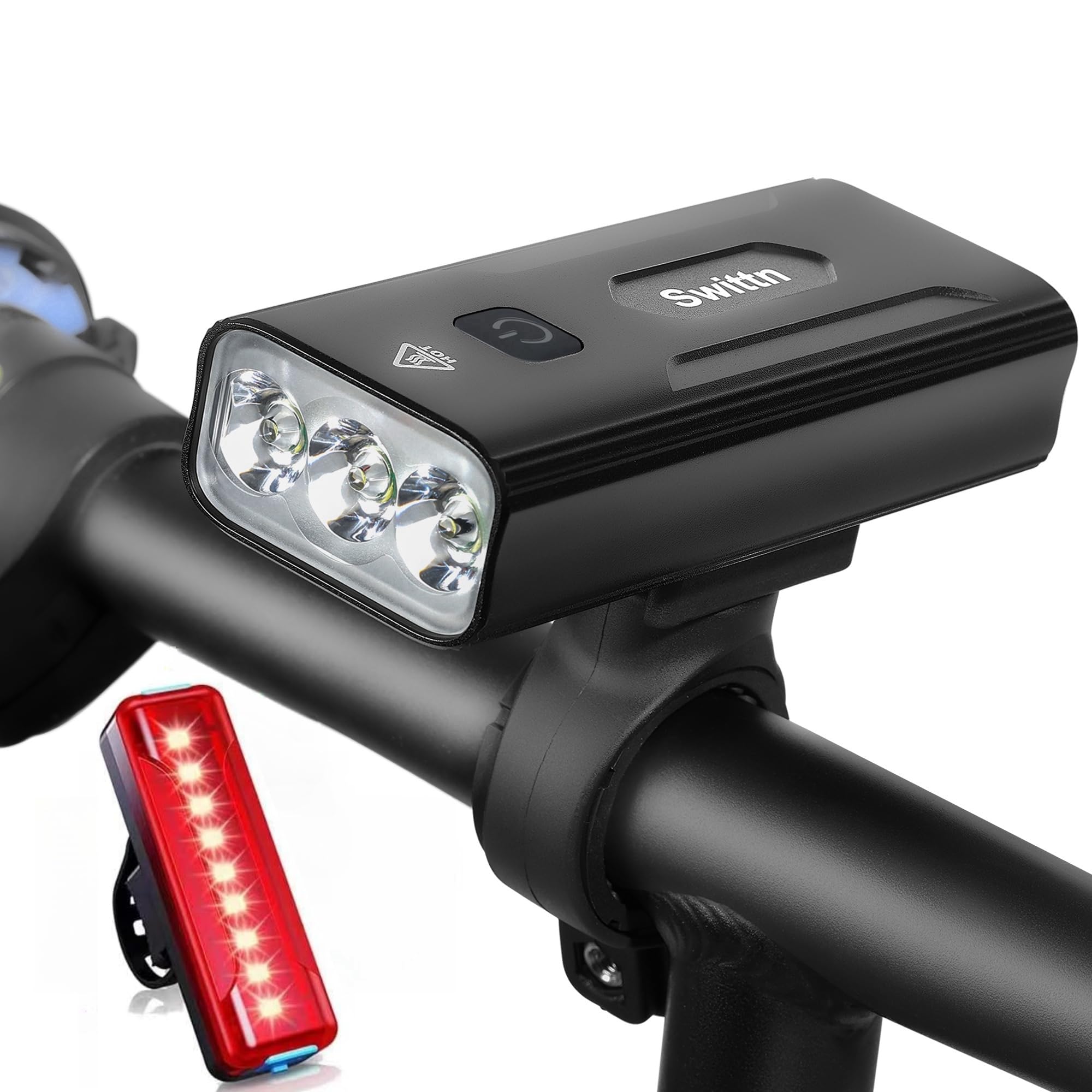
The Swittn 3000 provides enough brightness for night riding on smooth paths, and the 5200mAh battery lasts several rides on lower modes. However, the claimed 3000 lumens is unrealistic — actual output is closer to 1000-1500. The rubber strap mount can tilt on bumpy terrain, and some units may stop working after a few weeks. This light works best as a budget option for short paved rides or as a backup, but it is not suitable for mountain biking.

Bottom line: A functional emergency light or commuter backup, provided you stay on smooth surfaces and don't rely on the stated lumen count.

5

WSCXSC 1800

WSCXSC 1800

Light off-road use

Our Score 9.0/10
Check Price

Worth Noting

  • Clamp opening may not fit handlebars over 31.8mm
  • Battery runtime on high can fall short of advertised 2 hours depending on unit
True Lumens
1800 (claimed)
Mount Security
Double-nut aluminum bracket
Water Resistance
IPX5
Battery Life (High)
~2 h
Read the full review

The WSCXSC 1800 uses a double-nut aluminum bracket that holds position better than most budget lights — a worthwhile upgrade if you've dealt with slipping clamps on rocky descents. The plastic-mount competitor in the same price bracket can shift under vibration, making the WSCXSC's slight premium worthwhile for stability.

This light suits mountain bikers on mild to moderate trails who want a bright beam and a reliable clamp without spending premium money. The 5200mAh battery supports longer rides on lower settings, but some units may deliver less than two hours on high — something to test early. Also, the clamp opening may not fit oversized handlebars (31.8mm+), so verify your bar diameter before buying.

Keep an eye on runtime during your first few rides — if high mode drains faster than expected, the lower settings still provide enough light for moderate trails.

Bottom line: For riders who want a secure clamp and adequate battery capacity without spending much, the WSCXSC 1800 is a practical budget companion — just confirm your bar size and test the runtime early.

6

KAMSANG Set

KAMSANG Set

Kids' bikes spare

Our Score 9.0/10
Check Price

Worth Noting

  • Charging port may not stay reliable over time
  • Battery life covers about 45 minutes on high beam
True Lumens
Mount Security
Aluminum bracket with silicone pad
Water Resistance
IPX5
Battery Life (High)
45 min
Read the full review

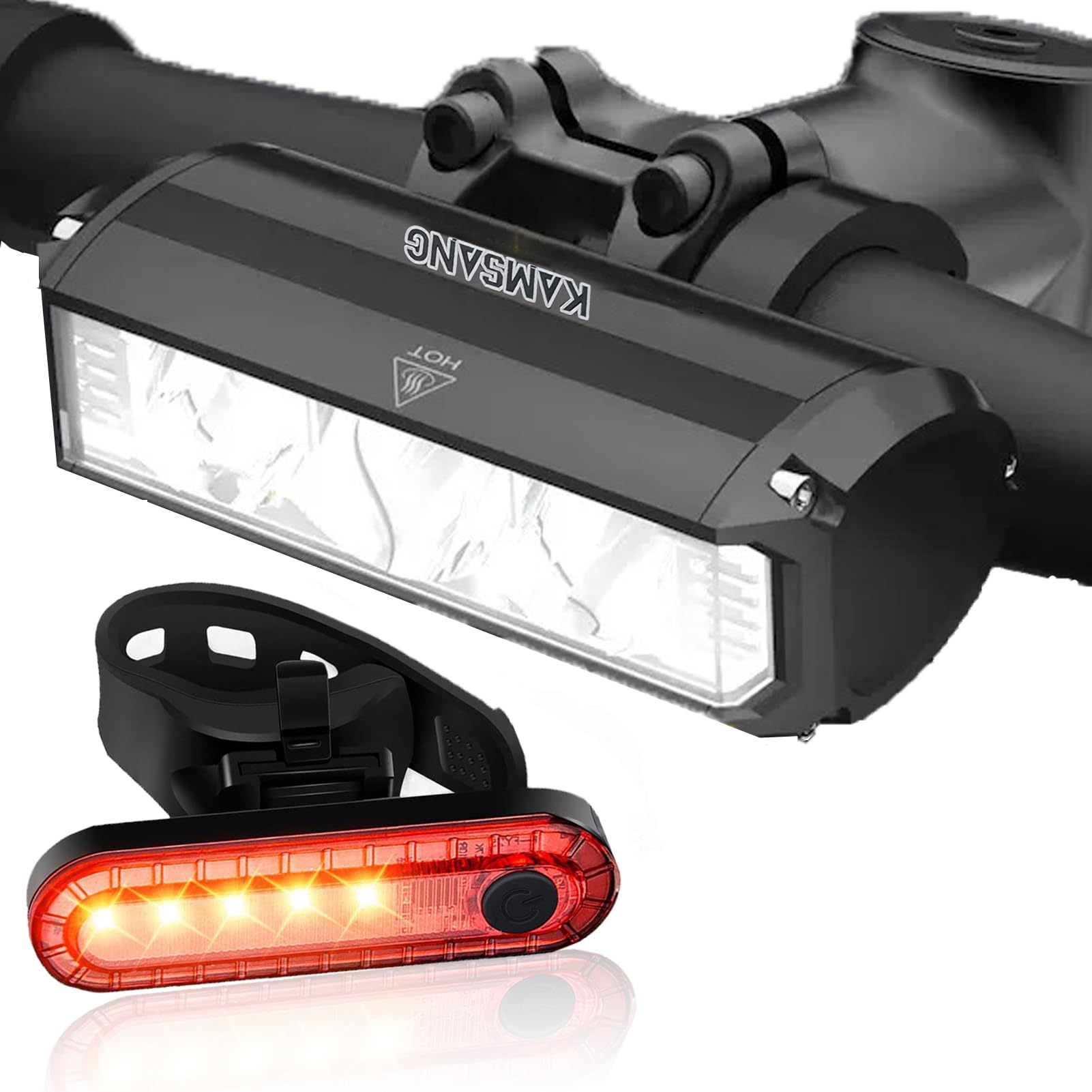
The KAMSANG Bike Light Set delivers a complete front and rear solution with USB-C charging and tool-free mounting at a budget-friendly price. The manufacturer does not specify lumens (likely 500-800), and battery life on high beam runs about 45 minutes – adequate for short paved rides but far too little for mountain biking. Charging port consistency can vary between units, making this a light-duty set for neighborhood use rather than off-road adventures.

Bottom line: A budget-friendly set for neighborhood rides on paved paths where runtime and charging consistency are secondary concerns.

7

DARKBEAM DB07

DARKBEAM DB07

Emergency backup

Our Score 9.0/10
Check Price

Worth Noting

  • On bumpy terrain, the rubber mount may allow the light to shift position
  • Battery life on high mode is short
True Lumens
Mount Security
Rubber strap with quick release
Water Resistance
IPX4
Battery Life (High)
Read the full review

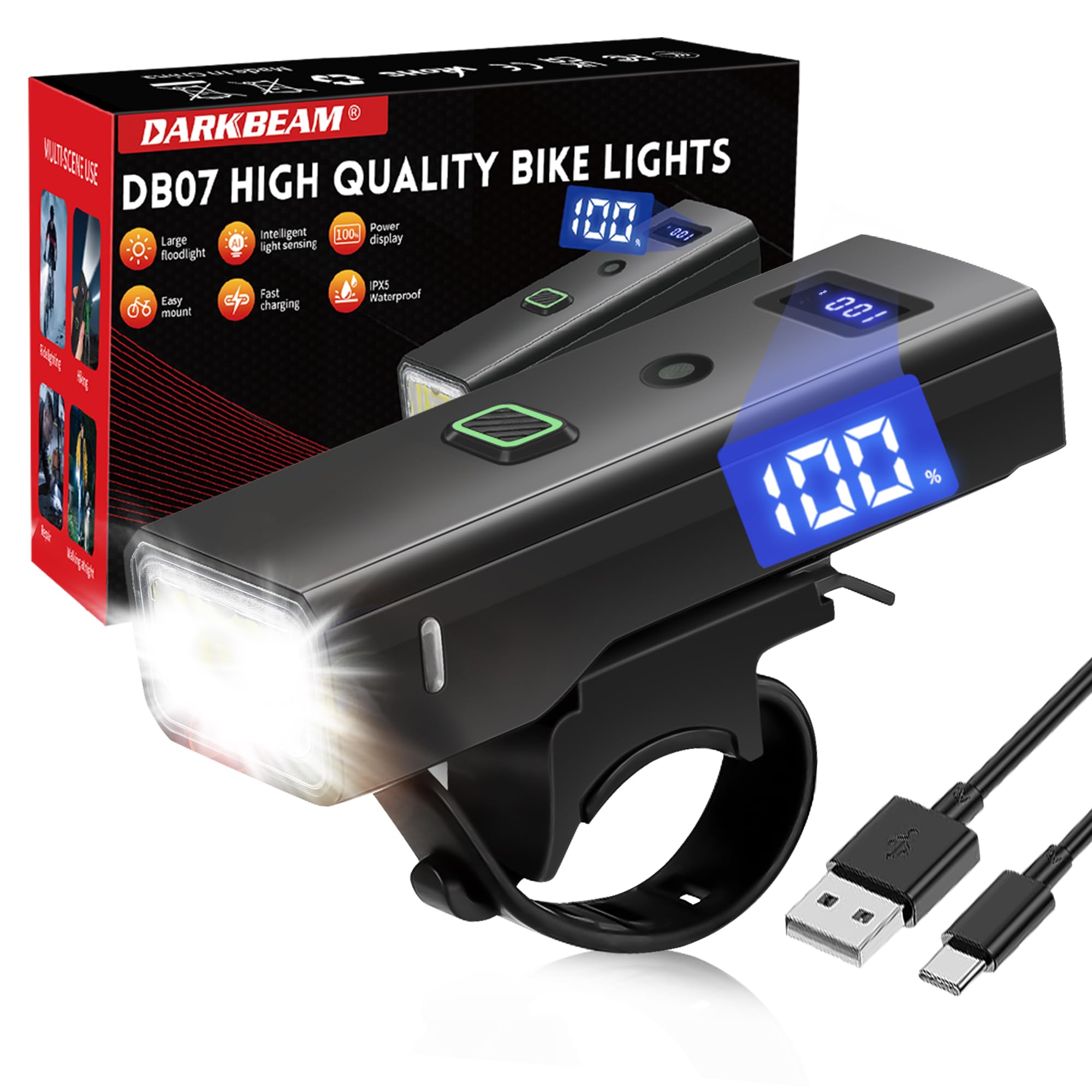
This pocket-sized light delivers surprising brightness from a compact body and includes a handy auto sensor that turns it on when ambient light drops. The USB-C charging and battery meter add convenience for casual use. However, its rubber strap mount can shift on bumps and the battery runs out quickly on high mode. It works fine for walking, dog outings, or as a backup emergency blinker, but it is not suitable for mountain biking in any capacity.

Bottom line: A compact emergency light for walkers or as a backup blinker — skip it for any serious riding.

8

Cygolite Metro 1100

Cygolite Metro 1100

All-weather riding

Our Score 8.8/10
Check Price

Worth Noting

  • Charging uses micro-USB, so you'll need a separate cable if you've standardized on USB-C devices
  • Cycling through modes with gloved hands requires deliberate pressure, especially on rough terrain
True Lumens
1100
Mount Security
Hard clamp (Locktite)
Water Resistance
IP67
Battery Life (High)
1.5 h
Read the full review

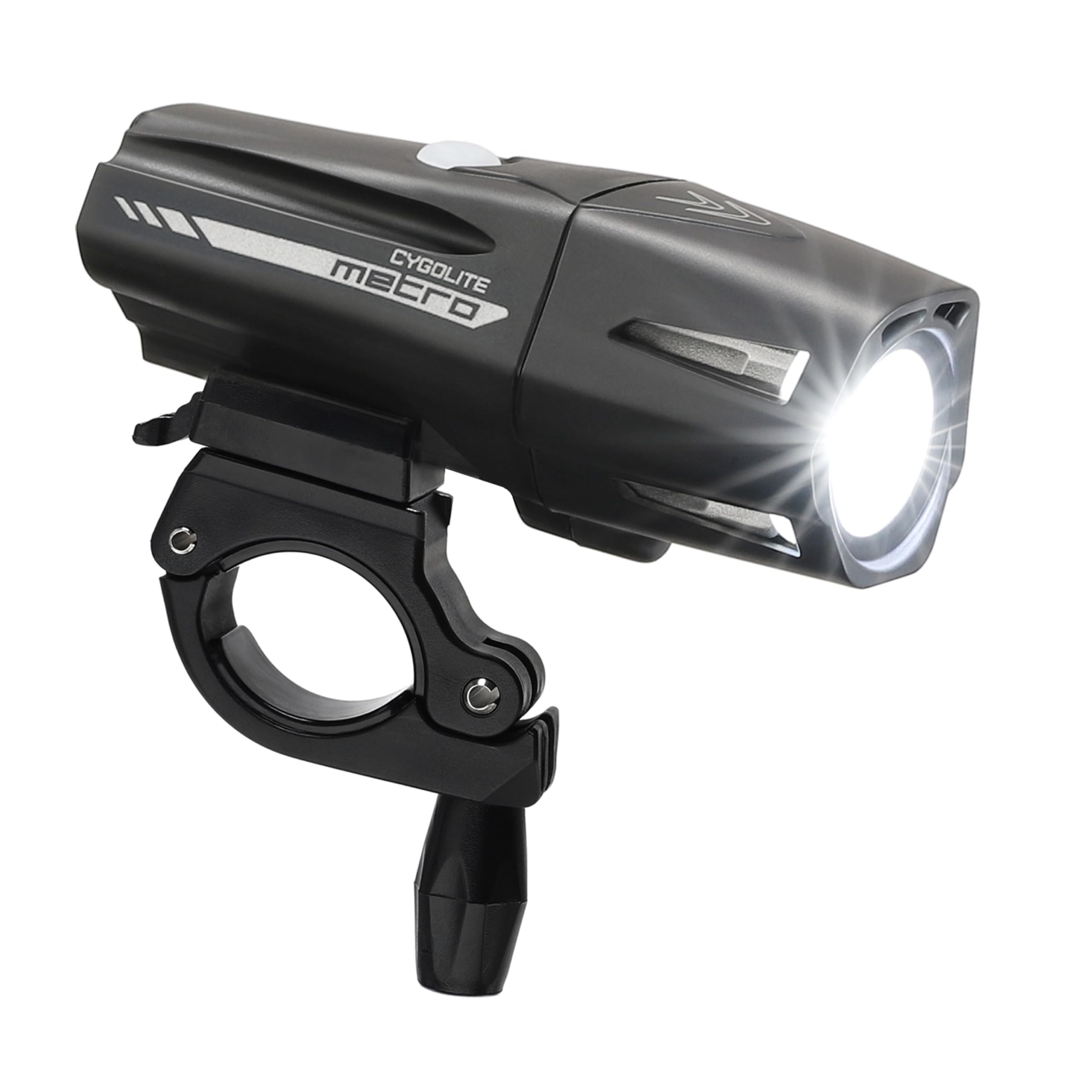
The Metro 1100 delivers a genuine 1100 lumens with a well-shaped beam that throws light both far ahead and to the sides, making it effective on dark, winding trails. Its IP67 rating means it survives heavy rain, mud splashes, and even full submersion — a spec the top pick can't match. Nine modes, including a SteadyPulse daytime flash, give flexibility from dawn commutes to night rides.

This light suits riders who ride in wet conditions and want a hard-mount clamp that stays put. The tradeoff: the power button requires firm pressure and is hard to feel through thick gloves, and the micro-USB port means carrying an extra cable if your other gear uses USB-C. For anyone who prioritizes water resistance over convenience, these boundaries are easy to live with.

Press the mode button firmly with your palm if gloves are too thick for your fingers.

Bottom line: For mountain bikers who ride in heavy rain or through puddles, the Cygolite's IP67 sealing provides peace of mind that a brighter budget light can't match.

9

NiteRider 900

NiteRider 900

Short commutes

Our Score 8.8/10
Check Price

Worth Noting

  • Micro-USB charging port may cease to charge, leaving the light unusable
  • Proprietary handlebar mount can loosen on rough terrain, shifting the beam angle
True Lumens
900
Mount Security
Hard clamp (quick release)
Water Resistance
IP64
Battery Life (High)
1 h
Read the full review

The NiteRider Lumina 900 Boost delivers 900 lumens with daytime flash and IP64 water resistance from a well-known brand, making it a decent option for road commuters. For mountain biking, two issues stand out: the micro-USB charging port can become inoperable over time, and the proprietary clamp mount may loosen on rough trails, causing the light to shift. Battery life on high is around one hour, which is short for extended off-road rides. Stronger lights with secure mounts and USB-C are available at the same price.

Handle the micro-USB cable gently and avoid jostling the port to prolong its function.

Bottom line: Best suited for road commuters who prioritize daytime flash and brand recognition, not for MTB riders needing a durable mount and reliable charging.

How to Choose

True Lumens vs. Advertised Lumens

Many budget lights advertise 2,000–3,000 lumens but deliver 500–1,000 in practice. This happens because manufacturers measure the LED chip's raw output without accounting for lens losses, heat throttling, or battery voltage drop. A light that says '1800 lumens' may actually produce 600 after 10 minutes.

To cut through the exaggeration, look for lights with independent reviews or user tests that measure output on high mode. The safest bet is a light from a brand that states consistent runtime numbers, like '850 lumens for 1.5 hours' — that level of specificity usually indicates a real spec.

Mount Security and Durability

The mount is the most overlooked component of a mountain bike light. Rubber straps and plastic clips work for smooth pavement but loosen on rocky descents, sending the light tilting down or falling off entirely. The physical mechanism: vibration from bumps causes the friction fit to gradually slip.

A secure mount uses a metal clamp with a tightening knob or Allen bolt that compresses around the handlebar. Double-nut brackets (like on the WSCXSC) and hard clamps with rubber shims (like the Cygolite) hold position even on chunky terrain. If the mount feels flimsy in hand, it will fail on the trail.

Battery Runtime on High

Battery life on maximum brightness is critical for night rides, but runtimes are often quoted on the lowest mode. A light that lasts '10 hours' may only manage 1 hour on high. The chemistry behind it: lithium-ion batteries lose capacity in cold weather, so a 1.5-hour runtime can drop to 50 minutes below 35°F.

For a typical 2-hour night ride, look for a light that offers at least 1.5 hours on high in moderate temperatures. If you ride in winter, add 20% buffer. Also consider lights with a battery indicator so you know when the juice is running low.

Water Resistance Rating

Water resistance ratings matter for wet trails and heavy rain. IPX4 means splash-proof — fine for light drizzle but not sustained downpours. IPX5 withstands water jets, and IP67 can be submerged briefly. The trade-off: higher ratings often require more gaskets and sealed ports, which may make charging slightly fussier.

If you ride in rainy climates, prioritize at least IPX5. For occasional showers, IPX4 is sufficient. Avoid lights without any IP rating — they may fail from sweat or fog alone.

Beam Pattern: Flood vs. Spot

The beam shape determines how much of the trail you see. A narrow spot beam projects far ahead but leaves the edges dark — dangerous on twisty singletrack. A wide flood beam (80° or more) illuminates the trail sides and obstacles, letting you corner with confidence.

For mountain biking, a flood pattern is almost always better. If a light doesn't specify its beam angle, assume it's a spot. Some lights offer adjustable focus, but that mechanism often adds fragility. Dedicated flood optics are more reliable.

Frequently Asked Questions