Bike Racks & Transport

8 Best Roof Bike Rack of 2026: Avoid Hidden Lock Costs & Stability Issues

Choose the roof bike rack that fits your crossbars and bike type without surprise lock costs or highway wobble.

Many roof bike racks advertise impressive specs but add $50 to $70 in lock cores after purchase. Pair that with highway wobble complaints on factory crossbars — a common frustration — and the process of choosing a roof rack becomes more about avoiding hidden costs than comparing features.

This guide focuses on racks that deliver both security and stability out of the box, while identifying which trade-offs are worth accepting for your specific bike and vehicle setup. The key is matching your rack to your crossbar shape and bike type, not just picking a brand name.

1

Thule UpRide

Top Pick
Thule UpRide

Carbon fiber bikes

Our Score 9.0/10
Check Price

Worth Noting

  • Lock cores are sold separately, adding $50–$70 to the total cost.
  • Front wheel arm locking may not hold securely at highway speeds, risking bike movement in some cases.
Security
Locks separate
Mounting Type
Wheel-clamp
Max Tire Width
3.0 in, 5 opt
Loading & Install
Tool-free install, quick
Read the full review

The Thule UpRide employs a wheel-clamp design that avoids any contact with the bike frame — the only universal roof rack to do so. This makes it the clear pick for carbon frames, unusual bike geometries, or anyone wanting zero abrasion risk. The rack is all aluminum, feels premium, and installs on most factory crossbars in under a minute. Switching between vehicles is equally quick.

This rack is best for cyclists who prioritize frame safety above all else. Two tradeoffs: lock cores are sold separately (adding $50–$70), and the front wheel arm's locking mechanism can loosen during highway driving in some units, allowing the bike to shift. That inconsistency means the UpRide is less suited for routine trips above 70 mph — for local rides and moderate speeds it performs well.

Against the Yakima FrontLoader (the top pick), the UpRide offers superior frame protection but falls short on integrated security and high-speed stability. The premium materials and quick-switch design justify the cost for owners of expensive carbon bikes, as long as they accept the additional lock expense and occasional arm adjustment.

Order a set of Thule lock cores at purchase to avoid retrofitting later.

Bottom line: If you own a carbon fiber bike and want a rack that never touches the frame, the UpRide is the correct choice — just factor in lock cores and check the front arm's grip before highway trips.
2

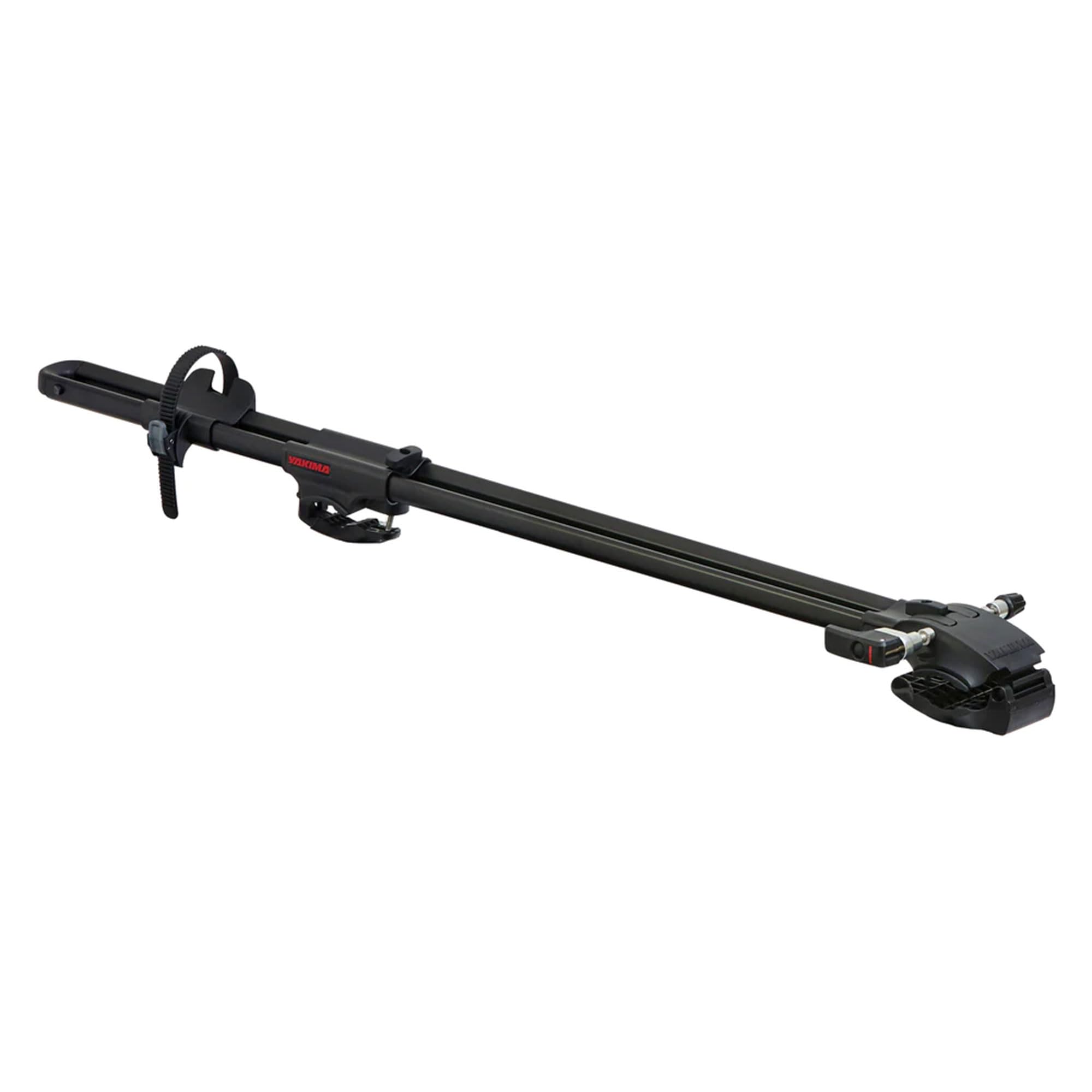
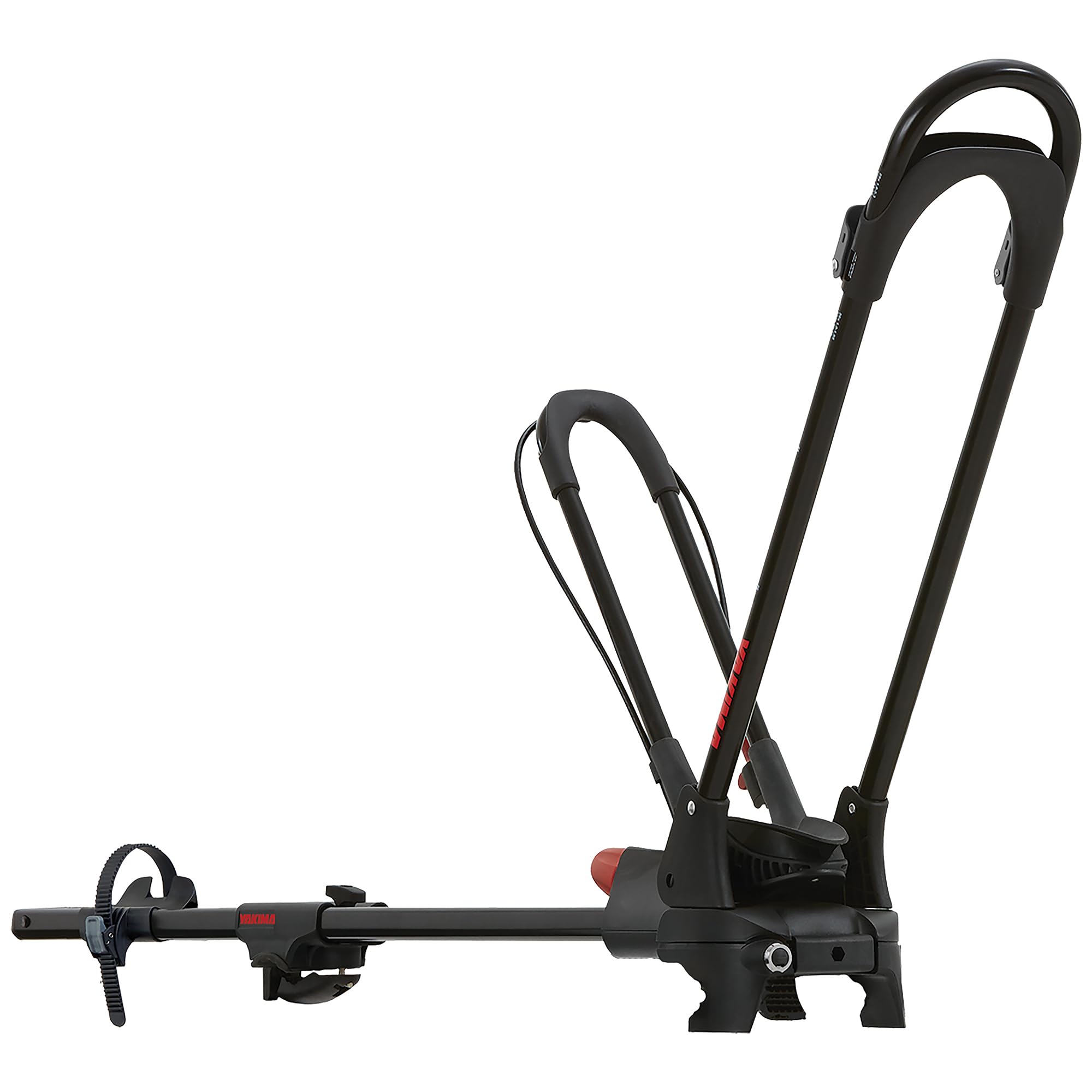
Yakima FrontLoader

Yakima FrontLoader

First-time buyers

Our Score 8.8/10
Check Price

Worth Noting

  • When fitting a smaller bike, sliding the rear wheel tray forward can take a few extra adjustments
  • The included cable lock requires separate lock cores for full theft protection, adding $50–$70
Security
Cable lock, cores extra
Mounting Type
Wheel-clamp
Max Tire Width
3.0 in
Loading & Install
Tool-free, no wheel removal
Read the full review

Loading a bike onto the FrontLoader takes seconds — no front wheel removal, no wrestling with frame clamps. The wheel-clamp mechanism grabs the front tire and tightens with a single strap, while the rear wheel sits in a sliding tray that adjusts to fit wheelbases from compact hybrids to long-travel mountain bikes. That simplicity makes it a strong choice for anyone who swaps bikes frequently or parks on a roof rack daily.

At highway speeds, the rack keeps the bike planted — the wheel cradle and rear strap hold the wheels firmly, with minimal side-to-side movement even over rough pavement. The 18-pound steel-and-plastic build feels substantial, and the clamps grip a wide range of crossbar shapes (round, square, aerodynamic) without slipping. Owners of multiple bike types will appreciate that the same rack accommodates road, mountain, and hybrid frames without any adapters.

This rack is best suited for first-time roof rack buyers who want a no-fuss setup, and for anyone who values quick daily use over maximum theft deterrence. The included cable lock provides basic security, but lock cores are not included — buyers who leave bikes on the roof in public areas should expect to spend an extra $50–$70 on Yakima’s lock cores for full protection. The rear wheel tray can also require a few extra adjustments when fitting smaller bikes, though this is a minor inconvenience during setup rather than a daily frustration.

Lock cores sold separately — pick up a set if parking the bike on the roof in public spaces.

Bottom line: The FrontLoader handles the essentials well — easy loading, stable hold, and broad compatibility — without overcomplicating the design.

3

RockyMounts Tomahawk

RockyMounts Tomahawk

Fat tire bikes

Our Score 8.8/10
Check Price

Worth Noting

  • Included assembly instructions are unclear, often sending users to online video help.
  • Requires short crossbar spacing (under 43 inches)
Security
Locks separate
Mounting Type
Wheel-clamp
Max Tire Width
5.0 in
Loading & Install
Tool-free, wide strap
Read the full review

The Tomahawk accepts tires up to 5 inches wide right out of the box — no adapters, no extra cost. That puts it in a category with racks that typically run $100 more, making it a budget-friendly option for anyone riding plus-size or fat bikes.

Once assembled, the wheel-clamp design holds bikes securely at highway speeds. The wide wheel straps adjust quickly, and loading takes under a minute. The construction feels solid, with minimal sway even on rough pavement.

This rack is best suited for fat bike owners who prioritize affordability and straightforward loading over aerodynamic profile or in-box polish. The assembly instructions are confusing enough that most buyers will need a video guide — a one-time inconvenience that pays off in the long run. Also confirm your crossbar spacing is under about 43 inches, as the Tomahawk only fits closely set bars.

Search for 'RockyMounts Tomahawk assembly' on YouTube before starting — the included instructions are nearly useless.

Bottom line: A strong value pick for fat bike owners who don't mind a one-time assembly hurdle and have the right crossbar spacing.

4

Yakima ForkLift

Yakima ForkLift

Yakima crossbar owners

Our Score 8.8/10
Check Price

Worth Noting

  • Lock cores must be purchased separately for theft protection
  • Mounting clamps may not fully encircle thicker crossbars, causing minor play
Security
Locks separate
Mounting Type
Fork-mount
Max Tire Width
Loading & Install
Tool-free install, fast
Read the full review

The Yakima ForkLift attaches to any crossbar shape in under 10 minutes without tools, making it the quickest fork-mount rack to set up. Unlike wheel-clamp designs that require rolling the bike into position, you simply secure the fork and tighten the hand knobs. The clamp system adapts to round, square, aero, and factory crossbars, so it works on nearly any roof rack without adapters.

Once mounted, the fork hold is impressively solid with no frame contact, so paint scratches are not a concern. The rack carries up to 35 lb, covering most road and mountain bikes. The lightweight 7 lb frame makes it easy to move between vehicles or store when not in use.

Compared to the top wheel-clamp rack, the ForkLift requires removing the front wheel — a tradeoff some riders find tedious. But for those comfortable with that step, the install speed is unmatched.

This rack is best for cyclists who prioritize speed of installation over built-in security. The clamps are designed to fit a wide range of crossbars, but on thicker aftermarket bars they may not fully encircle, which can cause minor play — riders with standard round or aero bars will have no issues. Lock cores are sold separately, so factor that into the total cost if you park in shared spaces.

Order a set of SKS lock cores with the rack — they install in seconds and prevent theft.

Bottom line: If you want a fork mount that sets up faster than any competitor and you have standard crossbars, the ForkLift is a smart buy — just budget for lock cores if you park in public.

5

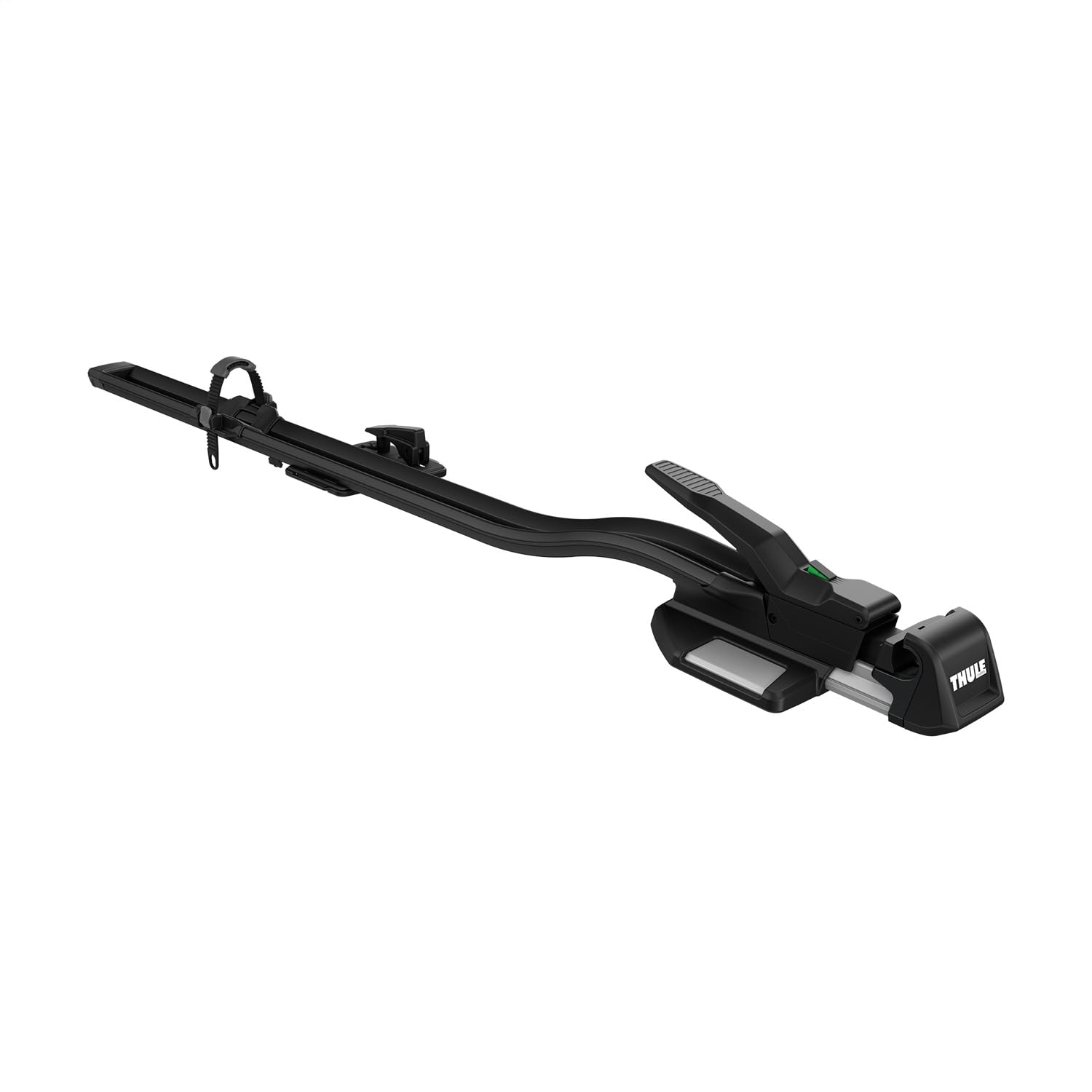
Thule TopRide

Thule TopRide

Thru-axle cyclists

Our Score 8.8/10
Check Price

Worth Noting

  • Fork locking mechanism can develop play, causing shaking and a clicking noise at the fork interface.
  • Assembly instructions are unclear and may frustrate first-time installers.
Security
Locks separate
Mounting Type
Fork-mount
Max Tire Width
Loading & Install
Quick-release fork mount
Read the full review

The Thule TopRide is a lightweight fork-mount rack that installs in minutes and lets you snap the bike in place with no fuss. The sturdy mounts feel solid when attached, and the low weight (7.7 lb) is a clear advantage for those who frequently mount and remove the rack. However, the fork locking mechanism can develop play over time, leading to shaking and a clicking noise at the fork interface. Assembly instructions are unclear, which may frustrate first-time installers. These issues, combined with a premium price, make the TopRide a niche choice: best reserved for thru-axle cyclists who prioritize minimal weight and quick loading above long-term stability and straightforward setup.

Bottom line: Only worth considering if you are a thru-axle rider who values the lowest possible weight and quick loading more than a perfectly stable fork interface and easy assembly.

6

Subaru OEM Thule Rack

Subaru OEM Thule Rack

Subaru owners

Our Score 8.8/10
Check Price

Worth Noting

  • End caps can fly off during driving, risking lost components
  • Loading a bike onto the rack alone can be awkward without a second person
Security
One lock included
Mounting Type
Frame-clamp
Max Tire Width
2.6 in
Loading & Install
Perfect Subaru fit
Read the full review

This Subaru-branded Thule rack delivers a no-guesswork attachment to factory crossbars, plus an integrated lock that rivals in this price tier often omit. Assembly is straightforward, and the frame-clamp design holds securely for most road and light trail bikes. The catch: the carrier is Subaru-specific, and the end caps holding small parts can detach at highway speeds — something to check before each trip. Tire width maxes out at 2.6 inches, ruling out many modern mountain bikes. It’s a clean, hassle-free solution for Subaru drivers who already own bikes within those limits, but anyone else should look at universal racks like the Thule UpRide or Yakima FrontLoader for broader compatibility.

Bottom line: Best left to Subaru owners with standard-width tires who prefer a guaranteed fit over versatility — for any other vehicle or bike type, a universal wheel-clamp rack makes more sense.

7

Thule ProRide XT

Thule ProRide XT

Multi-bike families

Our Score 8.6/10
Check Price

Worth Noting

  • Some units may arrive missing end caps
  • Front wheel can wobble laterally at speeds above 50 mph even after tightening.
Security
Locks separate
Mounting Type
Frame-clamp
Max Tire Width
Loading & Install
Tool-free frame clamp
Read the full review

The ProRide XT stands apart from wheel-clamp racks by using a frame-clamp system with soft claw pads that adapt to smaller frames like BMX and children's bikes. This adjustability addresses a common gap in roof racks, where many designs only accommodate standard adult frames. For those who prioritize avoiding frame contact entirely, some premium racks exist, but they lack the ability to secure odd-sized frames as easily.

This rack fits families with multiple bike sizes — from kids' BMX to full-size mountain bikes — who are comfortable with a traditional clamp that holds the frame rather than the wheels. Two tradeoffs require attention: highway-speed wheel wobble (reported even after tightening) and occasional missing end caps out of the box. If you keep speeds under 50 mph or accept some lateral movement, and you inspect the package upon arrival, the ProRide XT works well.

The soft claw pads hold the frame securely without scratching paint, and the rack itself weighs only 11 lb, making it easy to store when not in use. Its 44 lb capacity handles most bikes, and the adjustable frame holder accommodates children's and BMX bikes that other racks can't fit.

Test wheel stability at lower speeds before highway use to adjust driving accordingly.

Bottom line: A family-friendly frame-clamp rack that requires a speed check and an arrival inspection — best for those who prioritize bike size versatility over highway stability.

8

GATHERSKY Roof Rack

GATHERSKY Roof Rack

Budget occasional use

Our Score 8.4/10
Check Price

Worth Noting

  • Mounting hardware can cause the rack to sit unevenly, requiring extra attention during installation
  • At highway speeds the rack can sway excessively, especially on bumpy roads, making long trips a risk
Security
No lock
Mounting Type
Wheel-clamp
Max Tire Width
3.1 in
Loading & Install
Easy tool-free install
Read the full review

The GATHERSKY Roof Bike Rack undercuts most competitors on price while still handling bikes with up to 29-inch wheels and 3.1-inch tires. Assembly is quick with included tools, and the wheel-clamp design avoids frame contact. However, at highway speeds the rack can sway noticeably, especially on bumpy roads, which limits its use to short, low-speed trips with lighter bicycles. The U-bolt mounting hardware can also cause the rack to sit unevenly, adding to instability concerns. This is a budget-friendly option suitable only for occasional local use with sub-40-pound bikes, not for highway commutes or heavy e-bikes.

Bottom line: Fine for short, local drives with a lightweight bike, but not for highway commuting or carrying heavy e-bikes or mountain bikes.

How to Choose

Mounting Mechanism

Frame-clamp racks grip the top tube with soft pads; they work with traditional diamond frames but can mar carbon or oddly shaped frames. Wheel-clamp racks secure by the tires, avoiding frame contact entirely, which makes them safer for carbon and aero bikes. Fork-mount racks require removing the front wheel but offer the lightest weight and most secure hold for the fork.

Choose wheel-clamp if you have multiple bike types or carbon frames. Choose frame-clamp if you prioritize a quick load and have a standard steel or aluminum frame. Fork-mount is best for minimalists who don't mind wheel removal.

Tire Width Compatibility

Fat bikes with tires above 3.0 inches need a rack that accepts wide tires without adapters. Most wheel-clamp racks cap at 3.0 inches, but the RockyMounts Tomahawk handles up to 5.0 inches out of the box. Fork-mount racks have no tire width limit since only the wheel hub is clamped.

If you own a plus-size mountain bike or fat bike, confirm the rack's tire width rating before buying. A rack that requires an adapter adds cost and complexity.

Ease of Loading and Installation

Racks vary from tool-free installs that click onto crossbars in minutes to those requiring minor assembly. Wheel-clamp racks like the Yakima FrontLoader let you load the bike without removing the front wheel, cutting loading time by half. Fork-mount racks demand wheel removal but reward with a lighter overall weight.

Consider how often you'll mount and remove the rack. If you switch between vehicles weekly, a tool-free system saves significant time.

Security Features

Many premium racks sell lock cores separately, adding $50-$70 to the final cost. Budget racks occasionally include locks but often compromise build quality. Integrated cable locks provide basic theft deterrence but can be cut with bolt cutters; shrouded locks offer better protection.

If parking overnight in public areas, factor lock cost into your budget. The INNO Tire Hold II is one of the few mid-range racks that includes both a key lock and locking cable.

Stability at Highway Speeds

Wobble at highway speeds usually stems from crossbar spacing that's too wide or rack clamps that don't seat fully. Wheel-clamp racks with ratcheting straps hold the bike more securely than simple hook-and-loop straps. Frame-clamp racks depend on the bike's top tube shape; odd-shaped frames may not clamp evenly.

If you drive a taller vehicle or regularly travel over 70 mph, prioritize racks with positive locking mechanisms and check reviews for stability feedback.

Frequently Asked Questions