Bikes

4 Best 24 Inch Mountain Bike of 2026: The Ones That Actually Handle Trails Without Constant Fixes

Find the 24-inch mountain bike that matches your child's riding style and budget, avoiding models with critical safety flaws.

Most 24-inch mountain bikes under $200 come with a hidden catch: they need professional tuning right out of the box. Broken spokes, misaligned gears, and chains that slip are common enough that planning for a tune-up should be part of the purchase.

That doesn't mean a good 24-inch trail bike doesn't exist. It means the budget options demand more hands-on maintenance than many parents expect. The right pick balances cost with components that hold up to real off-road riding without constant shop visits.

This guide focuses on bikes that avoid critical safety flaws and deliver a ride quality that matches their price. You won't find models here that fail at pedals or front wheels – only those where the trade-off is manageable and the intended use is clear.

1

WEIZE Girls 24"

Top Pick
WEIZE Girls 24"

Neighborhood rides

Our Score 8.8/10
Check Price

Worth Noting

  • The brake cable can occasionally snag or the fork may feel less damped on bumpier terrain.
  • Riders near the 5’5’ upper height limit may find the handlebar-to-seat distance too short.
Brakes
Caliper
Speeds
7
Terrain
Neighborhood
Suspension
Front
Read the full review

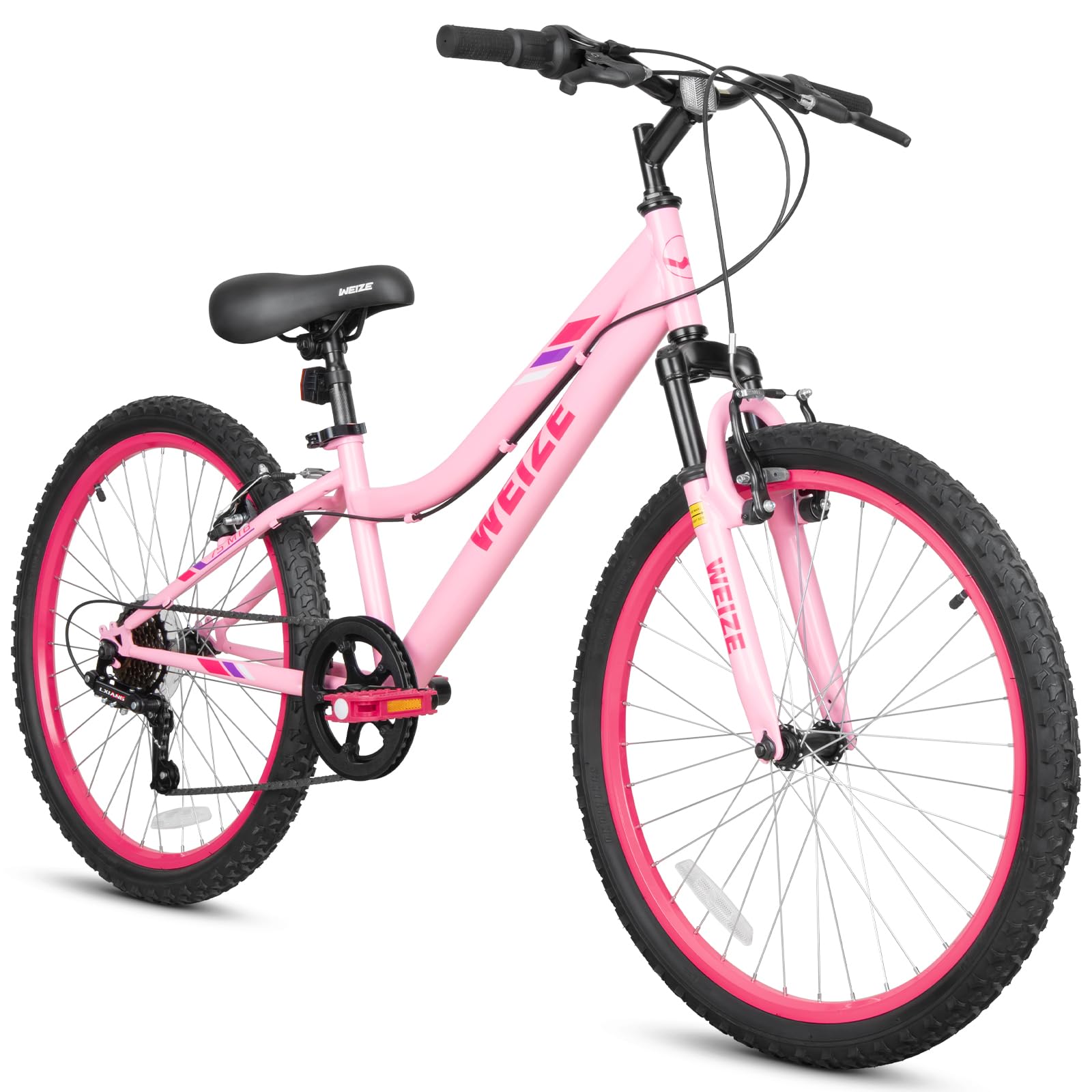
The WEIZE 24-inch mountain bike stands out among budget options for its solid carbon steel frame and front suspension, with assembly that takes under 30 minutes. Unlike the cheapest dual-suspension alternative in this set, which cuts corners on reliability, this bike focuses on a sturdy foundation that handles neighborhood streets and light trails without fuss.

The 7-speed drivetrain and caliper brakes operate smoothly out of the box, and the front suspension takes the edge off small bumps. That said, the bike is best kept to paved paths, packed dirt, and gentle gravel — aggressive off-road riding or repeated hard landings can expose the limit of the fork and brake cable durability.

This bike suits girls roughly 8 to 14 years old who are under 5’5’ and plan to ride around the neighborhood or on easy trails. Taller children near the top of that height range may find the cockpit cramped, so a test sit is worth it. Parents looking for a no-hassle build and a machine that feels more substantial than its price suggests will appreciate the straightforward package.

Check brake cable tension and fork smoothness after the first few rides — minor adjustments are normal.

Bottom line: For parents who want a no-surprises, easy-to-assemble bike for a young rider staying on smoother surfaces, the WEIZE delivers solid value where it counts: a frame that feels built to last.

2

Mongoose Argus Fat

Mongoose Argus Fat

Sand and snow

Our Score 8.8/10
Check Price

Worth Noting

  • Seat is firm and can become uncomfortable on longer rides
  • Gears may need adjustment after assembly; shifting can be rough until tuned.
Brakes
Disc
Speeds
16
Terrain
Sand, snow, gravel
Suspension
Rigid
Read the full review

The Mongoose Argus Trail stands out as the only 24-inch fat-tire option that floats over sand, gravel, and light snow with surprising stability. Its 4-inch tires deliver cushion and traction that compensate for the lack of front suspension on loose surfaces. On rocky singletrack, however, the rigid frame passes every bump straight through, which limits it to smoother, softer terrain.

This bike targets children or smaller adults whose riding involves beach paths, snowy commutes, or gravel trails rather than technical descents. The stock seat is firm enough that many replace it for longer outings, and the derailleur can need a tune-up after assembly. For its intended use — soft ground and low-impact riding — it provides a smooth, memorable experience that no conventional 24-inch hardtail can replicate.

Assembly is straightforward, and the build quality suits the price point of a specialized fat-tire machine. Riders who value appearance will appreciate its rugged, muscular look, which draws attention on any path. If your priorities lean toward floatation on unstable surfaces rather than technical handling, the Argus delivers a unique ride.

A softer saddle and a derailleur adjustment will improve comfort and shifting right out of the box.

Bottom line: If your riding consists of beach cruises, snowy commutes, or gravel paths, this fat-tire bike offers a unique capability that no other 24-inch model provides — just budget for a new seat and a quick derailleur tune.

3

Mongoose Flatrock

Mongoose Flatrock

Casual trail riding

Our Score 8.0/10
Check Price

Worth Noting

  • Spokes and chain may loosen after a few rides, requiring a tune-up for smooth operation.
  • Gears can need professional adjustment out of the box; first few gears may not engage properly until tuned.
Brakes
V-Brake
Speeds
7
Terrain
Casual trails
Suspension
Front
Read the full review

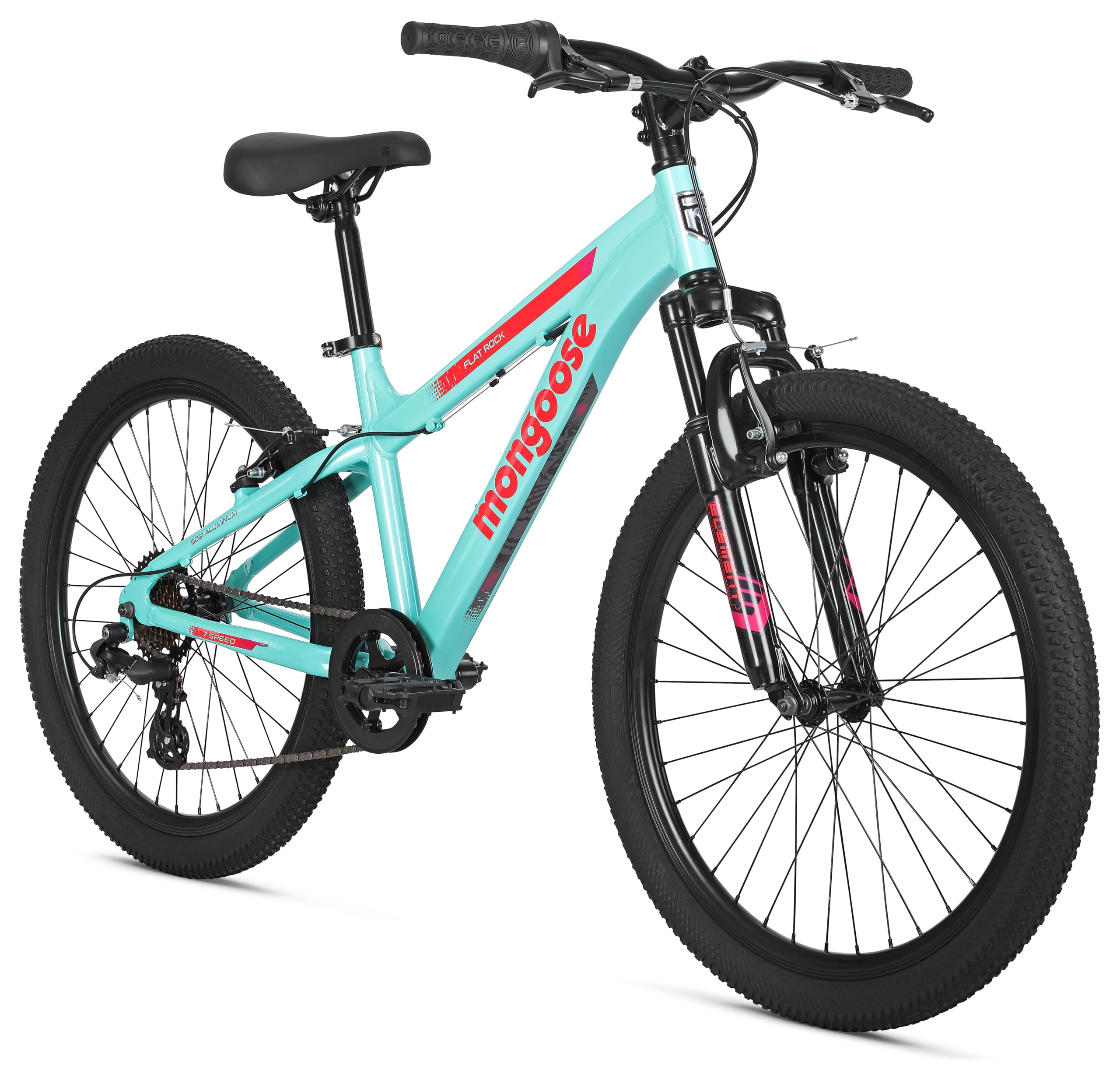
The Mongoose Flatrock combines an aluminum frame and front suspension at a price that sits between budget and premium options, giving young riders a genuine mountain bike feel. The 7-speed drivetrain and V-brakes are standard for this category, and the 33.2-pound weight is reasonable for a 24-inch hardtail. Parents shopping for a bike that looks the part will find several color options that appeal to kids and teens.

In some units, the spokes and chain can loosen after a few rides, and the gear indexing may need a professional adjustment out of the box. These are not safety hazards but usability considerations that affect how smoothly the bike shifts and rolls. A quick tune-up at a local shop typically resolves them, and many buyers find the bike rides well once dialed in.

Budget-conscious parents buying for neighborhood cruising or light dirt paths will appreciate the Flatrock’s conventional hardtail design. The fat-tire alternative in this category (the 4.4-star model with 515 reviews) handles soft terrain like sand and snow better but costs more and lacks suspension. The Mongoose is the better choice for traditional trail riding, provided you are comfortable spending a little extra time or money on initial setup.

The design is clean and the paint choices are popular, which helps the bike feel like a real mountain bike rather than a toy. For the price, you get an aluminum frame instead of heavier steel, and the front suspension adds comfort on bumpy paths. This combination makes the Flatrock one of the more visually and functionally complete 24-inch hardtails under $350.

A trip to a local bike shop for gear adjustment and spoke tension check within the first few rides is a worthwhile investment.

Bottom line: For parents seeking an affordable 24-inch mountain bike for neighborhood rides and easy dirt paths, the Flatrock offers a genuine hardtail experience — just plan for a post-purchase tune-up.

4

WEIZE 24" MTB

WEIZE 24" MTB

Smooth paths

Our Score 8.0/10
Check Price

Worth Noting

  • Chain and rear derailleur may need adjustment or replacement after a few weeks of regular use
  • Wheels can lose true or develop wobbles on anything rougher than smooth pavement
  • Gear shifting may be inconsistent out of the box, with the chain occasionally dropping
Brakes
V-Brake
Speeds
18
Terrain
Smooth paths
Suspension
Dual
Read the full review

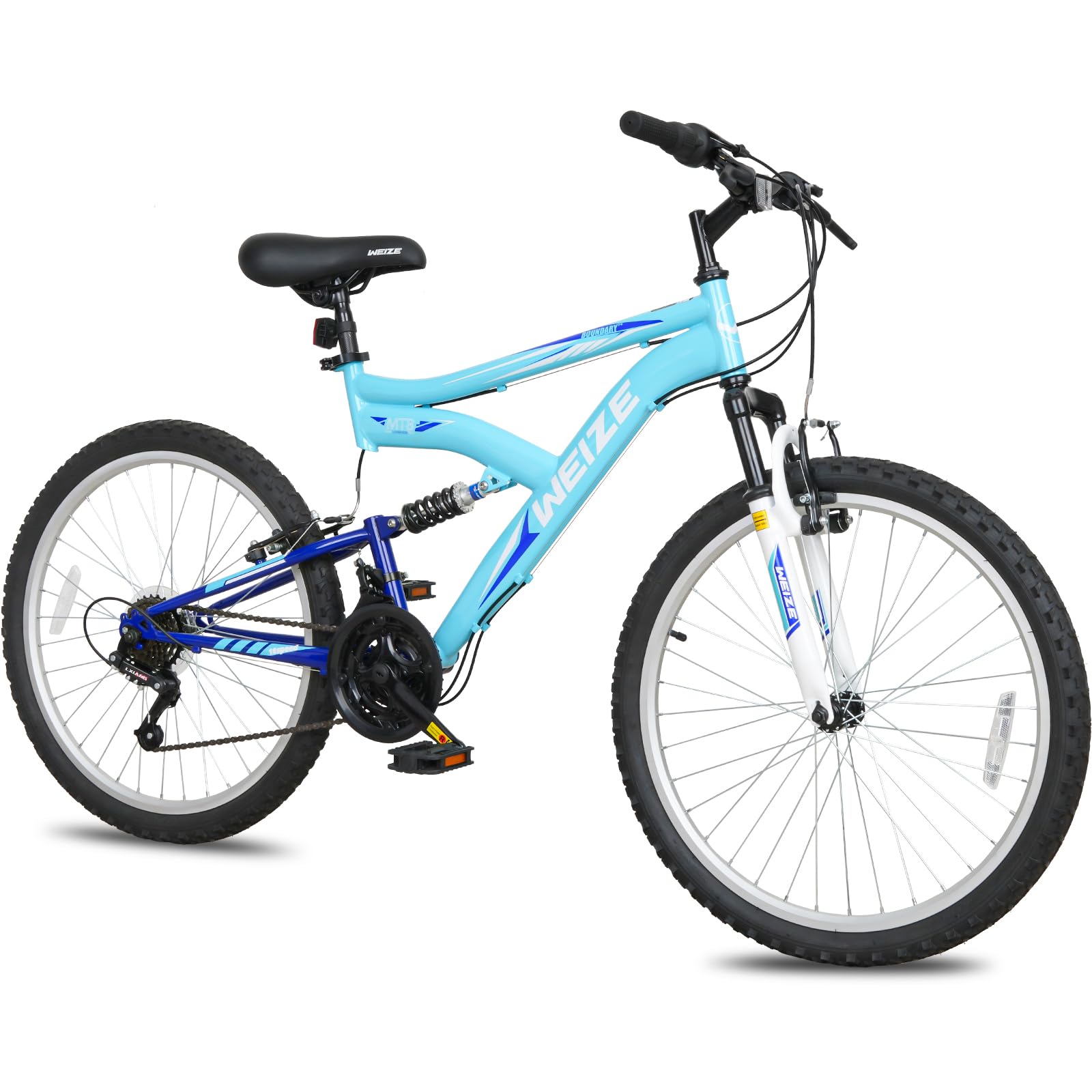
The WEIZE packs dual suspension into a 24-inch frame at a price that undercuts everything else in the category. For riders who simply want the look and feel of a full-suspension bike without spending much, this is the most budget-friendly way to get it.

This bike fits a very specific buyer: someone on a tight budget who needs a second bike for paved paths or smooth gravel, and who is handy enough to tune components. The frame and parts carry a known vulnerability — chain, derailleur, and wheels can require attention within weeks of regular riding. It is not intended for daily commutes or any off-road trail work.

Assembly is relatively quick, and the overall build quality feels acceptable given the price point. The suspension absorbs small bumps on well-maintained paths, making short neighborhood rides comfortable. But the tradeoff for that low price is a higher chance of mechanical quirks that a more mechanically confident owner can manage.

Check and adjust the derailleur and chain tension before the first ride — a few minutes with a tool can prevent early headaches.

Bottom line: If the bike will only see paved paths a few times a month and you're comfortable with occasional tuning, the WEIZE offers the lowest cost of entry for a dual-suspension ride.

How to Choose

Brake Type

Disc brakes provide more consistent stopping power in wet or muddy conditions compared to V-brakes. They also require less hand strength for a child to modulate. However, disc brakes add weight and cost. On budget bikes, they are often mechanical (cable-actuated) rather than hydraulic, which still need occasional cable adjustment. For a young rider who sticks to dry pavement or packed dirt, V-brakes are perfectly adequate and easier to maintain at home.

Number of Speeds

More gears don't always mean better. A 21-speed drivetrain on a cheap bike often means lower-quality components that are prone to misalignment and chain drops. A 7-speed system with a simpler rear derailleur is more forgiving for a child learning to shift. The trade-off is less range for steep climbs, but on a 24-inch bike used for neighborhood or light trails, 7 speeds are usually enough. The quality of the derailleur and shifter matters far more than the gear count.

Suspension Type

Front suspension helps absorb bumps on roots and rocks, but on budget bikes the fork is often heavy, non-adjustable, and adds little real damping. Dual suspension at the same price point compounds the problem: the rear shock is typically a cheap coil that bobs when pedaling and adds 2–3 pounds of dead weight. For serious off-road riding, a decent front suspension fork is worth the upgrade. For smooth paths or occasional gravel, a rigid fork is lighter and more reliable.

The fat-tire niche avoids this trade-off by using large, low-pressure tires for traction and comfort instead of suspension. That works well on sand and snow but limits technical trail capability.

Frame Material

Aluminum frames shave 1–2 pounds off the bike weight and resist rust, making them preferable for a child who may leave the bike in the rain. Steel frames (carbon steel or high-carbon steel) are heavier but can be more durable under abuse and are cheaper to repair if bent. The weight penalty matters most if the child has to lift or carry the bike over obstacles. For growth-spurt riders, a lighter aluminum bike reduces fatigue on longer rides.

Intended Terrain

The bike's capabilities should match where it will be ridden most often. A bike with smooth, narrow tires and V-brakes is fine for paved paths and hardpack dirt but will struggle on loose sand or wet roots. Fat-tire bikes float on soft surfaces but are slow on pavement. If the child wants to tackle steep, rocky singletrack, a hardtail with disc brakes and a quality front fork is the minimum. For family bikepath cruising, a simpler bike with lower maintenance is a better fit.

Frequently Asked Questions