Bikes

4 Best Mountain Bike 2026: Reliable Picks Without Hidden Repairs

Avoid costly repairs: find a mountain bike that actually lasts on the trail. For adult riders seeking dependable performance without breaking the bank.

Many mountain bikes under $700 arrive with weak chains, misaligned derailleurs, and seats that cause pain within minutes. This pattern is most common on fat tire and entry-level full suspension models.

The true cost of a budget bike includes the time and money spent replacing broken parts and adjusting components out of the box. A seat upgrade helps, but some bikes require fundamental repairs within the first year.

This guide highlights models that minimize those surprises. By focusing on the specs that matter — suspension type, wheel size, drivetrain — you can find a bike that fits your trails and your budget without hidden expenses.

1

AVASTA AV300

Top Pick
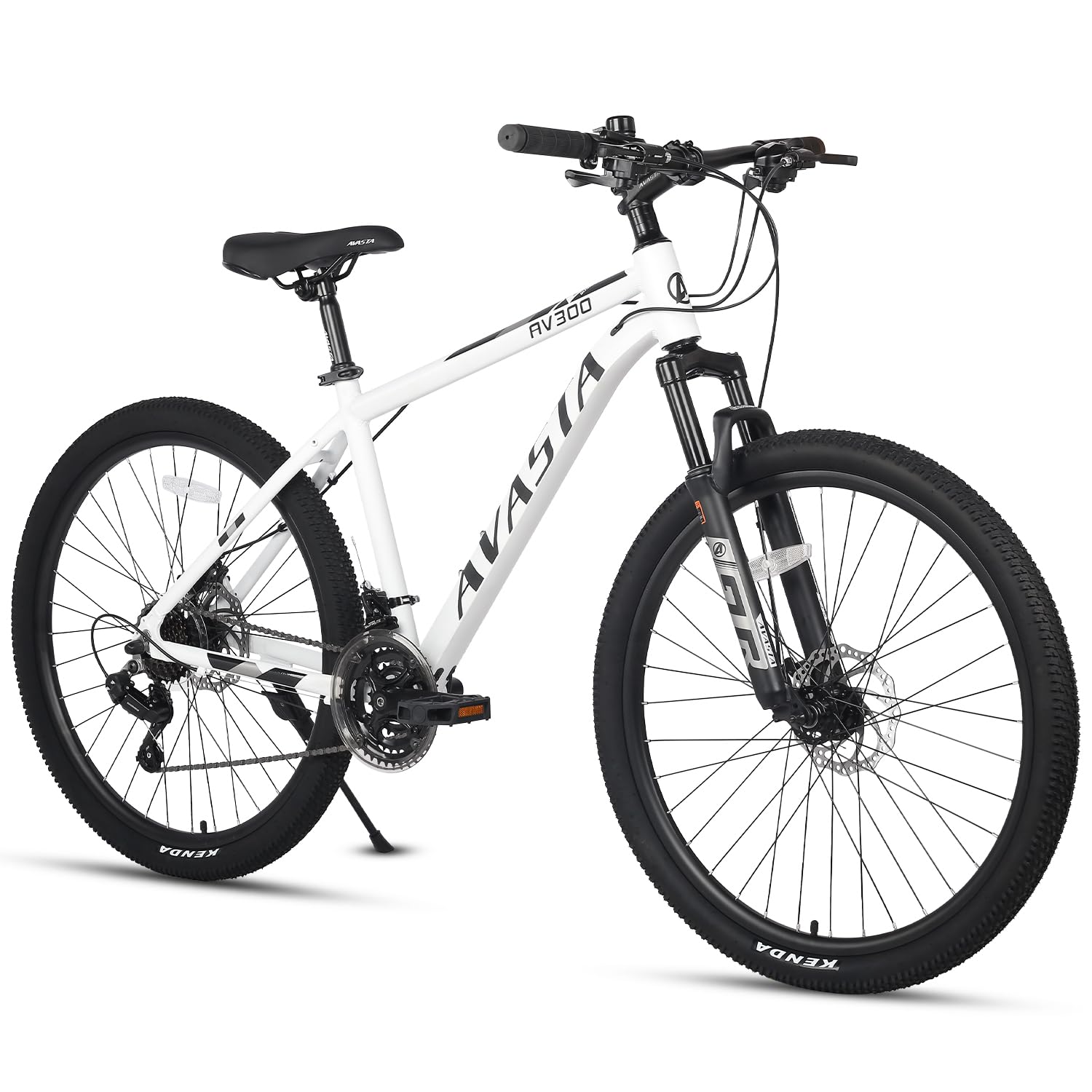
AVASTA AV300

Budget trail riding

Our Score 8.8/10
Check Price

Worth Noting

  • Plastic chain guard may arrive cracked from shipping
  • Front hub bearings can develop play over time on rough terrain
Brakes
Mechanical Disc
Speeds
21
Suspension
Front
Wheel Size
26 in
Read the full review

The AVASTA AV300 skips the heavy steel frames and questionable components common at this price point. Instead, it brings a lightweight aluminum alloy frame, mechanical disc brakes that grab consistently, and a 21-speed drivetrain with trigger shifters. That combination alone sets it apart from budget bikes that often arrive with twist shifters or weak rim brakes.

Out of the box, the bike rolls smoothly on paved paths and packed dirt trails. The front suspension absorbs small bumps and gravel without feeling overly bouncy, and the half-hidden brake cable routing gives the frame a cleaner look than most competitors. Assembly requires attaching the front wheel, handlebar, pedals, and seat; most buyers will have it ready to ride in under 45 minutes.

This bike suits riders who want a capable hardtail for recreational trail riding, commuting, or weekend greenway loops without spending more than necessary. It handles gentle climbs and moderate descents well, but it is not designed for aggressive downhill runs or full-suspension terrain. The 26-inch wheels (on the reviewed variant) offer nimble handling for smaller to average-height riders, though taller riders may prefer the 27.5-inch option.

Build quality is a standout for the price: the welds are clean, the drivetrain shifts positively, and the disc brakes require only a minor cable adjustment after the first ride. Some units have arrived with a cracked plastic chain guard, and a small number of owners have noted front hub bearing wear after several months of use. These issues are not widespread, but they are worth checking during assembly and periodically thereafter.

Inspect the plastic chain guard upon arrival and check front hub tightness after the first 50 miles of trail riding.

Bottom line: For anyone seeking a dependable, lightweight hardtail that actually works without hidden assembly headaches, the AV300 delivers where most budget bikes cut corners.

2

Mongoose Malus Fat Tire

Mongoose Malus Fat Tire

Casual fat tire

Our Score 8.8/10
Check Price

Worth Noting

  • At 35 pounds the bike is heavier than standard mountain bikes, making lifting and carrying more effort
  • Chain and derailleur components can wear or misalign under heavier use, requiring more frequent adjustments
Brakes
Mechanical Disc
Speeds
7
Suspension
Rigid
Wheel Size
26 in
Read the full review

The Mongoose Malus is the most popular fat tire mountain bike in its price range, backed by thousands of reviews and a strong 4.4-star rating. It delivers a stable, fun ride on loose terrain like sand and snow, and the steel frame supports heavier riders without flexing. Where it differs from the top pick’s reliable out-of-box experience is in its durability expectations: the chain and derailleur can require attention sooner than expected, making this a better fit for casual use than aggressive trail riding.

This bike suits bigger riders or anyone wanting an affordable fat tire for flat beach paths, winter snow, or easy neighborhood cruising. The 4-inch wide knobby tires provide excellent floatation, and the 7-speed drivetrain offers enough range for gentle hills. That said, chain snapping and derailleur misalignment have been noted after limited use — not an issue for light weekend rides, but worth considering if you plan to push the bike regularly on rough terrain.

The extra weight is worth noting if you need to lift the bike onto a rack or up stairs; rolling it on its tires is easier than carrying.

Bottom line: If your riding stays on flat sand, snow, or paved paths, the Malus offers a lot of fun per dollar — just plan for occasional mechanical attention.

3

Schwinn Traxion Full Suspension

Schwinn Traxion Full Suspension

Full suspension beginners

Our Score 8.6/10
Check Price

Worth Noting

  • Front fork may be installed backwards and derailleur hanger can arrive bent
  • Chain and bearing durability can be limited, with some units experiencing breakage after light use
Brakes
Mechanical Disc
Speeds
24
Suspension
Full (Dual)
Wheel Size
29 in
Read the full review

The Schwinn Traxion offers 29-inch wheels and a 24-speed Shimano drivetrain at a price that undercuts most full-suspension options. The aluminum frame keeps weight manageable, and the mechanical disc brakes provide stopping power suitable for casual trail riding.

This bike suits beginners looking to try full suspension without a big investment, provided they are comfortable checking and adjusting components upon arrival. Some units arrive with the front fork reversed, bent derailleur hangers, or chains that break after limited use — items that can be caught and corrected before the first ride. Riders who want a ready-to-roll experience are better served by the top pick in this segment.

Check that the front fork is oriented correctly and the derailleur hanger is straight before the first ride — catching these on arrival prevents most problems.

Bottom line: A tempting entry point into full-suspension riding for budget-conscious beginners, but only worth it if you're prepared to inspect and adjust the bike as soon as it arrives.

4

Mongoose Salvo Comp

Mongoose Salvo Comp

Intermediate trail

Our Score 8.6/10
Check Price

Worth Noting

  • Derailleur hanger may arrive bent; chain failures possible out of box
Brakes
Hydraulic Disc
Speeds
12
Suspension
Full (Dual)
Wheel Size
29 in
Read the full review

The Salvo’s 12-speed SRAM drivetrain and hydraulic disc brakes put it a step above the top pick’s component level. The full suspension frame with 29-inch wheels provides a smooth, controlled ride on climbs and descents, making it a serious option for trail riding at a mid-range price.

This bike fits intermediate riders who want strong components and full suspension and are willing to handle setup. However, several units arrive with bent derailleur hangers or chain breaks, so inspection and potential returns should be expected — the performance is there, but the out-of-box experience can be uneven.

Inspect the derailleur hanger and drivetrain upon delivery; returning a damaged unit is straightforward.

Bottom line: For riders who value component quality over out-of-box perfection, the Salvo’s performance on the trail rewards the extra setup effort.

How to Choose

Suspension Type

Rigid frames offer no shock absorption, making them best for smooth surfaces like pavement or packed sand. Front suspension (hardtail) handles moderate roots and rocks but adds weight and requires maintenance.

Full suspension adds rear shock for aggressive trails but at this price range often uses cheap linkage that saps pedaling efficiency and needs frequent servicing. For most beginners, a quality hardtail outperforms a poorly built full-suspension bike on all but the roughest terrain.

Wheel Size

26-inch wheels are nimble and accelerate quickly, ideal for tight trails and smaller riders. 29-inch wheels roll over obstacles more easily and maintain momentum, but feel sluggish in sharp turns and require a taller frame.

Fat tire (4-inch) bikes float on sand and snow but weigh significantly more. On packed trails, the extra drag makes climbing a chore. Choose wheel size based on your primary surface: 29 for mixed trails, 26 for agility, fat for soft terrain.

Number of Speeds

A 7-speed drivetrain is simple and cheaper but offers limited gear range, making steep climbs difficult. 21- or 24-speed setups provide more steps to find the right cadence, but the added complexity increases the chance of derailleur misalignment.

Budget bikes with many speeds often use lower-quality shifters that skip or stick. For casual riding, 7 or 21 speeds are fine. For hilly trails, prioritize a wide range over total gear count, and expect to adjust the derailleur after the first few rides.

Brake Type

Disc brakes (mechanical or hydraulic) provide consistent stopping power in wet and muddy conditions, unlike rim brakes that lose grip on wet rims. Mechanical disc brakes are common at this price and work well when adjusted, but cable stretch requires periodic tightening.

Hydraulic disc brakes offer superior modulation and self-adjustment, but are rare below $600 and can be expensive to repair if damaged. For recreational trail riding, mechanical discs are sufficient; avoid linear pull brakes entirely on any off-road bike.

Frame Material

Aluminum frames are lighter and resist rust, making them the preferred choice for most riders under $1000. Steel frames are heavier but more durable and absorb vibration better, though they rust if the paint chips.

High-carbon steel is the cheapest option but adds pounds and often indicates other cost-cutting measures. An aluminum frame at the same price usually signals better overall component quality. Check the weight: anything over 40 lbs will feel sluggish on climbs.

Frequently Asked Questions