Bikes

5 Best 26 Inch Bike for Teens of 2026: Safe, Lightweight Picks with Disc Brakes

Which 26-inch bikes for teens offer real durability and safety? Find the right balance of features, price, and reliability for your teenager.

Finding a 26-inch bike for a teenager often means wading through options that look great on paper but cut corners where it counts. Wheels that arrive bent, chains that drop off mid-ride, and brakes that need constant adjustment are frustratingly common in this price range.

The good news is that a few models genuinely deliver on component quality without demanding a premium. The sweet spot sits in the $200-$260 range, where aluminum frames, disc brakes, and 21-speed drivetrains become available. These features translate to a bike that weighs less, stops consistently in wet conditions, and handles hills without skipping gears.

This guide focuses on the bikes that avoid the safety and durability pitfalls that plague many budget options. The picks below are the ones most likely to survive a teenage riding schedule without becoming a project bike.

1

cubsala Trident

Top Pick
cubsala Trident

BMX tricks

Our Score 9.2/10
Check Price

Worth Noting

  • Rear V-brake can be finicky to adjust, with possible rubbing or reduced stopping power.
  • Single-speed drivetrain limits use on hills and for longer rides.
Frame
Carbon Steel
Brakes
V-brake rear
Speeds
1
Suspension
Rigid
Read the full review

The cubsala Trident stands apart from entry-level BMX bikes with a steel frame that feels noticeably more substantial than the lightweight, safety-compromised budget alternatives. Assembly is quick, with most of the bike coming pre-built, so you can spend more time riding than wrenching.

This bike is for teens who want a no-gear BMX for skateparks, tricks, and neighborhood cruising. The rear V-brake can be fussy to get dialed in — occasional adjustment may be needed to avoid rubbing. And the lack of gears means hills will demand leg power and patience. If your riding involves commuting or off-road trails, this isn't the right choice; those tasks call for a multi-speed bike with better brakes.

The clean paint and welded joints give the Trident a polished look that matches its price point, making it a visually appealing option for riders who care about style.

Adjust the rear brake cable tension after the first few rides to prevent rubbing as the pads wear in.

Bottom line: For teens who want a dedicated BMX for tricks and flatland cruising, the Trident delivers where it matters — just plan to take it easy on hills and keep an eye on that rear brake.
2

AVASTA AV300

AVASTA AV300

Trails & Commuting

Our Score 8.8/10
Check Price

Worth Noting

  • Cosmetic damage like a broken chain guard can occur during shipping.
  • Bearing wear may show up over time, especially with frequent off-road use.
Frame
Aluminum Alloy
Brakes
Disc
Speeds
21
Suspension
Front
Read the full review

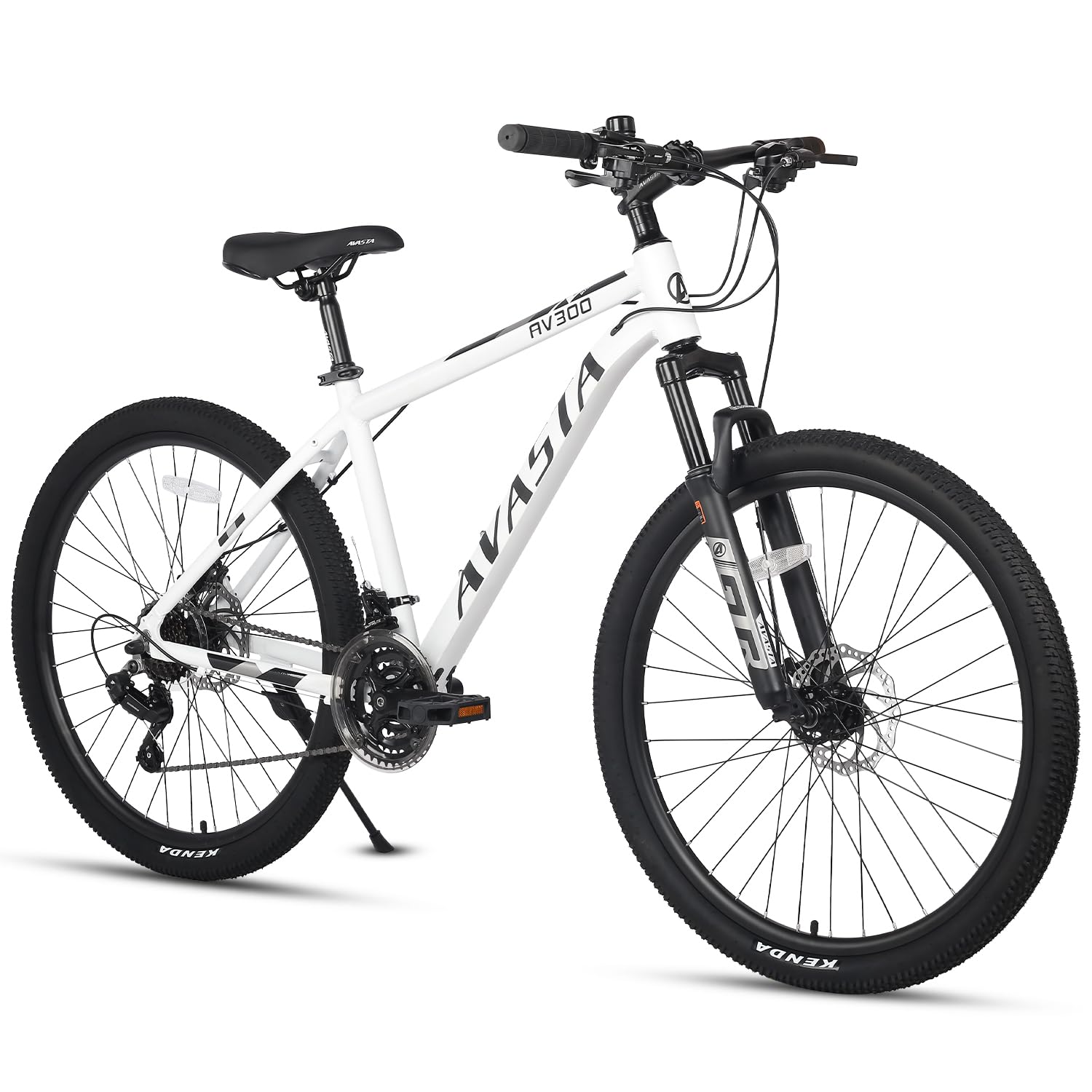
The AVASTA AV300 pairs an aluminum frame with disc brakes and a 21-speed drivetrain — a combination rarely found at this price point. The lightweight frame makes the bike manageable for teenagers on both paved commutes and light trails, while the disc brakes provide consistent stopping power in damp conditions. Front suspension smooths out gravel paths and packed dirt without adding unnecessary weight.

Assembly takes about an hour with the included tools and straightforward instructions. The shifting and braking arrive properly adjusted — gear changes are crisp, and the brakes engage immediately. Some units have arrived with a broken chain guard from shipping, but this cosmetic issue does not affect the bike's functionality and can be resolved through customer support.

This bike suits teens looking for a capable everyday ride for recreational use, commuting, or easy off-road exploring. The front suspension handles packed dirt and gravel without complaint, but riders wanting heavy-duty dual suspension for aggressive descents will find the travel too limited. Bearing wear may develop over time with frequent off-road use, something to monitor during routine maintenance.

Compared to budget models that cut corners on frame material and brakes, the AV300 avoids the safety concerns that plague lower-priced options. The aluminum frame and disc brakes are a genuine step up in durability and control, making this a worthwhile investment for a teenager's primary bike.

Inspect the box for shipping damage upon arrival — a broken chain guard is cosmetic and does not affect riding, but warranty support can replace it.

Bottom line: For a teen needing a lightweight, disc-brake-equipped 26-inch bike for everyday riding and light trails, the AV300 offers the best balance of specs and initial reliability without the safety hazards of cheaper alternatives.

3

Ecarpat Women MTB

Ecarpat Women MTB

Style & step-through

Our Score 8.6/10
Check Price

Worth Noting

  • Assembly can be challenging and may require professional help, increasing overall cost
  • Not built for off-road trails or heavy use due to steel frame and V-brakes
Frame
High Carbon Steel
Brakes
V-brake
Speeds
21
Suspension
Front
Read the full review

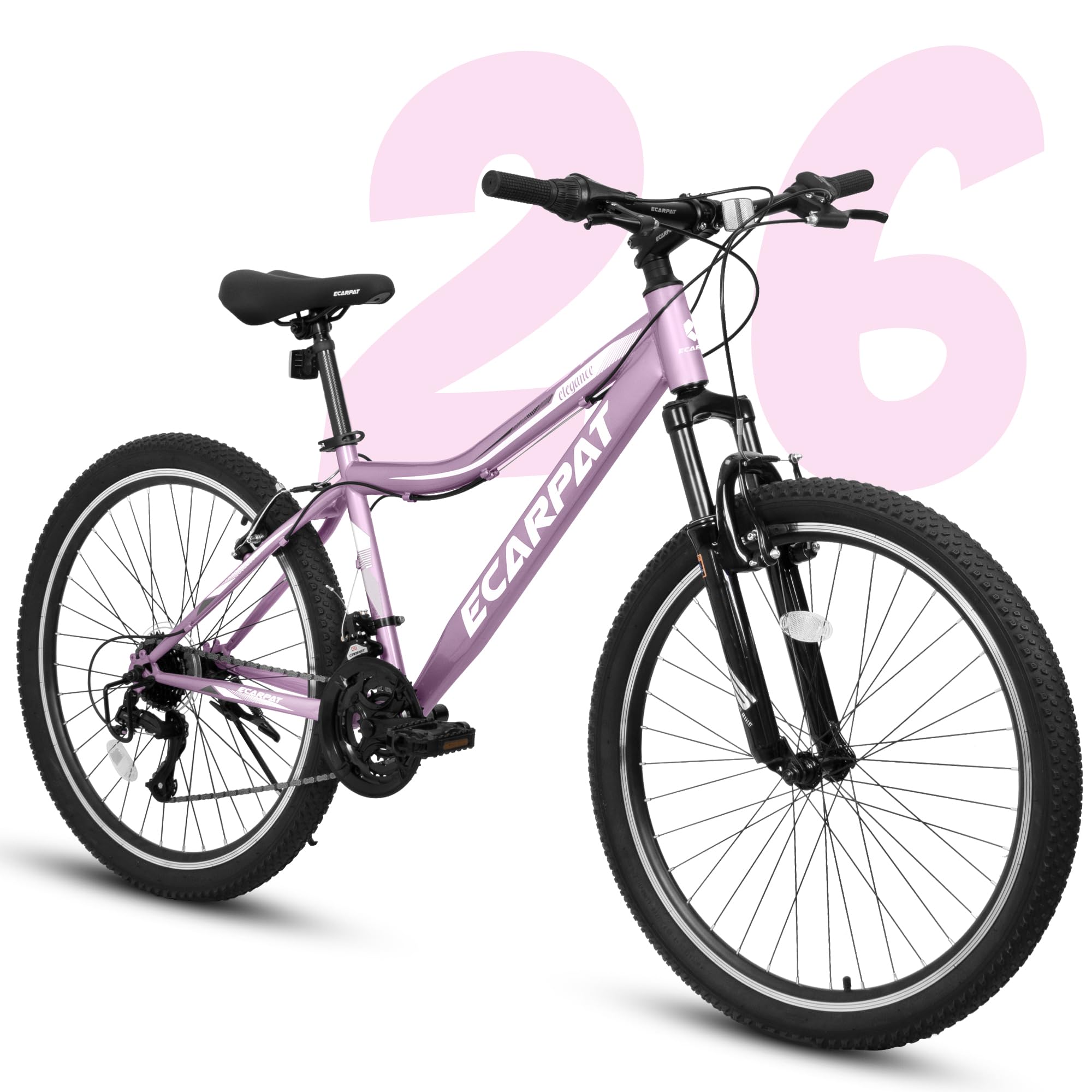
The Ecarpat 26-inch mountain bike stands out with its step-through frame and attractive color options, making it a visually appealing choice for teen girls who want a bike that’s easy to mount. Its 21-speed drivetrain provides a useful gear range for varied paved terrain, while the front suspension absorbs minor bumps on smooth paths. Unlike the aluminum-frame disc-brake options in this category, this bike uses high-carbon steel and V-brakes, which keeps the price accessible but limits its suitability for anything beyond light recreational riding.

This bike is best suited for teen girls who prioritize looks and convenience over trail capability. The lowered step‑through eliminates the need to swing a leg over a high top tube, and the bike handles commuting, neighborhood rides, and paved park paths without issue. However, long-term durability is unconfirmed, and this model is not intended for off-road trails or heavy use — stick to smooth surfaces for consistent performance.

Assembly can be a hurdle: the included instructions may require a bike shop’s help, adding to the total cost. The V-brakes offer adequate stopping power for casual paced riding but lack the modulation of disc brakes. Overall, the bike delivers on its design promise but asks buyers to accept some practical compromises.

Check if local shops offer assembly service — the manual can be frustrating to follow for first-time builders.

Bottom line: A solid choice for teen girls who want an easy-to-mount bike for neighborhood rides, as long as they stick to paved paths and factor in possible assembly costs.

4

WEIZE MTB

WEIZE MTB

Budget dual-suspension

Our Score 8.0/10
Check Price

Worth Noting

  • Not intended for daily commuting or moderate off-road trails
  • Component quality reflects the budget price
Frame
High Carbon Steel
Brakes
Linear Pull
Speeds
18
Suspension
Dual
Read the full review

The WEIZE 26-inch mountain bike is the most affordable dual-suspension option in this roundup, and it comes mostly assembled out of the box. While the top pick (AVASTA AV300) offers an aluminum frame and disc brakes for better durability, the WEIZE delivers a softer ride on paved paths at a lower price point.

This bike is best suited for teens looking for casual comfort on neighborhood streets and paved trails, without a daily commuting load. The dual suspension smooths out minor bumps, but the wheel rims and drivetrain components are known to require attention – bent rims and chain skipping have been reported, so it's best for occasional, light use rather than regular rides.

Assembly takes under an hour with the included tools, and the 18-speed Shimano derailleurs offer enough range for gentle hills. The 18-speed drivetrain handles gentle inclines without complaint, making it suitable for rolling suburban terrain. For the price, you get a functional bike that delivers on the basics, provided you keep expectations around component longevity in check.

Check wheel trueness and chain tension every few weeks to catch any looseness early.

Bottom line: For a teenager wanting dual-suspension comfort on occasional paved rides without breaking the bank, the WEIZE delivers – as long as you're comfortable with periodic maintenance and accepting it's not a daily rider.

5

Mongoose Flatrock

Mongoose Flatrock

Casual trails

Our Score 8.0/10
Check Price

Worth Noting

  • Gears may arrive out of adjustment and require careful tuning
  • Wheel durability can be inconsistent
Frame
Aluminum
Brakes
V-brake
Speeds
7
Suspension
Front
Read the full review

The Mongoose Flatrock brings a name-brand aluminum frame to the sub-$350 price bracket, with a clean look and front suspension that suit gentle off-road rides. Its 7-speed drivetrain and V-brakes keep costs down, though they fall short of the 21-speed disc-brake setup found on the Avasta AV300 top pick.

Long-term durability is the main caveat — wheels may develop bent rims or broken spokes after limited use, and chains have been known to come off. The bike arrives with gears that often need adjustment out of the box, and tuning them can be fussy. This makes the Flatrock better suited for teens who want a starter mountain bike for occasional trail riding and are comfortable with basic maintenance, rather than a daily commuter or a set-it-and-forget-it purchase.

After assembly, a quick derailleur adjustment at a local shop can improve shifting and reduce chain drop risk.

Bottom line: The Flatrock works as a budget-friendly first mountain bike for light trail use if you're willing to handle the occasional mechanical tweak — the Avasta AV300 delivers more reliable performance for a similar outlay.

How to Choose

Number of Speeds

More gears give your teen the ability to tackle hills and vary their pace without overexertion. A 7-speed drivetrain is the practical minimum for any commuting or off-road use. Single-speed BMX bikes are fine for flat neighborhoods and skateparks but become a chore on inclines.

At the budget end, 18- and 21-speed setups often use lower-quality derailleurs that require frequent tuning. Pay extra for a model with indexed shifting and a name-brand drivetrain if longevity matters.

Brake Type

Disc brakes provide consistent stopping power in wet, muddy, or dusty conditions, while V-brakes can lose grip when the rims are wet or dirty. The trade-off is that cheap disc brakes on very low-cost bikes sometimes suffer from poor alignment or cable stretch.

For a teenager who rides year-round or on trails, disc brakes are worth the price jump. V-brakes are adequate for dry paved paths and are easier to maintain if you plan to do home adjustments.

Suspension Type

Front suspension (a fork with travel) is enough to smooth out roots and gravel on light trails. Dual suspension adds weight and complexity; at budget price points, the rear shock is often more cosmetic than functional, adding pivots that can develop play.

A rigid fork (no suspension) is lighter and requires no maintenance, but it transfers every bump to the rider's arms. For purely paved riding, a rigid or front-suspension bike is the most efficient choice.

Frame Material

Aluminum frames are lighter, resistant to rust, and feel more responsive when climbing or accelerating. Steel frames are heavier but absorb road vibration better and are cheaper to repair if dented.

For a teen who will carry the bike up stairs or into a trunk, aluminum's weight savings matter more than the slight cost premium. High-tensile steel is common on budget models and is perfectly durable for occasional use.

Assembly Difficulty

Most bikes in this range arrive partially assembled, requiring the buyer to install the front wheel, handlebars, pedals, and seat. The process takes 1-2 hours if you are comfortable with basic tools and have a good video guide.

However, many safety-critical failures reported online — loose brakes, misaligned wheels, untuned gears — stem from improper home assembly. Budgeting $50-$100 for a professional bike shop tune-up before the first ride can prevent the majority of early problems.

Frequently Asked Questions