Tires & Tubes

11 Best 26 Inch Mountain Bike Tire of 2026: Traction That Lasts

Find the best 26-inch mountain bike tire for your trail riding style, from budget knobbies to premium tubeless options.

As the industry shifts to larger wheel sizes, finding quality 26-inch MTB tires requires knowing where to look. The best options still come from legacy brands that haven't abandoned this size, but the trade-off between grip and rolling speed is sharper than ever.

The most common mistake is overlooking how tread pattern and casing construction actually affect performance on the trails you ride. A tire with deep, aggressive knobs will hook up on loose descents but drag on climbs, while a faster-rolling tire may leave you sliding in corners.

This guide cuts through the confusion by focusing on the specs that matter: tread shape, width, casing strength, and compound. Whether you need a budget replacement for weekend rides or a premium tire for aggressive enduro, the right choice depends on matching those specs to your terrain and riding style.

1

Maxxis Minion DHR II

Top Pick
Maxxis Minion DHR II

aggressive trail

Our Score 9.6/10
Check Price

Worth Noting

  • Premium pricing reflects the performance tier—less suitable for budget-limited builds
  • Weight is noticeable on sustained climbs compared to lighter XC-focused tires
Casing
EXO, Tubeless Ready
Tire Width
26 x 2.30
Tread Pattern
Directional, aggressive knobs
Read the full review

The Minion DHR II’s directional tread pattern locks into loose soil and hardpack with a tenacity that inspires confidence on steep descents. The EXO casing adds sidewall toughness without turning the tire into a boat anchor, holding up to repeated rock strikes and root impacts that would shred lighter casings.

Tubeless setup is simple with a floor pump—no compressor needed—and once seated, the tire holds air reliably. Braking traction is immediate and predictable, letting you brake later into corners without washing out. The dual-compound rubber balances grip on the shoulders with a firmer center tread for decent rolling speed on fireroad transfers.

This tire is built for riders who charge technical trails and want a rear-specific upgrade that brakes and corners with authority. The weight is noticeable on long climbs compared to lighter XC rubber, and the price sits at the premium end of the market—a worthwhile investment if your riding demands maximum rear-wheel control, but overkill for casual pavement spins or budget-conscious builds.

Bottom line: For aggressive trail and enduro riders on 26-inch wheels who prioritize rear-wheel braking and cornering control, this is the tire to beat—no compromises on grip or durability.

2

Kenda City Slick

Kenda City Slick

pavement commute

Our Score 9.4/10
Check Price

Worth Noting

  • Slick tread lacks traction on dirt, mud, or loose rocks
Casing
Wire bead
Tire Width
26 x 1.95
Tread Pattern
Slick with directional grooves
Read the full review

The Kenda City Slick delivers a notably quiet, low-rolling-resistance ride on pavement, making it a cost-effective option for turning a 26-inch mountain bike into a commuter or tourer. Installation is straightforward on standard rims, and the slick tread with directional grooves keeps things stable on dry asphalt. However, that same tread offers minimal grip on dirt, mud, or loose rocks — this tire is designed for paved surfaces only.

Check your tire pressure: recommended PSI range is 40-65 for best rolling efficiency on asphalt.

Bottom line: Best for pavement commuters or tourers who want to repurpose an old mountain bike — skip this if you ever ride off-road.

3

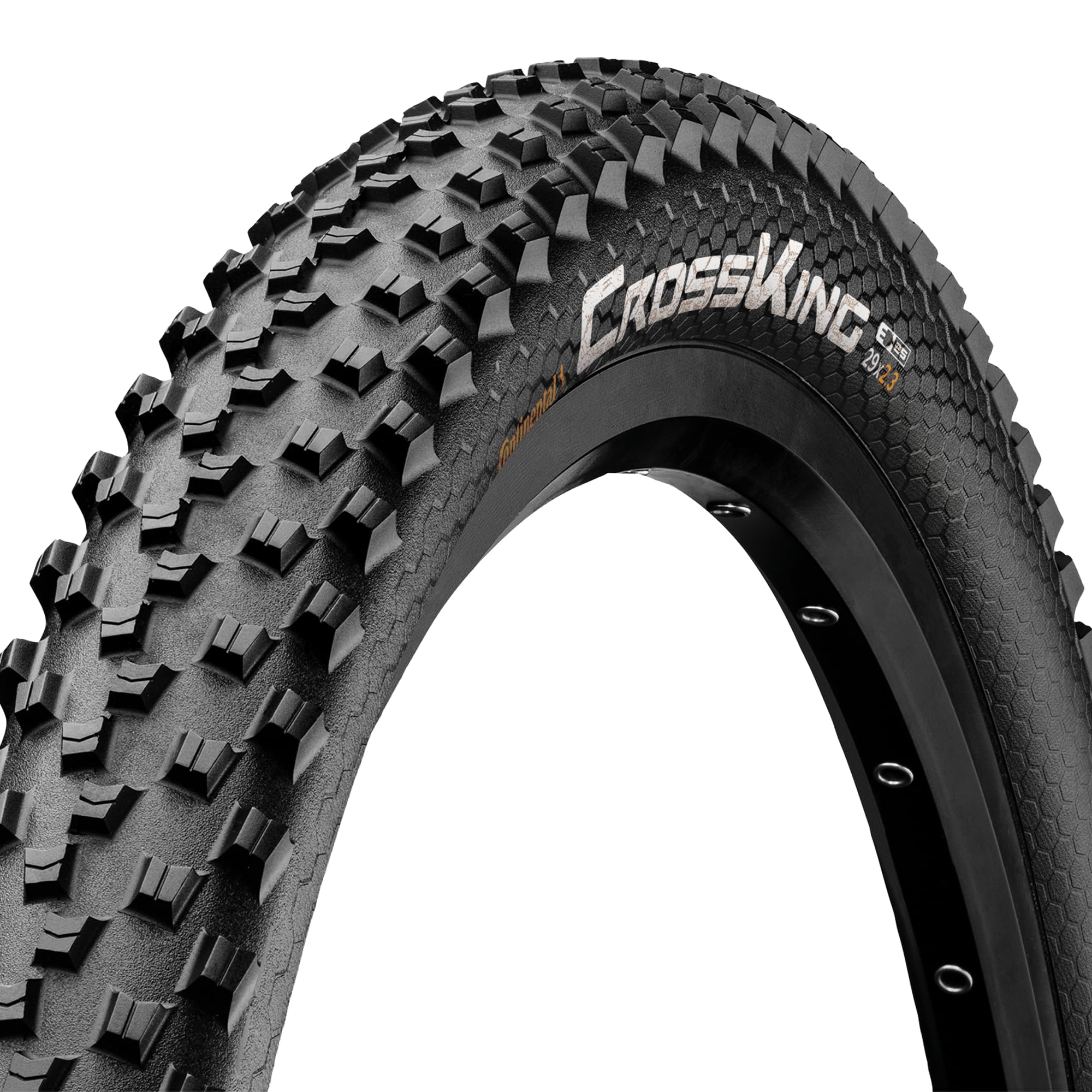
Continental Cross King

Continental Cross King

XC & trail

Our Score 9.2/10
Check Price

Worth Noting

  • Sidewall may tear when riding over sharp, rocky terrain.
  • Mounting can be very tight on some rims, sometimes requiring tools.
Casing
ShieldWall, Tubeless Ready
Tire Width
26 x 2.30
Tread Pattern
Low-profile knobs, ramped
Read the full review

The Continental Cross King uses a fast-rolling PureGrip compound that delivers low rolling resistance while maintaining solid cornering grip on hardpack and loose trails. Compared to the more aggressive trail tire in this guide, the Cross King prioritizes speed and efficiency, making it a better fit for cross-country riders who cover distance rather than technical descents. It carries an E25 rating for e-bike use. The ShieldWall casing adds some protection, but sidewall durability can be an issue on sharp rocks, and mounting may be very tight on certain rims — riders planning to ride rocky terrain should consider a tire with stronger sidewall reinforcement.

Using a tire lever and soapy water can ease mounting on tight rims.

Bottom line: The Cross King suits XC riders who prioritize rolling speed over extreme durability, and are comfortable with a tight initial mount.

4

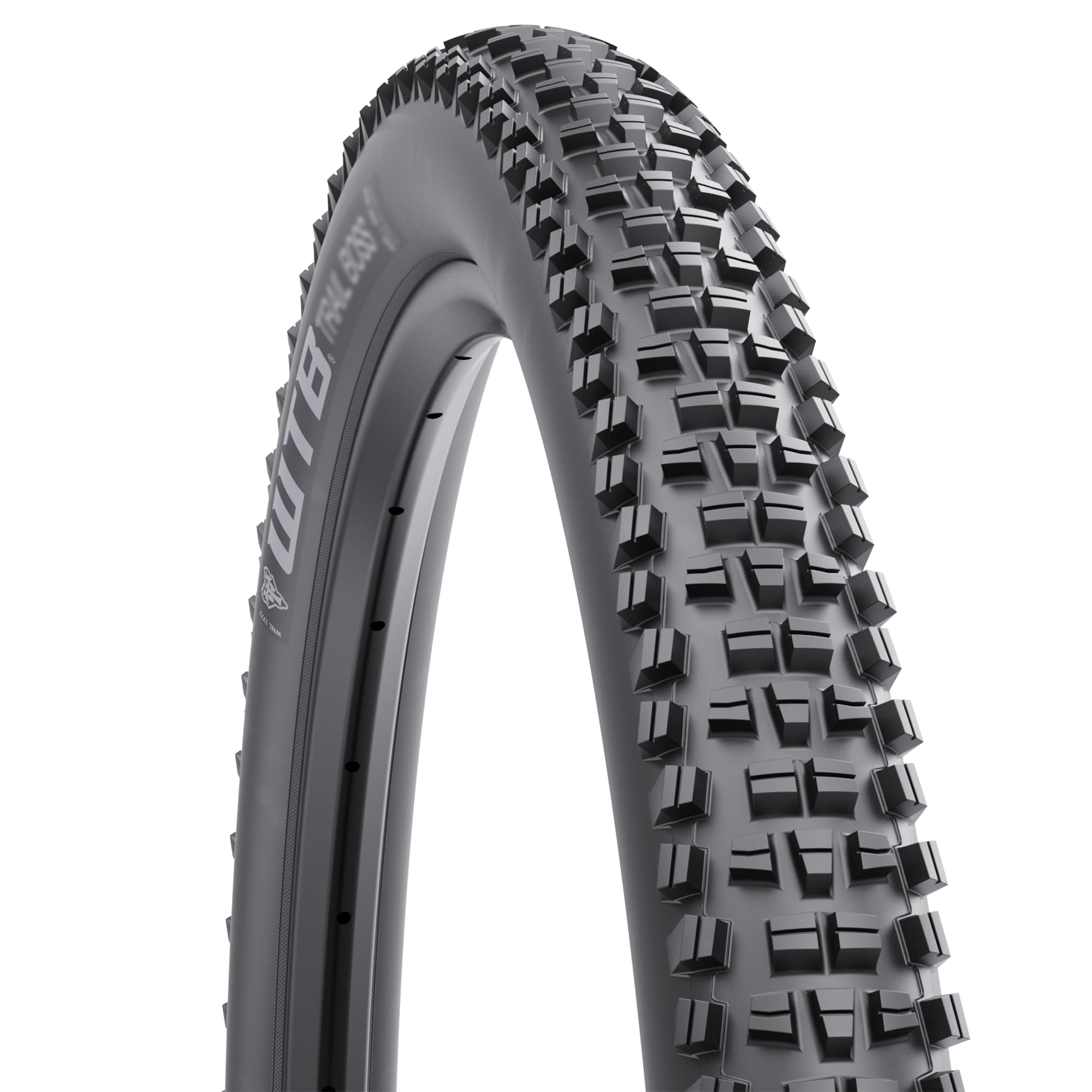
WTB Trail Boss

WTB Trail Boss

trail riders

Our Score 9.2/10
Check Price

Worth Noting

  • On sharp, rocky trails the sidewall can be cut more readily than thicker casings
Casing
30 tpi wire bead
Tire Width
26 x 2.25
Tread Pattern
Aggressive, directional siping
Read the full review

The WTB Trail Boss delivers steady cornering bite and efficient rolling on packed and loose trails, making it a capable rear tire for trail bikes. On sharp, rocky terrain, the 30tpi sidewall is more vulnerable to cuts — a tradeoff for the weight and rolling speed. It suits trail riders who want a durable tread and good grip without going into extreme rock gardens.

Running sealant can help protect against small sidewall cuts on moderate trails.

Bottom line: For trail riders looking for a balanced rear tire with good tread life and grip, this is a strong mid-range option — avoid the sharpest rock gardens for best results.

5

Schwinn All-Terrain

Schwinn All-Terrain

mixed terrain

Our Score 9.2/10
Check Price

Worth Noting

  • Tube blowouts during installation can occur with some units
Casing
Steel bead, puncture guard
Tire Width
26 x 1.95
Tread Pattern
Wide blocky knobs
Read the full review

Blocky knobs and a puncture guard let this tire handle mixed surfaces from pavement to loose trail without giving up traction. The thick tread resists thorns and wears slowly, making it a long-lasting choice for casual riders. Tube blowouts during installation have been noted in some cases, so careful mounting is advised. This tire suits budget-minded riders who want a durable all-terrain option and are willing to manage the mounting process.

Slowly inflate the tire within 40-65 PSI and check bead seating to reduce blowout risk.

Bottom line: A solid all-terrain budget tire for mixed surfaces — just take care during installation.

6

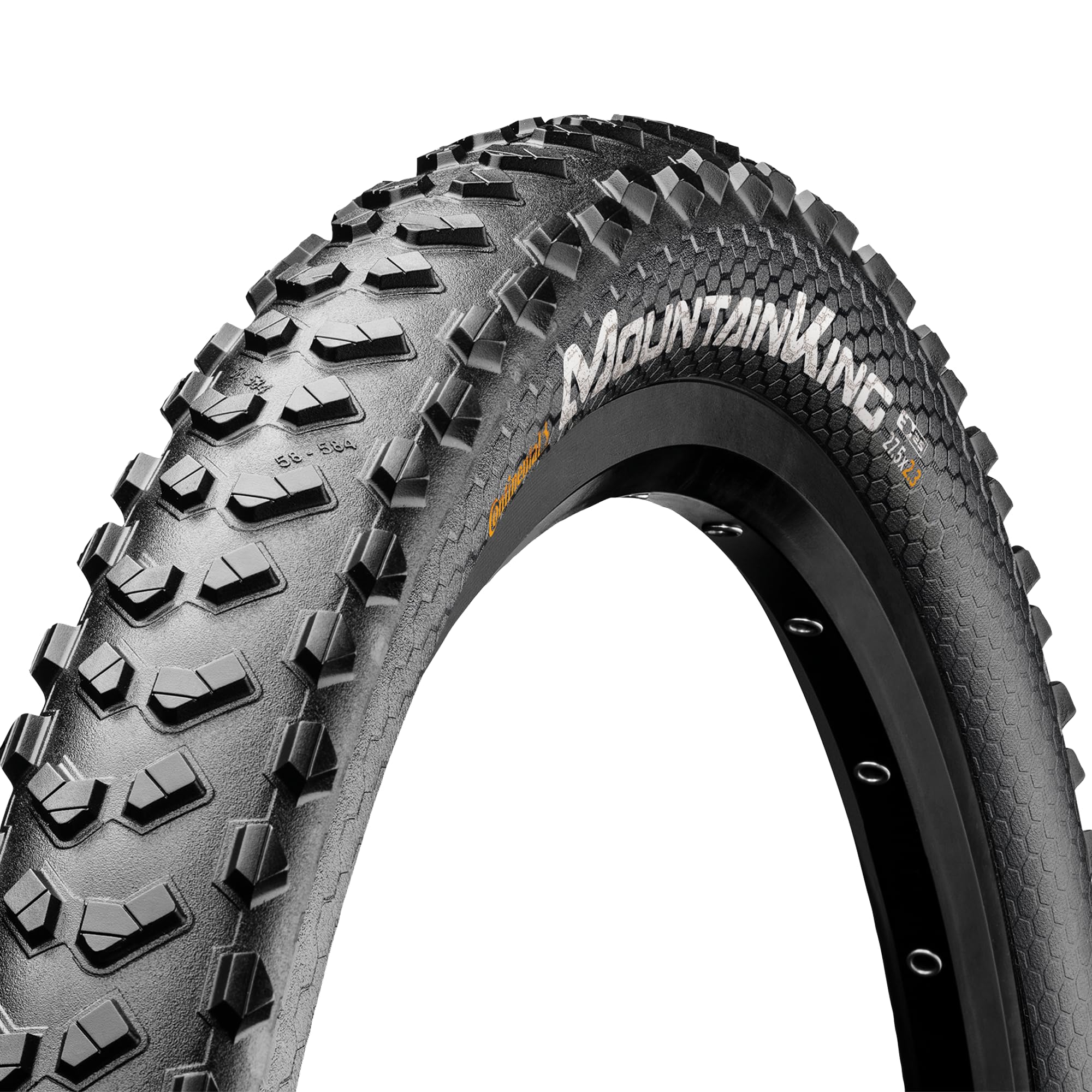
Continental Mountain King

Continental Mountain King

aggressive trail

Our Score 9.2/10
Check Price

Worth Noting

  • Mounting can require significant effort on some rims
Casing
ShieldWall, Tubeless Ready
Tire Width
26 x 2.30
Tread Pattern
Aggressive, high knobs
Read the full review

While the Cross King rolls faster on hardpack, the Mountain King prioritizes descents with aggressive tread that bites into loose terrain. Riders who already run tubeless and own a compressor will find the ShieldWall casing holds up well on rocky trails, though the initial mount can test patience. This tire suits those who want confident braking and cornering on technical off-road routes rather than pavement efficiency.

Tubeless mounting is easier with a compressor or by using a strap to force the bead into the rim channel.

Bottom line: If descending grip and sidewall strength are your priorities, the Mountain King delivers at a fair price — just plan for a careful setup.

7

Schwinn High Traction

Schwinn High Traction

casual off-road

Our Score 9.2/10
Check Price

Worth Noting

  • Sidewall cracking may appear within a year of use
Casing
Steel bead
Tire Width
26 x 1.95
Tread Pattern
Blocky knobs
Read the full review

The Schwinn High Traction tire is a budget-friendly option for casual off-road riders who need a direct replacement for older 26-inch mountain bikes. Its knobby tread provides decent grip on loose terrain, and installation is simple. However, durability concerns with sidewall cracking within a year make it less suitable for frequent trail use or riders seeking long-term reliability.

Bottom line: This tire fits best as an occasional replacement for older Schwinn bikes where budget is the priority and long-term durability is not a concern.

8

Bell Flat Defense

Bell Flat Defense

kids/light trail

Our Score 9.2/10
Check Price

Worth Noting

  • Sidewall splitting or tube blowouts can occur during inflation or on sharp impacts.
Casing
Carbon steel (foldable)
Tire Width
26 x 1.75–2.125
Tread Pattern
Knobby
Read the full review

The Bell Flat Defense delivers a low-cost option for outfitting a kids' bike or a spare for easy trails. Its knobby tread provides basic grip and the Flat Defense layer offers some puncture resistance. However, reports of sidewall splitting or tubes blowing out during inflation or on sharp impacts mean this tire is not for aggressive riding or anyone prioritizing safety.

Bottom line: Best for outfitting a kids' bike or a spare for easy trails where the possibility of sidewall issues is a known tradeoff given the low price.

9

MOHEGIA Set 26

MOHEGIA Set 26

recreational

Our Score 9.2/10
Check Price

Worth Noting

  • Durability can be inconsistent, with possible punctures from thorns and lever snapping under stress.
Casing
Tire Width
26 x 2.125
Tread Pattern
Continuous raised knobby
Read the full review

Complete kit with tires, tubes, and levers for convenient DIY replacement. Smooth on pavement, decent for recreational use. Durability can be inconsistent, with occasional punctures from thorns and possible lever snapping. Lacks tubeless readiness and long-term durability compared to premium options. Best for casual riders, not for off-road enthusiasts expecting longevity.

Bottom line: Best for recreational riders who want a complete, easy install and don't need long-term durability for aggressive trails.

10

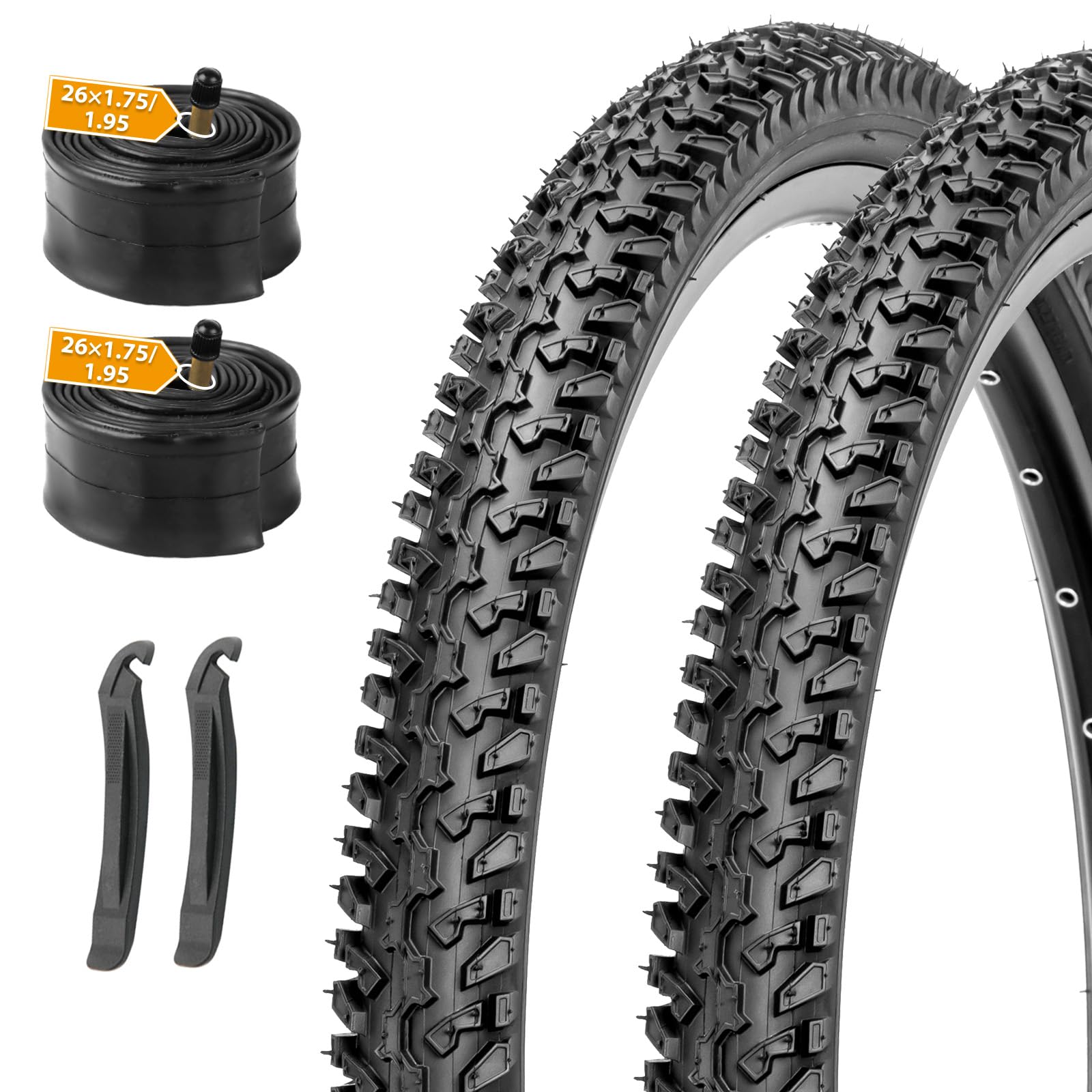
Chao YANG 26x1.95

Chao YANG 26x1.95

first timers

Our Score 9.0/10
Check Price

Worth Noting

  • For riders covering longer distances or rougher terrain, the combination of early tube failures and faster-than-expected tread wear may cut into the kit's cost savings
Casing
Tire Width
26 x 1.95
Tread Pattern
Read the full review

This kit pairs a dual-compound tire with the tools and tube needed for a straightforward swap, making it a practical entry point for first-time changers handling short commutes or light trails. The tradeoff: tread life is limited compared to pricier options, and tube durability can be inconsistent - riders who ride regularly or push harder terrain should expect to replace components sooner.

Bottom line: Best for the occasional rider who values convenience over long-term mileage and is comfortable swapping components more often.

11

Fincci 26x2.25 Pair

Fincci 26x2.25 Pair

lightweight XC

Our Score 9.0/10
Check Price

Worth Noting

  • Mounting can be very tight on certain rims, requiring considerable effort.
Casing
Kevlar bead, 30 TPI
Tire Width
26 x 2.25
Tread Pattern
Center knobs, side lugs
Read the full review

The Fincci pair saves rotational weight with folding Kevlar beads and delivers good grip on loose dirt and gravel. Tread life may be shorter than some riders expect, making these better suited for occasional XC use or as a budget upgrade on older wheels.

Bottom line: A good pick for weight-conscious riders on a budget who can handle a tight installation and don't need maximum tread life.

How to Choose

Tread Pattern

Tread pattern determines how the tire bites into the ground—or rolls over it. Knobby tires with widely spaced, tall lugs excel in loose dirt, mud, and rocky sections because they dig in. Closely spaced, low-profile knobs or slick treads roll faster on hardpack and pavement but slide on loose surfaces.

For mixed use, look for directional treads that have ramped center knobs for speed and aggressive side knobs for cornering grip. If you only ride pavement, a slick center with slight grooves (like the Kenda City Slick) is quieter and more efficient.

Tire Width

Width (measured in inches, e.g., 1.95 or 2.30) affects both traction and clearance. A wider tire (2.25-2.30) offers more surface contact and better cushioning at lower pressures, which improves grip on loose terrain. Narrower tires (1.95) accelerate faster and weigh less but provide less traction off-road.

Before buying, measure the clearance between your frame and fork stays. Many older 26-inch bikes cannot fit a 2.30 tire without rubbing. Check your rim's internal width as well—a 2.30 tire on a narrow rim may balloon and handle poorly.

Casing Construction

Casing refers to the sidewall material and bead type. Wire beads (steel) are heavy and stiff but hold their shape at low cost. Kevlar or folding beads save weight and allow the tire to pack flat, but they may be harder to mount. Tubeless-ready casings use a tighter weave to hold air without a tube, reducing flat risks.

EXO, ShieldWall, and similar layers add puncture resistance along the sidewall. For rocky trails, a tire with reinforced sidewalls is worth the extra cost. On smooth trails or pavement, a standard wire-bead tire is sufficient and cheaper.

Weight and Rolling Resistance

Heavier tires (over 800g) feel sluggish on climbs and accelerations but often have thicker casings that resist punctures. Lighter tires (under 700g) spin up quickly and are popular for cross-country racing, but they trade sidewall protection and tread life.

Rolling resistance is closely tied to tread pattern and compound. A tire with a continuous center ridge rolls faster on hard surfaces, while a deep knobby tread creates drag. For most recreational trail riders, a mid-weight tire (700-800g) with moderate knobs offers the best balance.

Compound

Compound refers to the rubber hardness and formulation. Dual-compound tires use a harder center for durability and softer sides for cornering grip. Single-compound tires are simpler but may wear unevenly or feel greasy on wet rocks.

PureGrip (Continental) and similar proprietary compounds aim to balance grip and wear. For aggressive trail riding, a softer compound on the side knobs is more important than the center. For pavement riding, a harder compound lasts longer but can feel slippery in the wet.

Frequently Asked Questions