Tires & Tubes

8 Best 29 Inch MTB Tires 2026: Grip & Durability for Trails

Find the best 29 inch mountain bike tire for your riding style — aggressive trail grip, fast XC, or budget-friendly traction and durability.

Choosing a 29-inch mountain bike tire means balancing grip, weight, and durability. A tire that excels on loose descents may feel sluggish on climbs. A fast-rolling XC tire can leave you sliding in corners on hardpack.

The solution often lies in matching tire design to position. Front tires prioritize cornering traction; rear tires focus on braking bite and rolling efficiency. Tubeless-ready casings reduce punctures and allow lower pressures, but they only work with compatible rims and a good sealant setup.

This guide covers tires that earn their reputation across these trade-offs — from aggressive enduro options to budget all-rounders that don't cut corners on safety.

1

Maxxis Minion DHF

Top Pick
Maxxis Minion DHF

Trail/Enduro Front

Our Score 9.6/10
Check Price

Worth Noting

  • Installation can be tight on certain rims, requiring extra effort for tubeless setup
  • Weight around 1020g limits suitability for cross-country racing
Width
29x2.50
Casing
EXO
Compound
Dual
Tubeless
Yes
Read the full review

The Minion DHF pairs fast-rolling center knobs with aggressive side lugs for controlled steering on loose corners and stable braking on descents. The EXO casing adds puncture resistance without stiffening the ride, and the dual compound balances wear and grip across mixed terrain. At 29x2.50 it provides good volume for cushioning over roots and rocks without feeling sluggish.

This tire belongs on the front of a trail or enduro bike where steering confidence matters more than low weight. It should not be used on the rear; the tread pattern compromises cornering performance. Installation can be tight on some rims, especially with tubeless setups, though warming the tire or using a rim strip helps seat the bead.

The tread holds up well on abrasive surfaces, and the sidewalls resist cuts from sharp rocks. Over a full season of aggressive use the tire maintains consistent performance without significant wear. At a mid-range price the DHF delivers durability on par with more expensive casings.

If installation feels tight, warm the tire or use a rim strip for easier bead seating

Bottom line: For front-end steering and durability, the Minion DHF sets the standard for trail and enduro builds.

2

Maxxis Minion DHR II

Maxxis Minion DHR II

Aggressive Rear

Our Score 9.6/10
Check Price

Worth Noting

  • Heavier than many rear tires
  • Tubeless seating can be tricky on some rims; occasional bead issues have been noted
Width
29x2.60
Casing
EXO
Compound
Dual
Tubeless
Yes
Read the full review

Where the DHF handles front-end steering, the DHR II targets the rear wheel with a directional tread pattern that grabs loose dirt under braking and cornering. The EXO casing and tubeless-ready design keep it competitive for aggressive trail and enduro use without adding unnecessary complexity.

Riders who want maximum rear traction on descents and don't mind a weight penalty on climbs will find this tire grips well on loose and hardpack surfaces. The extra heft is noticeable on long ascents, making it better suited for shuttle laps or enduro stages than all-day XC epics.

A compressor or tubeless booster pump helps seat the bead during installation.

Bottom line: If you ride aggressive terrain and want a rear tire that bites hard under braking, the DHR II delivers – just accept the weight penalty on climbs.

3

Maxxis Aggressor

Maxxis Aggressor

Rear Hardpack

Our Score 9.4/10
Check Price

Worth Noting

  • Heavier than some rear tires, which can reduce acceleration on climbs.
Width
29x2.30
Casing
EXO
Compound
Dual
Tubeless
Yes
Read the full review

This rear tire rolls fast and corners well on hardpack, with EXO casing and tubeless readiness. However, the added weight affects acceleration, and for loose conditions the Minion DHR II offers better grip. Within Maxxis's lineup, it is a solid second option when paired with a DHF front.

Bottom line: Best as a rear tire paired with a Minion DHF front for trail riding on hardpack and mixed terrain where weight is not the primary concern.

4

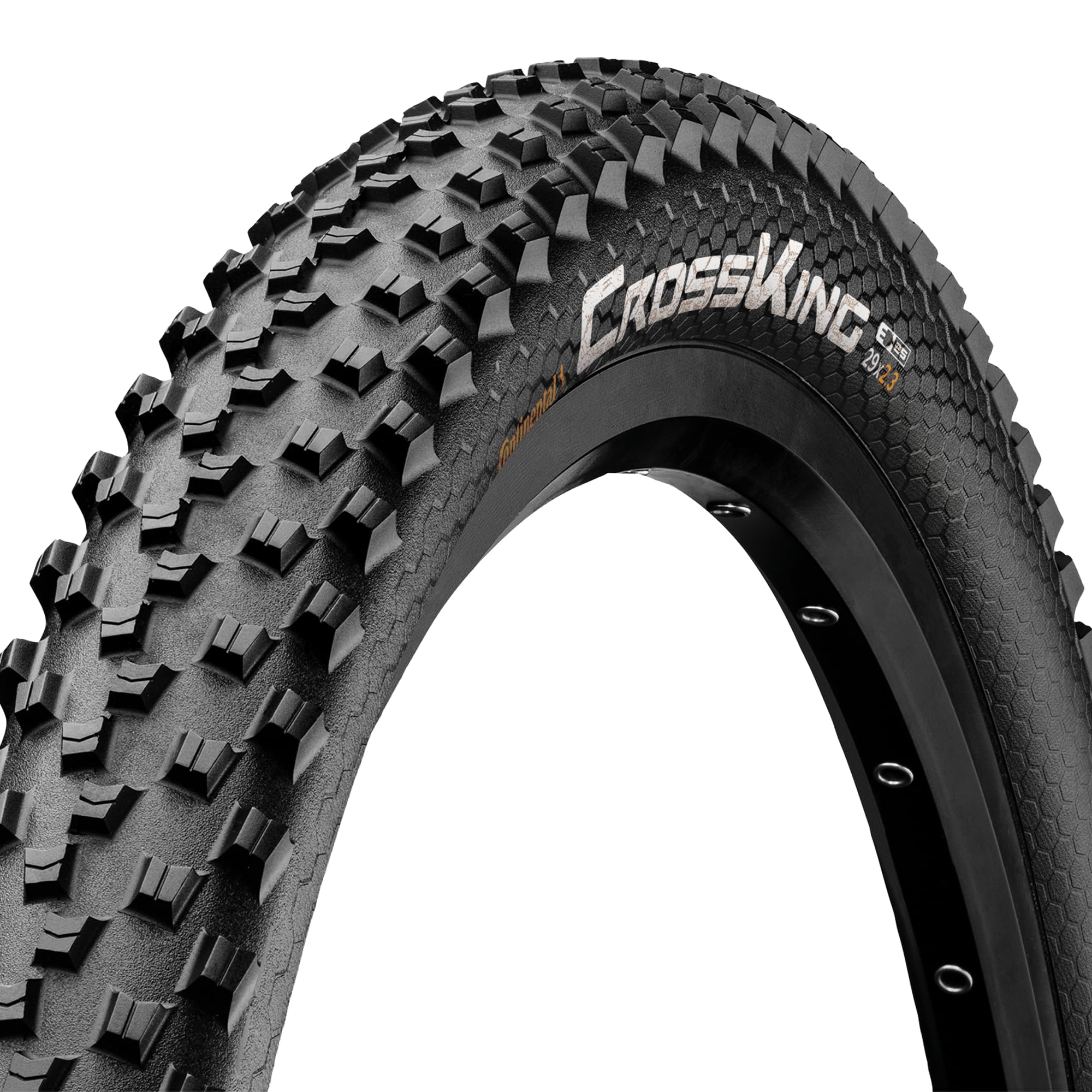
Continental Cross King

Continental Cross King

XC/Trail

Our Score 9.2/10
Check Price

Worth Noting

  • Mounting can be a challenge; some rims may require significant effort to seat.
  • Sidewall durability is a consideration if riding over sharp rocks or in rocky terrain.
Width
29x2.20
Casing
ShieldWall
Compound
PureGrip
Tubeless
Yes
Read the full review

The Cross King is the top choice for riders who prioritize rolling speed and value. Its PureGrip compound and ShieldWall casing handle hardpack and loose-over-hard conditions well, giving a smooth, efficient ride that budget-conscious XC and light trail riders will appreciate. Mounting can be a struggle—the tire may require extra effort or a second pair of hands to seat, and sidewall durability is worth checking if you ride rocky trails. This tire suits those who stay on smoother terrain and want a fast-rolling, affordable tubeless-ready option, not aggressive enduro or jagged rock gardens.

Using a tire lever and a compressor or booster pump can make seating the bead easier; patience is key.

Bottom line: For XC and light trail riders watching their spending, the Cross King delivers quick rolling and dependable traction—just be ready for a tight installation and avoid the rockiest lines.

5

WTB Trail Boss

WTB Trail Boss

Moderate Trails

Our Score 9.2/10
Check Price

Worth Noting

  • Not tubeless-ready; requires tubes, which adds puncture risk in rocky conditions
  • Sidewall durability can be inconsistent under hard cornering
Width
29x2.25
Casing
30tpi
Compound
Tubeless
No
Read the full review

The WTB Trail Boss rolls fast and hooks up on loose and hardpack surfaces, making it a solid pick for casual riders on hardtail mountain bikes who want a budget-friendly tire. Unlike tubeless-ready competitors at a higher price, this tire uses a wire bead and 30tpi casing that requires tubes — a practical choice for moderate trails but one that adds puncture risk on sharper terrain. Sidewall integrity can be inconsistent under aggressive cornering, so this tire is best suited for milder trails and riders who prioritize low cost over tubeless convenience.

Use a high-quality tube and moderate tire pressures to reduce sidewall stress.

Bottom line: For budget-conscious riders who ride moderate trails and don't mind running tubes, the Trail Boss delivers dependable traction at a low price.

6

Continental Kryptotal Front

Continental Kryptotal Front

All-Mountain Front

Our Score 9.2/10
Check Price

Worth Noting

  • Installation on some rims requires extra effort and tire levers
  • Tread pattern less aggressive than alternatives for very loose soil
Width
29x2.40
Casing
Trail
Compound
Endurance
Tubeless
Yes
Read the full review

The Continental Kryptotal Front is engineered for riders who want a fast-rolling tire with dependable grip across mixed terrain, without the aggressive cornering bite of the Minion DHF. Its Endurance compound and Trail casing deliver solid impact protection and predictable handling for all-mountain and enduro use. This tire suits riders who value rolling speed and durability over maximum bite in loose soil, though mounting it on certain rims can be a chore.

Allow extra mounting time; some rim and tire combinations may need a lever.

Bottom line: Best suited for all-mountain and enduro riders who prioritize rolling speed and durability over maximum bite in loose terrain.

7

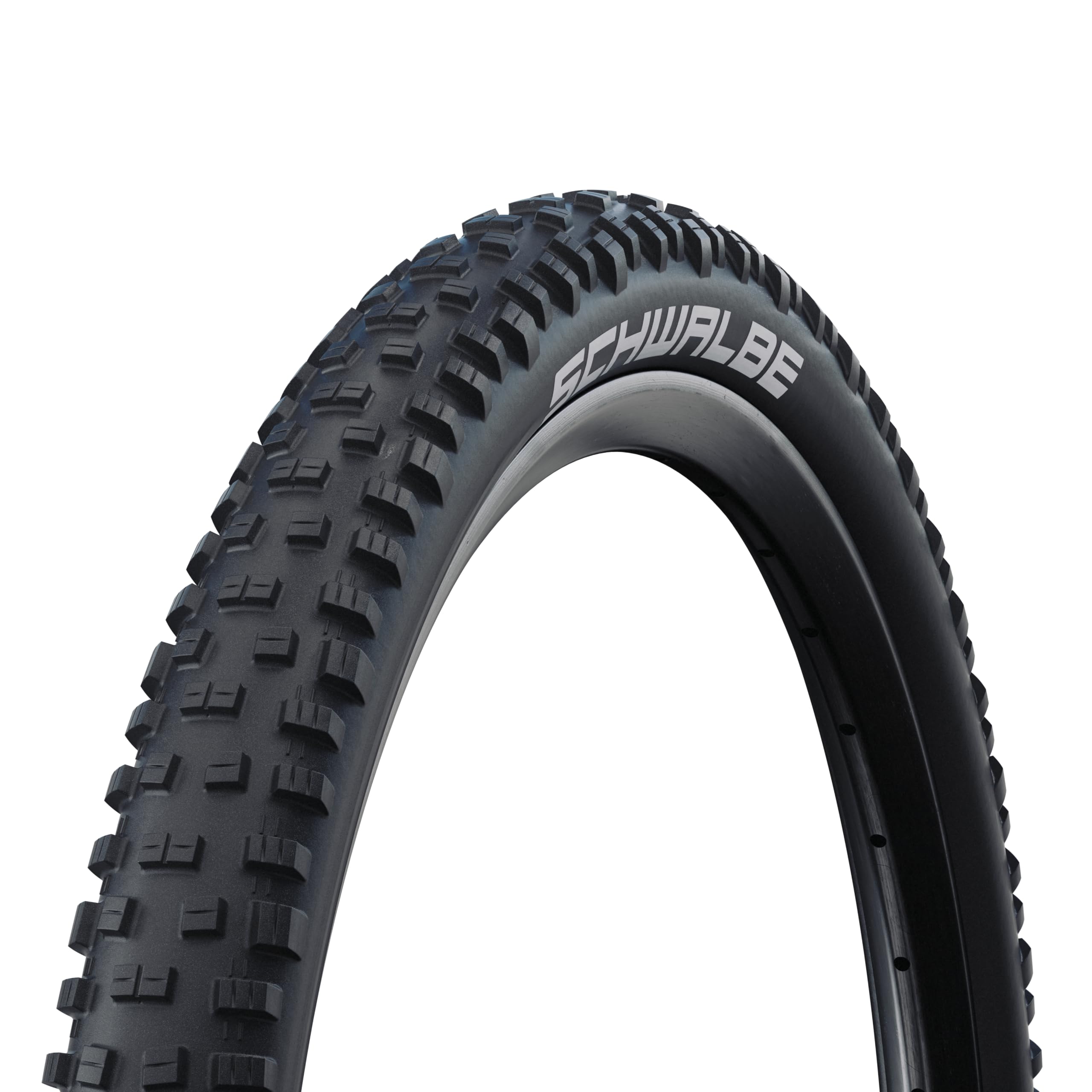
Schwalbe Tough Tom

Schwalbe Tough Tom

Entry-Level

Our Score 9.0/10
Check Price

Worth Noting

  • A small chance of receiving a tire with defects out of the box.
Width
29x2.6
Casing
K-Guard
Compound
Tubeless
No
Read the full review

The Schwalbe Tough Tom delivers decent grip for casual trails and installs without fuss, making it a low-cost entry point for beginners or children's bikes. However, limited user feedback and occasional defects out of the box mean you're taking a gamble on long-term durability.

Bottom line: Best for budget-conscious beginners on easy terrain where a minor gamble on quality is acceptable.

8

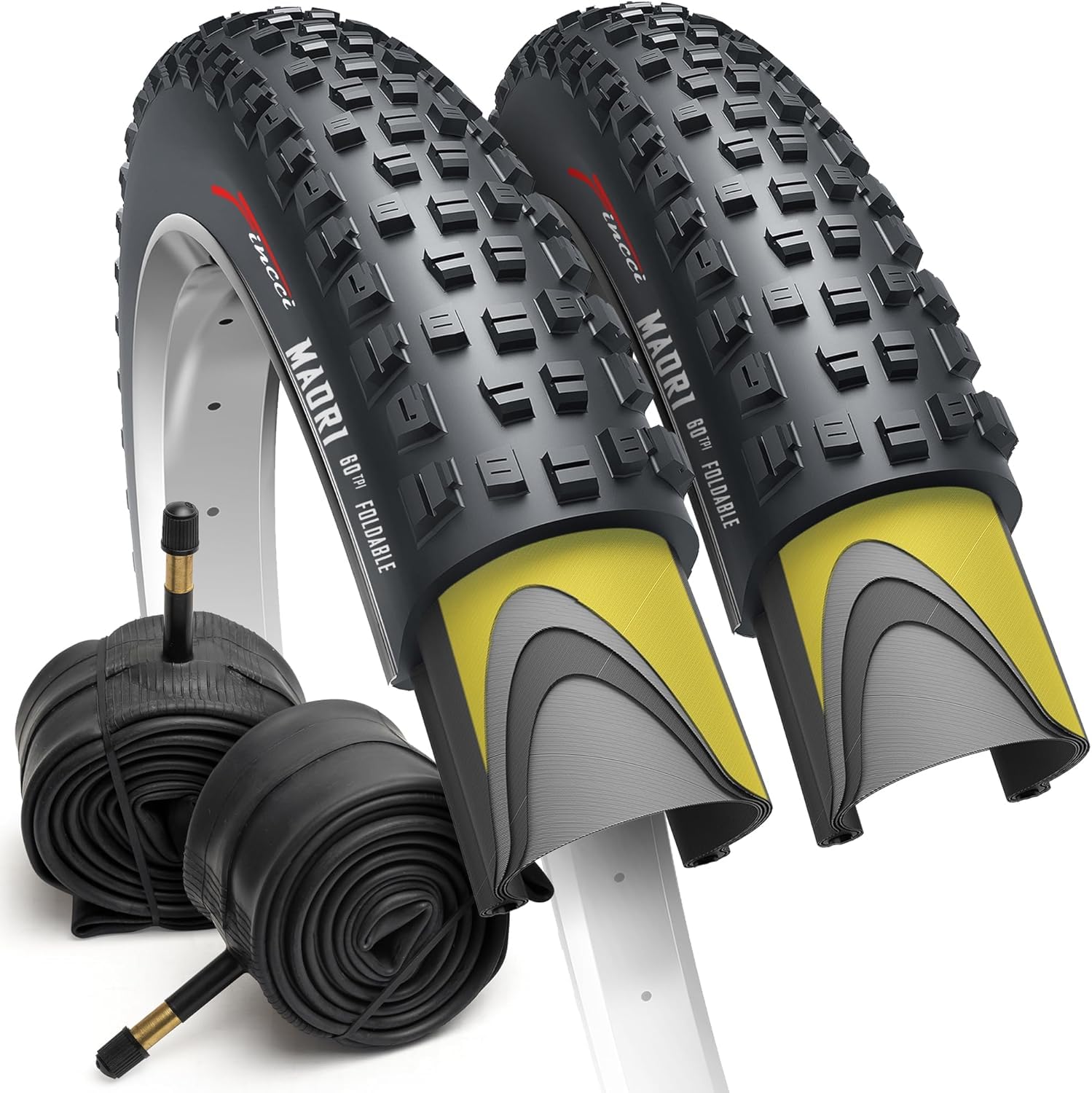
Fincci Maori Set

Fincci Maori Set

Light Trail

Our Score 8.8/10
Check Price

Worth Noting

  • May be too wide for frames with limited clearance
Width
29x2.25
Casing
60 TPI
Compound
Tubeless
No
Read the full review

Provides decent quality for the price with included tubes and puncture protection, making it a practical set for light trail or commuting. However, tubeless compatibility is absent and the 2.25 width may not clear all frames, limiting its suitability for more aggressive off-road use.

Bottom line: A reasonable choice for light trail riding or commuting where tubeless is not needed and frame clearance is generous.

How to Choose

Tubeless Compatibility

Tubeless-ready tires let you run lower pressures for more traction and fewer pinch flats, but they require compatible rims, sealant, and a rim tape setup. Clincher tires with tubes are simpler and cheaper but heavier and more prone to punctures. For trail and enduro riding, tubeless is the standard; for casual use or tight budgets, a clincher still works.

Mounting tubeless tires can be a struggle on some rim-and-tire combinations. Using a compressor or a booster pump often helps seat the bead. Once sealed, the system is largely maintenance-free apart from topping up sealant every few months.

Tread Design

Front tires use taller, more widely spaced knobs to dig into corners and provide steering grip. Rear tires have shorter, more tightly packed center knobs for braking traction and lower rolling resistance. Using a rear tire up front reduces cornering confidence; using a front tire on the rear creates excess drag.

Directional tread patterns improve self-cleaning in mud but limit brake direction. Some tires are asymmetric to optimize traction when leaning. Match tread aggression to your typical terrain: loose over hard, loam, or hardpack each favor different knob shapes.

Casing Protection

Casing layers (like Maxxis EXO, Continental ShieldWall, or Schwalbe K-Guard) add a cut-resistant fabric under the tread. A stronger casing resists sidewall tears on sharp rocks but increases weight and stiffness. Budget tires often use a single-ply 30tpi casing that is light but vulnerable to cuts.

For rocky trails, a casing like EXO or Trail is a worthwhile upgrade. For smooth hardpack or XC racing, a lighter casing saves rotational weight. E-bike-rated tires (E25) use thicker casings to handle motor torque and heavier bikes.

Compound

Rubber compounds balance grip against tread life. Dual-compound tires use a harder center for durability and softer sides for cornering. Triple-compound (3C) tires add a medium layer for progressive wear, ideal for aggressive riders who want consistent grip across the life of the tire. Softer compounds grip better but wear faster.

Budget tires often use a single, harder compound that lasts long but sacrifices cornering traction. Mid-range dual-compound tires offer a good compromise for most trail riders. Premium triple-compound tires are best for enduro and riders who prioritize maximum grip over cost.

Width

Wider tires (2.5 to 2.6 inches) provide more air volume, lower pressure, and better grip on loose surfaces and roots. But they add weight, increase rolling resistance, and may not clear your frame or fork. Narrower tires (2.2 to 2.3 inches) roll faster and suit XC racing or hardpack terrain.

Check your bike's tire clearance before buying. A 2.6-inch tire will not fit on many XC bikes. For trail and enduro, 2.4 to 2.5 inches is the sweet spot between grip and speed.

Frequently Asked Questions