Tires & Tubes

8 Best Cross Country MTB Tire 2026: Match Terrain for Speed & Durability

Find the right XC tire for your riding style and trail conditions, balancing rolling speed with sidewall protection.

Cross country tires walk a tightrope between speed and durability. A featherlight race casing sheds grams but can leave you stranded after a single rocky descent. Heavier protection adds peace of mind but dulls acceleration on climbs.

The key is matching the tire to your local terrain. If your trails are smooth hardpack, a semi-slick race tire delivers blistering lap times. If you ride loose over hard or mixed conditions, a versatile knobby with reinforced sidewalls saves you from mid-ride punctures.

This guide separates the fastest race-day options from the durable all-rounders and budget picks, so you can choose based on where you actually ride.

1

Rekon Race 29x2.35

Top Pick
Rekon Race 29x2.35

XC racers dry

Our Score 9.6/10
Check Price

Worth Noting

  • Slightly heavier than some dedicated race tires, noticeable to weight-conscious racers.
Tubeless
Yes
Tire Width
2.35"
Puncture Protection
EXO
Read the full review

The Rekon Race rolls with noticeably less drag than typical XC tires, making it a top choice for riders focused on speed on hardpack. Despite its semi-slick tread, the side knobs provide enough bite to hold a line through corners with confidence. The EXO casing and Maxxis tubeless-ready construction contribute to a dependable setup that seals well and resists punctures on most trails.

This tire suits XC racers who prioritize low rolling resistance and are comfortable sacrificing traction in loose or wet conditions. It shines on dry, hard-packed trails where every watt counts. Riders who face mud or wet roots should look to more aggressively treaded options.

If you are counting grams, check the actual weight on a scale — some units run slightly heavier than spec.

Bottom line: If your races are on dry, hard-packed dirt and you value speed over all-condition grip, the Rekon Race delivers exactly that — no compromises needed.
2

Cross King Tubeless 29

Cross King Tubeless 29

All-round XC

Our Score 9.2/10
Check Price

Worth Noting

  • Mounting can be tight on some rims, especially 26-inch
  • Sidewall rips may occur after limited use
Tubeless
Yes
Tire Width
2.2"
Puncture Protection
ShieldWall
Read the full review

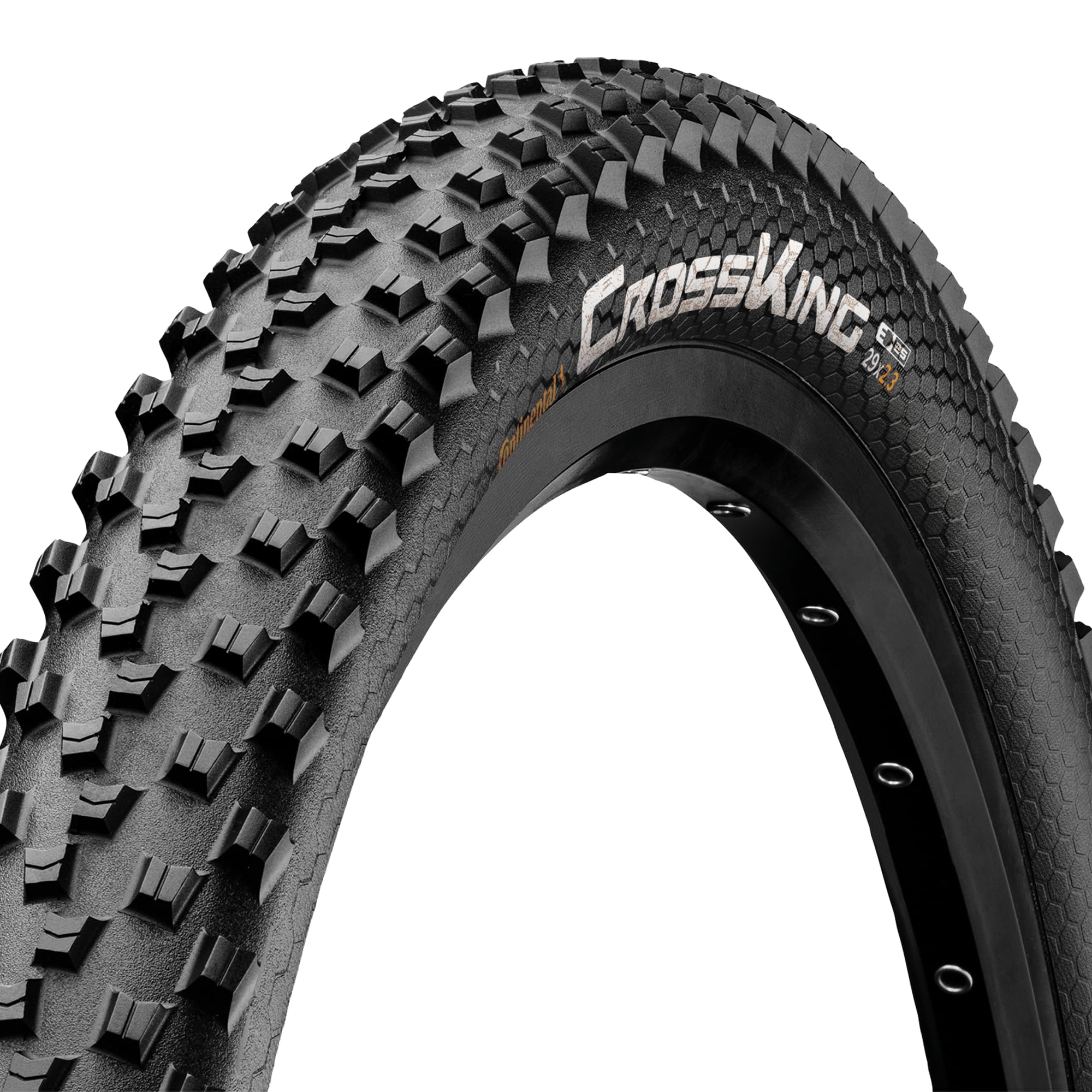
The Cross King delivers balanced traction across hardpack and loose surfaces, making it a strong alternative to faster but less adaptable race tires.

Best for XC racers and trail riders who encounter mixed conditions and want a tire that doesn't force a compromise between speed and cornering bite. Sidewall durability can vary between units, and mounting on some rims requires extra effort — these tradeoffs suit riders who prioritize on-trail performance over installation ease.

A tire lever and some patience may be needed for installation on tighter rims.

Bottom line: For riders who need an all-rounder that handles everything from dry hardpack to loose over hard, the Cross King is the practical choice.

3

Maxxis Rekon 29x2.4

Maxxis Rekon 29x2.4

Trail/XC mix

Our Score 9.2/10
Check Price

Worth Noting

  • Actual weight may exceed the listed spec, adding noticeable drag on long climbs
  • Sidewall tears can occur on rocky terrain, reducing durability for aggressive riders
Tubeless
Yes
Tire Width
2.4"
Puncture Protection
EXO+
Read the full review

The 3C MaxxTerra compound and EXO+ casing give the Rekon stronger cornering grip than the Rekon Race, making it a faster choice for mixed terrain than a pure XC tire. It rolls impressively well for its width, matching many lighter trail tires on speed. That added traction and protection comes with a weight penalty – actual weights can exceed spec – and some riders have noted sidewall tears on aggressive trails.

This tire suits trail riders who want XC-like efficiency without sacrificing cornering confidence on loose or tacky ground. Riders who prioritize the lightest possible setup or need maximum puncture protection for enduro riding should look elsewhere.

Bottom line: For trail riders wanting near-XC speed with dependable cornering, the Rekon delivers – but its sidewall durability and weight mean it's best suited to mixed-conditions trail riding rather than pure racing.

4

Michelin Country Rock 26

Michelin Country Rock 26

Hardpack/commute

Our Score 9.2/10
Check Price

Worth Noting

  • Semi-slick tread can slip on loose gravel, mud, or deep dirt.
  • Narrow 1.75" width reduces comfort and stability on rough trails.
Tubeless
No
Tire Width
1.75"
Puncture Protection
Read the full review

The Michelin Country Rock rolls noticeably faster than typical budget tires on pavement and hardpack, thanks to a semi-slick tread that keeps resistance low. Where the top pick (Maxxis Rekon Race) prioritizes cornering grip for dry XC, this tire focuses on longevity and a quiet ride — making it a better fit for commuters and touring riders who spend most of their time on hard surfaces. The narrow 1.75" width and minimal tread limit traction the moment you hit loose gravel or mud, so trail riders chasing performance will want a wider, more aggressive option.

Keep tire pressure on the higher side for best rolling efficiency on pavement.

Bottom line: A smart choice if your rides mix pavement with hardpack trails and you value durability over off-road grip. Not the tire for XC racing or loose conditions.

5

Race King Tubeless 29x2.0

Race King Tubeless 29x2.0

XC racing

Our Score 9.0/10
Check Price

Worth Noting

  • Installation can be very difficult
  • Sidewall durability is limited
Tubeless
Yes
Tire Width
2.0"
Puncture Protection
ShieldWall
Read the full review

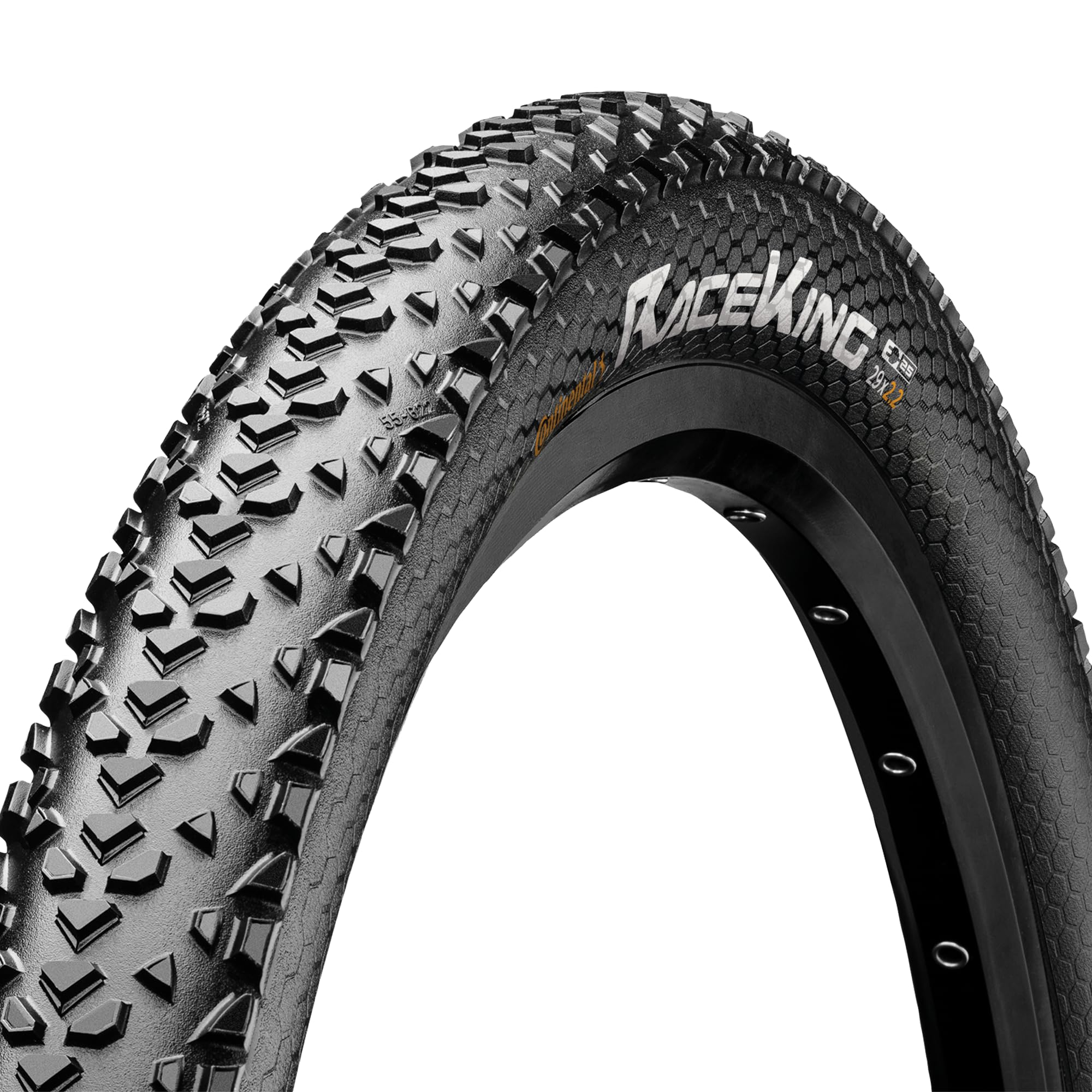
The Continental Race King hits 650g with a fast-rolling PureGrip compound that accelerates quickly on hardpack trails. It shaves grams compared to all-round options, making it the go-to for race day on smooth courses. That low weight comes with a tradeoff: the sidewall is more vulnerable to cuts on rocky terrain, and the snug bead can make installation a challenge. This tire suits XC racers chasing seconds, but riders mixing in loose rock or daily training should consider a sturdier casing.

If you mount these yourself, a bead jack can save time and frustration.

Bottom line: For XC racers on smooth courses, the Race King delivers unrivaled acceleration; for mixed terrain or daily training, a more durable casing makes more sense.

6

Fincci 27.5x2.10 Pair

Fincci 27.5x2.10 Pair

Budget XC pair

Our Score 9.0/10
Check Price

Worth Noting

  • The 1.1 kg weight per tire is notable during climbs
Tubeless
No
Tire Width
2.1"
Puncture Protection
Read the full review

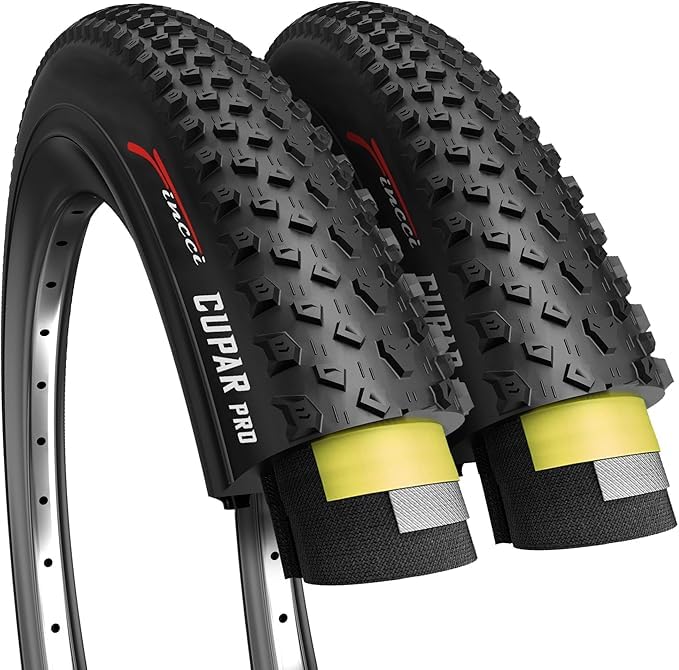
The Fincci pair delivers two tires at a budget-friendly price with quick installation on most rims. At 1.1 kg each, they are heavier than typical XC tires, and puncture resistance is average — a trade-off that suits casual trail use or e-bike commuting better than race-day performance.

Bottom line: A solid pick if you need a quick, affordable replacement for casual riding or an e-bike, but riders chasing performance should look to lighter, more durable options.

7

Fincci 26x2.10 Foldable

Fincci 26x2.10 Foldable

Budget 26in

Our Score 9.0/10
Check Price

Worth Noting

  • On gravel paths where punctures are a risk, the nylon layer may not always prevent flats
Tubeless
No
Tire Width
2.1"
Puncture Protection
1mm Nylon
Read the full review

Low price and foldable Kevlar bead allow easy mounting, and traction on dry hardpack is predictable. However, tread wears quickly, sidewalls feel flimsy, and puncture protection can be inconsistent – flats occur even on smooth paths. Best as a spare or budget commuter tire for light use.

Bottom line: A reasonable choice for riders needing an inexpensive temporary tire for pavement or light gravel – not for regular off-road or long-distance use.

8

Tough Tom 27.5x2.8

Tough Tom 27.5x2.8

Plus-size XC

Our Score 9.0/10
Check Price

Worth Noting

  • Width (2.8”) limits compatibility to plus-size bikes; won’t fit most standard XC hardtails.
Tubeless
No
Tire Width
2.8"
Puncture Protection
K-Guard
Read the full review

This tire offers good grip and easy setup at a budget-friendly price, making it a sensible pick for plus-size bikes. The 2.8” width, however, is too wide for standard XC frames and rims, so cross-country racers on conventional bikes should look elsewhere.

Bottom line: For riders with plus-size mountain bikes seeking a budget-friendly tire with solid traction, this fits the bill. Racers on standard XC bikes should skip this variant.

How to Choose

Tire Width

Tire width directly affects rolling resistance, traction, and comfort. Narrower widths (2.0-2.2 inches) accelerate quickly and cut through wind, ideal for smooth hardpack racing. Wider tires (2.35-2.4 inches) offer more volume for lower pressures, improving grip on loose corners and absorbing trail chatter.

The trade-off: a 2.4-inch tire adds rotational mass that slows acceleration and climbing. On tight singletrack, the extra width may also feel sluggish compared to a 2.2-inch option. Choose width based on your typical terrain: dry, hardpack = narrower; loose or rooty = wider.

Most XC riders find 2.25-2.3 inches a versatile compromise, but if you prioritize speed over traction, stick to 2.2 or under.

Puncture Protection

Puncture protection levels range from lightweight race casings (e.g., EXO) to reinforced trail casings (e.g., ShieldWall, EXO+, K-Guard). A heavier casing adds 50-100g per tire but dramatically reduces sidewall tears and pinch flats when you run lower pressures.

The hidden cost: extra material increases rolling resistance and makes the tire feel less supple. On smooth trails, a race casing is faster and more comfortable. On sharp rocks or high-speed descents, a reinforced casing is worth the weight penalty. Match protection to the sharpness of your local terrain.

Tubeless Compatibility

Tubeless tires seal punctures, run lower pressures for better traction, and eliminate pinch flats. Most modern XC tires are tubeless-ready, but require compatible rims, tubeless valves, and sealant.

The trade-off: setup is messier and requires occasional sealant top-ups. Some lightweight casings (e.g., Race King) are notoriously tight to mount on certain rims. If you prefer hassle-free installation or ride mostly pavement, a clincher tire with a tube may be simpler. For off-road performance, tubeless is the standard.

Frequently Asked Questions