Bikes

15 Best Balance Bike of 2026: That Grow With Your Toddler

Which balance bike actually fits your toddler's age and size? This guide helps you pick between short-lived 4-wheel starters and adjustable 2-wheel bikes that last.

Many parents buy a balance bike only to find their toddler outgrows it in months. The real issue isn't the price tag — it's understanding when a child is ready for two wheels versus four. A 4-wheel bike offers stability for early walkers but won't teach balance; a 2-wheel adjustable bike does that only if the child is tall enough.

The best balance bikes serve different stages. This guide focuses on the one spec that separates a bike that lasts one season from one that survives multiple kids: adjustable seat height. That simple feature determines whether your child can keep riding as they grow.

We've organized the picks by age and use case so you can match the right design to your child's current size and expected growth. No guesswork, no regrets.

1

SEREED Baby Balance Bike 4-Wheel

Top Pick
SEREED Baby Balance Bike 4-Wheel

First bike 1yr

Our Score 9.6/10
Check Price

Worth Noting

  • Fixed seat and small frame mean most toddlers outgrow it before 18 months
  • Small wheels limit use to smooth surfaces
Weight
3.5 lbs
Wheel Count
4
Age & Weight
12-24 mo / 55 lbs
Adjustable Seat
No
Read the full review

Assembly is the standout feature here: the frame clicks together without a single tool, and the whole process takes under five minutes. The four-wheel layout gives toddlers a wide base that resists tipping, making this one of the more forgiving balance bikes for a child just finding their feet. The aluminum frame keeps weight at 3.5 pounds, so small arms can steer without strain.

This bike is designed for a narrow window — roughly 12 to 18 months, or until the child reaches about 33 inches tall. The seat doesn't adjust, so once legs get longer, the bike feels cramped. It also works best on smooth indoor floors or paved surfaces; the small 6.7-inch wheels can struggle on grass or gravel. For parents who want a short-term, low-cost introduction to balance biking, that tradeoff is perfectly reasonable.

Check your child's foot placement as they grow; once their feet barely touch the ground flat, it's time for a larger bike.

Bottom line: For a no-fuss first bike that won't tip and won't strain your budget, this is the one — just plan to hand it down before your toddler turns 18 months.
2

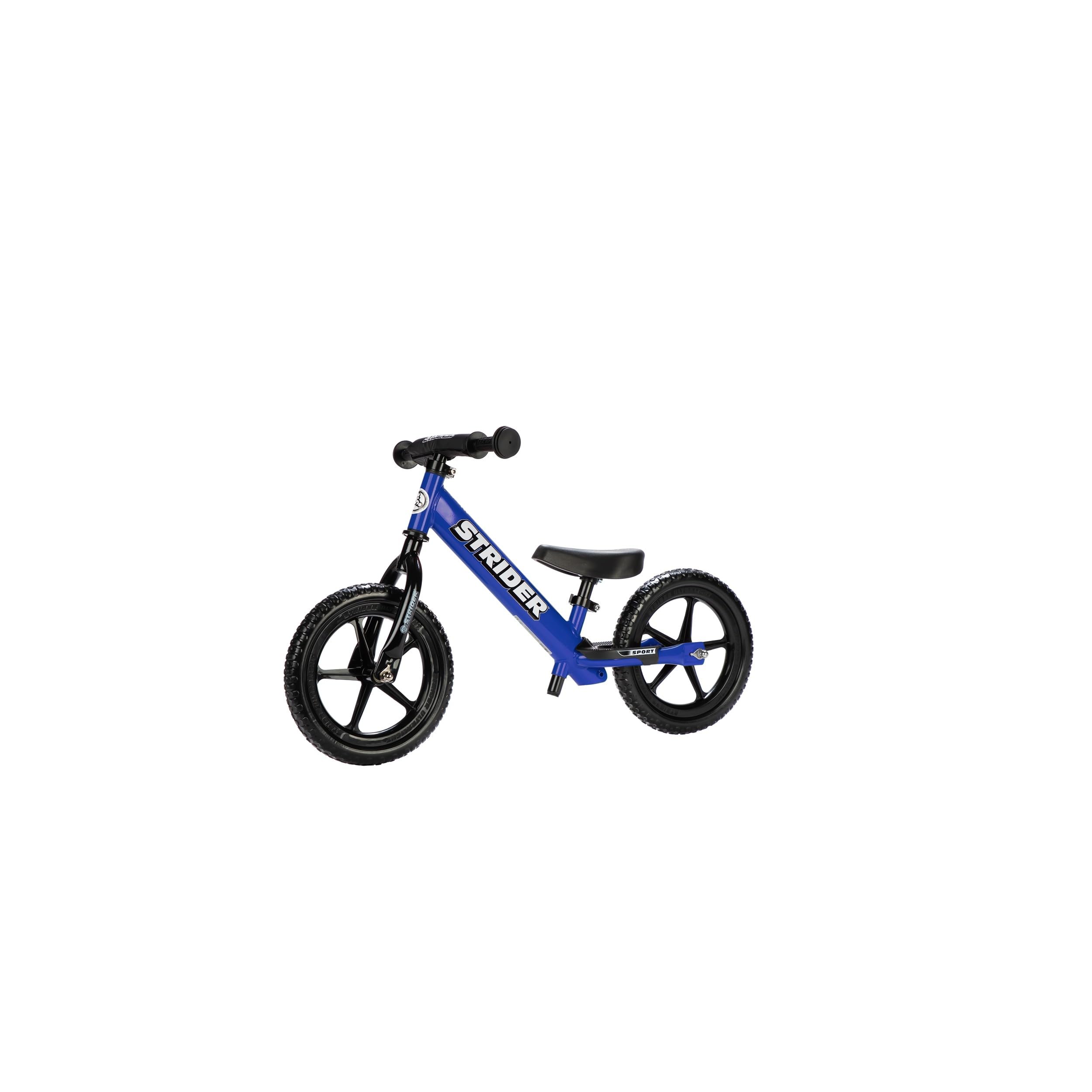
Strider 12 Sport

Strider 12 Sport

Adjustable lightweight

Our Score 9.6/10
Check Price

Worth Noting

  • No handbrake
Weight
6.7 lbs
Wheel Count
2
Age & Weight
1-4 yr / 60 lbs
Adjustable Seat
Yes
Read the full review

The Strider 12 Sport stands out for its tool-free seat and handlebar adjustments, allowing parents to fine-tune fit without any tools. At 6.7 lbs, it is light enough for toddlers to handle yet robust enough for daily use on pavement, grass, or trails. It lacks a handbrake — children stop by placing feet on the ground, which works well for younger riders but may feel limiting as they approach preschool age. This bike suits families who value adjustability and long-term durability over a budget price, and who understand that a 4-wheel starter bike might be a better first step for very wobbly 1-year-olds.

For safe stopping on steep slopes, consider a model with a handbrake; the foot-stopping method is best suited for flat terrain.

Bottom line: A premium-priced balance bike that earns its cost through durable construction and easy adjustments — best for families who plan to use it across multiple children or for extensive outdoor riding.

3

SEREED 2-5yr Balance Bike

SEREED 2-5yr Balance Bike

Adjustable 2-5yr

Our Score 9.6/10
Check Price

Worth Noting

  • Foam tires can slip on smooth indoor floors like hardwood or tile.
Weight
7.8 lbs
Wheel Count
2
Age & Weight
2-5 yr / 110 lbs
Adjustable Seat
Yes
Read the full review

The SEREED balance bike stands out for its easy tool-free seat and handlebar adjustments, allowing the bike to grow with a child from age 2 to 5. The carbon steel frame supports riders up to 110 lbs, making it a sturdy option for extended use. This bike is best suited for toddlers who have already mastered a smaller starter bike and need a long-term upgrade without the premium price. However, the foam tires can feel slick on hardwood or tile — indoor use requires some caution, so it works best on pavement or carpeted floors. Not recommended for children under 2 years old, as the minimum seat height (12.6 inches) is too tall for most 1-year-olds.

On smooth floors, encourage your child to take slower turns and use their feet to brake.

Bottom line: A smart upgrade for 2–5 year olds who need an adjustable bike — just keep it on carpet or pavement to avoid slipping.

4

Gamfeiny Light-Up Bike

Gamfeiny Light-Up Bike

Lights & novelty

Our Score 9.6/10
Check Price

Worth Noting

  • Seat height is too low for toddlers over 15 months or taller children, limiting usable life.
Weight
4.6 lbs
Wheel Count
4
Age & Weight
10-36 mo / —
Adjustable Seat
No
Read the full review

The Gamfeiny Light-Up Bike grabs toddlers' attention with its glowing rear wheels, and the carbon steel frame feels sturdier than the price suggests. Assembly is tool-free — the pieces snap together in minutes. This bike works best for younger 1-year-olds on the smaller side, used indoors on smooth floors. However, the seat height is low, and some toddlers may outgrow it by 15-18 months, so it's a short-term novelty rather than a long-term training tool.

Bottom line: A fun first bike for the youngest toddlers who love lights, but plan to pass it on quickly — the size won't last long.

5

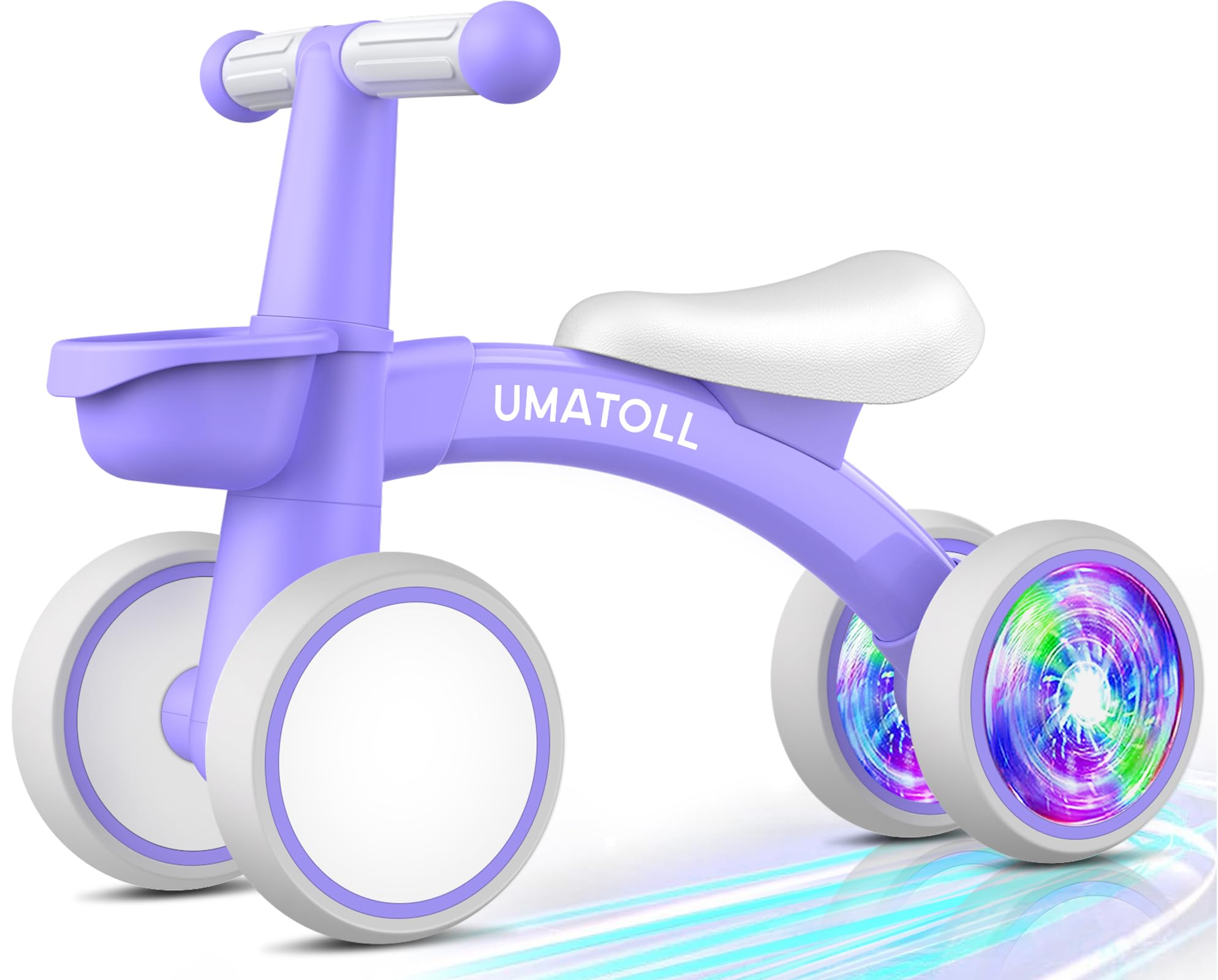
Umatoll Light-Up Basket Bike

Umatoll Light-Up Basket Bike

Petite 1yr

Our Score 9.6/10
Check Price

Worth Noting

  • Frame size is short
Weight
3.3 lbs
Wheel Count
4
Age & Weight
12-24 mo / —
Adjustable Seat
Yes
Read the full review

At just 3.3 lbs, the Umatoll is notably easy for a 1-year-old to lift and steer, and the 3-position adjustable seat and removable basket add practical and playful touches. The light-up rear wheels provide visual engagement that encourages movement. However, the bike's small frame means most toddlers will outgrow it well before 24 months – it's best suited for petite 12-18 month olds as a first bike. For families seeking a longer-term option, a larger adjustable bike like the top pick covers a wider age range.

Check your child's inseam – the seat adjusts to a lower range ideal for smaller toddlers.

Bottom line: For families with a very young toddler who wants a lightweight, engaging first balance bike for indoor or smooth surfaces, the Umatoll delivers novelty and ease – but plan to upgrade as they grow.

6

WETIFY Light-Up Bike

WETIFY Light-Up Bike

Ultra-budget 1yr

Our Score 9.6/10
Check Price

Worth Noting

  • Light-up wheels may lose their glow over time, and the tiny frame is outgrown by most toddlers before 18 months.
Weight
4.6 lbs
Wheel Count
4
Age & Weight
10-36 mo / —
Adjustable Seat
No
Read the full review

The WETIFY Light-Up Bike hits a rock-bottom price while delivering a surprising level of build quality for the cost. Assembly is completely tool-free, which is a rare convenience at this price point. The light-up rear wheels are a clear hit with toddlers, adding visual engagement during indoor play. However, the small frame is best suited for children under 18 months — most toddlers will outgrow it well before the stated 36-month limit. Additionally, the light-up wheels may stop illuminating after a few weeks of use, so this bike works best as a short-term novelty rather than a long-term learning tool.

Bottom line: Buy this only if you need a dirt-cheap first bike for a 1-year-old and are comfortable with it being a very short-term solution.

7

LOL-FUN 4-in-1 Trike

LOL-FUN 4-in-1 Trike

Multi-mode versatile

Our Score 9.6/10
Check Price

Worth Noting

  • In balance bike mode, the narrow rear wheelbase can tip during turns
Weight
6.6 lbs
Wheel Count
2
Age & Weight
10 mo-4 yr / 66 lbs
Adjustable Seat
Yes
Read the full review

Four riding modes switch without tools, offering storage-friendly flexibility from trike to pedal bike. But the narrow rear wheelbase in balance mode can tip, so this works best as a convertible trike rather than a dedicated balance bike for learning.

Bottom line: Best for parents who want one bike that turns from a trike into a pedal bike, accepting that balance mode is less stable than a traditional balance bike.

8

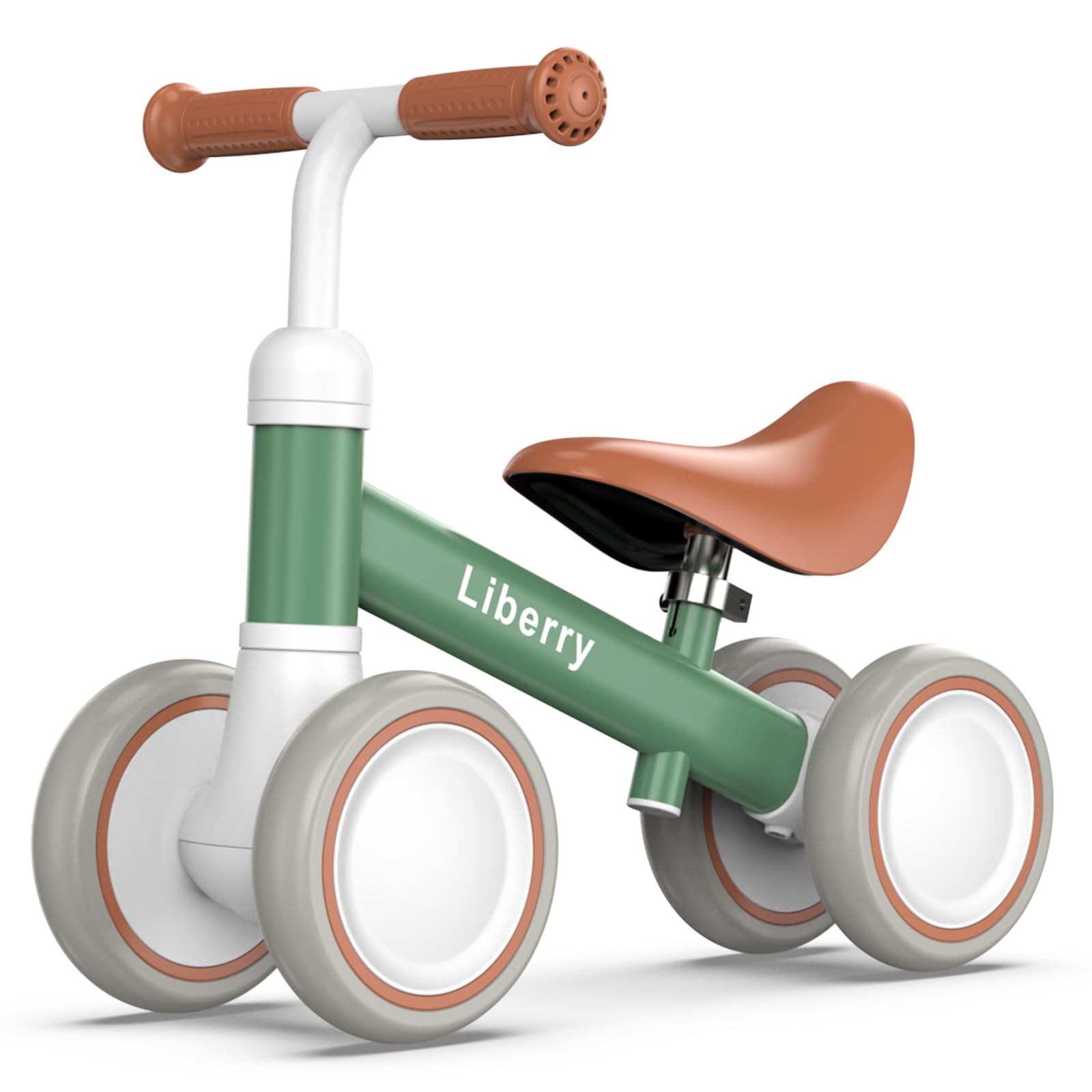
Liberry Adjustable Seat Bike

Liberry Adjustable Seat Bike

Stable 4-wheel

Our Score 9.6/10
Check Price

Worth Noting

  • Seat height only reaches 11 inches
Weight
5 lbs
Wheel Count
4
Age & Weight
12-24 mo / 55 lbs
Adjustable Seat
Yes
Read the full review

The Liberry Baby Balance Bike offers an adjustable seat with three positions and a stable 4-wheel design that resists tipping, ideal for small 12-18 month olds learning balance. However, the seat height maxes out at 11 inches, which may be too short for taller toddlers — limiting its use to a short window before outgrowing it.

Bottom line: Best for parents of petite 12-18 month olds who prioritize stability over long-term use — expect to upgrade within a year.

9

Retrospec Cricket

Retrospec Cricket

Tiny toddlers

Our Score 9.4/10
Check Price

Worth Noting

  • Kids may outgrow the frame before 18 months
Weight
4 lbs
Wheel Count
4
Age & Weight
12-24 mo / 44 lbs
Adjustable Seat
No
Read the full review

The Retrospec Cricket’s low center of gravity and four-wheel base make it nearly impossible to tip, even for the wobbliest beginner. That stability comes at a cost: the frame is sized for a small one-year-old and most children outgrow it well before 18 months. This bike suits parents who want a stationary ride-on for indoor cruising during the first year of walking, not a balance bike that will last through age two.

Given the short growth window, consider buying used or planning to hand it down quickly.

Bottom line: If your one-year-old is on the smaller side and you value stability above all else, this delivers — just don’t expect it to last beyond the first birthday.

10

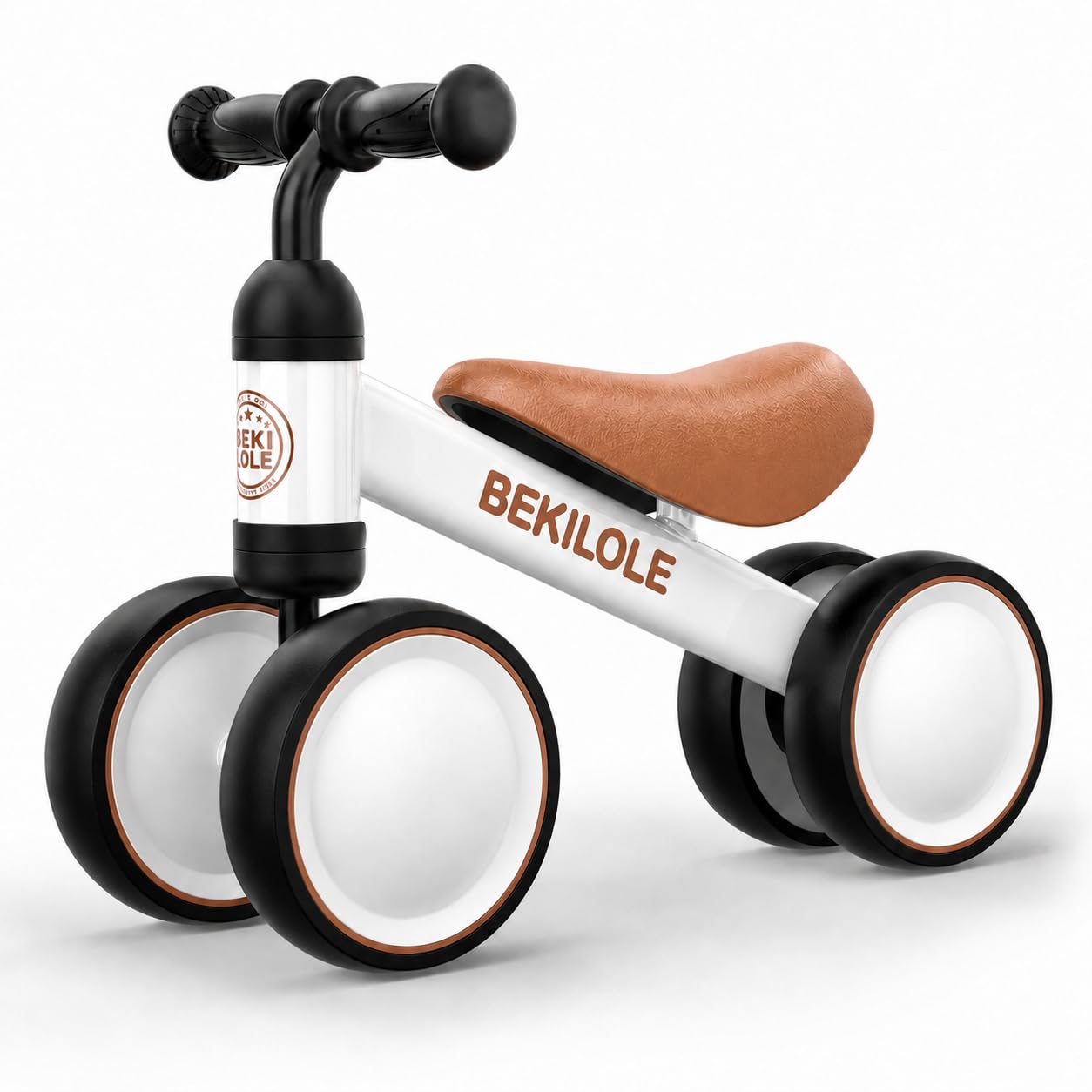
BEKILOLE 4-Wheel Bike

BEKILOLE 4-Wheel Bike

Budget limited

Our Score 9.4/10
Check Price

Worth Noting

  • The small frame limits use to a brief window before toddlers outgrow it.
Weight
Wheel Count
4
Age & Weight
12-24 mo / —
Adjustable Seat
No
Read the full review

At a rock-bottom price, the BEKILOLE offers good stability and easy assembly for a first bike. However, its small size means most toddlers outgrow it before 18 months, and the seat or wheel covers may fail under regular use. It works as a temporary solution for budget-limited households with younger toddlers.

Bottom line: Grab this only if you need a super-cheap starter bike for a 12-month-old and expect to replace it within six months.

11

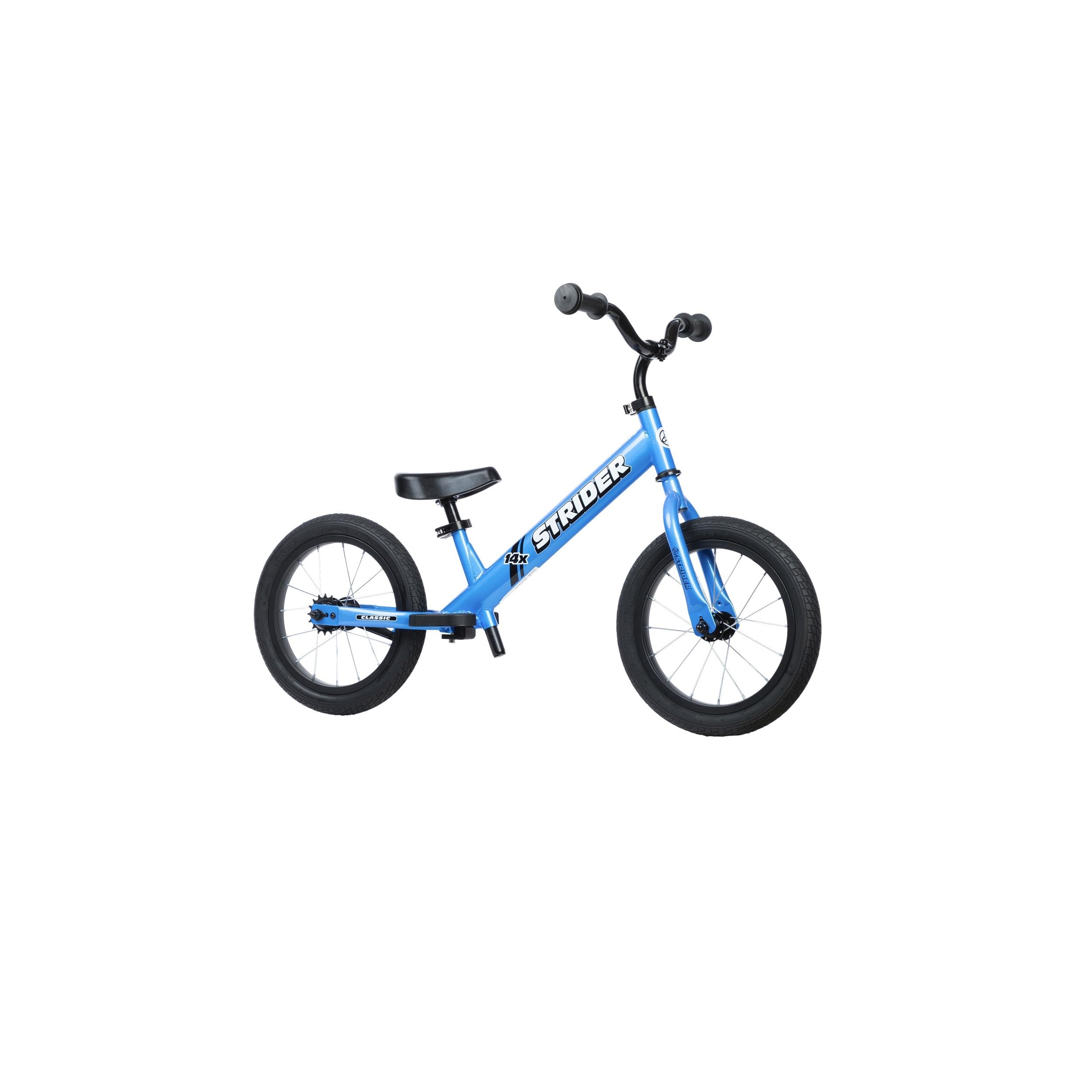
Strider 14x Classic

Strider 14x Classic

Older kids premium

Our Score 9.4/10
Check Price

Worth Noting

  • At 12.5 pounds, the bike can feel heavy for smaller children to maneuver.
Weight
12.5 lbs
Wheel Count
2
Age & Weight
3-6 yr / 80 lbs
Adjustable Seat
Yes
Read the full review

The Strider 14x Classic pairs a long-lasting alloy steel frame with the ability to convert to a pedal bike (kit sold separately). Its 14-inch wheels and 15-22 inch seat height fit older toddlers ages 3-6. The 12.5-pound weight may be heavy for some, and the missing pedal kit adds expense. Best suited as a second bike for older siblings, not a first for 1-2 year olds.

Bottom line: Ideal for families with multiple children or an older toddler ready to transition from a smaller balance bike to pedals, despite the extra cost for the conversion kit.

12

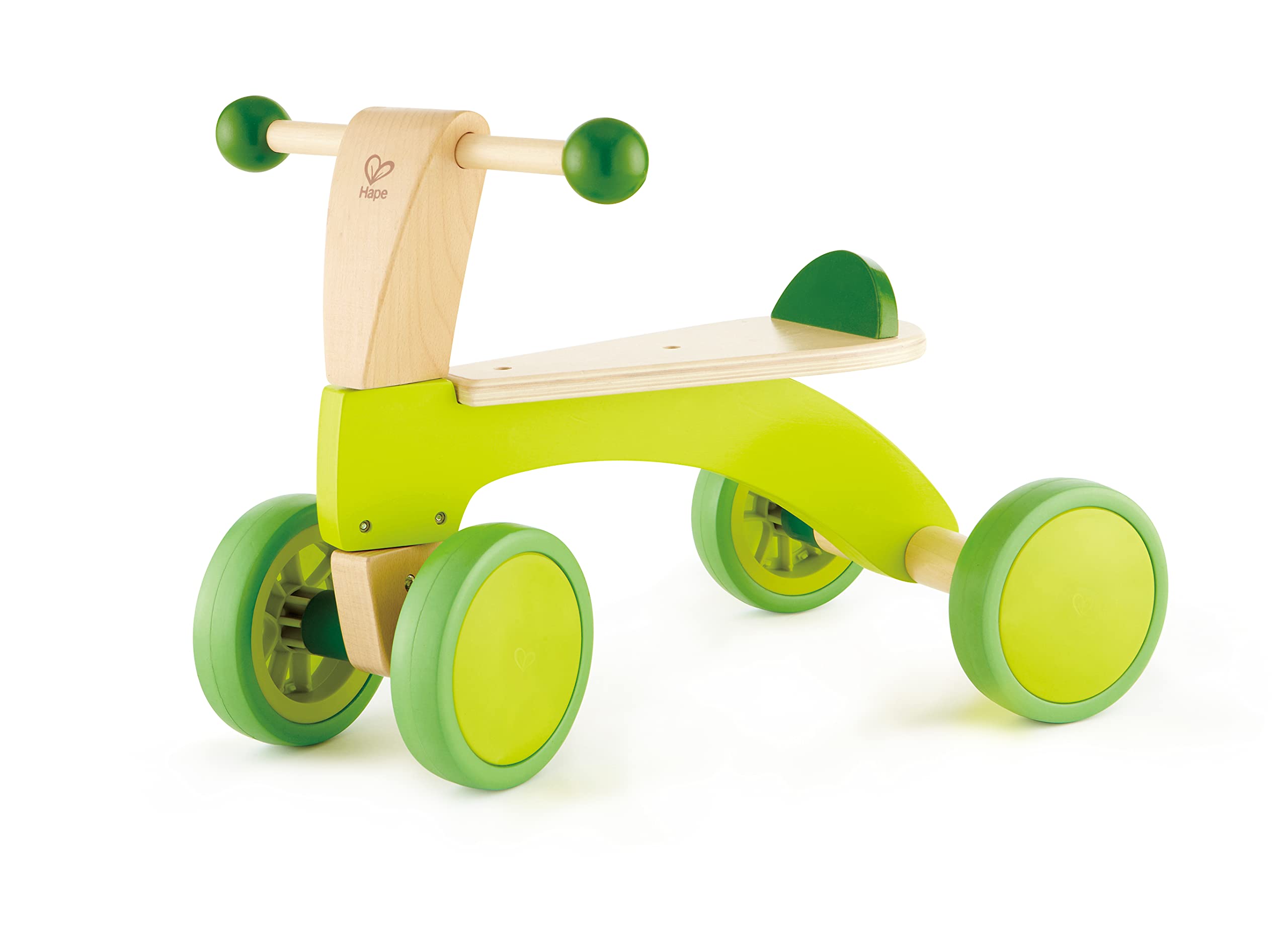
Hape Wooden Scoot Bike

Hape Wooden Scoot Bike

Eco-friendly wood

Our Score 9.4/10
Check Price

Worth Noting

  • Screws can loosen over time, causing the bike to wobble on smooth floors.
Weight
0.5 lbs
Wheel Count
4
Age & Weight
12 mo-5 yr / —
Adjustable Seat
No
Read the full review

This eco-friendly wooden bike's award-winning design and rubberized wheels protect indoor floors while providing a smooth ride. The 4-wheel wooden build can develop wobbliness as screws loosen over time, and sizing may not suit toddlers at either end of the 12-month to 5-year range. These stability and size inconsistencies make it less practical than metal competitors for active, long-term use.

Bottom line: A good match for eco-conscious families who keep the bike indoors and value aesthetics over long-term durability.

13

YGJT Tiger Bike

YGJT Tiger Bike

Interactive design

Our Score 9.4/10
Check Price

Worth Noting

  • Can tip over during turns, requiring careful supervision and stable terrain.
Weight
5.2 lbs
Wheel Count
2
Age & Weight
10-36 mo / 50 lbs
Adjustable Seat
No
Read the full review

The YGJT Tiger Bike's playful design with moving eyes and a chewing mouth delights toddlers who love character themes, and the durable carbon steel frame holds up well. However, the bike's tendency to tip during turns means it's best suited for supervised use on straight paths, not for children still learning balance.

Bottom line: Best for families who want a conversation-starting first bike and don't mind keeping rides confined to gentle, straight paths.

14

KRIDDO 12-inch Balance Bike

KRIDDO 12-inch Balance Bike

Budget adjustable

Our Score 9.2/10
Check Price

Worth Noting

  • Seat or wheel breakage can occur after short use.
Weight
6.6 lbs
Wheel Count
2
Age & Weight
2-5 yr / 110 lbs
Adjustable Seat
Yes
Read the full review

The KRIDDO balance bike delivers impressive balance-learning benefits at a mid-range price, with a fully adjustable frame that fits toddlers 18 months to 5 years. Some units may experience seat or wheel breakage after extended use, a trade-off that matters less for families planning a single child's use.

Bottom line: Works well for budget-conscious families who only need the bike for one child and can accept the possibility of durability issues.

15

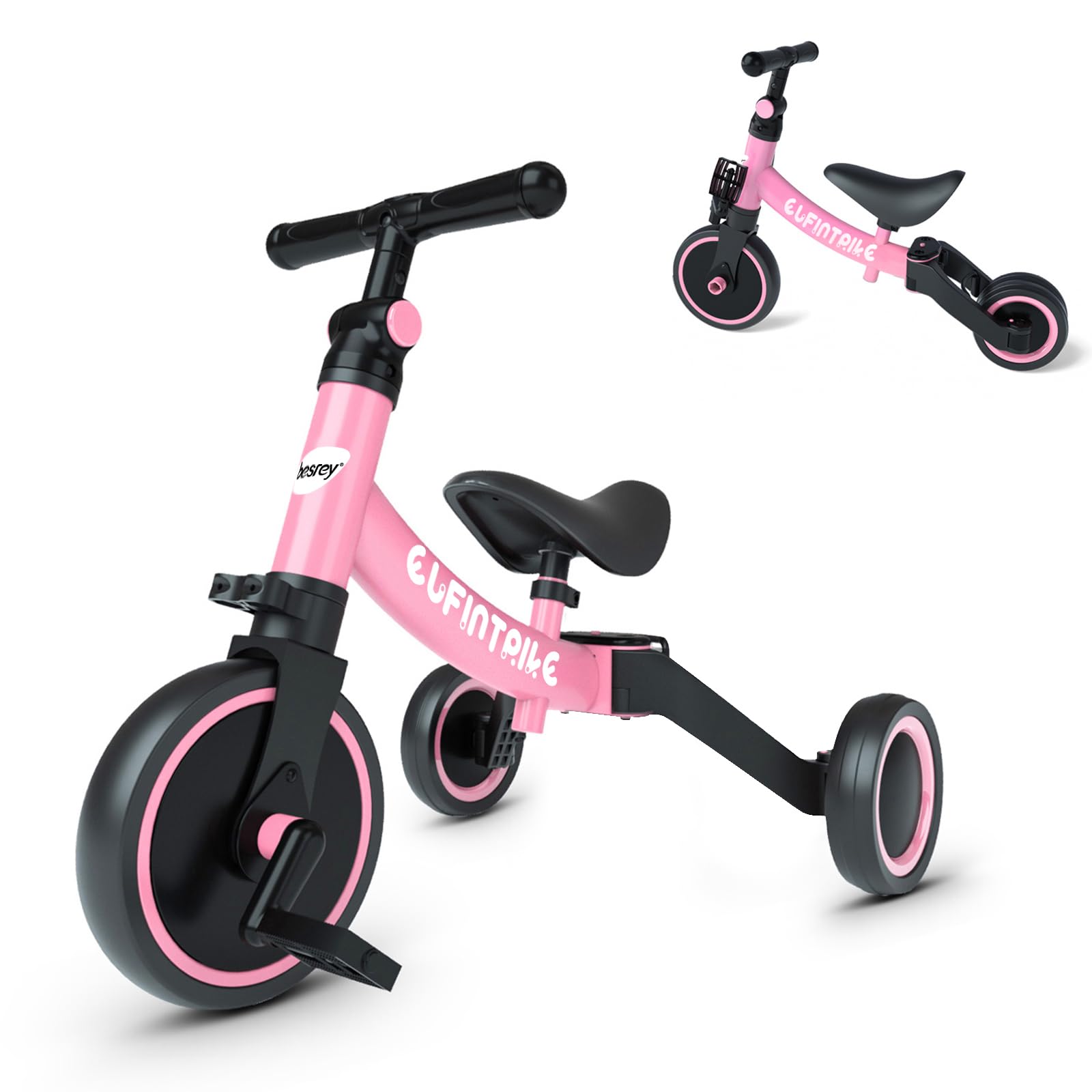
besrey 5-in-1 Trike

besrey 5-in-1 Trike

Do-it-all toy

Our Score 9.0/10
Check Price

Worth Noting

  • Pedals can strike the rider's heels, and the handlebar may loosen over time
Weight
7.3 lbs
Wheel Count
2
Age & Weight
12 mo-4 yr / 55 lbs
Adjustable Seat
Yes
Read the full review

This 5-in-1 system grows with your child across multiple riding modes, offering good value for families who want a single toy. However, as a dedicated balance bike, the pedals can strike the rider's heels, and the handlebar may loosen with use. Sizing also sits between age groups — the smallest riders may find it too large, while older toddlers might feel cramped. These compromises make it less suited for a pure balance bike purchase.

Bottom line: Consider this if you want a single toy that introduces multiple riding styles and plan to use it primarily in trike or scooter modes. For a dedicated balance bike experience, a simpler two-wheel model is a better fit.

How to Choose

Wheel Count: 4 vs 2

Four-wheel bikes provide maximum stability for 12-18 month olds still unsteady on their feet. The child never has to balance because the bike does it for them. That makes them excellent first walker toys but poor balance trainers.

Two-wheel balance bikes force the child to learn leaning and steering. Most toddlers can handle this by 18 months if their feet touch the ground flat. The trade-off is that two-wheelers are less forgiving of sudden moves, so a well-fitted seat height is essential.

Adjustable Seat and Handlebars

A fixed seat height limits the bike's usable window to roughly 6-9 months of growth. An adjustable seat extends that to 2-3 years. Look for tool-free adjustment — turn knobs or levers that let you raise the seat as your child's inseam grows.

Handlebar adjustment matters less but helps accommodate longer torsos. Together, these two adjustments turn a seasonal purchase into a multi-year investment. Without them, you will likely buy a second bike within a year.

Weight

Lighter bikes (under 5 lbs) are easier for toddlers to pick up after a fall and maneuver around corners. Heavier bikes (over 8 lbs) can be frustrating for small children who lack the strength to right the bike independently.

However, weight often correlates with durability. Steel frames are heavier than aluminum but withstand more abuse. For a first bike that stays indoors on carpet or tile, a light aluminum frame is ideal. For outdoor use on trails or grass, a slightly heavier steel frame offers better longevity.

Age Range and Max Rider Weight

Age ranges are guidelines, not guarantees. A tall 18-month-old may outgrow a bike labeled for 12-24 months. The real metric is seat height range — the minimum and maximum seat height in inches. Measure your child's inseam to the floor and ensure it falls within that range.

Max rider weight is rarely an issue for balance bikes (most support 50-110 lbs). It becomes relevant if you plan to hand the bike down to a heavier sibling or use it as a makeshift push bike for an older child. Ignoring it can lead to frame failure.

Frequently Asked Questions