Tools & Maintenance

10 Best Bike Bearing Grease of 2026: Skip Unneeded Ceramic Additives

The best bike bearing grease for your actual riding conditions — avoid overpaying for specialized formulas you don't need.

Many cyclists reach for specialized ceramic or high-performance greases, assuming they'll get better bearing protection. The reality is that for most bikes — steel bearings, moderate riding conditions — a standard polyurea or lithium grease provides all the water resistance and load capacity you need. Paying extra for ceramic additives or extreme temperature ratings often delivers no real-world benefit.

The real decision comes down to water resistance and consistency. A grease that washes out in heavy rain or separates in the tube will leave your bearings unprotected, regardless of its price tag. The best choice for you depends on how and where you ride — not on marketing claims.

1

Park Tool PPL-1 Polylube

Top Pick
Park Tool PPL-1 Polylube

All-around bearing

Our Score 9.6/10
Check Price

Worth Noting

  • Cap may loosen during shipping or storage, allowing minor leakage if not tightened before use.
Consistency
NLGI 2
Water Resistance
Excellent
Corrosion Protection
High
Bearing Compatibility
Steel, ceramic
Read the full review

The PPL-1's polyurea base resists water washout and maintains its lubricating film under the shear forces inside hubs and bottom brackets. Home mechanics find that a 4-ounce tube covers multiple bearing repacks over several seasons — one application holds up through wet conditions without needing replacement.

This grease suits the home mechanic who services their own wheels and bottom brackets and rides in wet or muddy conditions. It's not formulated for suspension forks or dropper posts, which require a lower-viscosity grease. The cap can loosen during storage — a quick tighten before each use prevents any leakage, though this is a packaging detail rather than a performance concern.

At a mid-range price, the PPL-1 costs less per application than general-purpose alternatives that lack comparable water resistance, making it a cost-effective choice for dedicated bike maintenance.

Store the tube upright and check the cap after shipping — a quick tighten prevents any leakage.

Bottom line: The PPL-1 is a straightforward choice for routine bearing maintenance in wet conditions — just keep the cap tight between uses.

2

Park Tool HPG-1 High Perf

Park Tool HPG-1 High Perf

Ceramic bearings

Our Score 9.6/10
Check Price

Worth Noting

  • Per-ounce cost is higher than the PPL-1, which delivers similar real-world protection for most riders
  • Tube nozzle may snap off when attaching a grease gun; hand application avoids this
Consistency
NLGI 2
Water Resistance
Corrosion Protection
Bearing Compatibility
Steel, ceramic, ground
Read the full review

The HPG-1 handles temperatures up to 540°F, which makes it the right choice for ceramic bearings and disc brake areas where standard greases break down. It reduces friction noticeably on precision surfaces and holds up under high-load conditions without thinning.

This grease fits mountain bikers riding in high-heat environments or home mechanics who want one high-temp option. The tradeoff: it costs more per ounce than the PPL-1, and the tube nozzle may break if forced onto a grease gun.

Squeeze the tube by hand — using a grease gun can break the nozzle.

Bottom line: Worth the premium if you ride in extreme heat or own ceramic bearings; otherwise the PPL-1 offers comparable protection for less.

3

Slickoleum Friction Reducer

Slickoleum Friction Reducer

Suspension service

Our Score 9.6/10
Check Price

Worth Noting

  • Not waterproof; cannot be used for bearing repacking in wet conditions
Consistency
Light
Water Resistance
Not waterproof
Corrosion Protection
Bearing Compatibility
Not for bearings
Read the full review

Slickoleum delivers a light buttery consistency that makes suspension forks and dropper posts operate noticeably smoother. It applies cleanly without the mess of heavier greases, and at a mid-range price it undercuts many brand-name shock greases while performing similarly for sliding parts. This is not a waterproof grease and lacks the film strength for hubs or bottom brackets, so it belongs on suspension components only.

This grease suits mountain bikers who service their own suspension and dropper posts and want a dedicated low-friction lubricant. Riders who need a single grease for bearings and wet-weather maintenance should stick with the top pick Park Tool PPL-1, which offers water resistance and shear stability for hubs and bottom brackets.

Pair with a waterproof grease for hubs and bottom brackets; use Slickoleum only on suspension and sliding parts.

Bottom line: If you ride in dry conditions and prioritize smooth suspension action over bearing protection, Slickoleum delivers. For all-around bearing grease, the top pick is a better fit.

4

Maxima Waterproof Grease

Maxima Waterproof Grease

Large volume waterproof

Our Score 9.6/10
Check Price

Worth Noting

  • Thicker formula may add drag in freehub bodies; not formulated with bike-specific additives.
Consistency
NLGI 2
Water Resistance
Excellent
Corrosion Protection
Yes
Bearing Compatibility
Steel (not optimized)
Read the full review

This tub delivers exceptional water resistance and clings to bearings in wet conditions. It suits multi-bike households that also maintain trailers or ATVs. The thick consistency can create drag in freehub bodies, so it is a better fit for heavy-duty applications than for low-friction cycling.

Bottom line: Best for riders who need one grease for bikes, boats, and ATVs, but not the top choice for pure cycling bearing performance.

5

Tri-Flow Clear Synthetic

Tri-Flow Clear Synthetic

Light-duty clear

Our Score 9.6/10
Check Price

Worth Noting

  • May not provide enough film strength for high-pressure bearing loads like hubs and bottom brackets
Consistency
NLGI 2
Water Resistance
Corrosion Protection
Bearing Compatibility
Steel (light use)
Read the full review

Clear, non-staining formula keeps seatposts and cables running smoothly without leaving residue. Longevity is strong in low-load, low-speed pivots. However, the lightweight film may not deliver enough protection for hubs and bottom brackets under real riding pressure — better suited to sewing machines than daily-driver bike bearings.

Bottom line: Works well on light-duty pivots and seatposts where cleanliness matters more than load capacity — but swap it for a dedicated bearing grease on hubs and bottom brackets.

6

Finish Line Premium Grease

Finish Line Premium Grease

Corrosion protection

Our Score 9.4/10
Check Price

Worth Noting

  • Thinner consistency can separate in the tube, requiring mixing before use
Consistency
NLGI 2
Water Resistance
High
Corrosion Protection
Yes
Bearing Compatibility
Steel, ceramic
Read the full review

Finish Line’s Teflon fluoropolymer additive gives this grease a distinct edge in shedding water and preventing rust on bearings and threads. The cost sits slightly below the Park Tool PPL-1, and the 3.5 oz tube covers multiple hub and bottom bracket services. Riders who don’t mind a thinner grease that can separate in storage will find strong corrosion protection here, though those wanting a stable, thick film for heavy loads should look at the top pick.

Squeeze from the bottom of the tube and stir if any separation is visible before application.

Bottom line: A solid choice for riders who prioritize water resistance and want to save a few dollars, as long as the thinner consistency isn’t a deal-breaker.

7

White Lightning Crystal

White Lightning Crystal

Budget clear grease

Our Score 9.4/10
Check Price

Worth Noting

  • In dusty environments, the tackiness can attract grit onto bearings.
Consistency
NLGI 2
Water Resistance
100% waterproof
Corrosion Protection
Yes
Bearing Compatibility
Steel, ceramic
Read the full review

White Lightning Crystal stands apart from heavier bearing greases with its transparent aluminum-based formula that won't stain clothing or leave black smears on components. The 100% waterproof claim holds up in wet commuting conditions, providing corrosion protection without the mess typical of traditional greases.

This grease suits riders on a budget who prioritize cleanliness and ease of application over extreme high-pressure performance. The squeeze tube allows precise application, and the grease washes off hands without solvents. However, for heavy mountain biking hubs or bottom brackets under sustained load, the film strength falls short — the stickiness can also trap dust if over-applied.

Apply sparingly — a thin layer is enough; excess stickiness can be avoided with light application.

Bottom line: The best choice for commuters and casual riders who want a waterproof grease that stays clean and won't break the bank.

8

Finish Line Ceramic Grease

Finish Line Ceramic Grease

Ceramic bearing grease

Our Score 9.4/10
Check Price

Worth Noting

  • Tube may crack from the side during normal handling
Consistency
NLGI 2
Water Resistance
Waterproof
Corrosion Protection
Yes
Bearing Compatibility
Ceramic, steel
Read the full review

Finish Line Ceramic Grease is formulated specifically for ceramic bearings, offering low friction and waterproofing. The clear formula is easy to apply and resists washout. However, the 2 oz tube is expensive per ounce, and some tubes may crack during handling. This makes it a targeted buy for cyclists with ceramic bearings who prioritize smoothness over volume.

Bottom line: Good for a single ceramic bearing upgrade, but skip if you need a cost-effective grease for multiple bikes.

9

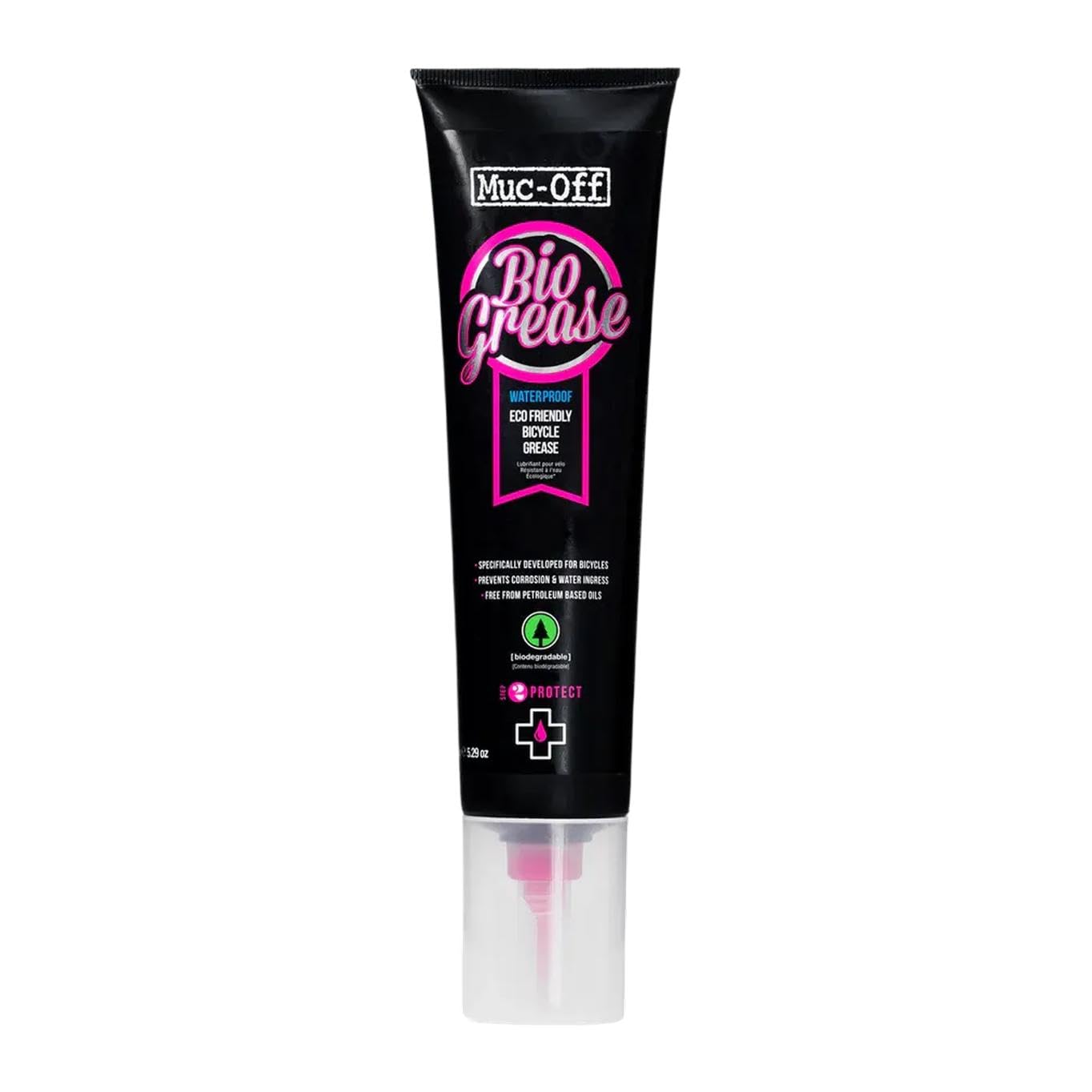
Muc-Off Bio Grease

Muc-Off Bio Grease

Eco-friendly grease

Our Score 9.4/10
Check Price

Worth Noting

  • Premium-priced compared to non-biodegradable alternatives
Consistency
NLGI 2
Water Resistance
Good
Corrosion Protection
Bearing Compatibility
Steel, ceramic
Read the full review

Fully biodegradable grease with a pleasant scent and good performance on bike bearings. Its premium price and unknowns around long-term durability under heavy use make it a niche choice for eco-conscious riders rather than a primary bearing grease for demanding conditions.

Bottom line: Best for environmentally focused riders who accept a premium price and can accept performance that matches standard greases rather than exceeding them.

10

Peaty's Assembly Grease

Peaty's Assembly Grease

Eco assembly grease

Our Score 9.4/10
Check Price

Worth Noting

  • Long-term durability under heavy bearing loads is a known vulnerability.
Consistency
Water Resistance
High
Corrosion Protection
Yes
Bearing Compatibility
Steel, carbon
Read the full review

Peaty's Assembly Grease offers a biodegradable synthetic formula that resists water washout and won't harm carbon components. It is an eco-friendly alternative to conventional greases. However, long-term durability under heavy bearing loads is not yet established, making it a choice for riders who prioritize environmental impact over proven track records.

Bottom line: Best for eco-conscious riders who trust the brand and are willing to accept performance uncertainty over environmental benefits.

How to Choose

Water Resistance

Water resistance is determined by the grease's thickener and base oil. A grease that fails the water washout test will leave bearings exposed to rust and contamination. If you ride in rain or muddy conditions, prioritize greases with proven water resistance such as polyurea or lithium complex formulations.

Greases labeled 'waterproof' often use aluminum or calcium sulfonate thickeners that repel moisture effectively. For casual road cyclists, even a standard NLGI 2 grease may suffice, but mountain bikers should choose one specifically rated for high water washout resistance.

Corrosion Protection

Corrosion inhibitors prevent rust from forming on bearing races and steel balls. These additives are sacrificial — they sacrifice themselves to protect the metal. In humid or coastal environments, a grease with strong corrosion additives (often zinc or molybdenum compounds) extends bearing life significantly.

Without adequate corrosion protection, even a well-greased bearing can pit and fail within a single winter season. Look for explicit mentions of rust inhibitors in the spec sheet.

High-Pressure Capability

High-pressure (EP) additives, such as molybdenum disulfide or graphite, prevent metal-to-metal contact under extreme loads. These are critical for bottom brackets and hubs under heavy pedaling forces, but overkill for light-duty components like derailleur pulleys.

A grease with EP additives will feel thicker and may increase drag in freehub bodies. If you ride aggressively, prioritize EP-rated greases; for casual use, standard grades provide adequate protection.

Bearing Compatibility

Not all greases are safe for all bearing materials. Ceramic bearings require a low-friction, non-abrasive grease to avoid damaging the smooth surface. Carbon components need a grease that won't cause galvanic corrosion or degrade the composite.

Steel bearings are the most forgiving — any quality bike grease works. The key is to match the grease to the specific bearing type: ceramic, steel, or carbon. Using a high-pressure grease on ceramic bearings can actually increase friction.

Consistency and Application

Consistency, measured by NLGI grade, affects how well the grease stays in place. NLGI 2 is the standard for bike bearings — thick enough to resist centrifugal force but not so thick that it creates drag. Slickoleum's 'light buttery' consistency (NLGI 1) is ideal for suspension but runs off bearings.

Application ease matters: a grease that separates in the tube or hardens over time wastes money. Squeeze tubes are convenient for home mechanics, while tubs offer better value for heavy users. Always check the tube tip design — some break under grease gun pressure.

Frequently Asked Questions