Tools & Maintenance

15 Best Bike Pump of 2026: Buy with Confidence in Accuracy and Durability

Which bike pumps actually deliver accurate pressure and last beyond a season? This guide helps you choose based on your riding style and budget.

A bike pump that reads 10 PSI high or fails after three months is worse than no pump at all — you either underinflate or find yourself stranded. Budget models often trade gauge accuracy and durable internals for a low price, forcing riders to replace them sooner than expected.

Mid-range floor pumps from established tool brands solve this by pairing metal barrels with large, calibrated gauges. Mini pumps and electric options add portability or convenience but introduce their own trade-offs in pressure range and battery life.

The right pump depends on how you ride: daily commuters need a floor pump they can trust for years, while weekend riders might prioritize a compact backup. This guide breaks down the choices by real-world performance, not marketing specs.

1

Topeak JoeBlow Sport III

Top Pick
Topeak JoeBlow Sport III

Road cyclists

Our Score 9.4/10
Check Price

Worth Noting

  • For cyclists who pump multiple tires daily, the pump's longevity can be inconsistent across units.
Weight
3.7 lbs
Material
Alloy Steel
Max Pressure
160 PSI
Valve Compatibility
Presta, Schrader, Dunlop
Read the full review

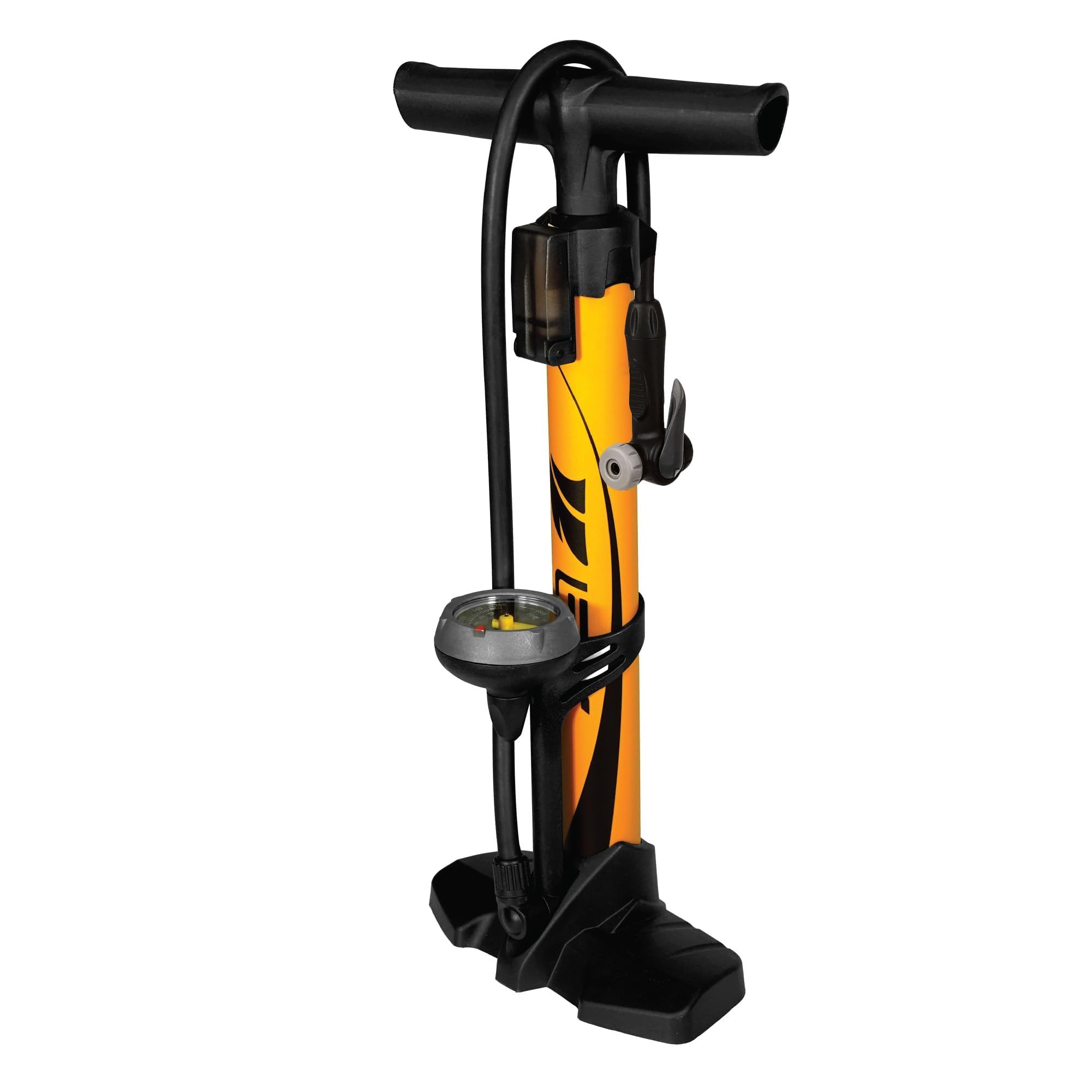
The Topeak JoeBlow Sport III's 3-inch analog gauge reads pressure clearly to within a couple PSI, and the alloy steel barrel provides a stable, solid feel when pumping. The dual-valve head locks onto Presta, Schrader, and Dunlop valves without adapters, and the handle is comfortable for rapid inflation to 160 PSI. This pump requires less effort at high pressures than many budget alternatives, which is a direct result of its well-sealed barrel and smooth piston action.

This pump suits road cyclists and commuters who inflate tires to 80–120 PSI and want reliable gauge accuracy without spending premium money. However, owners using it daily for high-volume tasks or in harsh conditions have noted that pump longevity can vary between units. For the typical weekend rider or garage use, the JoeBlow Sport III should deliver years of service, but those who need bulletproof daily reliability should consider the warranty terms or an alternative with a longer track record.

Bottom line: A practical choice for riders who prioritize gauge accuracy and build quality — just ensure your usage frequency aligns with the pump's durability profile.

2

Fanttik X9 Pro

Fanttik X9 Pro

Electric convenience

Our Score 9.4/10
Check Price

Worth Noting

  • Battery range is limited
Weight
1.2 lbs
Material
Max Pressure
150 PSI
Valve Compatibility
Read the full review

The Fanttik X9 Pro inflates bike tires quickly with digital precision and an automatic shut-off that stops at the preset pressure. It is compact enough to carry in a jersey pocket or saddle bag. Battery capacity handles a few tire fills before needing a recharge — suited for topping up at home or before a ride rather than inflating multiple car tires in one session. This electric pump suits cyclists who want fast, hands-free inflation and are comfortable managing battery life between uses.

Charge the pump after each use to keep it ready for your next ride

Bottom line: An electric pump that delivers speed and convenience for cyclists who want to skip manual pumping, as long as the battery range matches your typical ride-prep routine.

3

SKS Rennkompressor

SKS Rennkompressor

Brand loyalists

Our Score 9.4/10
Check Price

Worth Noting

  • At 2.86 kg, it is heavier than many floor pumps - less convenient to move between bikes
Weight
2.86 kg
Material
Aluminum/wood
Max Pressure
230 PSI
Valve Compatibility
All (MV Easy head)
Read the full review

The SKS Rennkompressor delivers 230 PSI through an aluminum barrel and wood handle, fitting all valve types. Its legendary status is built on German engineering, but the broader cycling community's experience is limited - making it a bet on brand heritage rather than widespread user validation.

Bottom line: A solid choice for SKS loyalists who value German craftsmanship, but cautious buyers may prefer a pump with more varied user reports.

4

Vibrelli Floor Pump

Vibrelli Floor Pump

Home mechanics

Our Score 9.2/10
Check Price

Worth Noting

  • Pump head may eventually lose its seal in high-use scenarios, requiring replacement.
Weight
2.5 lbs
Material
Max Pressure
160 PSI
Valve Compatibility
Presta & Schrader (T-Valve)
Read the full review

This floor pump packs a large analog gauge, a T-valve for Presta and Schrader valves, and a 5-year warranty into a sub-$35 package — features you'd expect to pay more for. It delivers reliable inflation for home mechanics who want solid performance without the premium price tag. Some users have noted that the pump head can wear out over time, but for casual to moderate use around the house, that tradeoff is manageable. It's best suited for budget-conscious riders who prioritize value and don't require the absolute durability of a professional shop pump.

Bottom line: A sensible buy for home mechanics who want near-premium features without the near-premium cost, as long as you accept the pump head's long-term reliability is not guaranteed.

5

Schwinn Air Center

Schwinn Air Center

Casual riders

Our Score 9.2/10
Check Price

Worth Noting

  • Pressure gauge may show readings off by several PSI
Weight
2.5 lbs
Material
Alloy Steel
Max Pressure
120 PSI
Valve Compatibility
Presta & Schrader
Read the full review

The Schwinn Air Center delivers decent build quality and consistent inflation at moderate pressures for a low price. Its alloy steel barrel feels sturdy enough for casual home use. The analog gauge is readable, though readings can vary by several PSI. Pumping above 70 PSI requires noticeably more effort, and long-term durability under frequent use remains uncertain. This pump fits best for the occasional rider who tops off tires a few times a season and doesn't rely on exact pressures. It is not a good match for road cyclists needing precise high-pressure inflation or daily commuters expecting years of service.

Bottom line: This pump suits occasional topping-off for casual riders who don't need high pressure accuracy; for regular use or road cyclists, budget up for a more durable model.

6

Pro Bike Tool Mini

Pro Bike Tool Mini

Budget backup

Our Score 9.0/10
Check Price

Worth Noting

  • Valve attachment can take a few tries with Presta valves
  • Pump may not withstand frequent daily use; best reserved for emergency backup.
Weight
4.3 oz
Material
Max Pressure
100 PSI
Valve Compatibility
Presta & Schrader
Read the full review

At 4.3 oz with a 100 PSI rating and included frame mount, the Pro Bike Tool Mini Pump is a solid emergency companion. Compared to the more feature-rich top pick, this pump prioritizes weight savings and simplicity. It suits cyclists who need a compact backup for occasional roadside repairs and can accept that long-term durability may be limited — daily high-pressure use will stress the pump. The valve attachment has a learning curve, but once mastered it works reliably.

Twist the pump head collar fully before attaching to the valve — this ensures a secure seal.

Bottom line: This pump is a capable emergency backup for riders who value weight and portability over long-term daily durability.

7

BV Floor Pump 160psi

BV Floor Pump 160psi

Budget floor

Our Score 9.0/10
Check Price

Worth Noting

  • Real-world reliability and gauge accuracy are unconfirmed due to the absence of customer feedback.
Weight
Material
Max Pressure
160 PSI
Valve Compatibility
Presta & Schrader
Read the full review

This BV pump hits the lowest price point for a 160 PSI floor pump with a smart valve head compatible with Presta and Schrader. Without verified customer feedback, though, real-world reliability and gauge accuracy remain unknown. It suits a budget-conscious cyclist willing to take a chance on an untested product for casual use.

Bottom line: This BV pump makes sense for a budget-minded cyclist who prioritizes low upfront cost and is comfortable with unknown long-term performance.

8

Bell High Volume Pump

Bell High Volume Pump

Fat tires

Our Score 9.0/10
Check Price

Worth Noting

  • Pressure gauge readings can be unreliable
Weight
2 lbs
Material
Nylon
Max Pressure
100 PSI
Valve Compatibility
Presta & Schrader
Read the full review

Moves large air volume quickly up to 60 PSI with minimal effort, making it a good fit for fat tire, cruiser, and kid bike owners. It’s not suitable for road cyclists needing high pressure, and durability can be a concern — the pump may struggle with consistent use at higher pressures. The gauge is often inaccurate, but for low-pressure applications that’s a minor inconvenience.

Bottom line: Best for fat tire, cruiser, and kid bike owners who need quick volume without high-pressure demands.

9

Tiakia 260 PSI Mini

Tiakia 260 PSI Mini

Ultra-high pressure

Our Score 9.0/10
Check Price

Worth Noting

  • May unscrew valve core on some Presta valves during use
Weight
0.33 lbs
Material
Aluminum alloy
Max Pressure
260 PSI
Valve Compatibility
Presta, Schrader, Woods
Read the full review

The Tiakia Mini Pump delivers a remarkable 260 PSI maximum in a pocket-friendly 0.33-pound design, ideal for road tire emergencies. Valve compatibility is the trade-off: the pump may unscrew the core on certain Presta valves, so check your valve type before relying on it.

Bottom line: A capable backup for road rides where high pressure is critical, provided you verify Presta valve compatibility beforehand.

10

Franklin Foot Pump

Franklin Foot Pump

Foot operation

Our Score 9.0/10
Check Price

Worth Noting

  • Pressure gauge can be inaccurate
Weight
2.6 lbs
Material
Alloy Steel
Max Pressure
100 PSI
Valve Compatibility
Schrader & Presta (via adapter)
Read the full review

The Franklin Foot Pump’s foot operation lets you inflate tires without bending, useful in tight spaces or when you prefer not to crouch. However, the pressure gauge can drift and the pump may show wear with frequent use, making it best for occasional, low-stakes tire top-ups.

Bottom line: Best for riders who need a foot-operated pump for occasional use and don’t rely on gauge accuracy.

11

Panaride Floor Pump

Panaride Floor Pump

Ultra-budget

Our Score 9.0/10
Check Price

Worth Noting

  • Under frequent use, plastic parts can crack
Weight
0.33 lbs
Material
Alloy Steel
Max Pressure
120 PSI
Valve Compatibility
Presta & Schrader
Read the full review

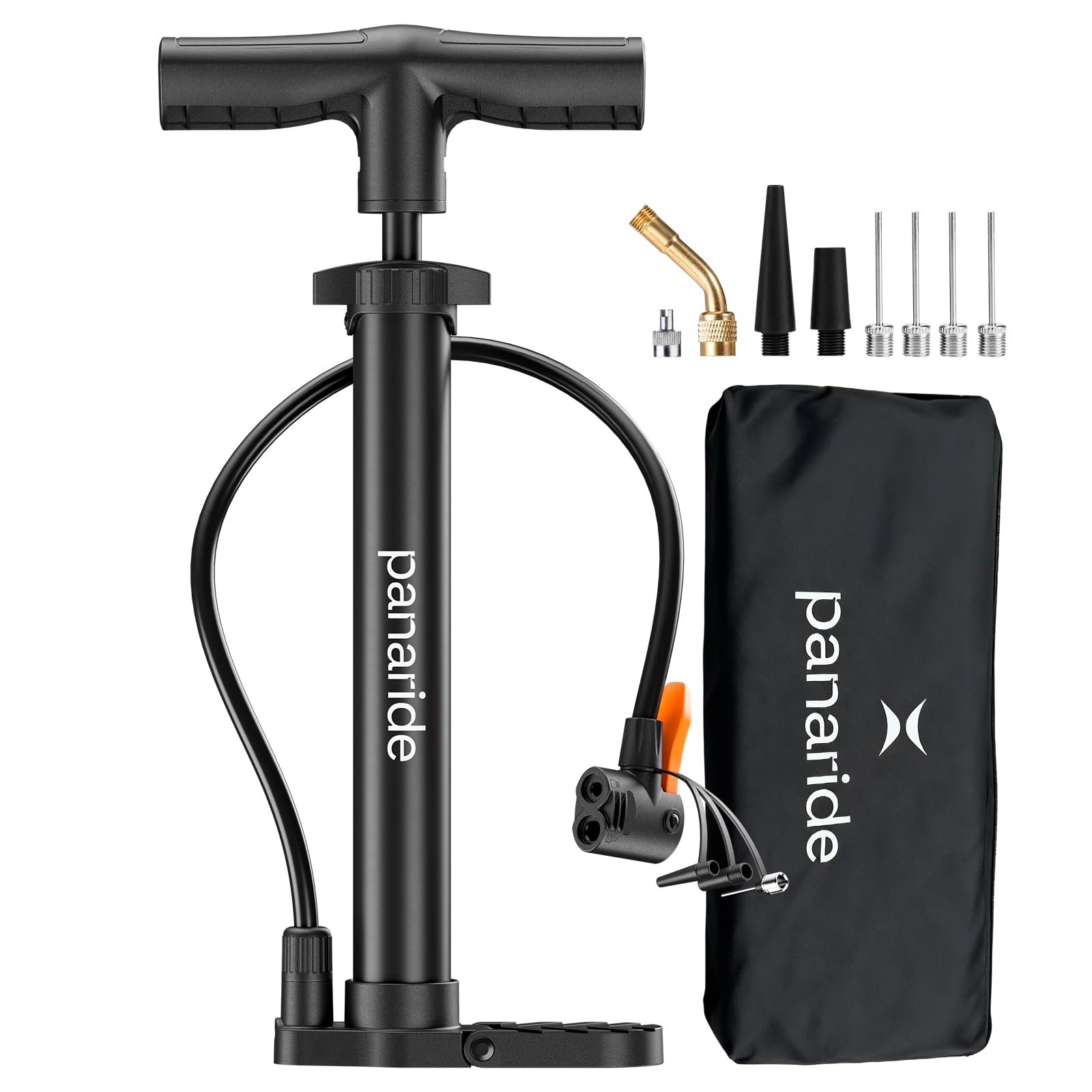
Weighing just 0.33 lbs, the Panaride floor pump is notably compact and budget-friendly, making it convenient to carry for occasional tire top-ups. It supports both Presta and Schrader valves and reaches 120 PSI. However, its plastic components can crack under repeated use, so this pump is best saved for infrequent inflation rather than daily cycling.

Bottom line: This pump works for ultra-budget buyers who need a compact, occasional-use pump and accept that plastic parts may not withstand heavy handling.

12

TOOLITIN Floor Pump

TOOLITIN Floor Pump

Occasional use

Our Score 9.0/10
Check Price

Worth Noting

  • Gauge can give inconsistent readings, reducing confidence for precise inflation.
Weight
2.2 lbs
Material
Aluminum barrel
Max Pressure
160 PSI
Valve Compatibility
Presta & Schrader
Read the full review

This mid-range pump offers a solid aluminum barrel and 160 PSI capacity at a budget-friendly price. But the analog gauge can deliver inconsistent readings, and some units may show wear after limited use – a better fit for occasional home use than for riders who need accurate pressure or long-term durability.

Bottom line: Sufficient for topping off tires on bikes used for casual rides, where exact PSI isn't critical.

13

HOVVIDA Electric

HOVVIDA Electric

Low-cost electric

Our Score 9.0/10
Check Price

Worth Noting

  • After several tire fills, the battery may have less charge than anticipated.
Weight
1.5 lbs
Material
Max Pressure
150 PSI
Valve Compatibility
Read the full review

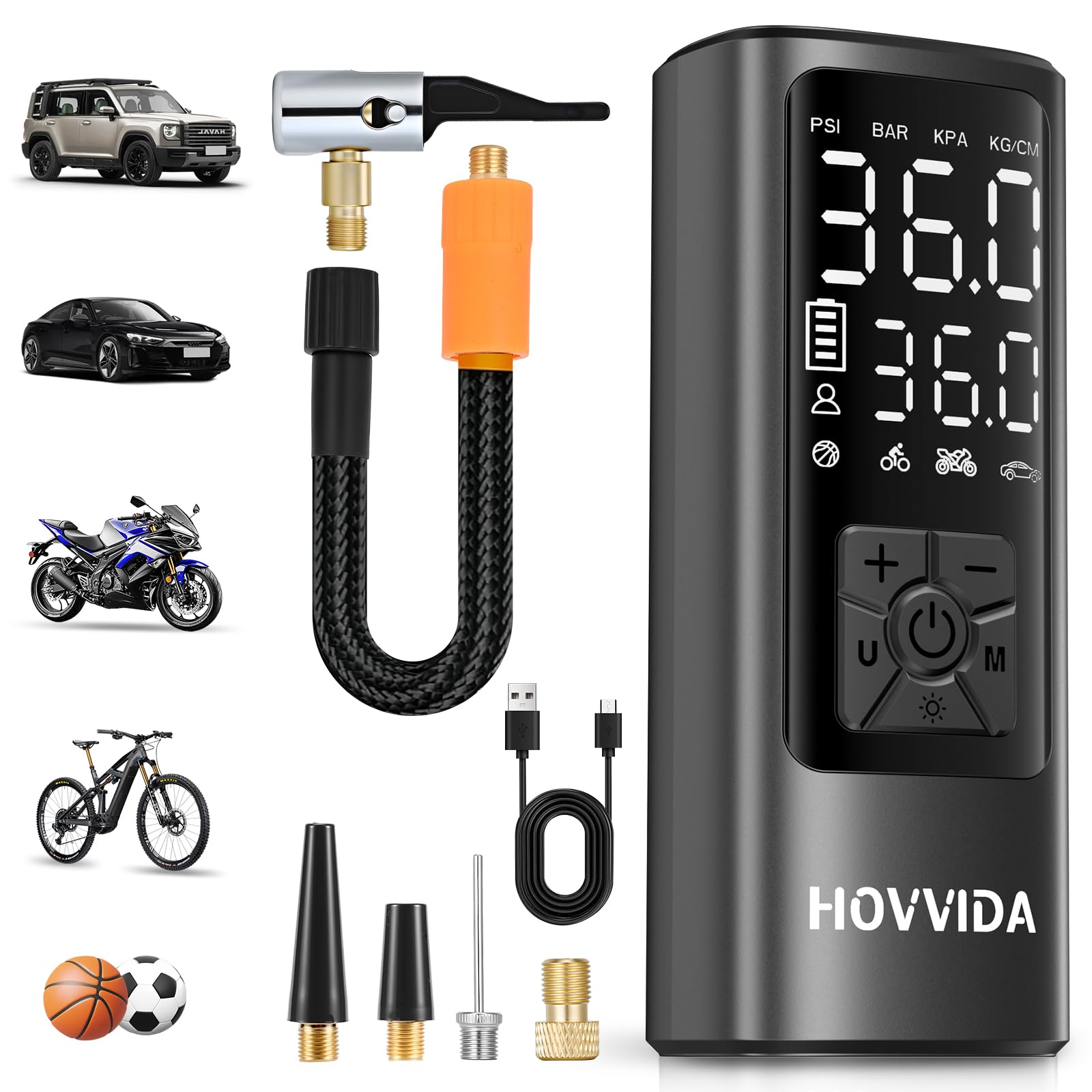
This electric pump handles bike tires with digital precision and auto shut-off, plus easy portability. Battery may drain faster than expected after a few fills, and long-term durability is not well documented. Best for occasional top-ups rather than regular use.

Bottom line: For casual riders who need only occasional tire top-ups, this budget electric pump offers convenience without a big investment.

14

Vibrelli Mini Pump

Vibrelli Mini Pump

Backup pump

Our Score 8.8/10
Check Price

Worth Noting

  • Attaching to Presta valves can require a deliberate technique to get a good seal
Weight
4.3 oz
Material
Max Pressure
120 PSI
Valve Compatibility
Presta & Schrader
Read the full review

The Vibrelli Mini Pump delivers consistent build quality in a pocket-sized package. While the slimmer alternative in this set prioritizes weight savings, the Vibrelli strikes a balance with a sturdier frame mount and 120 PSI capacity. It suits cyclists who need a dependable backup for roadside emergencies, though attaching to Presta valves takes a bit more attention than some alternatives.

Bottom line: For commuters and weekend riders wanting a compact pump that won't let them down, this is a sensible choice – just expect to practice the Presta attachment a few times.

15

BV Mini Pump 120psi

BV Mini Pump 120psi

Emergency only

Our Score 8.8/10
Check Price

Worth Noting

  • For anything beyond occasional roadside use, the pump may stop working sooner than expected.
Weight
3.4 oz
Material
Max Pressure
120 PSI
Valve Compatibility
Presta & Schrader (Smart Valve)
Read the full review

This pump is tiny and light enough to stash in a jersey pocket or under a saddle, and the price lets you keep spares in every bag. But the valve head may not fit all Presta or Schrader stems, and the internal components can wear out after a handful of uses. It belongs in a saddlebag as a just-in-case tool, not as your go-to pump for regular rides.

Bottom line: Keep this in your saddlebag for the flat you hope never happens, but plan on replacing it if you ever need to use it more than once.

How to Choose

Maximum Pressure

Road bike tires typically need 80–130 PSI, while mountain and hybrid tires run 30–60 PSI. A pump rated for 160 PSI handles both, but pushing a low-volume pump past 100 often requires significant effort if the barrel is narrow.

Mini pumps under 120 PSI are fine for topping off, but getting a road tire to full pressure with a tiny cylinder takes dozens of strokes. Floor pumps with a larger bore move more air per stroke, making high-pressure inflation manageable.

Valve Compatibility

Presta valves are standard on road bikes and higher-end models; Schrader is common on entry-level bikes and cars. A pump head that works with both without adapters saves fumbling on the roadside.

Dual-head designs (like Topeak's TwinHead) lock onto each valve type without swapping parts. Some budget heads rely on a single recessed hole that can loosen a Presta valve core when unscrewed — a known frustration with mini pumps like the Tiakia.

Gauge Accuracy

A cheap analog gauge can be off by 10–15 PSI, leading to under- or over-inflated tires that affect grip and puncture resistance. Gauges on mid-range floor pumps (like the 3-inch analog on the Topeak) are calibrated to within ±2 PSI.

Mini pumps and electric units often omit a gauge entirely or rely on a tiny needle that's hard to read. Separate tire pressure gauges cost $10 but are worth it if your pump's gauge is suspect.

Build Material

Steel barrels and heads withstand years of pushing against high pressure without cracking. Aluminum barrels are lighter but can warp under extreme force. Plastic components — especially on budget pumps — are the first failure point, often breaking at the head or base within months.

Look for a pump with a metal barrel and a reinforced head (preferably brass or steel). Nylon bodies (like the Bell high-volume pump) are acceptable only for low-pressure use because they flex less under repeated stress.

Portability vs. Performance

Floor pumps offer fast inflation and accurate gauges but weigh 2–4 pounds and need a flat surface. Mini pumps weigh ounces and fit in a jersey pocket but require 100+ strokes to reach road-tire pressure.

Electric pumps split the difference: they're portable (1–2 pounds) and inflate automatically in under a minute, but battery life limits you to a few tire fills per charge and they can't run continuously. Choose based on whether your primary use is at home or on a ride.

Frequently Asked Questions