Tools & Maintenance

8 Best Electric Bike Pump of 2026: Real-World Performance That Matches Claims

Find a portable electric bike pump that actually delivers on PSI and battery life, not marketing hype. For road cyclists and commuters who need a reliable pump for daily rides.

Many portable electric bike pumps promise 150 PSI and enough battery for multiple tire fills. In practice, real-world performance often lags behind the sticker claims by 20–30%. Battery life shrinks when inflating from flat, and gauges can be off by several PSI.

That doesn't mean a good pump doesn't exist – it means you need to match the pump to your actual riding habits. The key tradeoff is between portability and battery capacity. A tiny pump that fits in a jersey pocket will top off a road tire in seconds but may not handle a full flat, while a heavier unit with a large battery can cover group rides but stays in the car.

This guide cuts through the exaggerated specs to highlight pumps that perform as expected for their intended use. Whether you're a weight-conscious roadie or a commuter looking for a dependable backup, there's a pump that works without the disappointment.

1

Dsuy Mini Pump

Top Pick
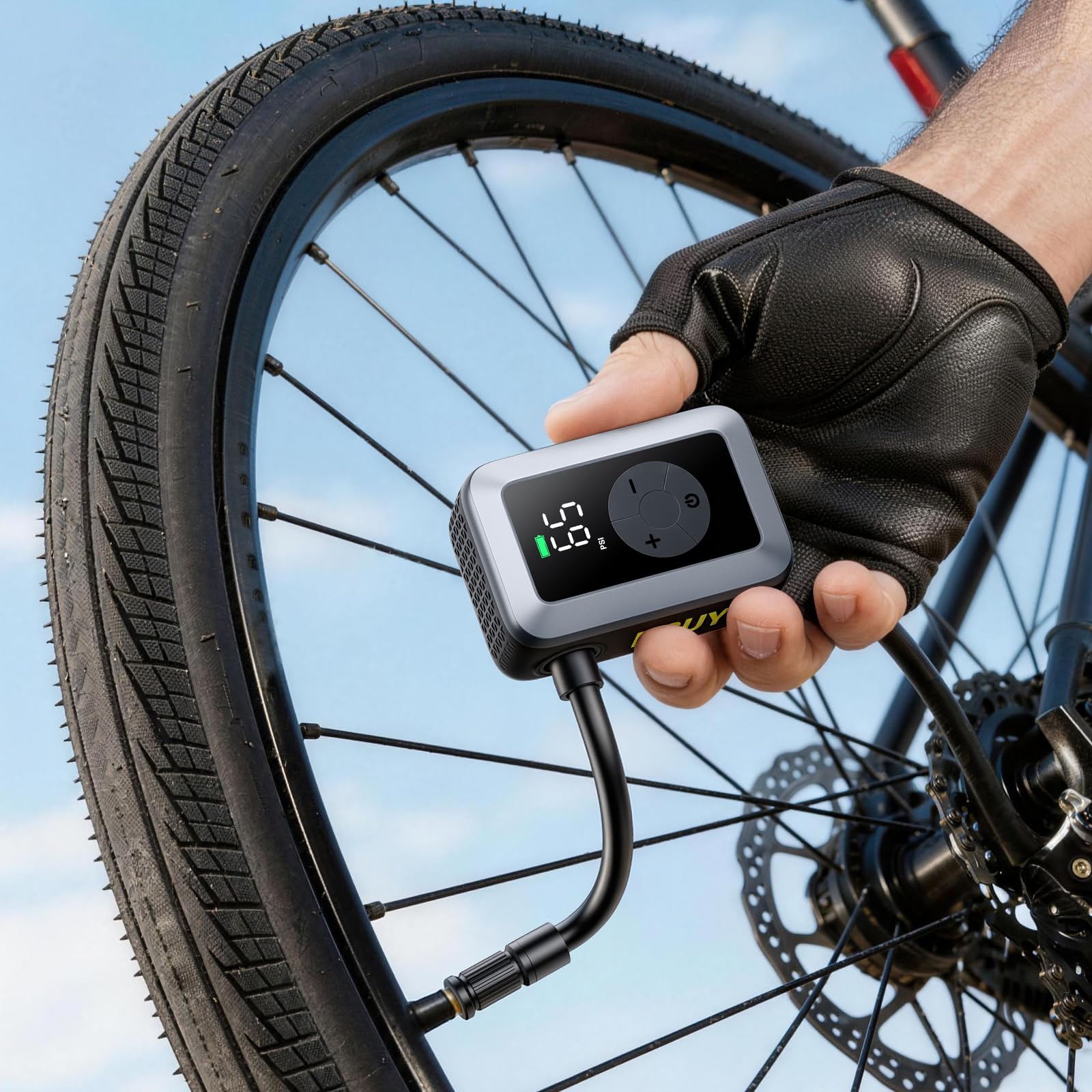
Dsuy Mini Pump

Road, gravel cyclists

Our Score 9.6/10
Check Price

Worth Noting

  • Battery supports only 4-5 full inflations from 0 PSI
Weight
136 g
Battery
14 top-offs, rechargeable
Max PSI
120 PSI
Inflation Speed
10 s
Read the full review

At 136 grams and roughly the size of a small earphone case, the Dsuy Mini Pump sets a weight-to-performance ratio that most competitors don't approach. It pushes 27 L/min of air and reaches 120 PSI, enough to bring a 700x23C tire from 80 to 100 PSI in about 10 seconds. That speed matters less for pre-ride top-offs than for getting back on the road quickly after a mid-ride puncture — provided the tire isn’t fully flat.

The digital gauge reads in real-time and the auto-stop function cuts off at your preset PSI, removing the guesswork that comes with mini hand pumps. Users consistently describe the operation as straightforward: mount the hose, set the target, press start. The pump handles road and gravel tires without strain, though its compact motor does produce the characteristic buzz of any small electric pump. The battery, rated for about 14 top-offs from 80 to 100 PSI, delivers roughly 4-5 full inflations from zero before needing a recharge.

This pump suits road and gravel cyclists who want a rechargeable solution small enough to carry on every ride — a practical replacement for CO2 cartridges. It excels at topping off tires before a ride and at handling the occasional mid-ride flat where the tire has lost most but not all air. If your typical use involves inflating multiple tires from completely flat to 120 PSI in a single session, the battery capacity will fall short; a larger, heavier pump with a bigger cell makes more sense for that job.

Keep it charged between rides — the battery is optimized for daily top-offs and the occasional flat rather than a full group ride rescue session.

Bottom line: For riders who prioritize pocketability over multi-tire capacity, the Dsuy Mini Pump delivers consistent, fast inflation without the bulk or CO2 expense.
2

ETENWOLF S0

ETENWOLF S0

Budget-conscious commuters

Our Score 9.2/10
Check Price

Worth Noting

  • Pressure gauge can read low by about 3 PSI on some units
Weight
245 g
Battery
2400 mAh
Max PSI
150 PSI
Inflation Speed
20 s
Read the full review

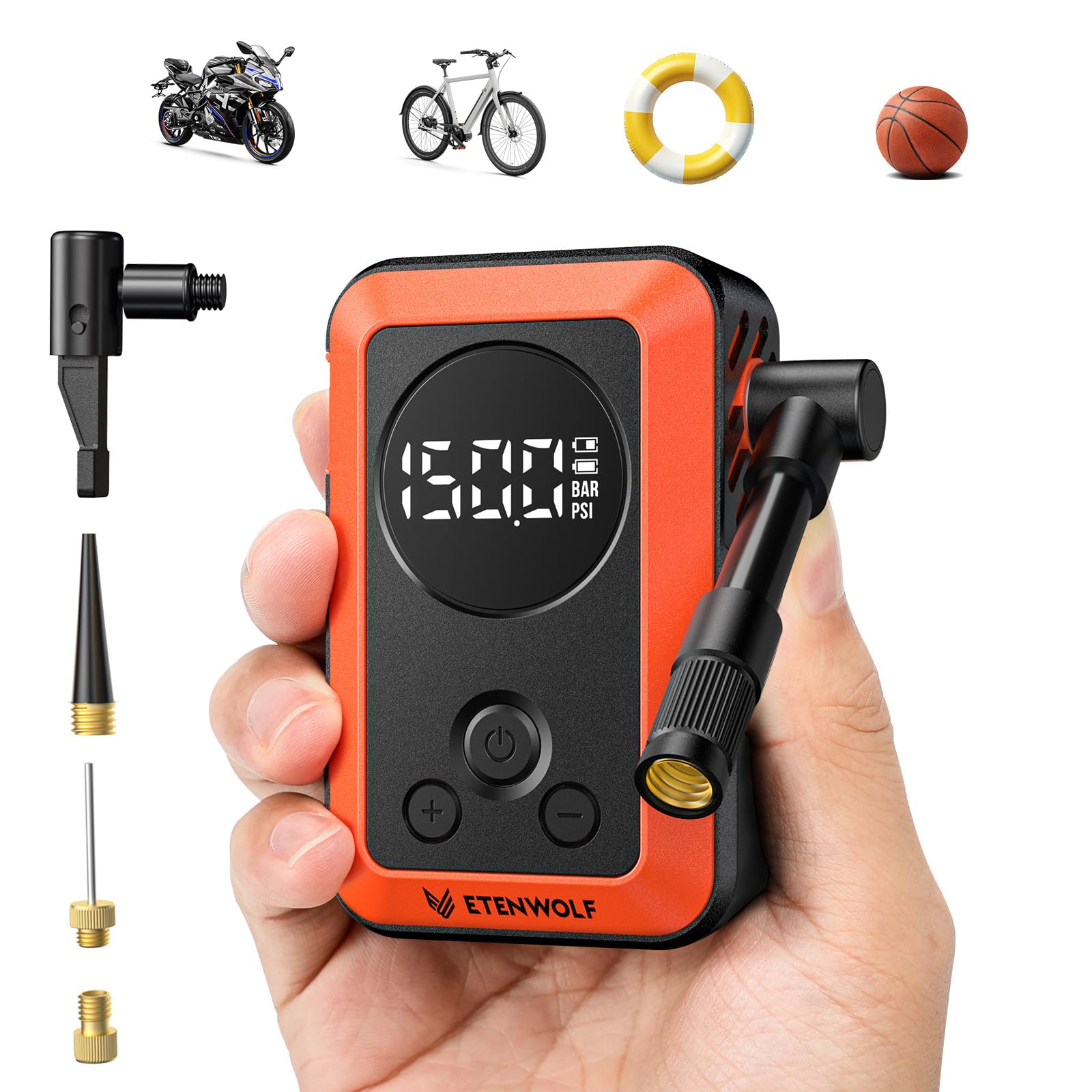
The ETENWOLF S0 keeps the essential specs — 150 PSI, a 2400 mAh battery, and 18 L/min airflow — while dropping the price to a point where most budget pumps cut corners. It inflates a 700x23C tire from 80 to 100 PSI in about 20 seconds, which is competitive for its price tier.

This pump suits cyclists who prioritize cost over weight and premium materials. The plastic housing keeps the price low, and while some units show a ~3 PSI gauge offset, checking with a floor pump before rides resolves the concern. It is a practical choice for commuters and casual riders who need a portable electric pump for pre-ride top-offs.

At 245 grams, it is heavier than ultralight alternatives, but still fits in a saddle bag. The 2400 mAh battery handles multiple top-offs before needing a recharge, so it won't leave you stranded on a typical ride.

Compare the pump's gauge with a known-accurate floor pump before a ride to account for any offset.

Bottom line: For the rider who wants electric inflation without spending triple the price, the ETENWOLF S0 delivers the essential specs with only a minor gauge quirk.

3

HOTO Mini Pump

HOTO Mini Pump

Road, mountain, e-bike

Our Score 9.0/10
Check Price

Worth Noting

  • Battery charge may drop after a week of storage
  • Some units have shown performance changes after several months of use.
Weight
254 g
Battery
8 tires per charge
Max PSI
150 PSI
Inflation Speed
25 s
Read the full review

The HOTO Mini Pump reaches 150 PSI in roughly 25 seconds for a typical road tire, covering the pressures most riders need. It works with both Presta and Schrader valves without adapters, and its compact body fits inside a saddle bag or jersey pocket – though at 254 grams it is heavier than the ultralight options designed for weight-conscious roadies.

Battery life holds well for regular commutes, but some units may lose charge over a week of storage. Occasional performance changes after several months have been noted, meaning this pump suits riders who can charge before each ride and don't need absolute long-term certainty.

This pump fits road and mountain bikers who want a mid-weight tool with high PSI and multi-valve compatibility, as well as commuters who can keep it charged regularly. If you need an ultralight backup for rare flat tires, the slimmer options in this set trade battery capacity for weight savings.

Keep the pump topped up if storing for more than a few days – a quick charge before a ride avoids surprises.

Bottom line: Best suited for riders who need high PSI and multi-type compatibility and are willing to charge the pump before rides.

4

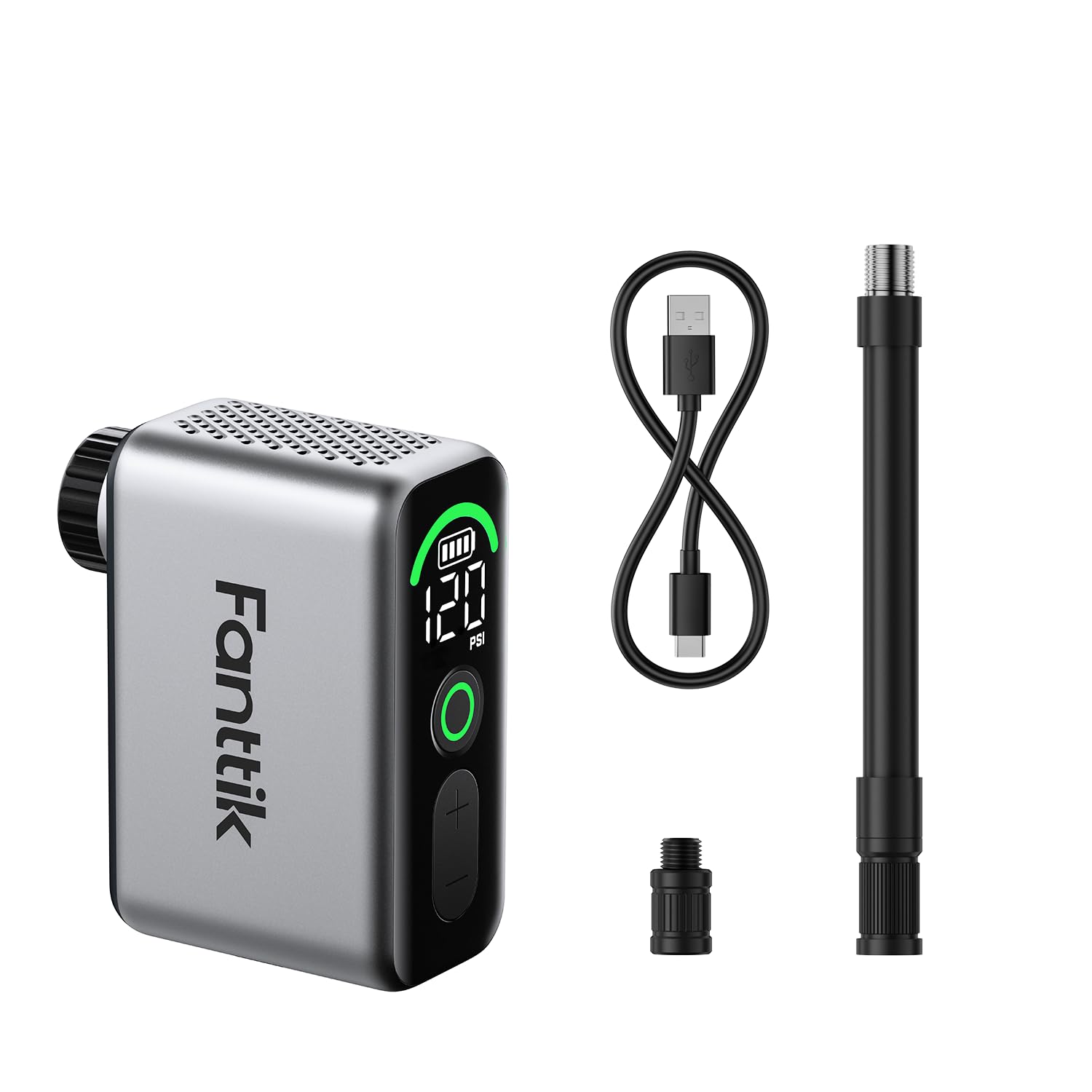
Fanttik X10 Ace Tiny

Fanttik X10 Ace Tiny

Ultralight weight weenies

Our Score 9.0/10
Check Price

Worth Noting

  • Motor noise is noticeable during operation
  • Battery holds enough charge for about one full inflation from flat; ideal for top-offs and single emergencies.
Weight
130 g
Battery
8 top-offs
Max PSI
120 PSI
Inflation Speed
22 s
Read the full review

At 130 grams, the Fanttik X10 Ace Tiny is one of the lightest rechargeable pumps you can carry — small enough to replace two CO2 cartridges in a jersey pocket. It’s a few grams lighter than the Dsuy Mini Pump, though inflation takes 22 seconds instead of 10 for a 700x25C tire from 80 to 100 PSI.

This pump is designed for road cyclists who value every gram and ride with minimal tools. It fits the emergency role: inflate a road tire in 22 seconds, then tuck it away. Best for rides where you expect only one puncture — not for group rides with multiple flats or long tours without USB access.

The Fanttik X10 Ace Tiny makes sense for weight-weenies who don't want to carry separate CO2 cartridges. The 22-second inflation is fast enough for a roadside fix, and the weight savings are real. Just keep expectations aligned with its size — this is a backup, not a daily driver.

Bottom line: For road cyclists who prioritize gram-shaving above all else, the Fanttik X10 Ace Tiny is the lightest rechargeable pump that can handle an emergency flat — just remember it's a one-shot tool.

5

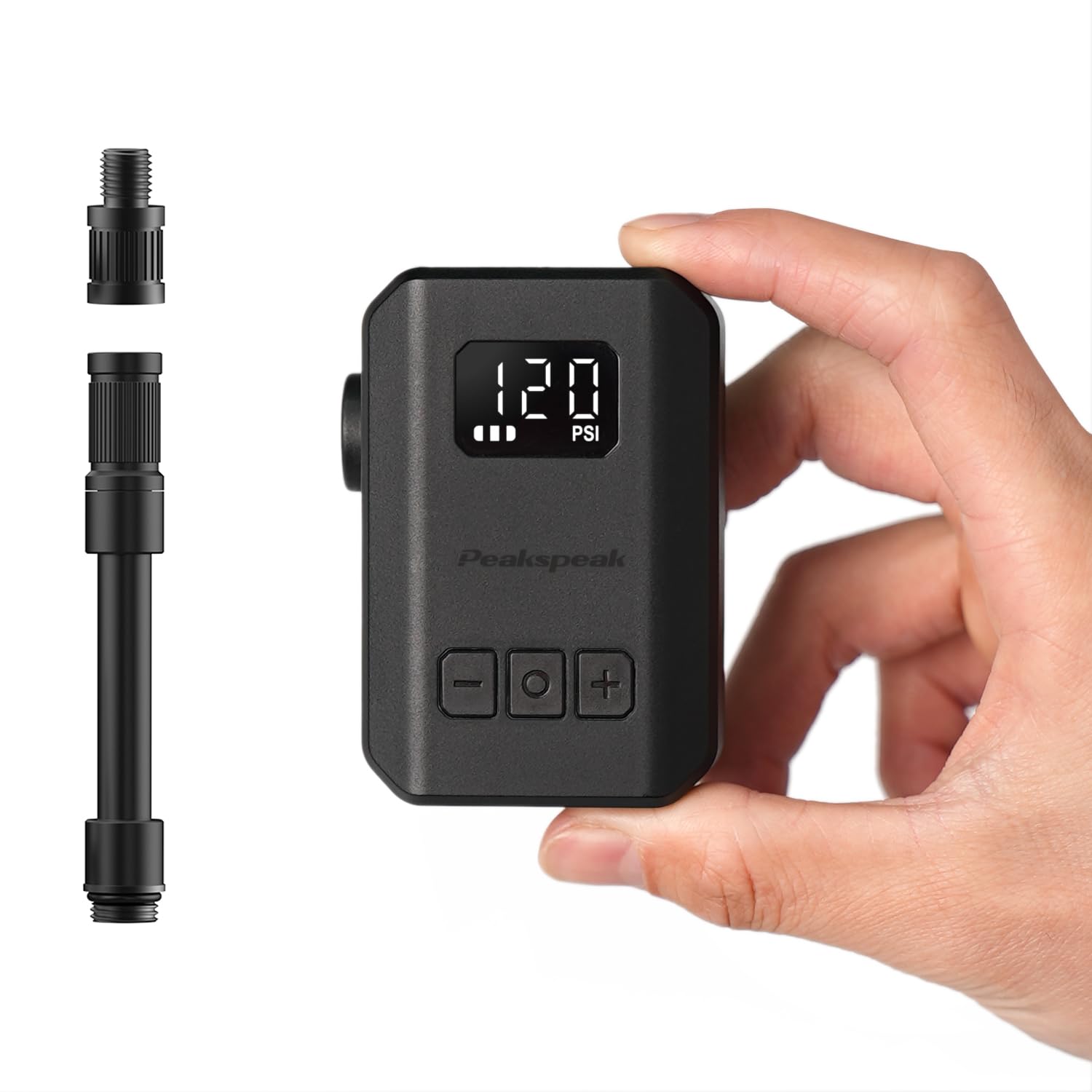
Peakspeak AS260PRO

Peakspeak AS260PRO

Short rides backup

Our Score 9.0/10
Check Price

Worth Noting

  • Limited user feedback means long-term reliability is uncertain for frequent use.
  • Battery capacity is modest
Weight
123 g
Battery
6 tires per charge
Max PSI
120 PSI
Inflation Speed
50 s
Read the full review

The Peakspeak AS260PRO hits the essentials for an emergency pump: pocket-friendly weight, USB-C charging, and automated shutoff at your target pressure. It inflates a 700x25C tire to 80 PSI in about 50 seconds — quick enough for a roadside top-off. The catch is that real-world durability data is thin. Fewer than 150 reviews exist, and the pump's long-term behavior under even occasional use isn't well documented. That makes it a sensible choice as a secondary pump for short recreational rides, not a daily driver for heavy commuters.

Bottom line: Pick this if you need a ultra-light backup pump for occasional roadside fixes and value a budget-friendly price over proven long-term track records.

6

Bosch EasyPump

Bosch EasyPump

Our Score 9.0/10
Check Price

Worth Noting

  • At 430g, too heavy for jersey pockets—better suited to a saddlebag or garage use.
  • Real-world battery life and gauge accuracy remain unverified, leaving room for unit-to-unit variance.
Weight
430 g
Battery
3.0 Ah
Max PSI
150 PSI
Inflation Speed
Read the full review

The Bosch EasyPump carries the brand's reputation for durable powertools into a portable format, offering 150 PSI and a 3.0 Ah battery that should handle several tire top-ups. USB-C charging and an auto-stop digital display match what competitors at this price point provide. Without a substantial base of user feedback, however, real-world behavior—battery life under repeated use and gauge accuracy—is unverified. The specs are on par with pumps costing less, making this a choice for those who prioritize brand consistency over proven track record.

Bottom line: For buyers who trust the Bosch brand and plan to keep this pump in a vehicle or workshop—where weight and the need for user validation matter less—the EasyPump offers familiar quality and a modern charging interface.

7

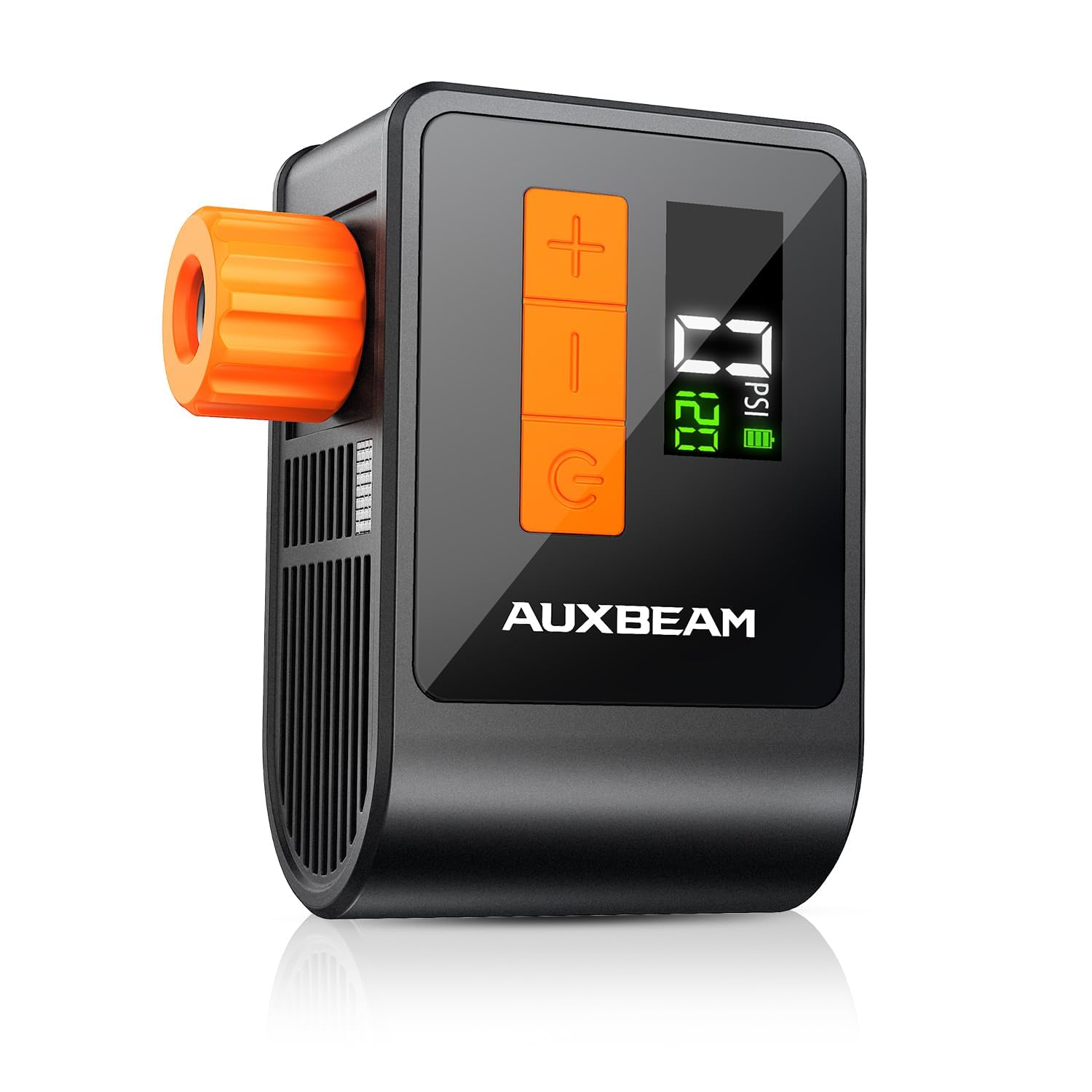
Auxbeam Tiny

Auxbeam Tiny

Compact metal build

Our Score 8.8/10
Check Price

Worth Noting

  • Battery may drain during extended storage
  • Loud operation
Weight
129 g
Battery
Lithium-ion, unspecified
Max PSI
120 PSI
Inflation Speed
40 s
Read the full review

The Auxbeam Tiny's aluminum body feels more substantial than typical plastic pumps. It reaches 120 PSI and works on both MTB and road tires, fitting easily into a jersey pocket. The pump is noticeably loud during inflation, and the battery may drain if left unused for weeks – this suits riders who ride frequently and don't mind noise, but not those who store the pump between long intervals.

Bottom line: Works well as a backup pump for riders who ride weekly and can tolerate some noise, but not for those who store the pump for months between uses.

8

Fanttik X9 Ace

Fanttik X9 Ace

Group rides, high volume

Our Score 8.6/10
Check Price

Worth Noting

  • Built-in gauge may read 3-5 PSI off from a known-accurate source, requiring a separate check for precise pressures.
  • When inflating from completely flat, the battery may deliver fewer than the advertised number of fills
Weight
384 g
Battery
5000 mAh
Max PSI
150 PSI
Inflation Speed
32 s
Read the full review

The Fanttik X9 Ace packs a 5000 mAh battery that inflates a 700x23C road tire from 80 to 100 PSI in 32 seconds, and it can handle several top-offs before needing a recharge. That battery capacity comes at a weight of 384g, noticeably heavier than more portable alternatives, but it means you won't be hunting for an outlet mid-ride.

This pump suits road cyclists who do frequent group rides or commute with a backpack, where the extra grams pay off in convenience. However, the built-in pressure gauge may read 3-5 PSI off from a known-accurate floor pump, so relying on the auto-stop without verification could give you slightly under- or over-inflated tires – worth checking with a separate gauge if you need precise pressure.

Despite the gauge quirk, the X9 Ace delivers fast, consistent inflation cycle after cycle. The 150 PSI max covers road bikes and hybrids, and the compact barrel shape fits under a seat bag or in a backpack easily enough, given its battery size.

Keep a floor pump gauge handy for final pressure checks after the auto-stop to account for the gauge offset.

Bottom line: The Fanttik X9 Ace earns its runner-up spot for riders who prioritize battery endurance over pocket portability – just confirm tire pressure with a separate gauge.

How to Choose

Maximum PSI

Most road bike tires require 80-120 PSI. A pump that claims 150 PSI will handle that, but may struggle to reach max from a completely flat tire. If you only do top-offs, 120 PSI is sufficient. For mountain or e-bikes, 120 PSI is plenty.

The real bottleneck is not the max pressure but the pump's ability to maintain flow at high pressure. Some pumps slow down drastically above 100 PSI, adding 30 seconds to the last 20 PSI.

Battery Capacity

Battery capacity (mAh) determines how many tire fills you get. A 5000 mAh pump can inflate 6-8 road tires from flat, while a 1000 mAh unit may only handle one or two. However, battery life drops in cold weather and when inflating from zero.

Look for real-world fill counts in reviews, not just mAh. Pumps that claim '14 top-offs' often mean small pressure increases, not full inflations. For daily commuting, three full fills per charge is a good baseline.

Weight and Portability

Weight affects where you carry it. Pumps under 150 g fit in a jersey pocket or saddle bag and can replace CO2 cartridges. Heavier pumps (250 g+) are better for frame mounting or garage use.

The tradeoff: lighter pumps have smaller batteries and slower inflation. A 130 g pump may take 40 seconds to inflate a road tire, while a 250 g pump does it in 20 seconds. Decide whether weight or speed matters more for your rides.

Inflation Speed

Speed measured from 80-100 PSI for a road tire. Top picks do it in 10-32 seconds. Faster pumps save time but often generate more noise and heat. Slower pumps (50+ seconds) are still fine for pre-ride top-offs.

Speed matters most when you're on the roadside with a flat. A 10-second pump can get you back on the road quickly, while a 50-second pump feels like an eternity. For group rides, fast pumps are appreciated by everyone.

Frequently Asked Questions