Lights & Electronics

14 Best Bike Odometer of 2026: Choose Between Reliable Wired or Convenient GPS

Tired of confusing bike computers? Find the best odometer for your riding style, from simple wired units to budget GPS trackers.

Picking a bike odometer should be simple: mount it, ride, see your distance. But between confusing manuals, flimsy mounts, and wireless signals that drop near bright headlights, even a basic purchase can feel like a gamble.

The real divide isn't price or brand – it's whether you want a wired sensor that never loses signal, a wireless unit that avoids cable routing, or a GPS computer that works across bikes with no wheel magnet at all. Each choice carries a trade-off in battery life, setup effort, and reliability.

This guide matches each odometer type to the riding style it actually suits, so you invest in a tool that works as expected from the first ride.

1

Garmin Edge 1050

Top Pick
Garmin Edge 1050

Premium luxury

Our Score 9.4/10
Check Price

Worth Noting

  • Occasional touchscreen freezes and random reboots can interrupt rides.
Display
3.5 inch color touchscreen
Battery Life
20 hrs rechargeable
Connectivity
ANT+, Bluetooth, Wi-Fi
Read the full review

The Edge 1050's vivid touchscreen, built-in speaker, and road hazard alerts make it the most feature-rich cycling computer. But its premium price and occasional stability issues — crashes or freezes — mean it is only for those who must have the absolute best, not for value-conscious cyclists who can get similar performance from the Edge 540.

Bottom line: For cyclists who insist on the latest screen and every training metric, and are willing to accept occasional software hiccups, the Edge 1050 delivers unmatched features. For most, the Edge 540 is a smarter buy.

2

COROS DURA Solar

COROS DURA Solar

Bikepackers

Our Score 9.2/10
Check Price

Worth Noting

  • Pairing with third-party sensors like Garmin Varia radar may require patience; some connections fail initially.
  • Firmware updates have occasionally caused errors or temporarily disabled the unit.
Display
2.7 inch color touchscreen
Battery Life
120 hrs solar
Connectivity
GPS + Bluetooth
Read the full review

With a 120-hour GPS battery that solar charging can extend further, the COROS DURA outlasts nearly any bike computer on the market — all at a mid-range price that undercuts Garmin equivalents by a significant margin. The responsive touchscreen and scroll wheel make ride data easy to access, even with gloves. However, pairing with third-party accessories like radar can be temperamental, and occasional firmware updates may introduce errors. Rerouting during navigation also depends on a phone data connection. This is best suited for bikepackers and long-distance cyclists who want multi-week battery life without paying premium prices, and who can tolerate occasional sensor quirks.

Keep the unit’s firmware current via the COROS app; this resolves most connectivity issues with third-party sensors.

Bottom line: For cyclists who measure rides in days rather than hours, the COROS DURA delivers unmatched battery endurance per dollar — just be prepared for occasional accessory hiccups.

3

CATEYE Velo 7 Wired

CATEYE Velo 7 Wired

Beginner cyclists

Our Score 9.0/10
Check Price

Worth Noting

  • Wired cable routing takes care and makes it impractical to move between bikes
  • Printed instructions can be confusing for first-time setup
Display
2.2 inch LCD
Battery Life
3 years coin cell
Connectivity
Wired
Read the full review

The CATEYE Velo 7 delivers dead-simple, accurate speed and distance readings with a battery that lasts years. Its large LCD is easy to read in daylight, and the wired connection means zero signal drops or pairing hassles. The tradeoff: installation requires routing a thin cable along the frame and zip-tying the sensor near the wheel – doable in about 20 minutes, but moving it to another bike means starting over. For a single-bike commuter or casual rider who just wants a reliable odometer without spending more, this is the value champion.

Bottom line: Buy this if you have one bike and want a no-fuss, accurate odometer that won't need batteries for years. It's the simplest path to basic metrics at a price that beats everything wireless.

4

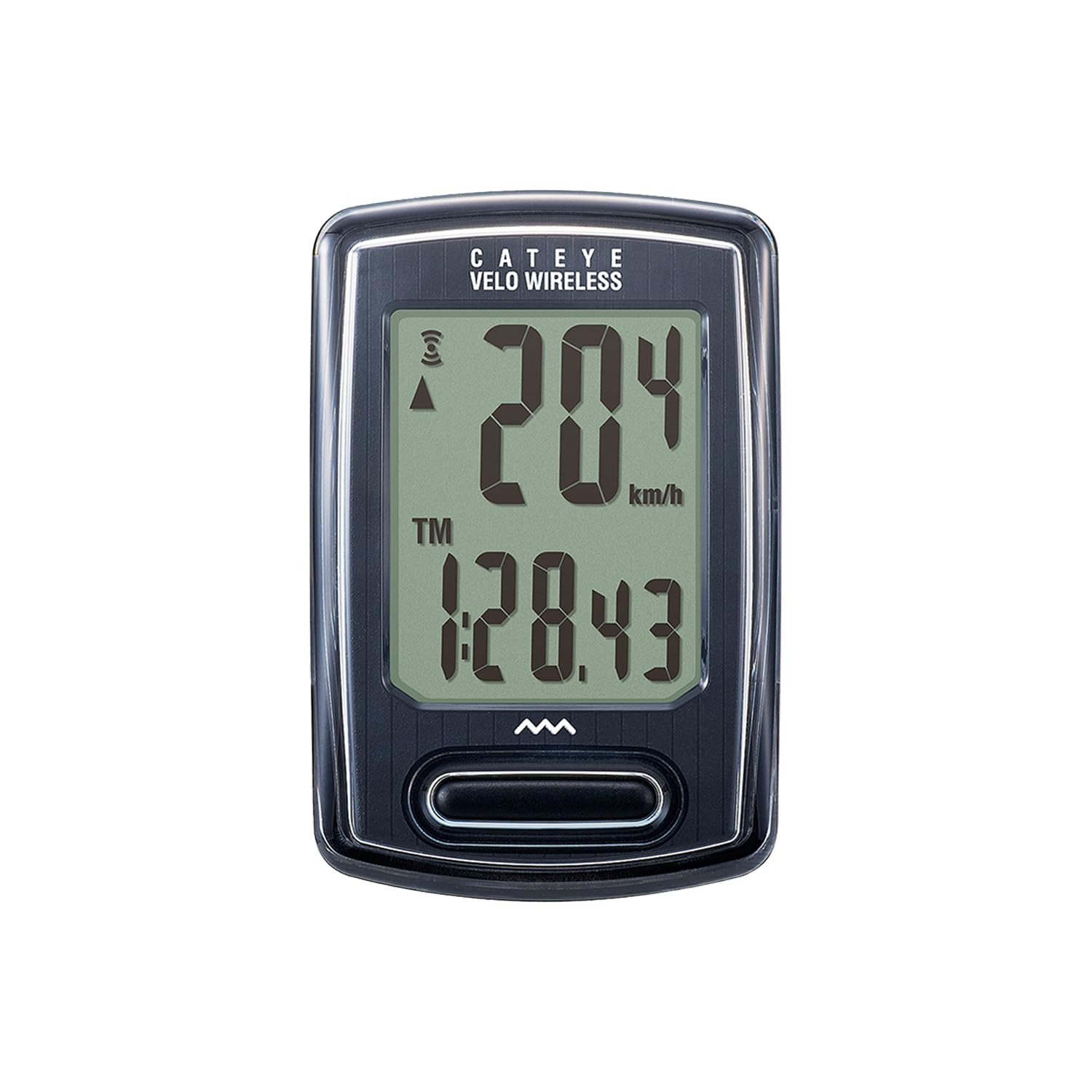
CATEYE Velo Wireless

CATEYE Velo Wireless

Wireless upgrade

Our Score 9.0/10
Check Price

Worth Noting

  • Wireless signal can drop near bright headlights or electromagnetic interference.
Display
LCD, 10 cm
Battery Life
1 year coin cell
Connectivity
Analog Wireless
Read the full review

The CATEYE Velo Wireless offers wireless operation, a programmable odometer, and calorie tracking for under $45. It's a hassle-free upgrade from a wired computer, but the wireless signal can be affected by bright headlights, and the zip-tie mount isn't as secure on rough terrain. For basic distance and speed tracking, the cheaper wired Velo 7 provides more consistent reliability.

Bottom line: Best for riders who want wireless convenience and calorie tracking without a phone, and are willing to accept occasional signal dropouts in certain lighting conditions.

5

Garmin Edge 130 Plus

Garmin Edge 130 Plus

MTB metrics

Our Score 9.0/10
Check Price

Worth Noting

  • Button controls are not intuitive; menu navigation can be clunky
Display
1.8 inch grayscale
Battery Life
12 hrs rechargeable
Connectivity
GPS, ANT+, Bluetooth
Read the full review

Jump count, hang time, and ClimbPro training features are packed into a lightweight body that mountain bikers will appreciate for its small footprint. The grayscale display works for glancing at data but can be hard to read on rough terrain. The 12-hour battery covers most day rides but falls short for all-day epics. Riders who need navigation maps or a larger screen should look at the Edge 540.

Bottom line: Best for mountain bikers who want MTB-specific metrics in a compact package and don't need long battery or a large screen.

6

Garmin Edge 540

Garmin Edge 540

Serious cyclists

Our Score 8.8/10
Check Price

Worth Noting

  • Button-only navigation has a learning curve that can be frustrating when changing settings mid-ride.
Display
2.6 inch color
Battery Life
26 hrs rechargeable
Connectivity
ANT+, Bluetooth, GPS
Read the full review

The Edge 540 packs Garmin's most advanced training features – ClimbPro, Power Guide, adaptive coaching – into a compact body with 26-hour battery life, undercutting the flagship Edge 1050 by roughly half. Where the 1050 offers a vivid touchscreen, the 540 uses button controls that take time to master – not ideal for riders who want to tap through menus mid-ride. But for cyclists who set up their data fields once and rely on physical buttons during hard efforts, the interface becomes a feature, not a frustration. This computer suits serious cyclists who want Garmin's coaching and navigation at a reasonable price, and don't mind spending time upfront learning the menu logic.

Set up your data fields before the ride – trying to adjust menus while pedaling is frustrating.

Bottom line: Go-to GPS computer for cyclists who want Garmin's top training tools without paying for the flagship touchscreen, but they must be comfortable with button navigation.

7

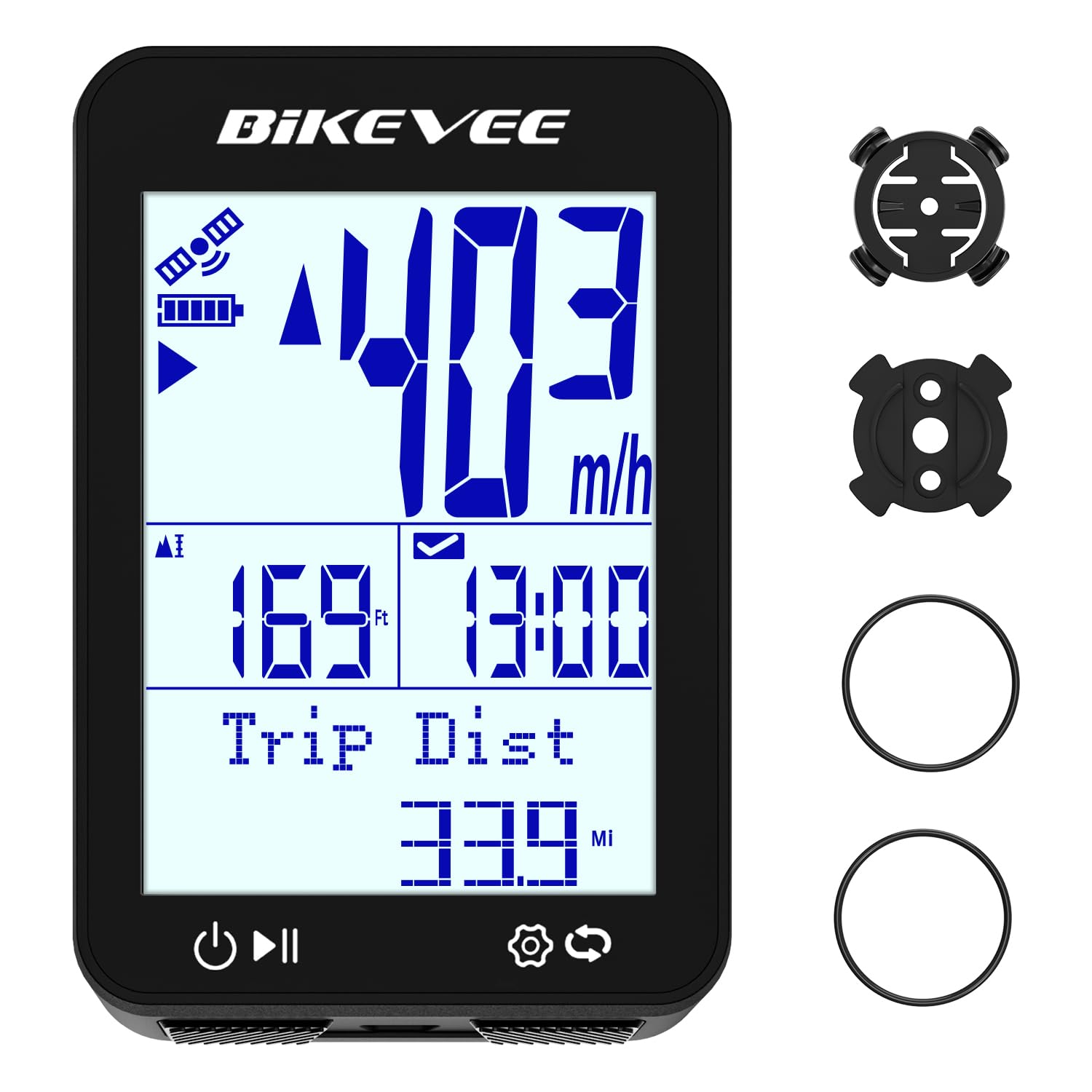
Bikevee GPS BKV310A

Bikevee GPS BKV310A

Ultra-budget GPS

Our Score 8.8/10
Check Price

Worth Noting

  • Handlebar mount can allow the unit to rotate or shift during rides.
Display
2.4 inch LCD, auto backlight
Battery Life
28 hrs rechargeable
Connectivity
GPS only
Read the full review

Bikevee BKV310A offers accurate GPS speed/distance with no wires, a large 2.4-inch display readable in bright sunlight, and 28-hour battery life. Setup is quick and tool-free. However, the handlebar mount can allow the unit to slip or rotate, and GPS lock may take a minute on first use. The CYCPLUS G1 delivers more consistent performance for a few dollars more, making this a fine choice for casual riders who accept these minor tradeoffs.

Bottom line: Best suited for casual riders who want a simple, wire-free odometer and can tolerate occasional adjustments to the mount and a brief wait for GPS lock.

8

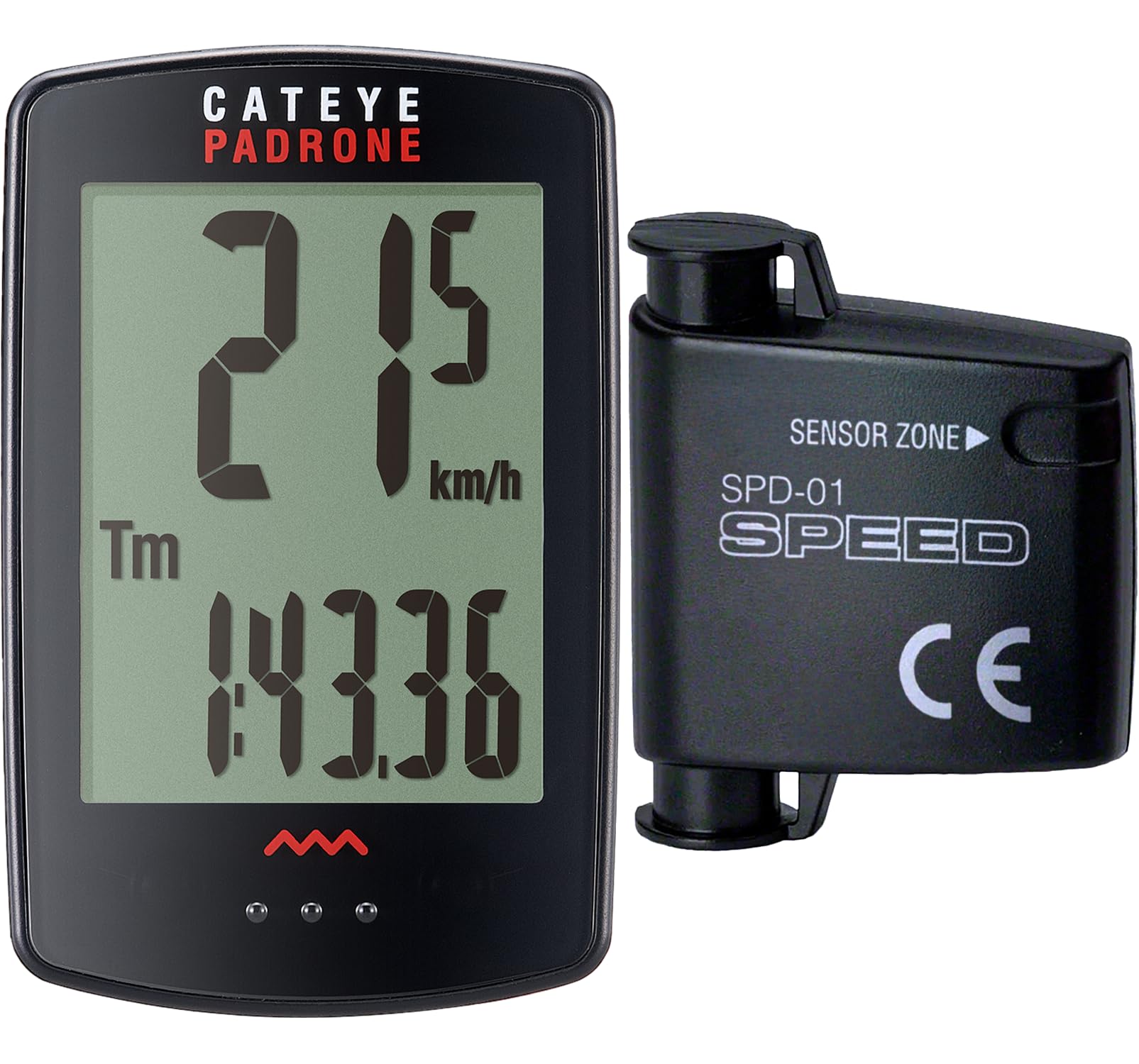
CATEYE Padrone Wireless

CATEYE Padrone Wireless

Easy reading

Our Score 8.6/10
Check Price

Worth Noting

  • On bumpy roads, the FlexTight bracket may lose its grip
  • Without a backlight, the display is unreadable after sunset
Display
5.5 cm oversize LCD
Battery Life
1 year coin cell
Connectivity
Analog Wireless
Read the full review

The Padrone's oversized 5.5 cm display is the easiest-to-read screen among non-GPS bike computers. ClickTec operation — pressing the unit to switch data — reduces fumbling for riders who prefer minimal distraction. This works best on smooth pavement where the FlexTight mount stays secure; on rough terrain the unit can pop off, and wireless interference from bright headlights may cause erratic readings. For older cyclists or anyone who struggles with small LCDs, the Padrone delivers clarity no other wired or wireless computer in this price range matches.

Bottom line: The Padrone is the right choice if reading the numbers trumps every other feature — just keep it on smooth roads and daylight hours.

9

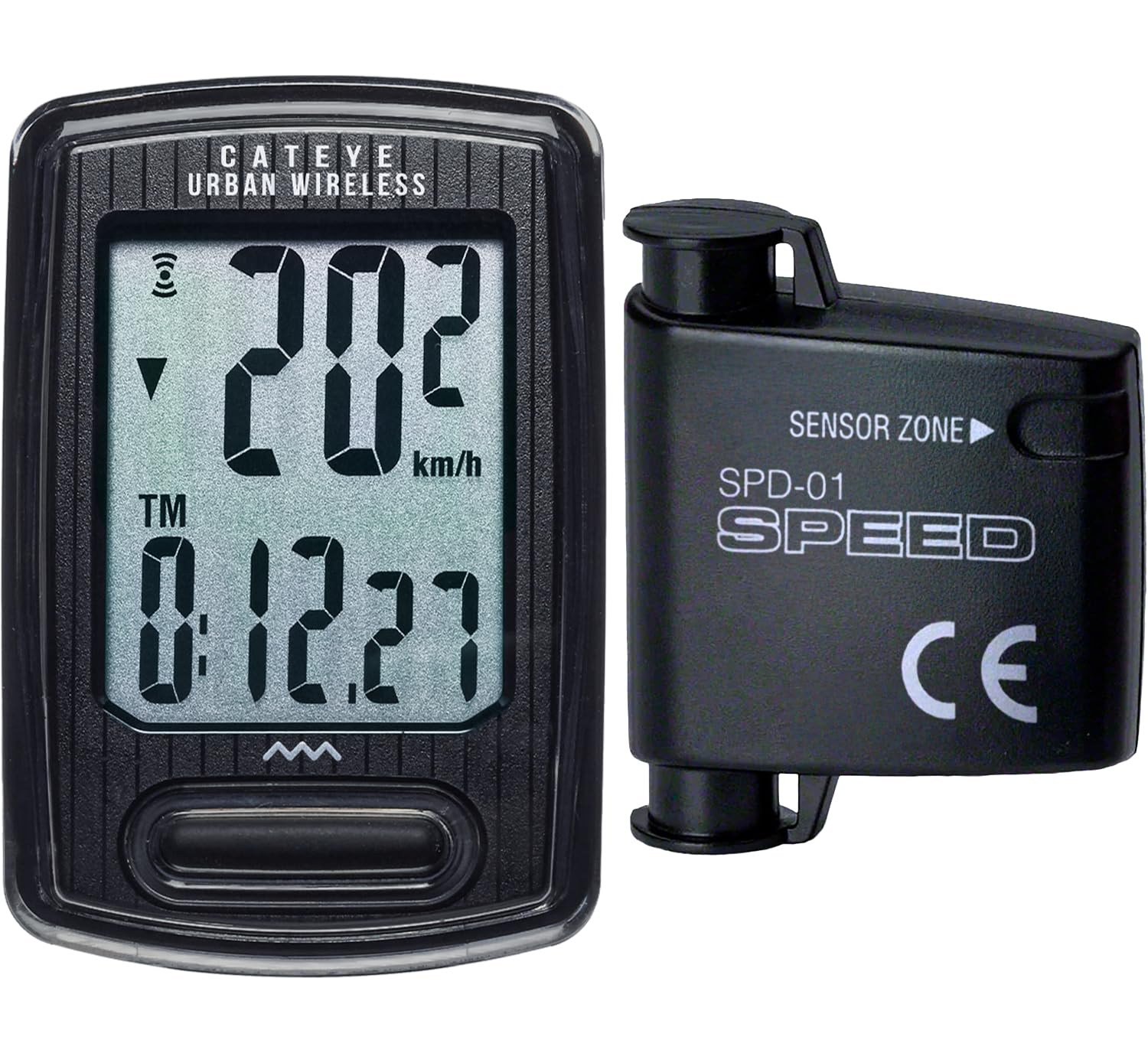
CATEYE Urban Wireless

CATEYE Urban Wireless

Urban commuters

Our Score 8.6/10
Check Price

Worth Noting

  • FlexTight mount may not hold secure on rough terrain or bumpy roads.
Display
LCD
Battery Life
1 year coin cell
Connectivity
Analog Wireless
Read the full review

The CATEYE Urban Wireless delivers the same core metrics as the Velo Wireless—speed, distance, odometer—plus calorie tracking at a lower price. Its FlexTight mount holds steady on pavement but may loosen over bumps. The setup manual can be unclear, though the display is easy to read once configured. For urban commuters who want basic wireless data without paying for the larger Padrone, this is a reasonable alternative.

Bottom line: Best for urban commuters and recreational riders who want affordable wireless functions and don't ride off-road.

10

Garmin Edge Explore 2

Garmin Edge Explore 2

Touring navigation

Our Score 8.6/10
Check Price

Worth Noting

  • 16-hour battery covers most day rides but not multiday tours without a charge
Display
3 inch color touchscreen
Battery Life
16 hrs rechargeable
Connectivity
GPS, Bluetooth, Wi-Fi
Read the full review

Garmin's mapping and navigation are the core strength here, with a large touchscreen that stays readable in sunlight and automatic rerouting on the fly. eBike compatibility adds range integration. The 16-hour battery limits use to day rides rather than multiday touring, and it skips the advanced training analytics of the Edge 540 — a tradeoff that suits navigator-first cyclists.

Bottom line: Best for recreational cyclists who value easy navigation over training data and keep rides within a single charge.

11

CooSpo BC107 (with sensors)

CooSpo BC107 (with sensors)

ANT+ support

Our Score 8.6/10
Check Price

Worth Noting

  • Some units may develop charging issues or become less consistent over months of use
Display
2.4 inch LCD, auto backlight
Battery Life
80 hrs claimed
Connectivity
ANT+, Bluetooth, GPS
Read the full review

The CooSpo BC107 delivers ANT+ sensor support, long battery life, and accurate GPS at a price under $40 with HR and cadence sensors — unmatched value. However, its interface requires patience to learn, and some units may develop charging issues over time, making the CYCPLUS G1 a more dependable choice for riders who prioritize simplicity.

Bottom line: Best for budget-minded cyclists who are willing to learn the interface and don't mind some durability risk in exchange for the sensor bundle value.

12

CYCPLUS G1 GPS

CYCPLUS G1 GPS

GPS budget value

Our Score 8.4/10
Check Price

Worth Noting

  • First-time GPS acquisition can take 30 seconds to several minutes, which may delay quick ride starts.
  • Screen navigation feels unintuitive; setting up mileage and switching modes takes some trial and error.
Display
2-inch LED, auto backlight
Battery Life
55 hrs rechargeable
Connectivity
GPS only
Read the full review

The CYCPLUS G1 skips the wheel magnet and wire tangle entirely, using GPS alone to track speed, distance, and altitude. Its 55-hour rechargeable battery means weekly charging rather than nightly, and the auto-adjusting backlight keeps the 2-inch display readable from dawn to dusk without any button pressing. Speed and distance readings hold up well against GPS watches — close enough for training and touring.

This computer suits riders who want GPS logging without spending over $50, especially those who swap bikes often or dislike fiddling with wheel sensors. The catch: satellite lock can take 30 seconds to several minutes on first power-up, delaying the start of quick rides. The interface also takes some trial-and-error — cycling through screens isn't immediately obvious. These quirks matter less for planned weekend rides and riders comfortable with a brief setup ritual.

Turn on the unit a few minutes before you ride so it can lock onto satellites while you gear up.

Bottom line: If you want accurate GPS tracking, long battery life, and zero wheel sensors on a budget, the CYCPLUS G1 delivers — provided you can live with a slow startup and a little menu patience.

13

GEOID CC600 Color

GEOID CC600 Color

Budget navigation

Our Score 8.4/10
Check Price

Worth Noting

  • Navigation rerouting and map display are less polished than premium units
  • App connectivity and firmware updates can be unreliable
Display
2.4 inch color LCD
Battery Life
24 hrs rechargeable
Connectivity
ANT+, Bluetooth, GPS
Read the full review

Color display with customizable data fields and fast GPS lock make the CC600 feel more premium than its price suggests. Navigation and app connectivity are less polished — map rendering can be clunky, and pairing may require patience. Riders who want maximum features per dollar and are comfortable with occasional troubleshooting will find strong value here; those seeking a seamless experience should look to the top pick.

The user manual is sparse — expect to spend time setting up and pairing.

Bottom line: A feature-rich budget option for tech-savvy cyclists who want color navigation and indoor training on a tight budget, but not for those demanding Garmin-like polish.

14

CooSpo BC107 (Solo)

CooSpo BC107 (Solo)

ANT+ support

Our Score 8.4/10
Check Price

Worth Noting

  • Costs more than the identical bundled BC107 with no added features
Display
2.4 inch LCD, auto backlight
Battery Life
80 hrs claimed
Connectivity
ANT+, Bluetooth, GPS
Read the full review

The CooSpo BC107 (orange) delivers the same accurate GPS tracking, long battery life, and ANT+ sensor support as the bundled BC107 model, but at a higher cost and without sensors. The confusing setup and occasional reliability concerns from the original carry over. This version makes sense only if the orange color is a deciding factor or if you already own compatible sensors.

Bottom line: Buy this orange BC107 only if the color matters to you or if you already own sensors and want the same hardware in a different shade.

How to Choose

Wired vs Wireless vs GPS

Wired computers are the simplest and most reliable: a thin cable from the fork sensor directly to the handlebar unit. No batteries to recharge, no signal dropouts. The trade-off is that installation requires careful cable routing, and moving the unit to another bike means unhooking everything.

Wireless computers eliminate the cable but still need a wheel magnet and fork sensor. They use a radio signal that can be disrupted by certain LED headlights or interference from other electronics. GPS computers require no sensors at all, but they need a clear view of the sky to lock satellites, and startup can take up to a minute or more.

GPS models let you swap bikes instantly and often include altitude, gradient, and route logging. For most riders today, the convenience of no wires outweighs the occasional satellite delay.

Display Size and Readability

A larger display means you can read speed and distance at a glance without squinting. Units like the CATEYE Padrone use an oversized LCD that is a clear win for older eyes or anyone who rides in bright sun. But bigger screens often mean a bulkier device that may not fit cleanly on a crowded handlebar.

Smaller displays (under 2 inches) keep the computer compact and light, but the numbers can be hard to read while riding, especially under glare. If you ride after dark, look for an automatic backlight – many budget GPS units now include this, while most traditional wireless models do not.

Battery Life and Type

Battery life ranges from a three-year coin cell in wired computers to 120 hours in high-end solar GPS units. Coin cells are replaceable and last for years, but they are not rechargeable. Rechargeable lithium batteries in GPS units need a USB cable every few days to weeks, but they typically last for the life of the device.

For commuters and casual riders, a year-long coin cell is perfectly convenient. For bikepackers who spend weeks on the road, the COROS DURA's solar-assisted 120-hour battery is a game-changer. Know how often you are willing to charge before picking a battery type.

Ease of Installation and Setup

Wired computers require routing a sensor wire along the fork and brake cable, which takes about 20 minutes but can be frustrating if the wire is too short. Wireless sensor-based units are faster to install, but both types need a magnet on a spoke and accurate wheel-size input for correct distance.

GPS computers are the easiest to install: just mount the bracket and turn it on. However, initial setup often involves scrolling through menus to set units, time, and data fields – a process that many users find confusing, especially on budget models.

Data Fields and Sensor Compatibility

Basic odometers show speed, distance, and trip time. If you want cadence, heart rate, or power, you need a computer that supports ANT+ or Bluetooth sensors. Budget GPS units like the CooSpo BC107 accept ANT+ sensors, but many wired and wireless models do not.

If you use a power meter or heart rate strap, confirm the computer's connectivity before buying. Otherwise, a simple speed/distance computer is all you need, and it will be cheaper and simpler to operate.

Frequently Asked Questions