Indoor Training

8 Best Bike Rollers of 2026: Choose the Right Type for Your Riding

Which bike rollers actually suit your training? Whether you need balance practice, quiet indoor riding, or maximum realism, this guide matches the right roller to your goal.

Many bike rollers claim to be for everyone, but the real split is between traditional three-drum models that teach balance and rear-wheel-only trainers that skip the skill. The marketing often blurs the two, leaving buyers to discover the difference after purchase.

This guide breaks down that trade-off directly. Whether you want to master handling or just spin quickly indoors, the choice comes down to how much time you're willing to invest in learning to balance versus hopping on and riding.

The biggest decision is between proven affordability and a more immersive, realistic feel. Your training goals and patience will decide which roller fits best.

1

Elite Quick-Motion

Top Pick
Elite Quick-Motion

Tech enthusiasts

Our Score 8.8/10
Check Price

Worth Noting

  • Premium price places it beyond entry-level budgets.
  • Long-term reliability of the floating mechanism has not been confirmed through extensive real-world use.
Type
Three-drum with floating
Resistance
Magnetic, 3 levels
Portability
Read the full review

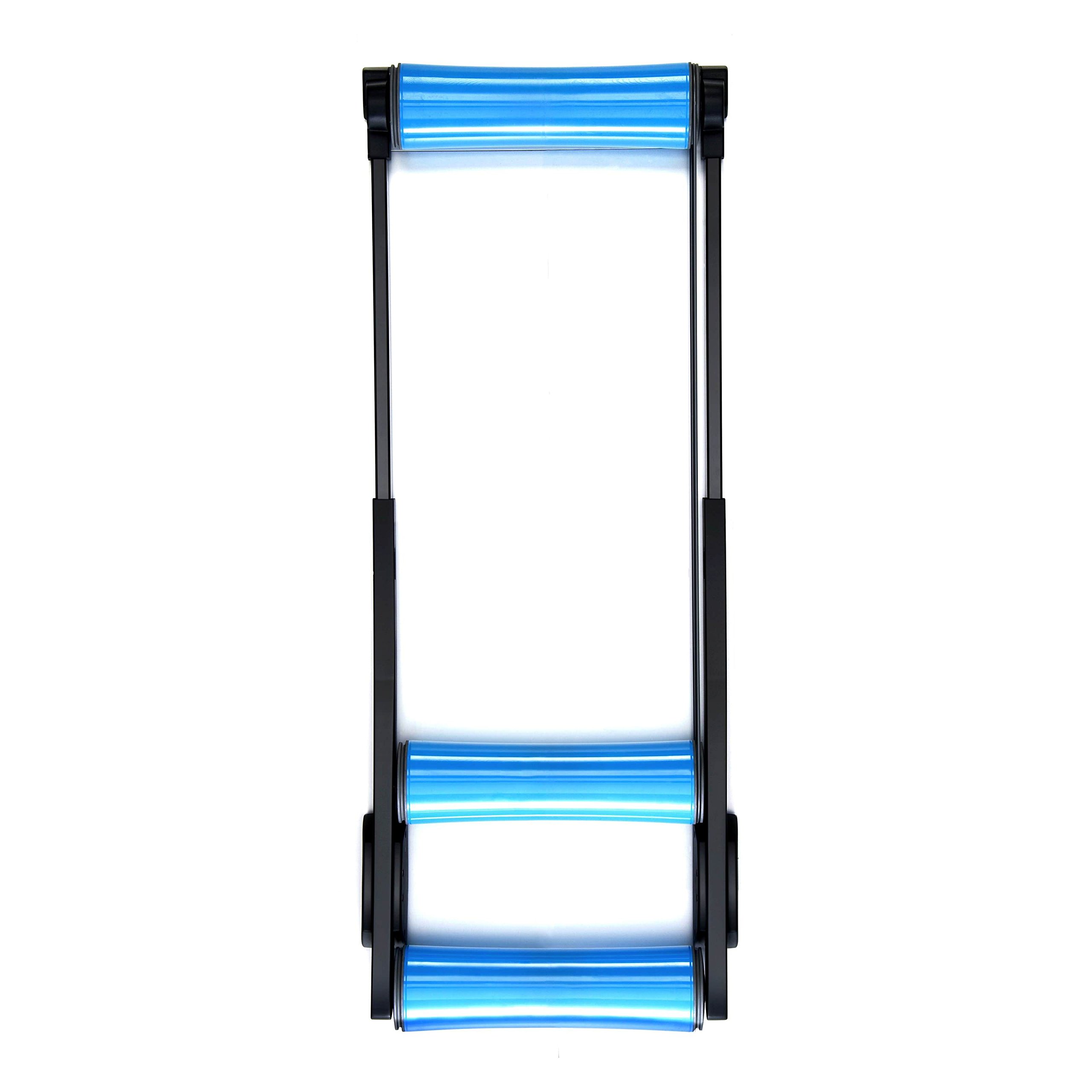
The Elite Quick-Motion's floating system allows the entire roller frame to move laterally, mimicking the feel of riding outdoors while reducing vibration transmitted through the bike. Three magnetic resistance levels let riders adjust difficulty without changing drums.

This design appeals to cyclists who prioritize realism and comfort over saving money — the floating motion feels more natural than fixed rollers. However, with limited extended-use feedback from owners, the floating mechanism's durability over years of regular training remains uncertain. Budget-conscious buyers or those wanting a low-risk purchase should look to the more established Antares.

Bottom line: For riders who value road-like feedback and are willing to accept some uncertainty about long-term wear, the Quick-Motion delivers a distinctive feel — but the Antares remains the safer recommendation for most.

2

Minoura FG220

Minoura FG220

Heavy riders

Our Score 8.8/10
Check Price

Worth Noting

  • Only two magnetic resistance levels, limiting workout variety for structured training.
  • No balance skill development
Type
Fork-mount hybrid
Resistance
Magnetic, 2 levels
Portability
Read the full review

The Minoura FG220 trades the skill-building challenge of three-drum rollers for a stable, no-balance-required platform. Its fork-mount design locks the front end in place while the rear wheel spins on two drums, eliminating the need to remove the front wheel. With a maximum load of 350 lbs, this unit supports heavier cyclists and aggressive pedaling without wobble, making it a practical choice for riders who prioritize stability over developing balance.

This trainer suits cyclists who want a steady indoor ride with minimal setup fuss and don't need the feedback of traditional rollers. The magnetic resistance offers only two levels — a light spin and a moderate load — so structured interval workouts are limited. For riders focused on smooth spinning or warmups, the FG220 delivers a solid foundation, but those seeking progressive resistance or balance training should look at the true roller options in this roundup.

Keep the front fork tight in the mount and verify wheelbase compatibility before purchase — the FG220 fits most but not all frames.

Bottom line: A sturdy, high-capacity hybrid trainer for riders who prioritize stability and fork-mount convenience over balance training or variable resistance — best suited for steady spinning and light warmups.

3

Elite Arion

Elite Arion

Budget entry

Our Score 8.8/10
Check Price

Worth Noting

  • Long-term durability under heavy use is not well documented, making this a higher-risk choice for riders who keep equipment for years.
Type
Three-drum folding
Resistance
Air (up to 280W)
Portability
530 x 730 x 250 mm
Read the full review

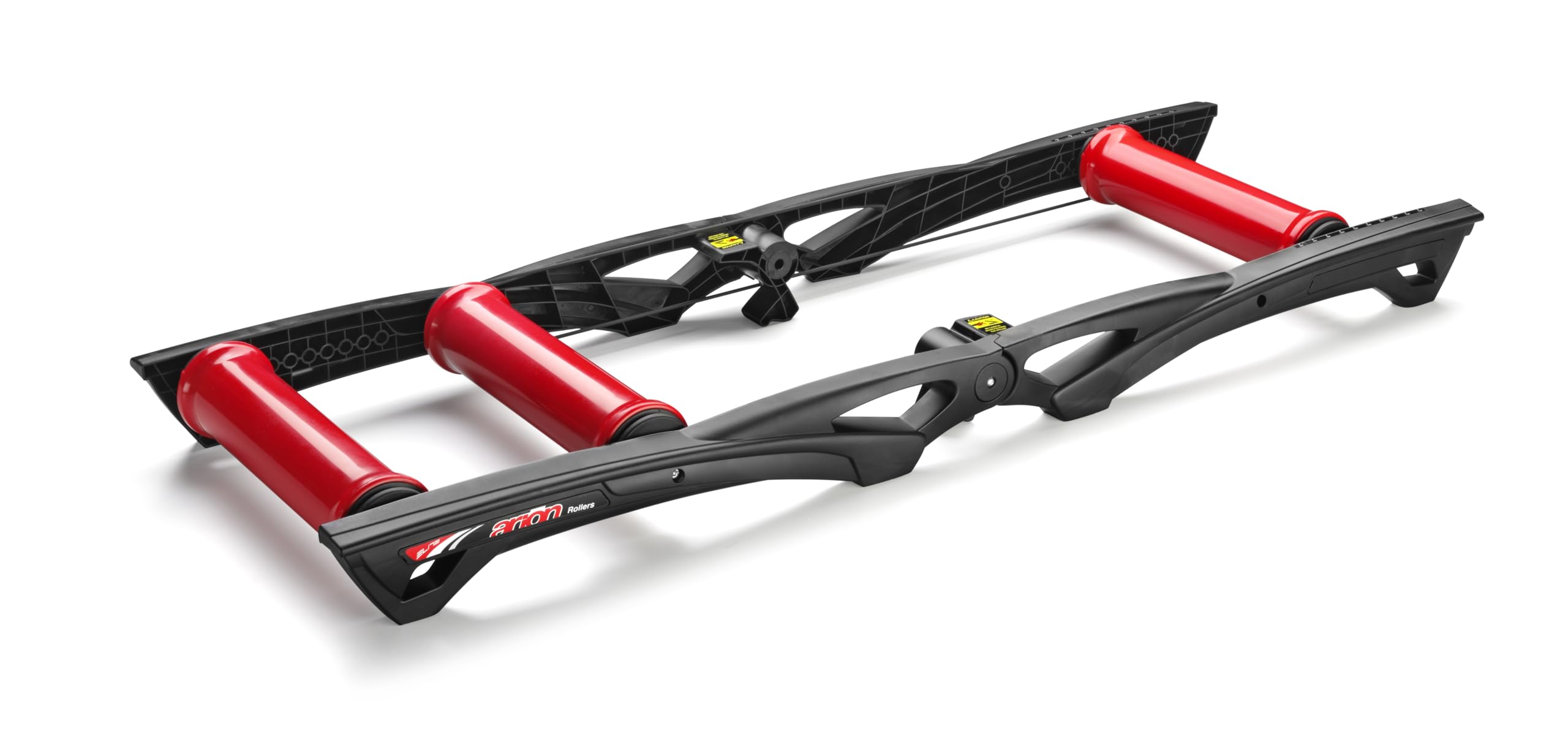
The Elite Arion undercuts nearly all traditional rollers on price while adding app compatibility through an optional sensor. Its air resistance provides up to 280W at 40 km/h, sufficient for most indoor sessions. However, the limited volume of verified user experience means long-term build quality and real-world durability remain uncertain — this is a budget choice that requires accepting some unknowns.

Bottom line: Best suited for riders who want the lowest-cost roller setup and are willing to accept potential reliability trade-offs in exchange for app integration.

4

TacX Galaxia

TacX Galaxia

Experienced riders

Our Score 8.6/10
Check Price

Worth Noting

  • Swing motion requires an adjustment period for new users.
  • Noise level varies; some units produce rattling sounds.
Type
Three-drum with swing
Resistance
None
Portability
31.5 x 19.7 x 5.3 in
Read the full review

The Galaxia’s patented fore-aft rocking system delivers a realistic road feel that fixed-drum rollers can’t match. This design supports out-of-saddle efforts and reduces the risk of drifting off the drums, making it a favorite among riders who train for sprints and climbs.

It suits cyclists who are already comfortable with balance on rollers and want a more immersive experience. The swing motion has a learning curve — first rides may feel disorienting — and noise levels can vary between units, so placement in a garage or basement is recommended over a quiet living space.

Start on a low resistance setting and keep a wall nearby during the first few sessions to build confidence with the swing motion.

Bottom line: For experienced riders who prioritize realistic ride feel and plan to practice standing efforts, the Galaxia offers a unique advantage over traditional rollers.

5

Elite Arion Mag

Elite Arion Mag

Magnetic resistance fans

Our Score 8.6/10
Check Price

Worth Noting

Type
Three-drum folding
Resistance
Magnetic, 3 levels
Portability
500 x 1400 x 130 mm
Read the full review

The Elite Arion Mag delivers three levels of magnetic resistance (up to 520W) in a traditional three-drum roller that folds compactly for small apartments. Its mid-range price undercuts many magnetic models, yet the top pick presents a lower cost and a more established reputation, making it the safer choice for most buyers. This roller suits those who specifically want adjustable resistance on foldable drums and are willing to prioritize those features over the stronger value of the top pick.

Bottom line: Best for apartment cyclists who need magnetic resistance and space savings, and who are comfortable trading the top pick's lower price and broader track record for these specific features.

6

TacX Antares Rollers

TacX Antares Rollers

Budget-conscious beginners

Our Score 8.4/10
Check Price

Worth Noting

  • Balance takes practice; first-time roller users may find it difficult to stay centered
Type
Traditional three-drum
Resistance
None
Portability
31.5 x 18.5 x 5.3 in
Read the full review

The TacX Antares delivers a stable three-drum roller platform at an entry-level price, making it the most popular choice for cyclists wanting to improve balance and handling. The tapered 100-110mm drums provide a natural rolling feel that helps maintain alignment while pedaling.

The drum noise is noticeable, particularly with knobby tires, and some units have shown surface cracks after extended use. That said, the overall build remains solid for the price, and the foldable design makes storage simple.

Best suited for budget-conscious riders who want to work on bike handling without breaking the bank. Riders with smaller bikes (26-inch wheels) will appreciate the fit. However, the noise level and possible durability issues mean this is ideal for those willing to accept some roughness in exchange for a low-cost entry into roller training.

Start with a few minutes of static riding to get accustomed to the rocking motion before attempting to ride freely.

Bottom line: For the price, the Antares offers a capable balance-training experience with the essential stability features needed to build skills.

7

Feedback Omnium

Feedback Omnium

Traveling cyclists

Our Score 8.4/10
Check Price

Worth Noting

  • Very low resistance makes it unsuitable for any training beyond a light warmup - even in the hardest gear.
Type
Fork-mount rear roller
Resistance
None (zero)
Portability
Read the full review

The Omnium is a fork-mount rear roller that prioritizes portability over resistance. It folds small enough to carry on a plane, and the included travel bag makes it easy to take to a velodrome or remote event. Setup takes seconds for most bikes with quick-release or thru-axle adapters. Unlike traditional balance rollers, there is no balancing skill required - you simply mount the front fork and roll.

This trainer is best for track cyclists and travelers who need a light spin to loosen muscles before a race or ride. It is not a tool for structured workouts or interval training - resistance caps around 150W even in the highest gear. Riders seeking a traditional three-drum roller for balance training or high-intensity sessions should look elsewhere, like the Antares or Galaxia. The Omnium is a warmup-only device with a premium price that reflects its travel-friendly engineering, not its training load.

Keep the travel bag accessible - this trainer lives in your luggage, not your living room.

Bottom line: A niche travel companion for cyclists who need a portable spin-up before events, but overpriced and underpowered for general indoor training.

8

Wahoo Kickr Rollr

Wahoo Kickr Rollr

Convenience seekers

Our Score 8.0/10
Check Price

Worth Noting

  • With thick tires, drum noise can be higher than expected
  • Out-of-saddle sprints cause noticeable bouncing, limiting high-intensity training
Type
Rear-wheel roller
Resistance
Magnetic, 5 levels
Portability
Read the full review

Setting up the Wahoo Kickr Rollr takes minutes: position the bike’s rear wheel on the drum, secure the fork mount, and ride. Unlike traditional three-drum rollers that demand balance practice, this unit simply cradles the rear wheel, making it instantly usable for anyone. The carbon steel frame feels sturdy, and five magnetic resistance levels provide adjustable intensity for varied workouts.

Best suited for cyclists who want a quick indoor setup without removing the rear wheel, riders recovering from injury, or those who dislike balancing. However, out-of-saddle sprints cause noticeable bouncing, limiting high-intensity efforts. Noise from the drum can also be higher with thick tires. This is not a balance-training tool – it’s a rear-wheel cradle design, so traditional roller enthusiasts should look elsewhere. Budget buyers will also find the premium pricing hard to justify.

Keep weight seated during high-power sprints to reduce bounce – this design favors steady seated riding.

Bottom line: This trainer eliminates the balancing barrier, making indoor riding accessible to anyone, though high-intensity riders should check its stability limits.

How to Choose

Type of Roller

Traditional three-drum rollers demand balance skills but improve smoothing pedal stroke and bike handling. Rear-wheel trainers, like fork-mount or roller-only designs, eliminate balancing entirely, making them easier to use out of the saddle.

If your goal is to practice balance and cornering feel, choose traditional rollers. If you just want a quick indoor spin without learning a new skill, a rear-wheel trainer is more practical.

Resistance Type

Rollers come with no resistance, magnetic, or air resistance. No-resistance rollers offer the quietest and most maintenance-free ride but limit workout intensity to what your legs produce.

Magnetic resistance adds progressive load and is adjustable, while air resistance gets harder as you pedal faster but can be noisy. Magnetic is best for structured training; air suits riders who prefer a natural feel.

Build Durability

Roller materials range from plastic to aluminum. Plastic drums can crack under heavy use or high torque, especially with heavier riders. Metal drums and reinforced frames are more durable.

Check the max load rating and look for steel or aluminum components if you plan to ride regularly or weigh over 200 lbs. Budget rollers often use plastic, which may need replacement after a season of intense use.

Portability

Folding rollers save space and are easier to store, but not all fold compactly. Some models offer carry bags or even fit in overhead bins for travel.

If you travel to races or have limited apartment space, prioritize models with a folded size under 30 inches and a carry bag. Otherwise, a non-folding roller is stable and often cheaper.

Noise Level

Roller noise comes from drum vibration and tire contact. Smooth, rounded tires and a solid floor reduce noise, while knobby tires amplify it. Magnetic rollers are generally quieter than air or no-resistance types.

If you ride in an apartment or near others, factor in noise dampening mats and tire choice. Some rollers have foam inserts or quieter drum coatings, but they add cost.

Frequently Asked Questions