Indoor Training

6 Best Indoor Bike Trainer 2026: Pick the Right Noise Level

Find the indoor bike trainer that matches your noise tolerance and cycling goals, from budget magnetic to premium direct-drive options.

Indoor bike trainers promise quiet operation, but anyone who has set one up knows the reality: noise depends heavily on your tires and floor surface. Many cyclists discover this only after purchase, leading to frustration.

The key is matching the trainer type to your space and riding style. This guide breaks down the trade-offs between magnetic, fluid, and direct-drive designs so you can choose with confidence.

1

Wahoo KICKR CORE 2

Top Pick
Wahoo KICKR CORE 2

Zwift enthusiasts

Our Score 9.0/10
Check Price

Worth Noting

  • The trainer's smart capabilities stay dormant without a power source and a paid app subscription.
  • Maximum rider weight of 200 lbs restricts access for heavier cyclists.
Load Capacity
200 lbs
Resistance Type
Direct-drive
Resistance Levels
Electronic (auto)
Wheel Compatibility
Read the full review

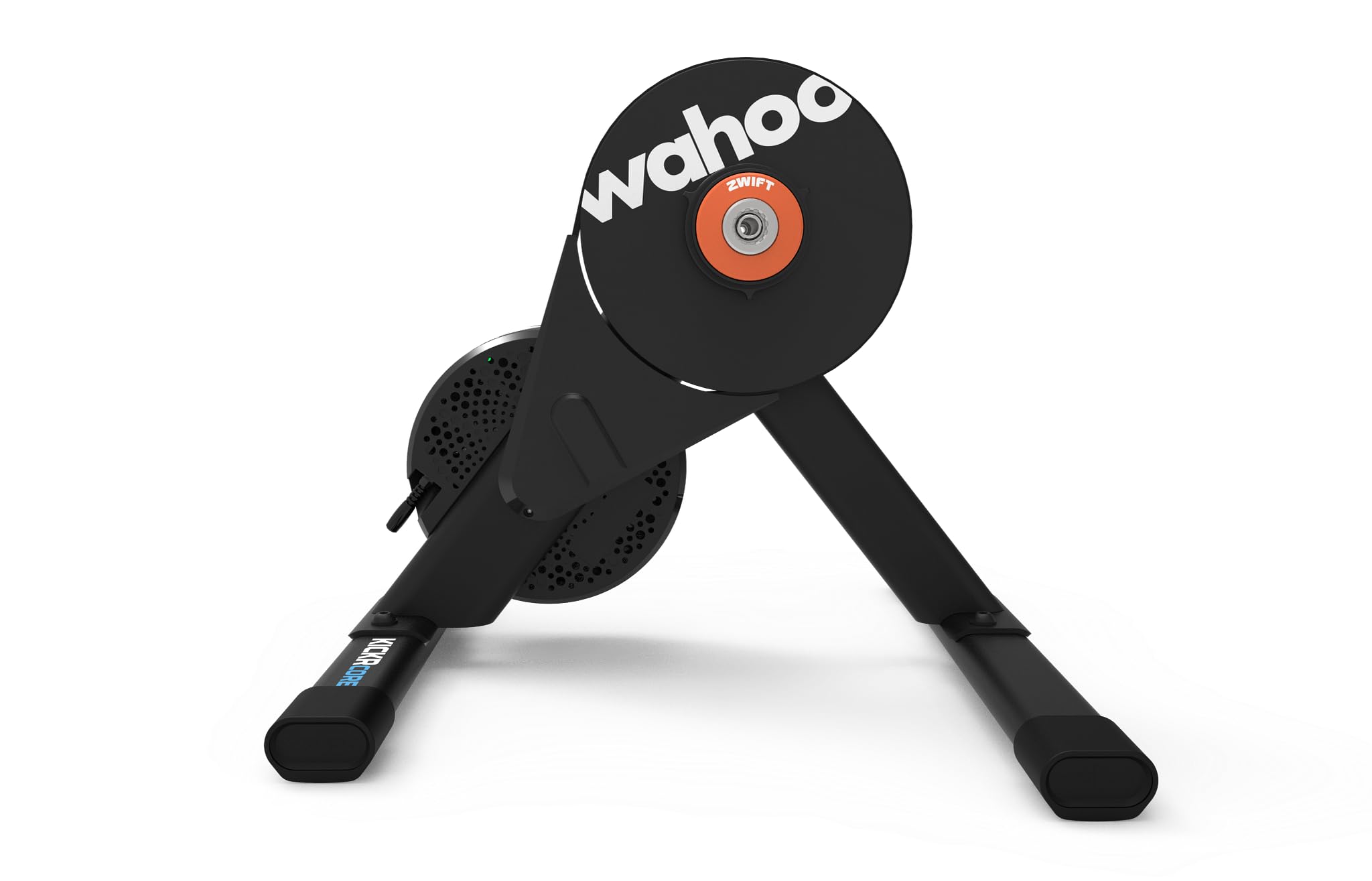
Direct-drive design removes the tire noise and variance of wheel-on trainers. The included Zwift Cog and Click simplify shifting, while WiFi connectivity provides a stable app connection. This trainer suits serious Zwift users who want a realistic indoor feel. It accommodates riders up to 200 lbs, and full smart features require a power source and a Zwift subscription.

The trainer's full smart functions depend on a paid Zwift subscription and connection to power.

Bottom line: A premium indoor training solution for dedicated Zwift riders who stay within the weight limit and embrace the app ecosystem.

2

Alpcour Mag Trainer

Alpcour Mag Trainer

Portability seekers

Our Score 8.8/10
Check Price

Worth Noting

  • On wood floors the magnetic unit produces noticeable noise that can resonate
Load Capacity
Resistance Type
Magnetic
Resistance Levels
6 levels
Wheel Compatibility
26-29", 700C
Read the full review

The handlebar remote control is the standout feature, letting you adjust resistance without dismounting. The stainless steel frame is sturdy and compatible with 26-29 inch and 700C wheels. Noise is moderate — noticeable on hard floors, less so on carpet. Resistance variability means the lower levels may feel similar, but for steady-state training it works well. The included carrying bag makes it easy to store or transport, ideal for riders who need a portable trainer rather than a dedicated setup.

A thick training mat can reduce noise transmission to floors below.

Bottom line: A portable magnetic trainer with handy remote control, well-suited for riders who prioritize convenience over whisper-quiet operation and perfectly consistent resistance.

3

Alpcour Fluid Trainer

Alpcour Fluid Trainer

Progressive resistance

Our Score 8.8/10
Check Price

Worth Noting

  • Noise can be louder than typical conversation level in quiet rooms
  • Assembly instructions are minimal, making initial setup take longer than expected
Load Capacity
300 lbs
Resistance Type
Fluid
Resistance Levels
Progressive
Wheel Compatibility
26-29", 700C
Read the full review

The Alpcour Fluid Trainer uses a sealed fluid unit to deliver resistance that rises naturally as you pedal faster, creating a feel closer to outdoor riding than stepped magnetic trainers. The stainless steel frame holds bikes securely, and the dual-lock system keeps the rear wheel planted during sprints.

This trainer suits cyclists who value realistic road texture over absolute quiet or instant setup. The progressive resistance rewards higher output without fumbling with a remote or dial. However, the noise level is noticeable, especially on hard floors or with knobby tires, and assembly requires patience with sparse instructions. Those needing a dead-silent zone or an out-of-box-ready experience should look at the magnetic remote model instead.

Keep the carrying bag handy for off-season storage, and consider a trainer tire to cut down on noise.

Bottom line: If you prioritize a natural progressive resistance feel and can tolerate moderate noise and a fiddly setup, this fluid trainer delivers good road-like training at a reasonable price.

4

Sportneer Magnetic Trainer

Sportneer Magnetic Trainer

Budget cyclists

Our Score 8.6/10
Check Price

Worth Noting

  • Noise may be noticeable, especially with knobby tires
  • Resistance may feel underwhelming for stronger cyclists
Load Capacity
299 lbs
Resistance Type
Magnetic
Resistance Levels
6 levels
Wheel Compatibility
26-28", 700C
Read the full review

The Sportneer magnetic trainer unfolds quickly and clamps onto the rear wheel with a standard quick-release skewer, making it ready to ride in minutes. The steel frame and rubber feet keep the bike stable during hard efforts, and the six-level magnetic resistance provides a gradual increase suitable for steady endurance workouts. Build quality holds up through regular use with no creaking or wobble — a straightforward unit that does its job without extra complexity.

Noise is the main tradeoff: with knobby mountain bike tires the unit produces a clear whir that stands out in a quiet room, while smooth road tires cut the sound to a manageable hum. The resistance range is moderate — ample for base miles and recovery spins, but strong cyclists will find the top level underwhelming for high-intensity intervals. This trainer suits casual riders and beginners who want a simple, cost-effective way to spin indoors without advanced features.

Switching to a smooth road tire and using a rubber mat underneath noticeably reduces noise from the magnetic unit.

Bottom line: For casual indoor training on a budget, the Sportneer delivers exactly what's needed: simple setup and a stable ride, with noise and resistance tradeoffs that matter most to serious athletes.

5

CXWXC Bike Trainer

CXWXC Bike Trainer

Mountain & e-bikes

Our Score 8.6/10
Check Price

Worth Noting

  • Noise may be noticeable, particularly with knobby tires.
Load Capacity
330 lbs
Resistance Type
Magnetic
Resistance Levels
6 levels
Wheel Compatibility
26-29", 700C
Read the full review

The CXWXC supports up to 330 pounds and fits 29-inch wheels, a rare combination at this price point. It pairs well with e-bikes and mountain bikes that would exceed the limits of most budget trainers. The magnetic resistance offers six levels, though the unit is noticeably loud, especially with knobby tires. Assembly instructions can be confusing, so expect to spend extra time on setup. Riders who value quiet operation should look elsewhere, but for those needing high load capacity, this is a functional option.

Placing a rubber mat under the trainer helps reduce vibration noise through the floor.

Bottom line: Best for riders with e-bikes or 29-inch wheels who can accept a louder ride; the top pick is quieter for standard bikes.

6

Yaheetech Bike Trainer

Yaheetech Bike Trainer

Extreme budget

Our Score 8.6/10
Check Price

Worth Noting

  • Noise level is high enough to be disruptive in quiet, shared rooms.
  • Only one resistance level, so riders wanting progressive intensity will need a different model.
Load Capacity
265 lbs
Resistance Type
Magnetic
Resistance Levels
1 level
Wheel Compatibility
26-28", 700C
Read the full review

Yaheetech's stand is the most affordable option for mounting your bike indoors. Its single magnetic resistance level keeps workout intensity fixed, and the noise from both the unit and tire contact is noticeable — less of an issue in a garage or basement than a shared living space. Compatibility with thru-axle bikes requires a separate adapter, so this trainer suits budget-conscious riders who only need a stand for short, light sessions a few times a week and are willing to accept the noise and fixed resistance.

Bottom line: Best suited for the occasional indoor rider who prioritizes cost above all else and can accommodate the noise and single-resistance limitation.

How to Choose

Resistance Type

Magnetic trainers use a flywheel with adjustable magnets to create resistance in discrete levels. Fluid trainers use a turbine in a viscous liquid that provides progressive resistance - the harder you pedal, the more resistance you feel. Direct-drive trainers replace your rear wheel entirely and use an electronic motor to control resistance with high precision.

The trade-off: magnetic levels often feel similar to one another, fluid resistance can be taxing at high speeds, and direct-drive requires power and app setup. For casual riders wanting simplicity, magnetic is fine; for road-like feel and no manual adjustments, fluid works well; for smart app integration, direct-drive is the choice.

Noise Level

Wheel-on trainers press a roller against your tire, so tire tread pattern determines noise volume. Slick road tires are significantly quieter than knobby mountain bike tires. Floor surface also matters: wood floors resonate more than concrete.

The hidden trade-off: no wheel-on trainer is truly silent. If you live in an apartment or train during quiet hours, a direct-drive trainer (which eliminates tire contact) is the only reliable solution. For others, a smooth trainer tire and a thick mat can reduce noise to acceptable levels.

Wheel Compatibility

Trainers specify wheel diameter (e.g., 26-28 inches) and axle type. Most budget trainers come with quick-release skewers and may not include thru-axle adapters. If your bike uses a thru-axle (common on modern mountain bikes), you will need to purchase an adapter separately.

Check both wheel size and axle type before buying. A trainer that fits 29-inch wheels can still be incompatible if the axle diameter is wrong. Compatibility issues are the top cause of returns in this category.

Load Capacity

Load capacity indicates the maximum combined weight of rider and bike the trainer can safely support. Higher capacity usually means a heavier steel frame, which adds stability but reduces portability.

If you weigh over 200 lbs, choose a trainer rated for at least 275 lbs. Direct-drive trainers often have lower limits because the frame is built around the drivetrain. Ignoring this can lead to frame failure or instability during sprints.

Resistance Levels

Magnetic trainers advertise 6 or 8 levels, but the actual resistance difference between adjacent levels is often subtle. Many cyclists find only the top 2-3 levels challenging enough for high-intensity work. Fluid trainers have no levels - resistance increases smoothly with speed.

Direct-drive trainers offer infinite resistance controlled by software, allowing precise power targets. If you need structured interval training, smart direct-drive is ideal. For steady indoor rides, a magnetic trainer with a handful of levels is sufficient.

Frequently Asked Questions