Indoor Training

5 Best Indoor Smart Bike of 2026: Find Quiet Magnetic Models That Last

Which indoor smart bikes deliver true magnetic resistance without noise or pedal failures? We separate the quiet, reliable picks from the fakes.

Many indoor smart bikes advertise 'magnetic' resistance but actually use friction pads. That means noise, maintenance, and potential pedal failures over time.

The real divide isn't budget versus premium—it's magnetic versus friction. Magnetic offers quiet operation and long-term reliability, but not all magnetic bikes are created equal. Some offer only 8 resistance levels; others give you 100.

This guide focuses on bikes that deliver bona fide magnetic resistance with verified user feedback. We will help you choose the right balance of features, capacity, and noise level for your home.

1

pooboo KM16

Top Pick
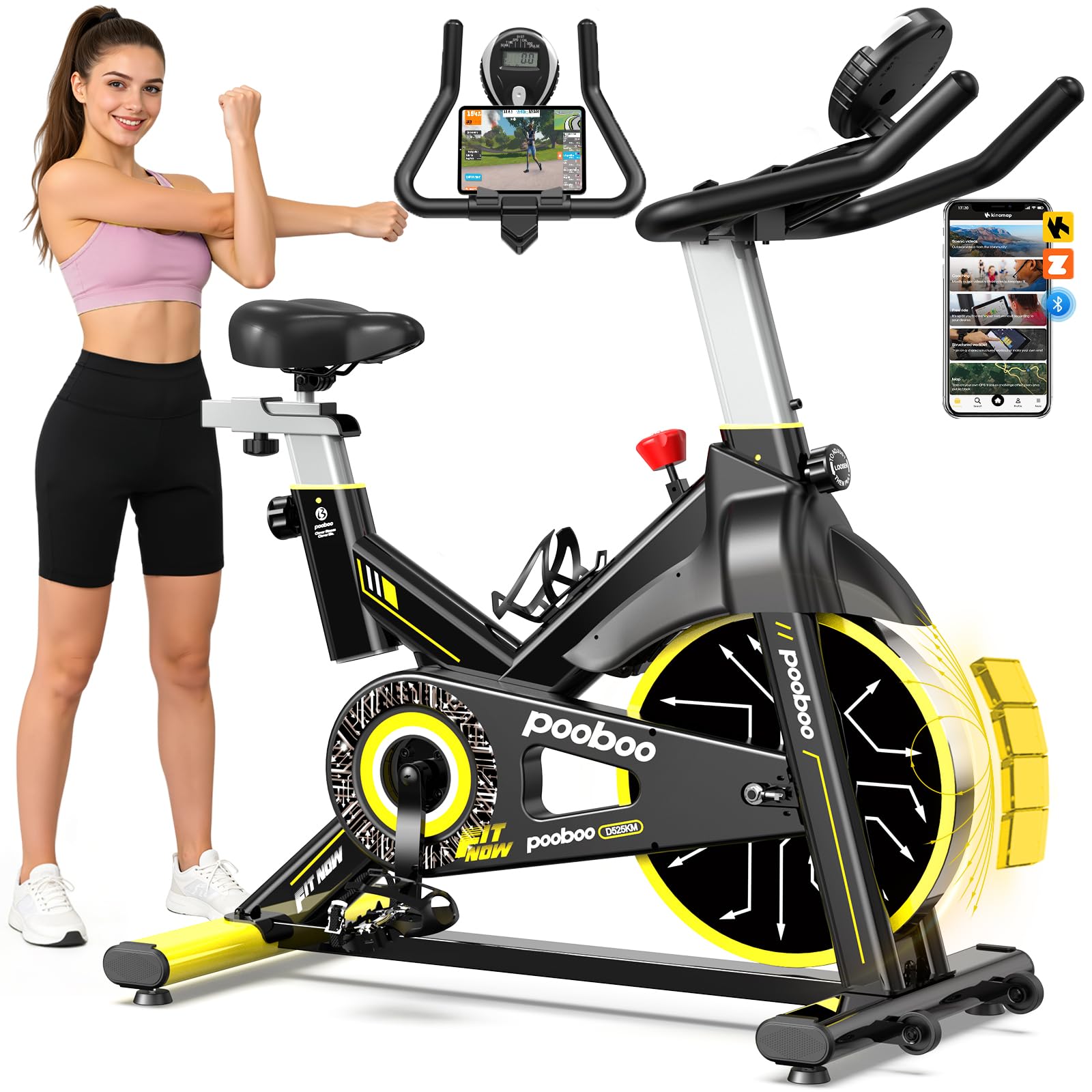
pooboo KM16

Budget magnetic value

Our Score 9.0/10
Check Price

Worth Noting

  • In rare cases, the monitor display may glitch or the drivetrain can produce a light ticking sound during pedaling
Resistance Type
Magnetic
Weight Capacity
350 lbs
App Compatibility
pooboo app
Read the full review

The pooboo KM16 delivers 100-level magnetic resistance that stays quiet and smooth across the entire range. The belt-driven system operates under 25 dB, making it one of the quietest options at this price. Riders can fine-tune intensity with precision, whether starting a warm-up or pushing through a climb.

Assembly takes most users under 30 minutes – the frame comes largely pre-assembled and tools are included. Once set up, the steel frame feels planted even during standing efforts, and the 350 lb weight capacity accommodates a wide range of body types. This combination of straightforward setup and rock-solid stability is rare in the budget segment.

This bike is best for buyers who need near-silent operation in shared living spaces – the magnetic resistance won't disturb others. Heavy riders and those who prefer a stable platform will find it reassuring. The included app provides Bluetooth connectivity for basic metrics, though resistance adjustments are manual and lack automatic control. For rides over 30 minutes, the stock seat may require a replacement cushion or wider saddle – a low-cost fix that makes long sessions much more comfortable.

At a price where many competitors cut corners with friction pads or lower weight limits, the KM16 delivers true magnetic resistance and a 350 lb capacity without compromise. It's a focused tool for riders who want quiet, controlled workouts and don't need subscription-based classes or auto-resistance.

Bottom line: For budget-conscious buyers who prioritize quiet operation, high weight capacity, and true magnetic resistance, the KM16 is the smartest pick in this comparison – just budget a seat upgrade for sessions beyond 30 minutes.
2

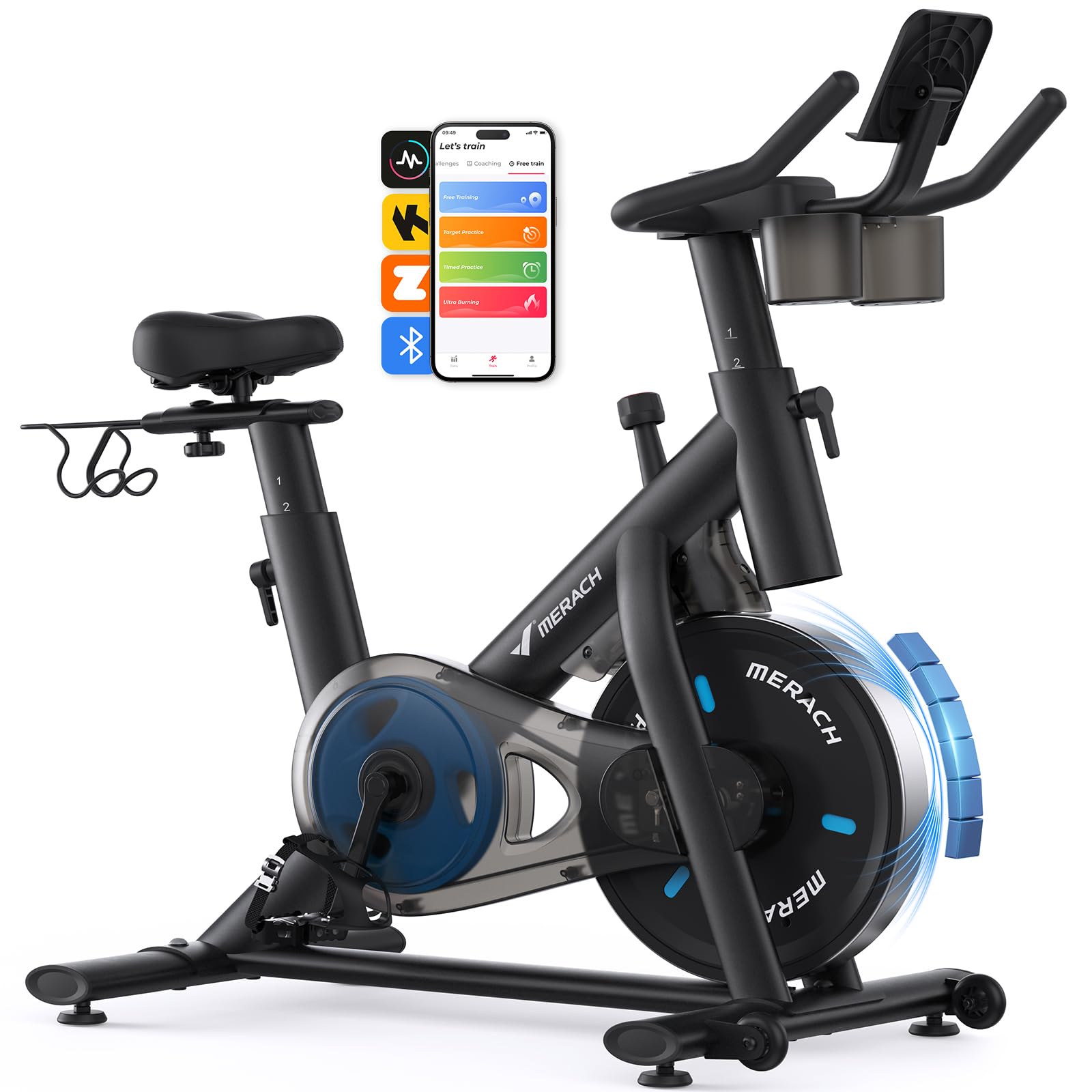
MERACH S26

MERACH S26

Budget magnetic with apps

Our Score 9.0/10
Check Price

Worth Noting

  • Bluetooth pairing can be inconsistent with the app on some units
Resistance Type
Magnetic
Weight Capacity
300 lbs
App Compatibility
Merach, Kinomap, Zwift
Read the full review

The MERACH S26 brings Zwift and Kinomap support to a sub-$250 price point, combining app connectivity with belt-driven magnetic resistance that operates under 25 dB. The frame feels solid for its class, with minimal flex during pedaling.

Assembly takes roughly 30 minutes and requires only basic tools. The 8 resistance levels cover light to moderate intensity, suiting recovery rides and steady-state cardio — advanced riders will need the 100-level adjustability found in the top pick.

This bike fits small apartments and budgets, with app functionality for beginners and casual users. The saddle may become uncomfortable on longer sessions, so a seat swap is a common adjustment. Riders over 300 lbs or those needing fine resistance increments should consider the higher-capacity top pick.

If Bluetooth connectivity issues arise, try moving the bike closer to the router or ensuring the app is updated.

Bottom line: A cost-effective entry-level smart bike for app-based workouts, best for casual riders who prioritize quiet operation over resistance range.

3

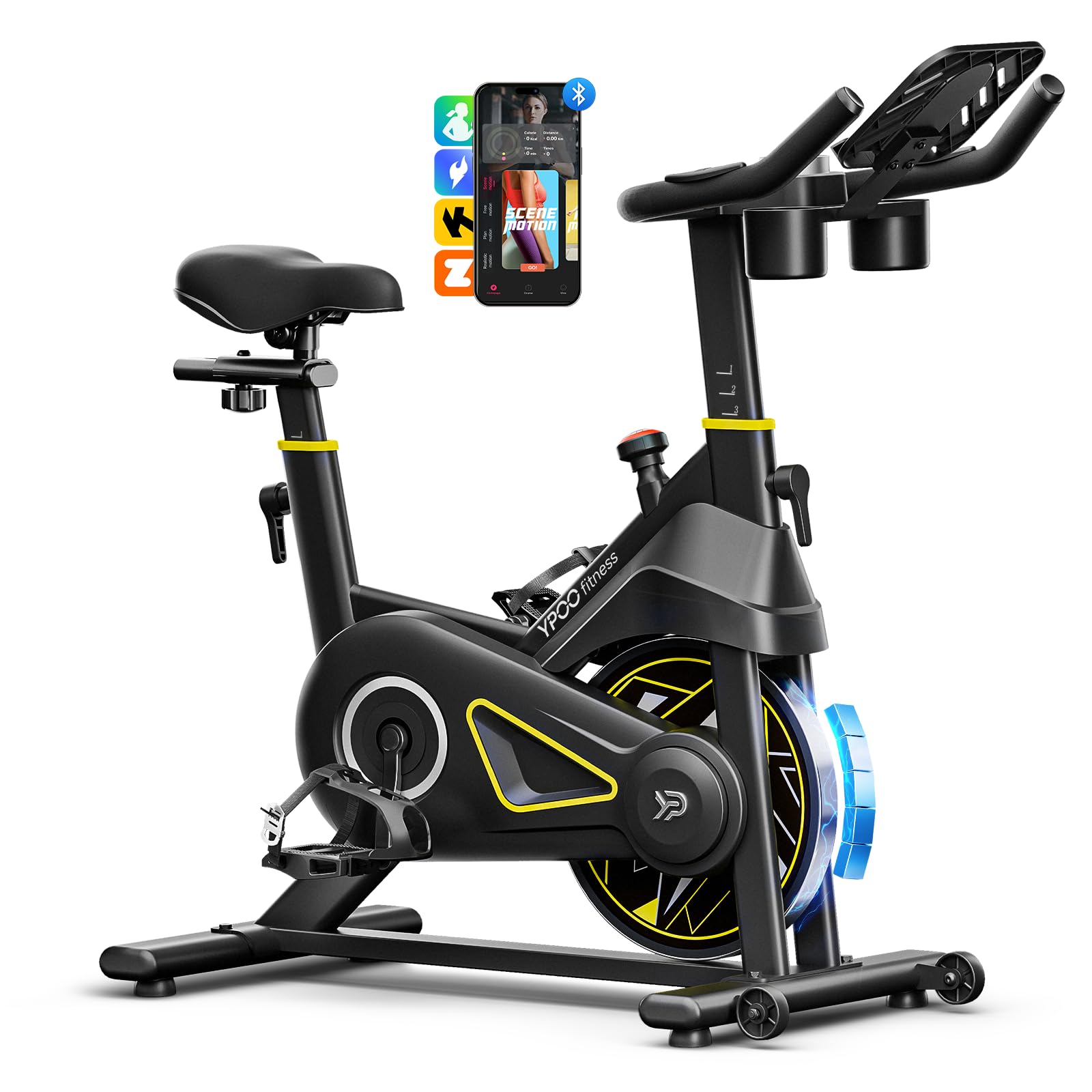
YPOO BC710

YPOO BC710

Ultra-budget magnetic

Our Score 9.0/10
Check Price

Worth Noting

  • Monitor display functionality may degrade over time in some units.
  • Seat comfort can be unsatisfactory for rides longer than 30 minutes.
Resistance Type
Magnetic
Weight Capacity
300 lbs
App Compatibility
YPOOFIT app
Read the full review

At under $160, the YPOO BC710 is the lowest-priced indoor bike with true magnetic resistance and Bluetooth app connectivity, delivering the near-silent ride that magnetic systems offer. That quiet operation sets it apart from friction-based budget bikes, though it only provides 10 resistance levels – a fraction of the 100-level adjustment found on the pooboo KM16, the top pick in this category.

This bike is best suited for riders who want a connected, magnetic experience on a tight budget and plan to use it for occasional spin sessions rather than daily training. The limited resistance range works for moderate efforts but lacks the granularity needed for structured interval programs. The seat can feel firm after 30 minutes, and some owners have reported monitor display issues over time – a tradeoff that matters less for secondary use or short workouts.

Assembly takes about 30 minutes with basic tools, and the 300-pound capacity accommodates a wide range of riders. The magnetic system keeps noise under 25 dB, making it apartment-friendly. Overall, the BC710 delivers the core smart bike features at a price that leaves little room for complaint, provided expectations align with its limitations.

Consider swapping the seat if your rides regularly exceed 30 minutes.

Bottom line: The BC710 makes sense for budget-limited buyers who need an occasional magnetic smart bike, but those wanting a daily trainer should consider more proven options with better long-term data.

4

Peloton Bike+

Peloton Bike+

Premium connected fitness

Our Score 8.8/10
Check Price

Worth Noting

  • Assembly is time-consuming and the bike is heavy
  • Some units may need inspection for monitor glitches or wheel rubbing right out of the box.
  • The $49 monthly subscription adds up quickly, making this a long-term commitment best for frequent riders.
Resistance Type
Magnetic
Weight Capacity
297 lbs
App Compatibility
Peloton subscription
Read the full review

The Peloton Bike+ automatically adjusts resistance to match instructor cues, letting you stay focused on effort rather than twisting a knob. While the top pick offers manual magnetic resistance at a lower cost, this model adds a rotating screen for on-bike yoga, strength, and meditation classes — expanding its role beyond a stationary bike.

This bike fits riders who treat indoor training as an instructor-led ritual and are comfortable with the $49 monthly All-Access membership. The auto-follow resistance and diverse class library reward frequent users. For anyone who rides casually or wants to avoid ongoing fees, the subscription will feel like a penalty rather than a perk.

Assembly requires moving a heavy machine and can take over an hour, though professional setup is available. A small number of units may arrive with monitor or wheel alignment issues, so inspecting the bike upon delivery is wise. For committed riders who value a seamless connected experience, these setup hurdles are manageable tradeoffs.

Consider paying for professional assembly to avoid the heavy lifting and possible alignment adjustments.

Bottom line: The Bike+ is the clear choice for riders who want auto-resistance and a guided class platform — just confirm the subscription fits your budget and usage frequency before committing.

5

MERACH MR-S38

MERACH MR-S38

Automated resistance budget

Our Score 8.8/10
Check Price

Worth Noting

  • Long-term durability under regular use is still being established
  • Seat padding may feel firm for extended rides
Resistance Type
Magnetic
Weight Capacity
300 lbs
App Compatibility
Merach app
Read the full review

The MERACH MR-S38 stands alone in the budget category as the only exercise bike with app-controlled automated resistance. While the top pick offers 100 magnetic levels and a massive review base, the MR-S38 lets you set target power or cadence in the Merach app and the bike adjusts resistance automatically – a feature typically reserved for models costing twice as much. The magnetic belt drive delivers a whisper-quiet ride, and assembly takes minutes out of the box.

This bike is best for tech enthusiasts who want to experiment with automated training without committing to a premium subscription. That said, the MR-S38 is an early-stage product with a small user community – long-term performance under consistent use is still being observed. The seat also draws mixed feedback; some riders find it fine for short sessions, others note discomfort after 20 minutes. If you are willing to accept these boundaries for the sake of automated resistance at a budget-friendly price, the MR-S38 delivers a unique experience.

Consider a gel seat cover for rides over 30 minutes – the stock saddle may feel firm.

Bottom line: If automated resistance is your priority and you are comfortable adopting a newer model, the MR-S38 is the only budget option that delivers it – just be prepared to evaluate its long-term fit yourself.

How to Choose

Resistance Type: Magnetic vs. Friction

Magnetic resistance uses magnets to create drag without physical contact, resulting in near-silent operation and minimal wear. Friction resistance relies on felt pads pressing against a flywheel, which generates noise and requires regular replacement of the pads.

For apartment or shared-wall use, magnetic is the only practical choice. If you see 'friction' or 'felt pad' in the specs, expect audible clicking and squeaking after a few months.

Weight Capacity

Weight capacity isn't just about maximum load—a higher limit usually means a sturdier frame with thicker steel and reinforced joints. Bikes rated at 350 lbs feel more planted during standing climbs than those at 275 or 300 lbs.

If you plan to push hard or are over 250 lbs, aim for 350 lbs. Lighter riders can safely use lower capacities, but the stability margin narrows.

Noise Level

Decibel ratings under 25 dB are essentially silent—you will hear your own breathing and the belt drive, but little else. Higher dB ratings or unspecified noise often means friction resistance, which can exceed 40 dB after a few weeks.

Check user reviews for 'clicking' or 'squeaking' complaints; these are hallmarks of friction pads or loose cranks. Magnetic bikes with belt drives rarely develop these issues.

App Compatibility

App ecosystems vary widely. Some bikes only work with the brand's own app, while others sync with Zwift, Kinomap, or Peloton. If you already use a training platform, confirm compatibility before buying.

Bikes with Bluetooth FTMS (Fitness Machine Service) offer the broadest third-party support. Proprietary apps often lack structured workouts or auto-resistance, limiting long-term engagement.

Flywheel Weight

Heavier flywheels (40+ lbs) smooth out pedal strokes and maintain momentum between power surges, mimicking the feel of a real road bike. Lighter flywheels (under 25 lbs) feel 'jerky' at low cadence.

Magnetic resistance bikes often have lighter flywheels because the magnets provide the load, but you still want at least 25 lbs for a natural road-like feel. Friction-based bikes rely on heavy flywheels for smoothness, which is why they are heavier.

Frequently Asked Questions