Tires & Tubes

7 Best BMX Tire of 2026: Get Puncture Protection Without Overpaying

Which 20-inch BMX tires actually last and resist flats? Find the right balance of durability, grip, and cost for your riding style.

Most budget BMX tires wear fast and leave you patching tubes every few weeks. Premium brands like Maxxis and Schwalbe rarely make 20-inch versions, so riders are stuck with options that fade quickly or cost too much for what you get.

That middle ground — reliable puncture protection at a fair price — is where the best value lives. A tire with a built-in guard like Kevlar or a dedicated flat-fighting layer can double the life of your set, saving you time and money on replacements.

This guide picks five tires that balance durability, grip, and cost for street, park, and dirt. Whether you skate the park or cruise the neighborhood, there’s a tire here that won’t leave you stranded.

1

ZUKKA 20x2.35 2-pack

Top Pick
ZUKKA 20x2.35 2-pack

Enthusiasts, heavy use

Our Score 9.6/10
Check Price

Worth Noting

  • Premium price may feel steep for casual riders or those on a tight budget
  • Wide 2.35-inch profile can cause fit issues on frames with narrow clearance
Bead Type
Folding
Tire Width
2.35 in
Tread Pattern
Directional drainage
Puncture Protection
Read the full review

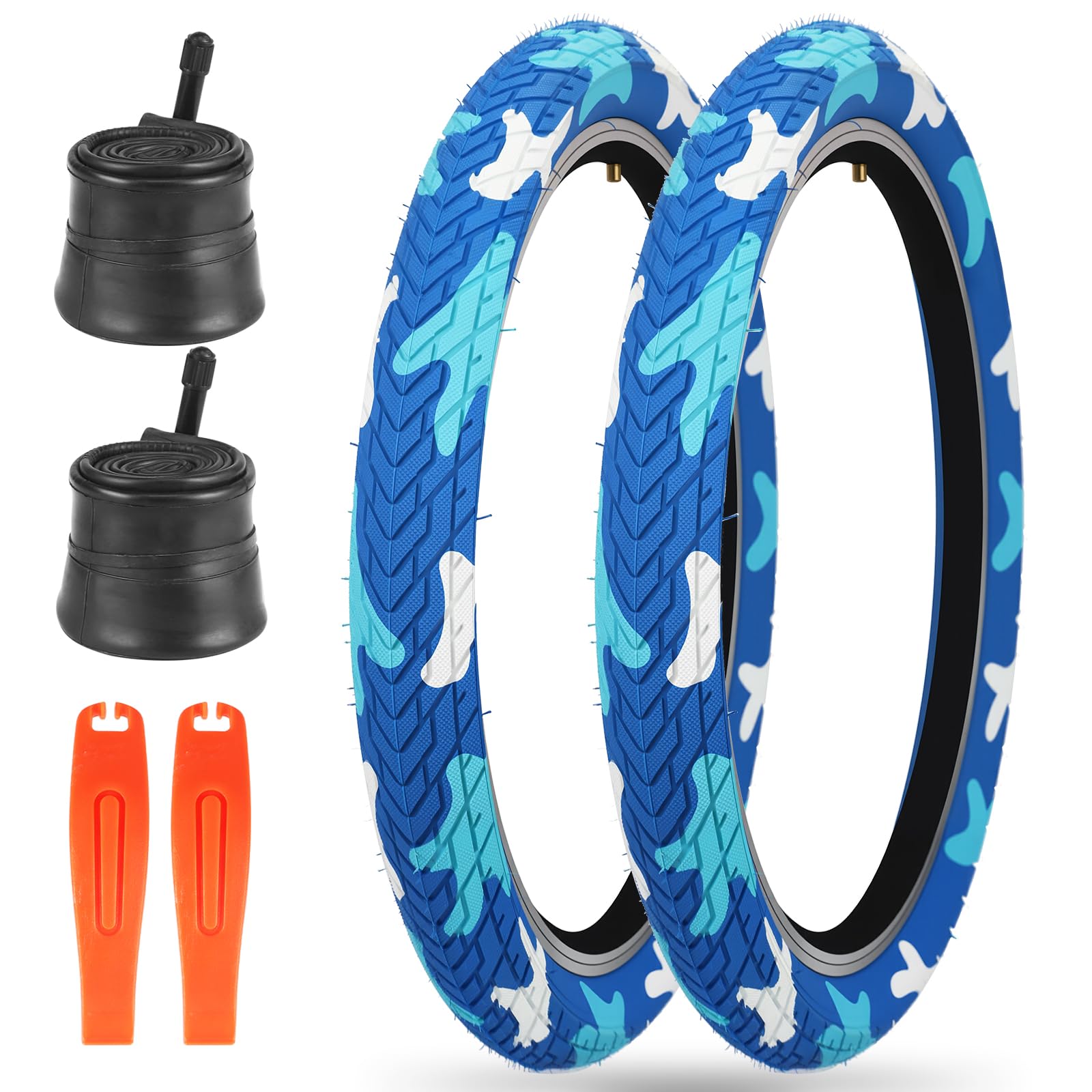
The ZUKKA 20x2.35 tire uses a folding bead and directional tread with drainage grooves, providing solid grip in wet conditions that typical BMX tires lack. Its 2.35-inch width adds stability on loose surfaces, but the extra volume means not every 20-inch frame will accept it — measure clearance before buying.

This tire suits riders who prioritize durability and wet-weather traction over cost. The included tire levers simplify installation, and the build quality matches higher expectations. Budget-conscious or casual BMX users will find more affordable options that still perform adequately for lighter use.

Bottom line: If you ride BMX in wet or loose conditions and want a tire that won’t quit, this is a strong choice — just confirm your frame and budget can handle it.
2

WEEROCK 20x2.125 2-pack

WEEROCK 20x2.125 2-pack

Kids, style, light use

Our Score 9.4/10
Check Price

Worth Noting

  • In heavier use the tread can wear down quicker than expected.
Bead Type
Folding
Tire Width
2.125 in
Tread Pattern
Convex-concave
Puncture Protection
Read the full review

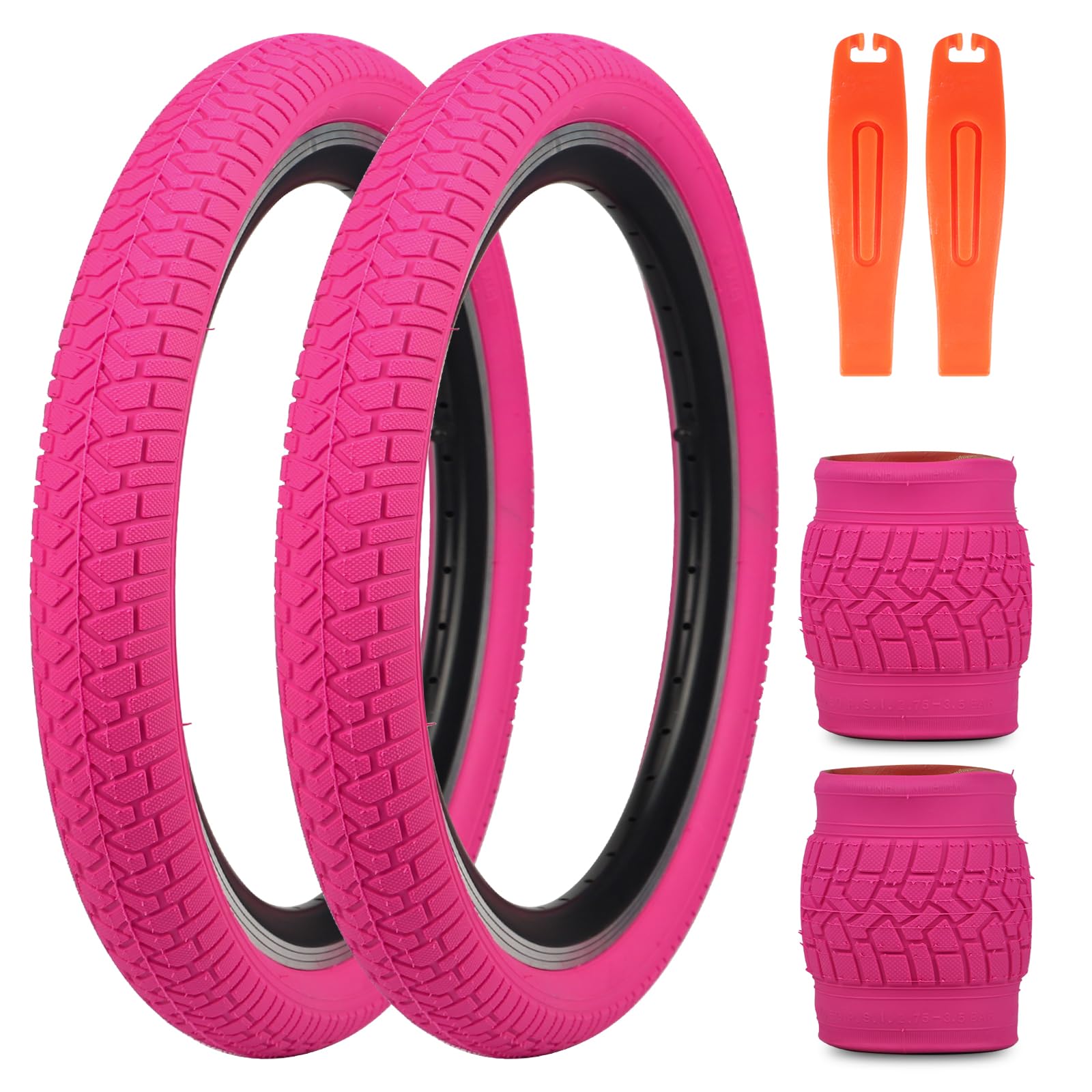
The WEEROCK 20x2.125 tires bring multiple color options and a folding bead to budget-conscious riders who want their bike to stand out without spending much. Installation is simple, and the convex-concave tread pattern rolls smoothly on pavement. Where they differ from the premium 2.35-inch option in this lineup is expected lifespan: while the rubber quality feels good initially, durability under heavy riding can vary, with some seeing tread thinning within months.

These tires suit kids, casual riders, or anyone upgrading style on a light-use bike. For frequent jumps, skatepark sessions, or daily commuting over rough surfaces, the tradeoff in longevity means you may need replacements sooner than with a tougher option.

Aim for pavement or dirt paths rather than aggressive jumps or skidding to extend tread life.

Bottom line: If style and price matter more than long-haul durability, the WEEROCK two-pack delivers on both. Just keep expectations light for the riding it handles.

3

Kenda K-Rad 20x1.95

Kenda K-Rad 20x1.95

Commuter, light trail

Our Score 9.4/10
Check Price

Worth Noting

  • Sidewall may shred after several months of heavy use
Bead Type
Wire
Tire Width
1.95 in
Tread Pattern
Knurled checkerboard
Puncture Protection
Read the full review

The Kenda K-Rad stands out for its low rolling resistance and quiet knurled tread, making it a fast option for street and hardpack commuting. It grips well on pavement and packed dirt, handling light trails without the drag of a knobby tire. For riders who stick to paved paths, bike lanes, and occasional dirt paths, this tire delivers a smooth ride. However, the sidewall may shred after several months of heavy use, especially if ridden aggressively on rough terrain. That makes it better suited for casual commuting than for BMX park or off-road riding.

Sidewall life holds up best on smooth pavement and packed dirt; avoid sharp edges and heavy curb hopping to prolong durability.

Bottom line: For mixed-surface commuting where speed and comfort matter more than rugged durability, the Kenda K-Rad delivers on its promise of a smooth, quiet ride.

4

Bell BMX Tire 20"

Bell BMX Tire 20"

Street, park, casual

Our Score 9.2/10
Check Price

Worth Noting

  • Tread rubber can separate under frequent, heavy skidding
Bead Type
Steel
Tire Width
1.75-2.25 in
Tread Pattern
Knobby
Puncture Protection
Flat Defense
Read the full review

The Bell BMX Tire uses a dedicated Flat Defense layer that cuts down on flats from glass and thorns — a practical upgrade over standard budget tires. It installs easily and fits true to size on common 20-inch rims, with a knobby tread that grips well on pavement and packed dirt.

This tire suits general BMX riding, kids' bikes, and street or park sessions where you want puncture protection without paying premium prices. It's not built for extreme downhill or heavy mud, but for everyday pedaling and light tricks it holds up well.

Bottom line: The Bell BMX Tire delivers dependable flat protection for most 20-inch riders at a fair price.

5

Schwinn Knobby 20x2.125

Schwinn Knobby 20x2.125

Value, kids, casual

Our Score 9.0/10
Check Price

Worth Noting

  • Sidewall may wear faster than tread in aggressive riding with curb hops
Bead Type
Steel
Tire Width
2.125 in
Tread Pattern
Low-profile knobs
Puncture Protection
Kevlar guard
Read the full review

While the top pick's dedicated Flat Defense layer offers more robust puncture protection, the Schwinn's integrated Kevlar guard reduces puncture risk for street and park riding at a lower cost. This tire suits budget-conscious riders and kids' bikes where sidewall wear from heavy curb hopping is less of a concern — the sidewall may wear faster than the tread under aggressive use, but for casual riding the Kevlar guard and low price make it a practical choice.

Keep tire pressure at 30-40 PSI and avoid sharp curbs to minimize sidewall wear.

Bottom line: For budget-focused riders who want Kevlar protection without the premium price, this Schwinn tire delivers — just keep an eye on sidewall wear during aggressive use.

6

Sunlite MX3 20x1.75

Sunlite MX3 20x1.75

Kids, casual, budget

Our Score 9.0/10
Check Price

Worth Noting

  • Tread can wear more quickly under aggressive riding or heavy skidding
Bead Type
Wire
Tire Width
1.75 in
Tread Pattern
Knobby
Puncture Protection
Read the full review

The Sunlite MX3 hits the lowest price point among 20-inch BMX tires while delivering acceptable durability for kids’ first bikes and neighborhood cruising. The tread can wear more quickly under aggressive street riding or heavy skidding, and it lacks the puncture protection found in similarly priced competitors like Schwinn.

Bottom line: This tire fits best for kids learning to ride or casual neighborhood cruising where keeping costs low matters more than long-term tread life.

7

WHEELO 20x2.125 2-pack

WHEELO 20x2.125 2-pack

Complete kit, kids

Our Score 9.0/10
Check Price

Worth Noting

  • Not intended for high-performance BMX riding; tread and casing suit casual use.
Bead Type
Tire Width
2.125 in
Tread Pattern
Directional
Puncture Protection
Read the full review

This set includes two tires, tubes, and tire levers, making it a convenient replacement for kids' bikes. Installation is straightforward and the fit is accurate. However, the tires are built for light, casual riding rather than high-performance BMX use, and long-term durability under heavy riding is not yet established.

Bottom line: Best for parents refreshing a child's bike for neighborhood or light park riding, not for aggressive BMX tracks.

How to Choose

Tire Width

Most 20-inch BMX tires range from 1.75 to 2.35 inches. A narrower tire (1.75-2.0) accelerates faster and weighs less, making it ideal for park or racing where responsiveness matters. A wider tire (2.125-2.35) puts more rubber on the ground, improving traction in loose dirt and adding stability at speed.

The trade-off: a 2.35-inch tire may not clear the frame on older or compact BMX frames. Always measure the gap between your chainstays and seatstays before buying. A tire that rubs can damage the frame and slow you down.

Puncture Protection

Puncture protection comes as a layer of material between the tread and casing — common types are Kevlar belts, rubber compounds like Flat Defense, and sidewall reinforcements like EXO. These layers add a few ounces but dramatically reduce the chance of a flat from glass, thorns, or sharp rocks.

On 20-inch tires, puncture protection is rare at budget prices. Spending a few extra dollars for a tire with a guard layer is the most reliable way to double tire life and avoid mid-ride repairs. Tires without it rely on tube thickness alone, which is often insufficient.

Bead Type

Beads are either steel wire or folding Kevlar. Steel beads are heavier and harder to mount but hold the rim securely once seated. Folding beads are lighter and make installation easier — especially for riders who swap tires frequently or travel with spares.

The practical difference: folding beads cost more but save weight and effort. For most BMX riders, steel beads are fine unless you race competitively or need to change tires often. Folding beads also allow the tire to pack flat for storage.

Tread Pattern

Knobby treads provide grip on loose dirt and gravel but create rolling resistance on pavement. Slick or grooved treads roll faster on asphalt and are quieter, but they sacrifice traction in wet conditions or off-road. Directional treads with drainage grooves handle wet pavement better by channeling water away.

Choose your tread based on where you ride most. If 80% of your riding is street, a slick or low-profile knob works best. For dirt jumps and park, a medium knob offers a good balance of grip and speed.

Weight and Rolling Resistance

Heavier tires (over 600g) are more durable but make acceleration feel sluggish and require more effort to maintain speed. Lighter tires (under 500g) spin up quickly but often have thinner casings that wear faster and offer less puncture protection.

For most riders, a mid-weight tire (500-600g) with a puncture layer is the sweet spot. It sheds weight when you pedal hard but still stands up to daily abuse.

Frequently Asked Questions