Tires & Tubes

11 Best Tubeless Tire Sealant 2026: Stop Flats Without Constant Top-Ups

Tubeless sealants vary wildly in longevity and sealing ability. This guide helps you pick the right one for your climate, riding style, and budget.

Tubeless tire sealant marketing often claims months of protection, but real-world longevity depends heavily on your climate and riding terrain. A sealant that lasts three months in mild conditions may dry out in three weeks in a hot, dry summer. Figuring out which product actually delivers on its promises — and for your specific use — is the real challenge.

This guide cuts through the exaggerated longevity claims and focuses on what matters: sealing speed, maximum puncture size, and ease of maintenance. Whether you ride road at 90 PSI, shred trails in freezing weather, or commute year-round, the right sealant can save you from constant top-ups and unexpected flats.

The key trade-off is between longevity and sealing aggressiveness. Some formulas last longer but seal slower, while others plug holes instantly but require more frequent refreshing. Your choice should match your tolerance for maintenance and the conditions you ride in.

1

Orange Seal Endurance

Top Pick
Orange Seal Endurance

Long-lasting eco

Our Score 9.6/10
Check Price

Worth Noting

  • In hot, dry climates the sealant can dry out faster than expected, needing more frequent checks.
Material
Latex, biodegradable
Max Seal
6mm
Longevity
2-4 months
Read the full review

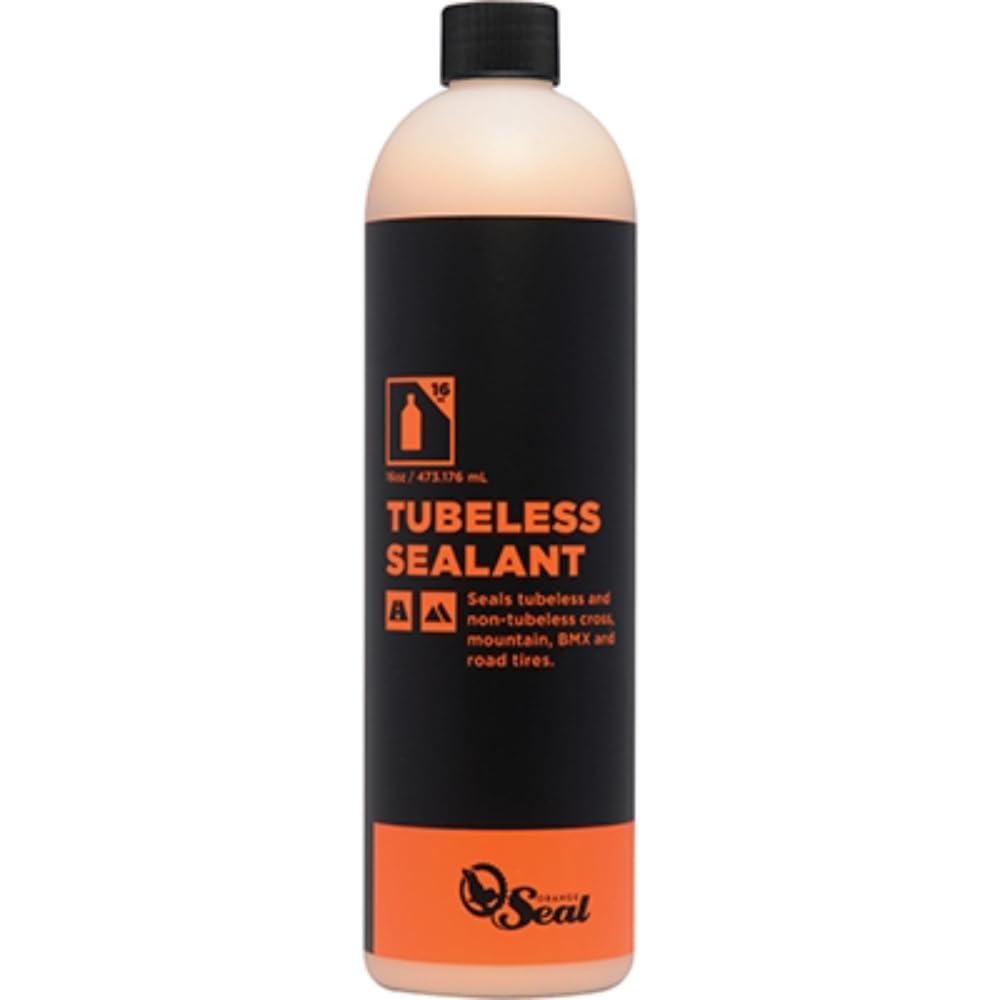
Orange Seal Endurance lasts 60-120 days between applications, outstripping standard sealants by two to three times. Its biodegradable latex formula seals punctures up to 6mm and slices up to 12mm quickly. The tradeoff is that longevity depends on climate: in consistently hot, dry regions the sealant can dry out faster than claimed, requiring periodic checks.

This suits endurance riders, frequent tourers, and eco-conscious cyclists who want fewer top-ups and a lower environmental footprint. Riders in temperate climates get the full benefit; those in extreme heat should monitor sealant condition every 4-6 weeks.

In hot climates, inspect sealant condition every 4-6 weeks to ensure it hasn't dried out.

Bottom line: For riders in temperate climates who value low-maintenance and eco-friendly ingredients, Orange Seal Endurance is a strong alternative to the standard tubeless sealant.
2

Orange Seal Regular

Orange Seal Regular

Cold weather fast

Our Score 9.6/10
Check Price

Worth Noting

  • Sealant can dry out within 2-3 weeks, requiring frequent top-ups
Material
Natural latex
Max Seal
6mm
Longevity
Read the full review

Orange Seal Regular handles sub-freezing temperatures and seals slices up to 19mm without issue. That strong cold-weather performance makes it a winter-only choice: the sealant dries out every few weeks, so regular top-ups are necessary. For riders who maintain their tires frequently and ride in freezing conditions, this formula works well — but anyone wanting longer intervals should look at endurance variants.

Bottom line: Keep a bottle handy for winter rides or cold climates where you already check tire pressure weekly — the short lifespan is manageable if you plan for it.

3

Orange Seal Endurance 8oz

Orange Seal Endurance 8oz

Small volume longevity

Our Score 9.6/10
Check Price

Worth Noting

  • Small 8oz bottle may require multiple purchases for households with more than one bike or for frequent sealant top-ups.
Material
Biodegradable
Max Seal
6mm
Longevity
Read the full review

Orange Seal Endurance's 8oz bottle offers the same long-lasting sealant as the larger version but at a lower entry price, making it practical for topping off one bike. The small volume covers only one or two tire treatments — riders with multiple bikes or those needing frequent sealant changes will find the larger bottle more cost-effective, so this works best as a travel companion or for occasional top-ups rather than a primary sealant supply.

Bottom line: Best suited as a travel companion or for riders maintaining a single bike who want extended sealant life without committing to a larger bottle.

4

Beanewone 3x2oz Sealant

Beanewone 3x2oz Sealant

Ultra-portable emergency

Our Score 9.0/10
Check Price

Worth Noting

  • Sealant can bond very strongly to tyre bead making removal difficult.
Material
Max Seal
6.5mm
Longevity
Read the full review

The Beanewone Tubeless Tire Sealant packs three 2oz bottles with a tool-free precision nozzle that injects sealant directly through the valve stem without removing the tire — ideal for saddle packs on long rides. The budget-friendly price suits one-bike households. Each bottle covers roughly one tire top-up, so regular use becomes costly per ounce. The sealant can also bond firmly to the tire bead, complicating future removal.

Bottom line: Best for riders who need a compact emergency backup for a single bike and can tolerate stronger bead adhesion during tire swaps.

5

Stan's NoTubes Sealant

Stan's NoTubes Sealant

All-round reliability

Our Score 0.0/10
Check Price

Worth Noting

  • May not hold on very large punctures or sidewall gashes
Material
Latex
Max Seal
6.5mm
Longevity
2-7 months
Read the full review

Stan's NoTubes Sealant closes punctures up to 1/4 inch rapidly, with a latex formula that sets quickly inside the tire. The sealant pours directly or injects without clogging, making initial setup straightforward for tubeless beginners.

On the trail or road, the sealant handles small cuts and thorn punctures with minimal loss of air. For larger sidewall gashes, the sealant may leak slowly or fail to hold — a limitation shared by most fast-sealing latex formulas, though slightly more frequent in user experience here compared to endurance-oriented alternatives.

This sealant suits riders who value immediate sealing speed over maximum longevity — typical top-up intervals range from 2 to 7 months depending on climate and tire type. Riders looking for an eco-friendly or biodegradable formula should look elsewhere, and those who want absolute longevity will find more maintenance here than with extended-life competitors.

For larger cuts, carry a tubeless plug or boot as backup.

Bottom line: For the majority of road, gravel, and mountain riders, this is the sealant to start with — it works predictably and is backed by the widest pool of real-world feedback in the category.

6

Muc-Off No Puncture

Muc-Off No Puncture

UV leak detection

Our Score 0.0/10
Check Price

Worth Noting

  • Sealing can be inconsistent; some small punctures may fail to close.
  • In some cases, sealant may leak around the puncture site.
Material
Max Seal
6mm
Longevity
Up to 6 months
Read the full review

The UV tracer dye turns leak hunting into a quick task under UV light, and the non-drying formula stays liquid in the bottle for months without clumping. The scent is mild compared to ammonia-based alternatives, making application less unpleasant.

This sealant works best for road cyclists who value easy troubleshooting over guaranteed sealing on every small hole. The UV dye helps confirm a seal, but some punctures may not close fully, so riders on aggressive terrain or who need instant sealing on larger cuts should consider a more consistent option like the top pick.

Bottom line: For riders who want UV leak detection and can accept occasional sealing hiccups, this sealant provides a useful tool. For maximum sealing reliability, the top pick is a better fit.

7

WTB TCS Sealant

WTB TCS Sealant

Latex-free sealing

Our Score 0.0/10
Check Price

Worth Noting

  • Leakage around spoke holes or failure to seal can occur on some wheel setups
  • Extremely difficult to inject through valve stem
Material
Synthetic latex
Max Seal
6mm
Longevity
Read the full review

WTB TCS Sealant uses a synthetic latex base that seals punctures up to 6mm, offering a latex-free option for allergy sufferers. It also delivers good value in larger bottle sizes for those who go through sealant regularly.

Riders setting up new tires benefit from being able to pour sealant directly into the tire before seating the bead, avoiding the injection process entirely. The trade-off comes when topping up: adding sealant through the valve stem is very difficult and often clogs syringes, requiring tire removal. This makes the sealant best for those who plan ahead rather than needing quick mid-ride replenishment.

Add sealant during tire installation by pouring directly into the tire before seating the bead.

Bottom line: A good fit for riders who set up tires at home and value a latex-free sealant, but not for those who need valve-stem top-ups on the trail.

8

Peaty's Holeshot

Peaty's Holeshot

Eco-friendly trail

Our Score 0.0/10
Check Price

Worth Noting

  • Some punctures may not seal completely, especially during wet rides.
  • Larger cuts can lose pressure gradually over time.
Material
Biofibres, water-based
Max Seal
6mm
Longevity
Up to 6 months
Read the full review

Peaty's Holeshot uses a water-based, ammonia-free formula that makes application and cleanup notably easier than solvent-based alternatives. The thinner consistency simplifies syringe setup, while biodegradable biofibres seal most punctures up to 6mm without harsh chemicals. This eco-friendly approach avoids the strong smell of many sealants, but sealing consistency is slightly behind the category leader.

This sealant fits environmentally conscious trail riders who ride in temperate climates and prioritize easy maintenance. It can last up to six months in the bottle and tire under those conditions. However, in wet weather or on larger cuts, sealant may struggle to hold pressure, so it's best suited for casual rides where absolute puncture prevention isn't the top concern.

In wet conditions, consider carrying a small sealant booster or spare tube as a backup.

Bottom line: If you value eco-friendly ingredients and hassle-free cleanup over maximum sealing assurance, Peaty's Holeshot is a worthwhile choice for casual trail and gravel rides.

9

Joe's No Flats Super

Joe's No Flats Super

Budget versatile

Our Score 0.0/10
Check Price

Worth Noting

  • Sealing reliability decreases for larger punctures near the 0.25-inch limit
Material
Max Seal
6mm
Longevity
6-8 months
Read the full review

Joe's No Flats Super Sealant covers the basics at a low price, sealing typical punctures in both tubeless tires and inner tubes. Its clear bottle makes checking fill level easy. However, sealing consistency drops for punctures near the 0.25-inch limit, so it suits budget builds and casual riding rather than aggressive trail or high-pressure road use.

Bottom line: A sensible pick for budget-conscious riders running tubeless or tubes on casual bikes, but not for those who need consistent sealing on demanding terrain.

10

Muc-Off Road Sealant

Muc-Off Road Sealant

High pressure road

Our Score 0.0/10
Check Price

Worth Noting

  • Packaging can arrive with broken bottles or caps
  • May fail to seal some punctures at high pressure
Material
Synthetic latex, bamboo
Max Seal
7mm
Longevity
3-6 months
Read the full review

Muc-Off's Road & Gravel sealant uses a synthetic latex and bamboo particle blend designed to seal punctures up to 7mm at pressures from 80 to 110 PSI. It performs well on small holes common in road and gravel riding. However, packaging can arrive with broken bottles or caps, and some instances of sealant failing to seal at high pressure have been noted. This makes it a targeted choice for high-pressure road users who can tolerate these occasional issues, rather than a universal recommendation.

Bottom line: Worth considering for road cyclists who ride at high pressures and want a purpose-built sealant, provided they accept possible packaging issues and occasional sealing misses.

11

SILCA Ultimate Tubeless

SILCA Ultimate Tubeless

Carbon fiber tech

Our Score 0.0/10
Check Price

Worth Noting

  • Fibre clumps can make injection difficult and may cause wheel imbalance
  • Potential to damage rim tape due to fibre clumps
Material
Natural latex
Max Seal
Longevity
Read the full review

SILCA's ammonia-free latex with carbon fibre particles seals small punctures quickly. However, the fibres tend to clump, which can make injection difficult and may cause wheel imbalance or damage rim tape. Riders willing to monitor sealant consistency and accept extra maintenance will find innovative sealing performance, but those seeking a set-and-forget solution should look elsewhere.

Shake the bottle thoroughly before each use to minimize clumping, and consider filtering through a fine mesh if injection becomes difficult.

Bottom line: Best suited for tinkerers who prioritize fast puncture sealing over low maintenance and are comfortable cleaning clumps during routine top-ups.

How to Choose

Max Puncture Size Sealed

The maximum puncture size a sealant can handle is usually stated in millimeters. Most formulas claim 6mm to 7mm, but the real-world ability to seal depends on the particle size and fiber content of the sealant.

Larger particles and fibers can plug bigger holes but may clog injectors or settle in the tire. A 6mm rating is sufficient for typical thorns and glass shards, but sidewall cuts often exceed that. If you ride aggressive trails or debris-heavy roads, consider carrying a plug kit for anything a sealant can't fix.

Longevity in Tire

The time between sealant top-ups varies hugely by climate and tire pressure. In hot, dry conditions, water-based sealants can evaporate in weeks, while latex-heavy formulas last longer but dry into rubber clumps.

A sealant that promises 6 months may deliver only 2 in a dry summer. Check your sealant level every 2-3 months by listening for sloshing or using a dipstick. If you ride in consistently high heat, a formula with ammonia or glycol additives typically lasts longer.

Ease of Valve Injection

Adding sealant through the valve stem is the most common method, but some sealants are too thick or fibrous to pass through a standard valve core. Products with carbon fibers or large particles require you to remove the tire to pour sealant in.

If you prefer quick top-ups, choose a sealant that flows easily through a normal injector. Thicker sealants offer better puncture sealing but demand more labor. Always remove the valve core and use a syringe-style injector for the cleanest application.

High-Pressure Compatibility

Road tubeless tires often run at 80-110 PSI, which places different demands on sealant than low-pressure MTB setups. Sealants formulated for high pressure have smaller particles and stronger adhesion to prevent blowouts at high speeds.

Using a standard MTB sealant in a road tire may result in leaks under pressure. Look for a product that explicitly states its PSI ceiling, and avoid sealants with large fibers that could separate under centrifugal force.

Eco-Friendliness and Material

Most sealants are latex-based, which can cause allergic reactions and are not biodegradable. Eco-friendly alternatives use water-based, ammonia-free formulas with natural fibers that wash off with water.

These sealants tend to have shorter shelf life and may not seal as aggressively as latex. If you're environmentally conscious or have sensitive skin, a biodegradable option is worth the trade-off, but check that it handles your local puncture threats.

Common Mistake

Ignoring your climate when choosing a sealant leads to the most buyer frustration. Many riders pick a sealant based on brand reputation or online reviews without accounting for local humidity and temperature extremes, only to find it dries out far faster than expected.

Frequently Asked Questions