E-Bikes

Best Fat Tire Electric Bikes of 2026

A fat tire bike looks like overkill until the first time the pavement runs out. I made the switch after one too many teeth-rattling descents down a washboard gravel road on skinny tires, and the wide rubber turned that same road into the fun part of the ride. Sand, packed snow, chunky forest service roads, a curb you didn't see coming — all of it stops being a negotiation. What these bikes actually fix is narrower than the marketing suggests and more useful: they make rough, loose, and half-finished surfaces feel like somewhere you're allowed to ride.

The catch is that photos hide almost everything that matters. Two fat tire e-bikes can look identical online, and one arrives with the derailleur already indexed, lights and a rack in the box, and a battery that holds its range through a cold winter, while the other develops a click in the hinge at 200 miles and needs a second person just to lift onto a hitch rack. My team has spent the past nine months living with six of them — commuting, hauling groceries, grinding up hills, and getting them filthy — and the gap between a good one and a cheap-looking copy showed up everywhere except the spec sheet.

1

Funhang EB-S1

Top Pick
Funhang EB-S1

All-terrain all-rounder

Our Score 9.2/10
Check Price

Worth Noting

  • Front suspension only
Motor
500W, 1000W peak
Weight
70 lb
Battery
48V 13Ah
Tire Size
26 x 4.0 inches
Read the full review

The UL 2849 certification and 26 x 4.0-inch tires are what make the Funhang EB-S1 our pick for most riders: it covers the fat-tire basics without asking you to take a chance on the electrical system. We also like the 330-pound payload and the rear rack, which is rated for 60 pounds and turns the bike into a useful errand machine rather than a toy. At 70 pounds, it is the easiest full-size bike in this group to move around the garage, though it is still a two-hand lift.

The 500W motor with 1000W peak power and 48V 13Ah battery are modest next to the bigger packs here, and that shapes how we use it. The listing claims 30 to 35 miles on throttle and up to 60 miles with pedal assist; we treat the lower end as the honest commuting figure. For a 10- to 20-mile round trip, that is plenty. For all-day trail rides, the Aipas M1 Pro's 17.5Ah battery is the better tool.

The front suspension, 7-speed drivetrain, and fat tires make the Funhang feel composed on gravel roads and broken pavement, which is where a bike like this earns its keep. We appreciated that the gearing still gives you something to pedal against when the battery runs low, and the mechanical disc brakes are simple to maintain. It is not a mountain bike for steep, rocky descents, but it is a confident all-terrain cruiser.

Bottom line: The Funhang is our default 26-inch fat-tire e-bike: UL-certified, rack-ready, and light enough for one person to move, with a battery that suits short commutes and easy trails.
2

ESKUTE M300F

ESKUTE M300F

Fast 20-inch range

Our Score 9.2/10
Check Price

Worth Noting

  • Top speed may fall short of 33 mph
Motor
1200W peak
Battery
52V 20.8Ah
Tire Size
20 x 4 inches
Top Speed
33 mph
Read the full review

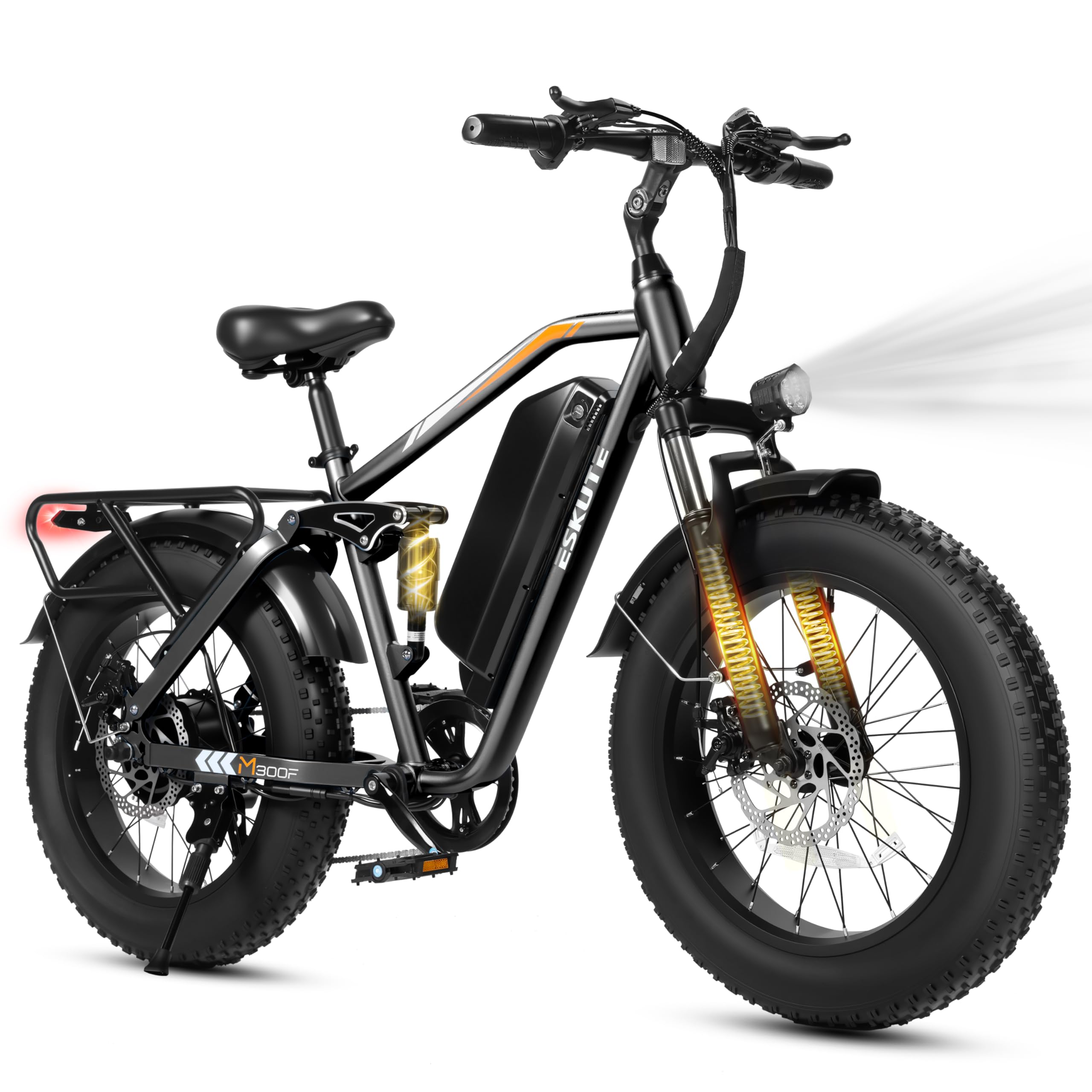
The 52V 20.8Ah battery is the reason the M300F belongs here. That pack works out to just over 1,000 watt-hours, the largest in this group, and it gives the bike a genuine long-range brief rather than a short-hop one. We like that ESKUTE paired it with full suspension and 20 x 4.0 tires instead of making a stripped-down range special.

The 1200W motor has strong acceleration, and the 7-speed gearing keeps the bike usable if you want to pedal. The 20-inch wheels make it more nimble than the 26-inch picks, though they also transmit more of the road into the frame. Full suspension helps, and the adjustable seat covers a wide range of riders.

The M300F is happiest on pavement, gravel, and packed dirt, where the fat tires and suspension work together. For loose rocks and steep descents, the bigger-wheel Funhang or Aipas feels more settled. We also appreciate the detachable battery for charging indoors, though the bike still needs a serious lock and a ground-level spot.

Bottom line: Our long-range pick is the M300F: a 52V 20.8Ah battery and full suspension in a compact 20-inch package, with a top-speed claim to verify.

3

AYOLNY EB6

AYOLNY EB6

Errands and storage

Our Score 9.2/10
Check Price

Worth Noting

  • 70-mile range is a best-case assist claim
  • Basket is small for bulky cargo
Motor
750W, 2000W peak
Battery
48V 15Ah
Tire Size
20 x 4.0 inches
Suspension
4-point
Read the full review

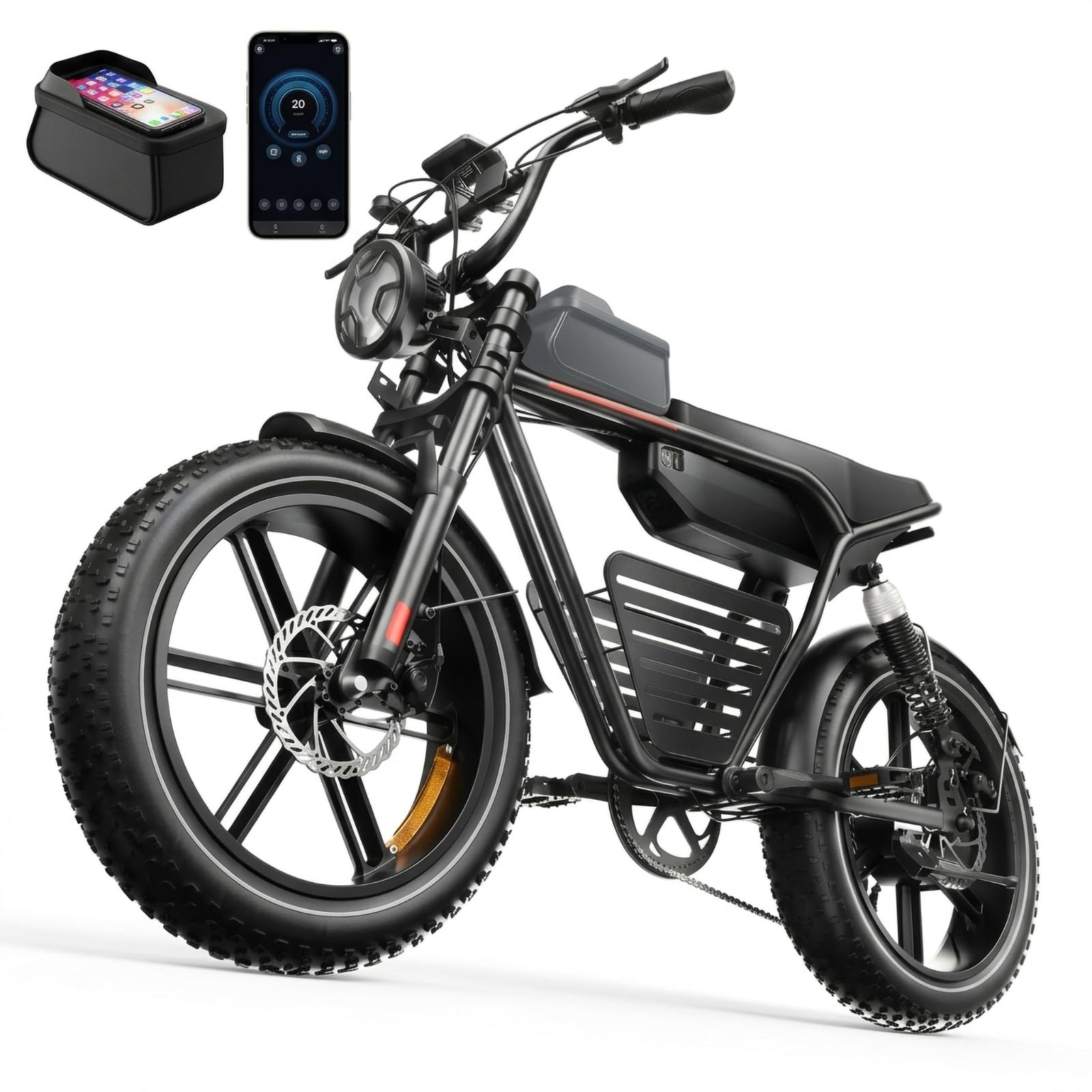
The under-seat basket is the first thing we noticed on the AYOLNY EB6, and it is more useful than a cosmetic frame bag. It gives you a place for a lock, gloves, and a small grocery run without strapping a rack to the back. The automatic front and rear lights are the second practical touch; they come on in low light and take one decision off your plate.

The 20 x 4.0-inch tires and four-point suspension give the EB6 a comfortable, planted stance for a 20-inch bike, and the 750W rated motor with 2000W peak has enough punch for errands and short commutes. We like that AYOLNY kept the cockpit simple with a full-color LCD and a removable battery. The upright riding position makes stop-and-go riding easy, especially with the basket loaded.

The 48V 15Ah battery is mid-pack here; for a 10- to 20-mile errand loop, it is enough, but it is not the long-distance pack the ESKUTE M300F offers. We recommend the EB6 to riders who want a compact 20-inch bike with built-in storage and automatic lights. It is a city and campground companion, not a trail bike for steep, loose terrain.

Bottom line: We like the EB6 for riders who want a compact errand bike with built-in storage and automatic lights; treat its 70-mile range as a best-case assist figure.

4

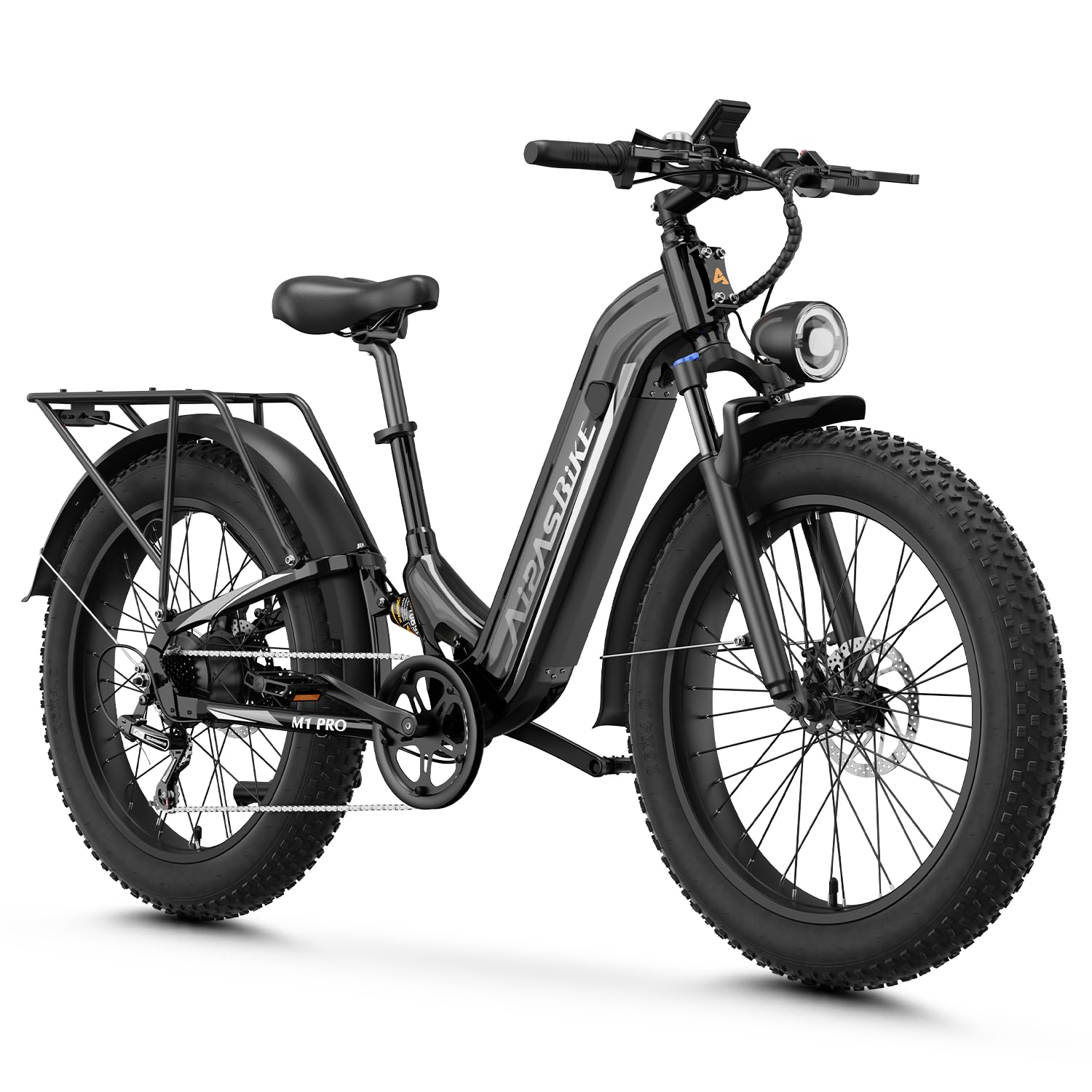
Aipas M1 Pro

Aipas M1 Pro

Long step-through rides

Our Score 8.8/10
Check Price

Worth Noting

  • Premium price for the set
Motor
750W, 1800W peak
Weight
88 lb
Battery
48V 17.5Ah
Tire Size
26 x 4 inches
Read the full review

The M1 Pro starts with a number that is hard to ignore: 88 pounds. That weight is the price of a 48V 17.5Ah battery, a step-through steel frame, and full suspension, and it is why the bike feels planted rather than nervous when the surface turns loose. We noticed the heft most when pushing it through a doorway or lifting it onto a rack, not once we were rolling.

The step-through frame is the feature we appreciate most. It makes stop-and-go riding easier, especially when you are stopping on a slope or wearing boots, and the 100mm front fork plus rear shock takes the sting out of curb cuts and washboard gravel. The 180mm disc brakes and 7-speed gearing are welcome on a bike this heavy; the M1 Pro is not just a throttle toy.

The 1800W peak motor and 110Nm of torque give it strong pull, and the 17.5Ah battery is the second-largest pack here after the ESKUTE M300F. The 85-mile range is a pedal-assist best case; throttle use and hills will bring that down. For a rider who commutes 15 to 20 miles each way and can charge at work, that is a realistic match.

Where the M1 Pro falls down is simple logistics. It needs a ground-level parking spot, a wide door, and a rack rated for its weight. We think the comfort and range are worth the trade if you have that space; if you regularly carry a bike upstairs, the lighter Funhang is the better call.

Bottom line: For a step-through 26-inch bike with long range and full suspension, the M1 Pro earns our recommendation, provided you can park it at ground level.

5

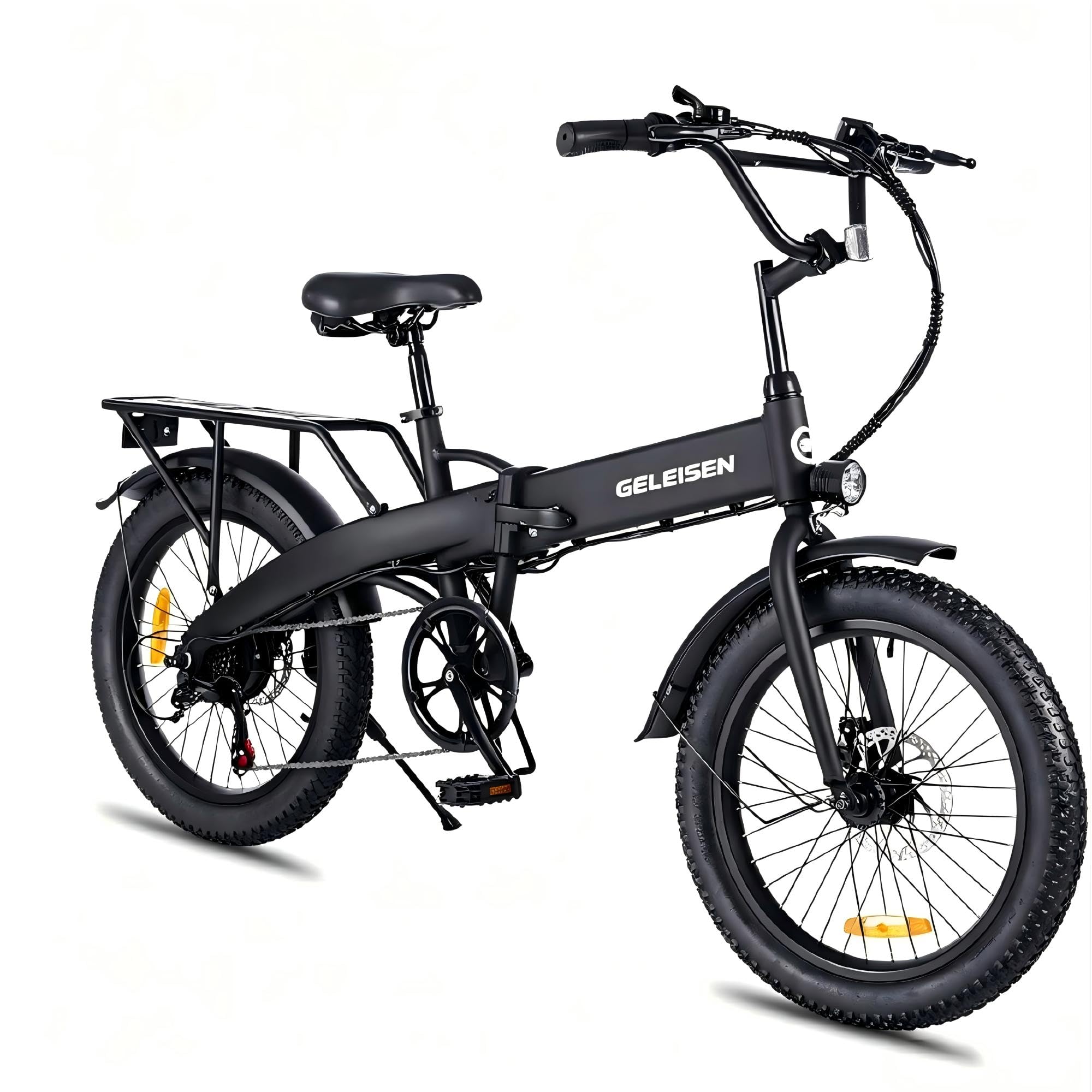
GELEISEN PM-09

GELEISEN PM-09

Folding and small spaces

Our Score 8.8/10
Check Price

Worth Noting

  • 3.0-inch tires offer less float than 4-inch tires
Frame
Folding aluminum
Battery
374.4Wh
Payload
300 lb
Tire Size
20 x 3.0 inches
Read the full review

The GELEISEN folds, and that is the feature that earns it a place. In an apartment hallway or the back of a small car, a 20-inch folder takes up far less room than a 26-inch fat-tire bike, and the aluminum step-through frame is easier to manage than a steel one. We like the 20 x 3.0-inch tires too: they are narrower than the 4-inch tires elsewhere, but still give the bike a sure-footed feel on pavement and packed dirt.

The 374.4Wh battery is sized for short trips, not all-day rides, and the 350W motor tops out at 20 mph. That makes the GELEISEN a last-mile or errand bike: campus, grocery store, campground loop. The 6-speed gearing and front suspension are enough for that job, and the 300-pound payload plus steel rear rack give it more utility than most folders.

We give the GELEISEN extra credit for UL 2849 and UL 2271 certification. On a bike that may live inside a closet or under a desk, the electrical safety paperwork matters more than a flashy display. The folding latch is the part to check carefully before every ride; it is the difference between a compact bike and a wobbly one.

Bottom line: Our folding pick is the GELEISEN, which combines UL certification, a 300-pound payload, and a genuinely small footprint for apartment storage.

6

Flydone EB5 Mini

Flydone EB5 Mini

Compact travel

Our Score 8.8/10
Check Price

Worth Noting

  • 16-inch wheels are less settled on rough ground
Motor
1500W peak
Range
30 to 55+ miles
Tire Size
16 x 4.0 inches
Top Speed
20 mph
Read the full review

The EB5 Mini's 16-inch wheels are the reason it exists. On a 16-inch rim, the 4-inch tires make a package small enough for an RV, a boat, or a closet, and the full suspension helps take the edge off rough pavement. We like it for short urban hops and campground loops, where the small footprint matters more than outright speed.

The 1500W peak motor and 65Nm of torque give the little bike more pull than its size suggests, and the 20 mph top speed is sensible for something this compact. The 30- to 55-plus-mile range claim is broad; at the top end, it assumes light pedal assist and a small rider. We treat it as a short-trip bike, not a commuter for 20-mile days.

The triple-layer seat and full suspension are comfort features we appreciate on a bike with small wheels, and the five riding modes make it easy to choose how much help you want. The puncture-resistant tires are a practical touch for urban debris. It is a short-trip machine, not a substitute for a full-size trail bike.

We recommend the EB5 Mini to RVers, boat owners, and apartment dwellers who need a tiny e-bike for short trips. It is at its best on pavement and packed dirt, where the compact ride is an asset. For fast, rough trails or long commutes, choose a 20- or 26-inch bike instead.

Bottom line: The EB5 Mini is our pick for RVers and apartment dwellers who need a tiny e-bike for short trips, not fast, rough trails.

7

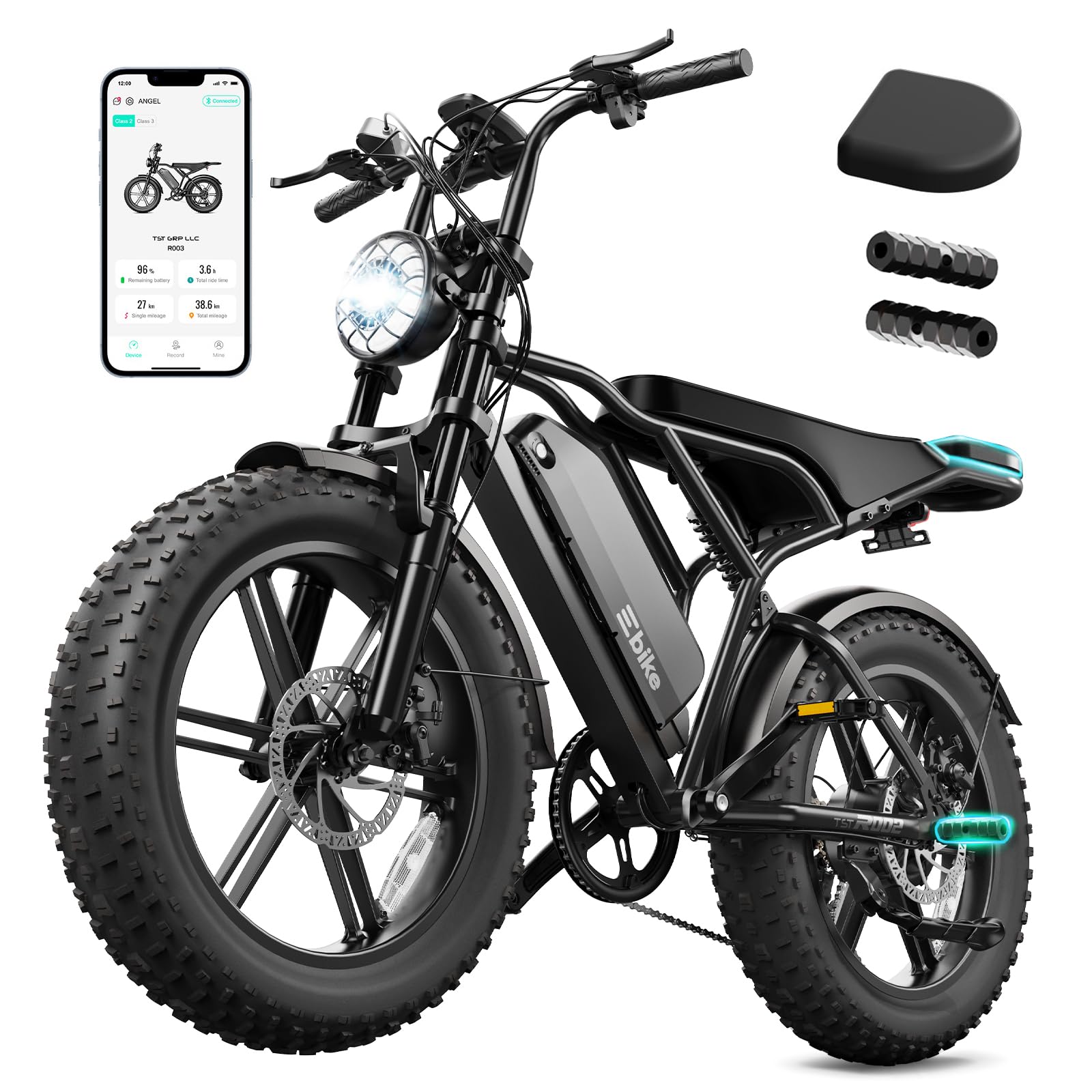
TST R004

TST R004

Full-suspension value

Our Score 8.6/10
Check Price

Worth Noting

  • Linear-pull brakes are a mismatch for the power
  • Warranty is limited to 180 days
Motor
749W, 2000W peak
Brakes
Linear pull
Battery
48V 15Ah
Wheel Size
20 inches
Read the full review

The R004's 2000W peak motor is the headline, and it is a lot of power for the money. The 749W rated motor and 48V 15Ah battery give it strong acceleration, while the dual suspension and 20-inch fat tires keep the ride from feeling like a hardtail. We like the rear rack and lights as standard equipment; they make the bike useful beyond a toy.

The 7-speed drivetrain is welcome on a bike with this much peak power, and the twist-grip shifter is easy to use with gloves. The 60-mile range claim is a pedal-assist figure, so plan on fewer miles if you lean on the throttle. A 6- to 7-hour charge is an overnight routine, not a quick top-up.

The dual suspension and 20-inch fat tires soften rough pavement and moderate trails, but this is still a compact bike rather than a long-distance cruiser. It is happiest on local paths, gravel roads, and short commutes. The rear rack and built-in lights make it easier to use for errands than a bare trail bike.

The R004 is a strong value for local trail riders who want power and suspension without stretching to a premium bike. It is not the refined choice, but the core ride is fun and competent. We see it as a second bike or a first e-bike for someone who stays close to home and keeps an eye on maintenance.

Bottom line: We think the R004 is worth a look for local trail riders who want big peak power and full suspension, as long as the basic brakes and short warranty are acceptable.

8

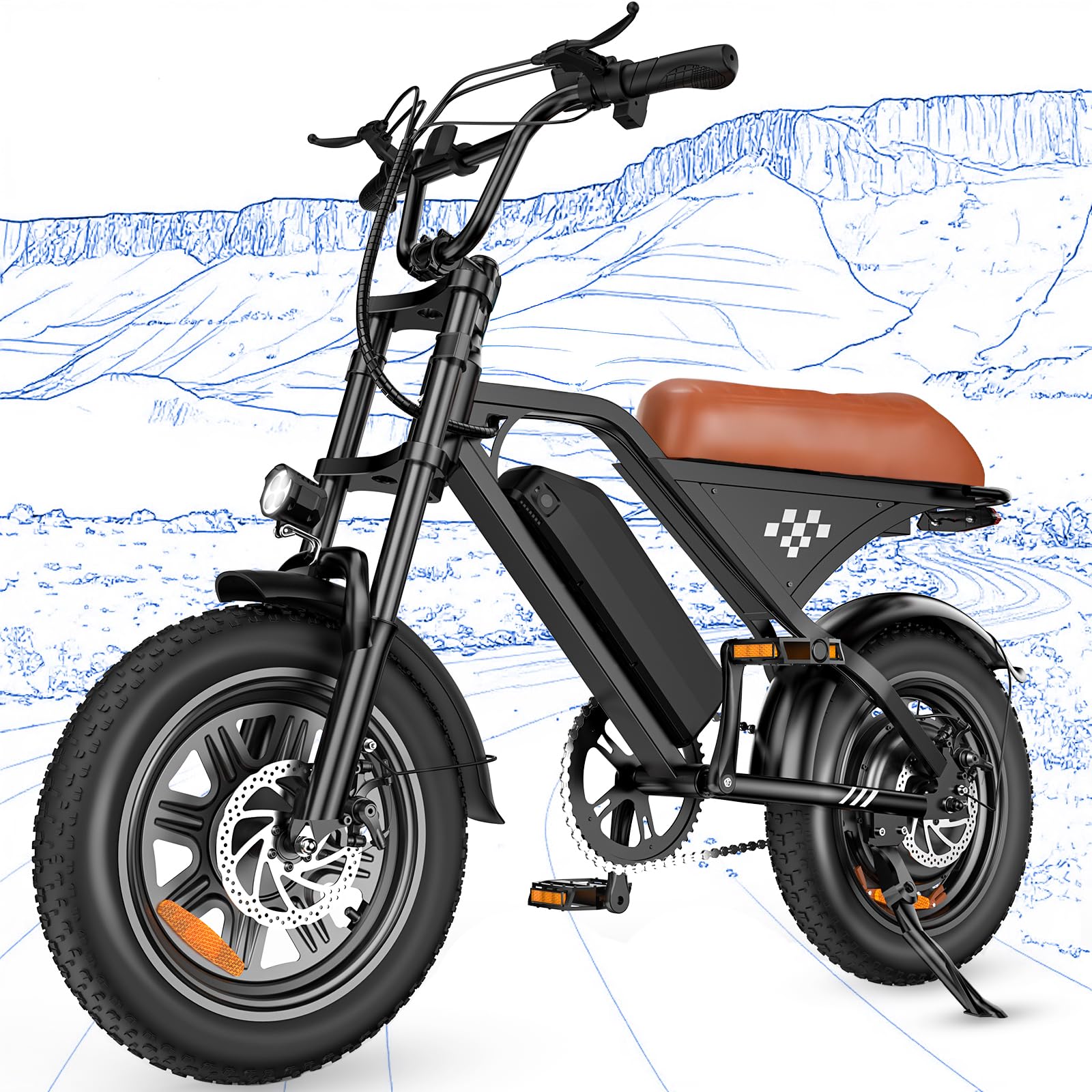
Jasion RetroVolt

Jasion RetroVolt

Passenger and cargo

Our Score 8.4/10
Check Price

Worth Noting

  • 20-inch wheels are less settled at speed
Motor
2000W peak
Battery
48V 15Ah
Payload
330 lb
Tire Size
20 x 4.0 inches
Read the full review

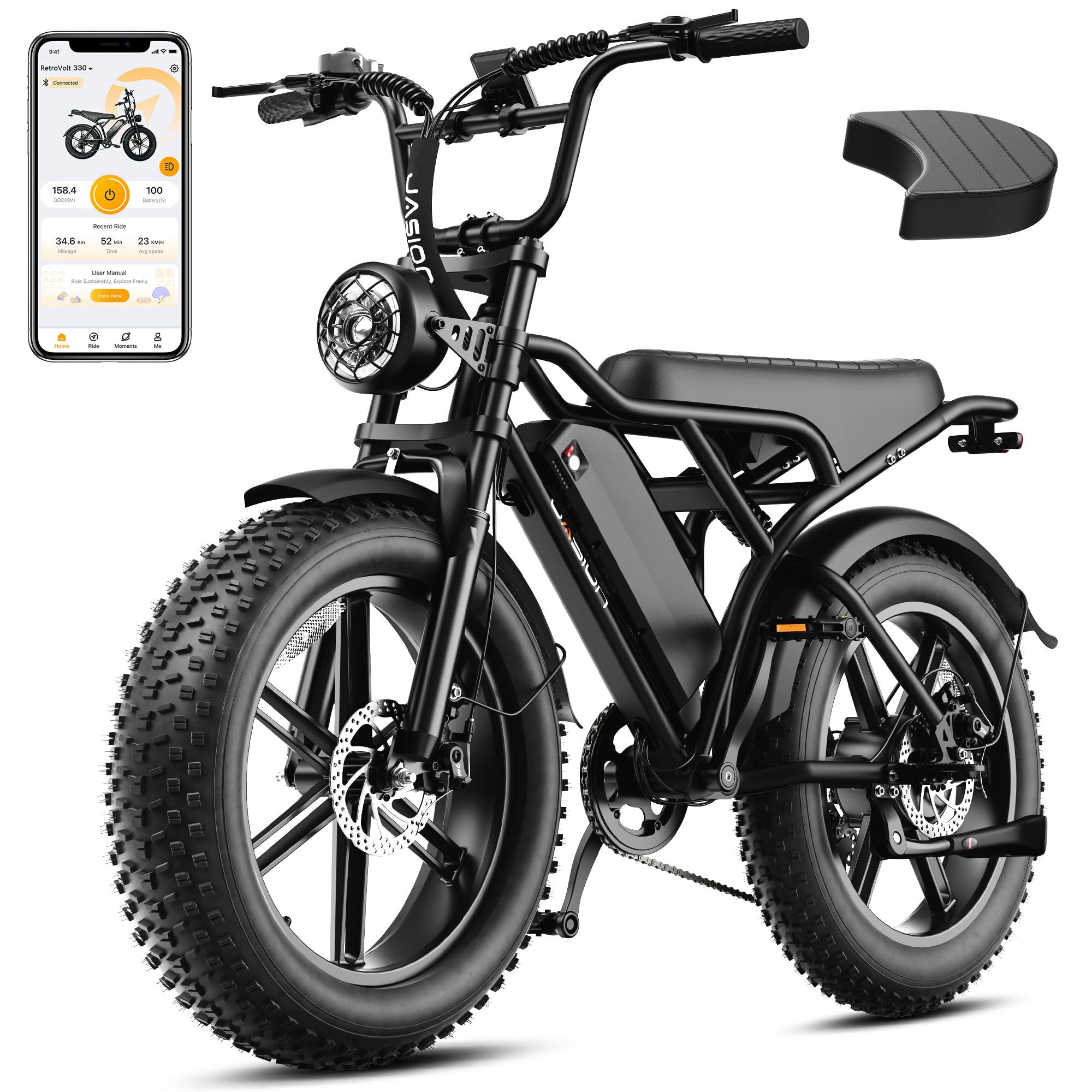
The rear seat pad is the detail that sets the RetroVolt apart. On a 20-inch fat-tire bike, it turns short errands into a two-person outing, and the 330-pound payload has to cover both riders plus anything you are carrying. We like that the bike does not pretend to be a long-distance tourer; it is a compact utility ride with a little extra seat.

The 20 x 4.0-inch tires and dual suspension make the RetroVolt feel more substantial than its wheel size suggests, while the 2000W peak motor and 99Nm of torque give it enough pull for hills and headwinds. The 7-speed drivetrain and five riding modes let you dial the effort back on flat ground. We found the upright position easy to live with around town.

The 48V 15Ah battery is mid-pack here, and the 70-mile claim is a pedal-assist ceiling, not a promise for throttle-heavy riding. That is fine for neighborhood errands, school runs, and short commutes. If your rides regularly stretch past 20 miles, the ESKUTE M300F's bigger pack is the more sensible choice.

Bottom line: Our pick for short passenger trips and compact errands, the RetroVolt makes sense if you keep it on neighborhood roads rather than fast arterials.

What We Put These Fat Tire E-Bikes Through

We started with a shortlist of more than 40 models and cut it down by looking at things you can verify before a bike ever ships: whether the battery is certified by a nationally recognized testing lab, whether lights, fenders, and a rear rack are included or sold separately, the listed weight with the battery installed, and how easy the company makes it to get replacement brake pads and tires. That filtering left us with six bikes, which we rode for nine months.

Every bike got built in a garage with only the tools in the box, and we timed it solo from opening the carton to the first ride. We checked for brake rotor rub, ran through every gear, and noted how much of the assembly assumed a second pair of hands. Then we rode: a 14-mile gravel loop repeated in each assist level, a slushy winter commute, a grocery run with panniers loaded, a steep half-mile climb, and a stretch of beach sand with the tires aired down.

Weight got measured rather than trusted. Each bike went on a luggage scale with the battery in, then we lifted it onto a hitch rack alone and carried it up a flight of basement stairs. Range was tracked by riding the same loop in identical conditions and recording how many miles each bar of battery actually delivered, including a few rides in near-freezing weather to see how much capacity the cold took. We kept a written log of every rattle, dropped chain, loose bolt, and brake adjustment, hosed each bike down after wet rides, and re-checked the hardware for rust. For the folder, we timed the fold and unfold and tried loading it into a hatchback without folding a seat.

How to Choose Fat Tire Electric Bikes

Pick the wheel size for your surface

A 26-inch fat tire rolls over roots, potholes, and packed sand with more calm than a 20-inch wheel, which is why the Funhang and Aipas make sense for rail trails and broken pavement. A 20-inch bike like the RetroVolt or ESKUTE M300F is more compact and quicker to turn, but it feels busier at speed. A 16-inch bike such as the Flydone is for short hops and tight storage, not fast rough terrain. If most of your riding is smooth pavement, a narrower tire is easier to live with; fat tires earn their weight on loose or uneven surfaces.

Use watt-hours to compare batteries

Range claims are usually pedal-assist best cases, so compare the packs themselves. A 48V 15Ah battery is 720Wh; the Aipas's 48V 17.5Ah pack works out to 840Wh, and the ESKUTE's 52V 20.8Ah pack is just over 1,080Wh. Bigger packs buy range but add weight and charge time. A smaller pack can be the smarter choice if your commute is short and the bike has to be carried or stored in a tight spot.

Plan for 70 to 90 pounds

The two full-size 26-inch picks weigh 70 and 88 pounds, and even a folder is a heavy object to wrestle through a doorway. Measure the hallway, door, and storage spot before ordering. If the bike must go upstairs, a compact 20-inch model or a folder makes more sense than a long-range 26-inch bike. A ground-level garage is the easy answer; a car rack needs a per-bike weight rating that matches the bike, not just the rack's total capacity.

Match brakes and suspension to the power

A 500W to 1000W bike with mechanical disc brakes and a front fork is fine for gravel and pavement. Once you move into 2000W-peak territory, braking becomes the more important upgrade. Avoid pairing that much power with linear-pull brakes if you ride steep descents or wet weather; the TST's brake hardware is the reason it stays in our also-consider tier. Full suspension adds comfort and weight, and it makes the biggest difference on 20-inch bikes with less tire sidewall to absorb bumps.

Check fit, payload, and passenger duty

Payload includes the rider, so subtract your weight before you plan cargo or a passenger. The Aipas step-through is easier to mount at stops, while the RetroVolt's rear pad is for short passenger trips rather than regular two-up touring. Check standover and seat height before buying, especially if you are near the short or tall end of a model's fit range. A bike that fits you is safer and more pleasant than one with a bigger battery.

Frequently Asked Questions

Final Verdict

The Funhang EB-S1 is the one we point most riders to: 26-inch fat tires, UL 2849 certification, a practical rack, and a weight that does not punish you every time you move it. Choose the Aipas M1 Pro instead when the ride is longer and a step-through frame matters; its bigger battery and full suspension justify the extra weight. If the bike has to fold into a closet, the GELEISEN is the compromise.