Components

11 Best Mountain Bike Fork 2026: Reliable Without Overpaying

Find a suspension fork that matches your riding style and budget without buying into marketing hype. We break down real trade-offs between air vs coil, travel, and durability.

Many budget suspension forks claim trail-readiness but struggle with roots, rocks, or regular off-road use. The gap between advertised capability and actual performance is wider in this category than almost any other bike component.

Air forks offer significant weight and adjustability advantages over coil, but the real difference lies in damping quality and long-term durability. A fork that feels smooth on the first ride may develop play or leaking seals within months if built with marginal tolerances.

The best fork for you depends on your wheel size, axle type, and how aggressive your typical trail is. This guide organizes picks to match common upgrade paths and budgets, so you can skip the trial-and-error.

1

RockShox Recon RL 27.5"

Top Pick
RockShox Recon RL 27.5"

Weight-conscious XC

Our Score 9.4/10
Check Price

Worth Noting

  • Plastic rebound adjuster and lockout lever lack the solid feel of metal components, detracting from an otherwise refined fork.
Travel
100 mm
Axle Type
9 mm QR
Spring Type
Solo Air
Steerer Type
1-1/8 straight
Read the full review

The Recon RL sheds noticeable weight compared to the top pick, transforming the front end feel of a 27.5-inch XC bike. The Solo Air spring and Motion Control damper deliver predictable damping and small-bump sensitivity that prioritize efficiency over plushness.

This fork suits weight-conscious cross-country riders who value ride feel and can accept less premium controls. The plastic rebound adjuster and lockout lever work reliably, but won't satisfy those expecting a solid metal feel. Not recommended for riders who prioritize tactile controls or plan heavy trail use.

The plastic rebound knob works fine with normal use, but avoid using tools to force adjustments – finger-tight is sufficient.

Bottom line: For XC riders who prioritize weight and ride feel over tactile controls, this fork delivers strong performance at a mid-range price.

2

RockShox Judy Silver TK 29"

RockShox Judy Silver TK 29"

29" upgrades

Our Score 9.4/10
Check Price

Worth Noting

  • The 100mm travel and basic damper limit capability on steep descents and rocky trails - ideal for XC and beginner riding but not for aggressive trail use.
Travel
100 mm
Axle Type
9 mm QR
Spring Type
Solo Air
Steerer Type
1-1/8 straight
Read the full review

Shares the same Solo Air spring and Motion Control architecture as pricier RockShox forks, giving entry-level 29ers a substantial ride improvement. The 100mm travel and simpler damper trade aggressive trail capability for weight savings - a fair compromise for XC and beginner use.

Bottom line: A solid choice for budget-conscious 29er riders who want a smooth air fork upgrade without needing extra travel for aggressive trails.

3

RockShox Recon Silver RL 29"

RockShox Recon Silver RL 29"

XC light trail

Our Score 9.2/10
Check Price

Worth Noting

  • Straight steerer and 9mm QR axle limit compatibility with modern frames and wheels.
  • Initial setup requires a shock pump (sold separately) to set sag properly.
Travel
100 mm
Axle Type
9 mm QR
Spring Type
Solo Air
Steerer Type
1-1/8 straight
Read the full review

The Recon Silver RL pairs RockShox's responsive Solo Air spring with Motion Control damper, giving hardtails a noticeable weight reduction and controlled feel on climbs and descents. Lockout is positive and the damping stays consistent across varied terrain without the harshness of budget coil forks.

Best suited for cross-country and light trail riding on 29er hardtails with a straight 1-1/8 inch headtube and 9mm QR dropouts. The 100mm travel covers XC efficiency but won't smooth out aggressive enduro lines. Riders with modern tapered frames or thru-axle wheels will need to look at other options.

Bottom line: If your bike uses a straight steerer and QR axle, this is the fork to beat for XC and light trail duty — consistent performance without the premium price.

4

RockShox Judy Silver TK 27.5" 100mm

RockShox Judy Silver TK 27.5" 100mm

XC riders

Our Score 9.2/10
Check Price

Worth Noting

  • Frames with tapered headtubes or thru-axle dropouts cannot use this fork
Travel
100 mm
Axle Type
9 mm QR
Spring Type
Solo Air
Steerer Type
1-1/8 straight
Read the full review

RockShox’s Motion Control damper and Solo Air spring give this fork a level of control and adjustability that cheap coil forks lack. Installation is straightforward, with plenty of online resources, making it a practical step up for someone working on their own bike.

Best suited for first-time mountain bikers upgrading from heavy coil forks on 27.5-inch hardtails, or cross-country riders who want a reliable lockout for climbs. The 100mm travel is on the shorter side – it’s not meant for plush trail riding, and the straight steerer and 9mm QR limit compatibility with modern frames.

Bottom line: An easy, cost-effective upgrade that delivers consistent damping for cross-country riding, as long as 100mm travel suits your terrain.

5

RockShox Judy Silver TK 27.5" 120mm

RockShox Judy Silver TK 27.5" 120mm

More travel

Our Score 9.2/10
Check Price

Worth Noting

  • Damper performance is identical to the 100mm Judy; the Recon offers better damping for a similar cost.
Travel
120 mm
Axle Type
9 mm QR
Spring Type
Solo Air
Steerer Type
1-1/8 straight
Read the full review

Offers 120mm travel for a plusher feel on 27.5 hardtails, and benefits from RockShox's consistent build quality. The damper is the same unit used on the 100mm version, so riders seeking more refined damping will get better performance from the Recon at a similar price.

Bottom line: For 27.5 hardtail owners wanting extra travel without leaving RockShox reliability, this fork works — but if damping refinement matters, the Recon is worth the extra cost.

6

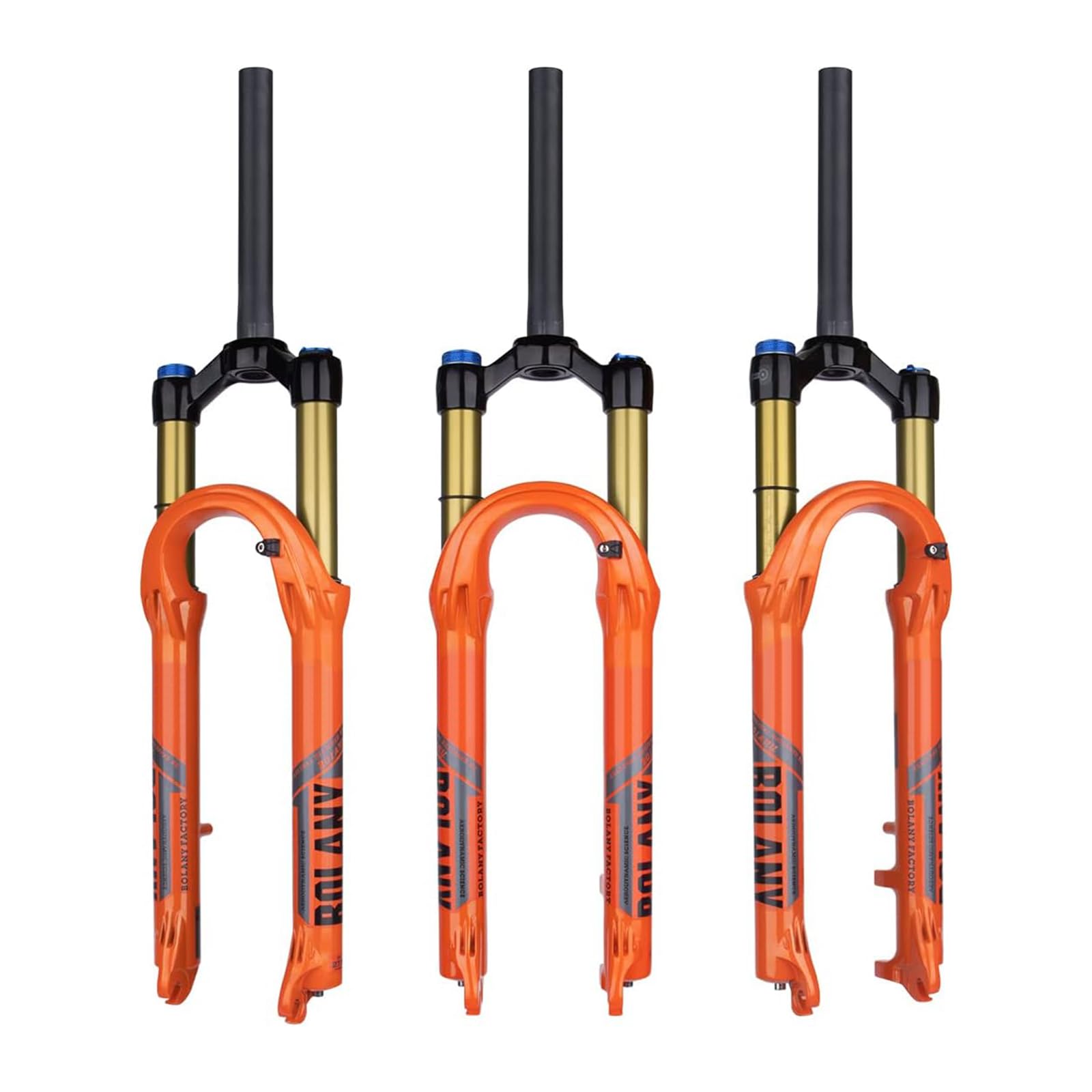
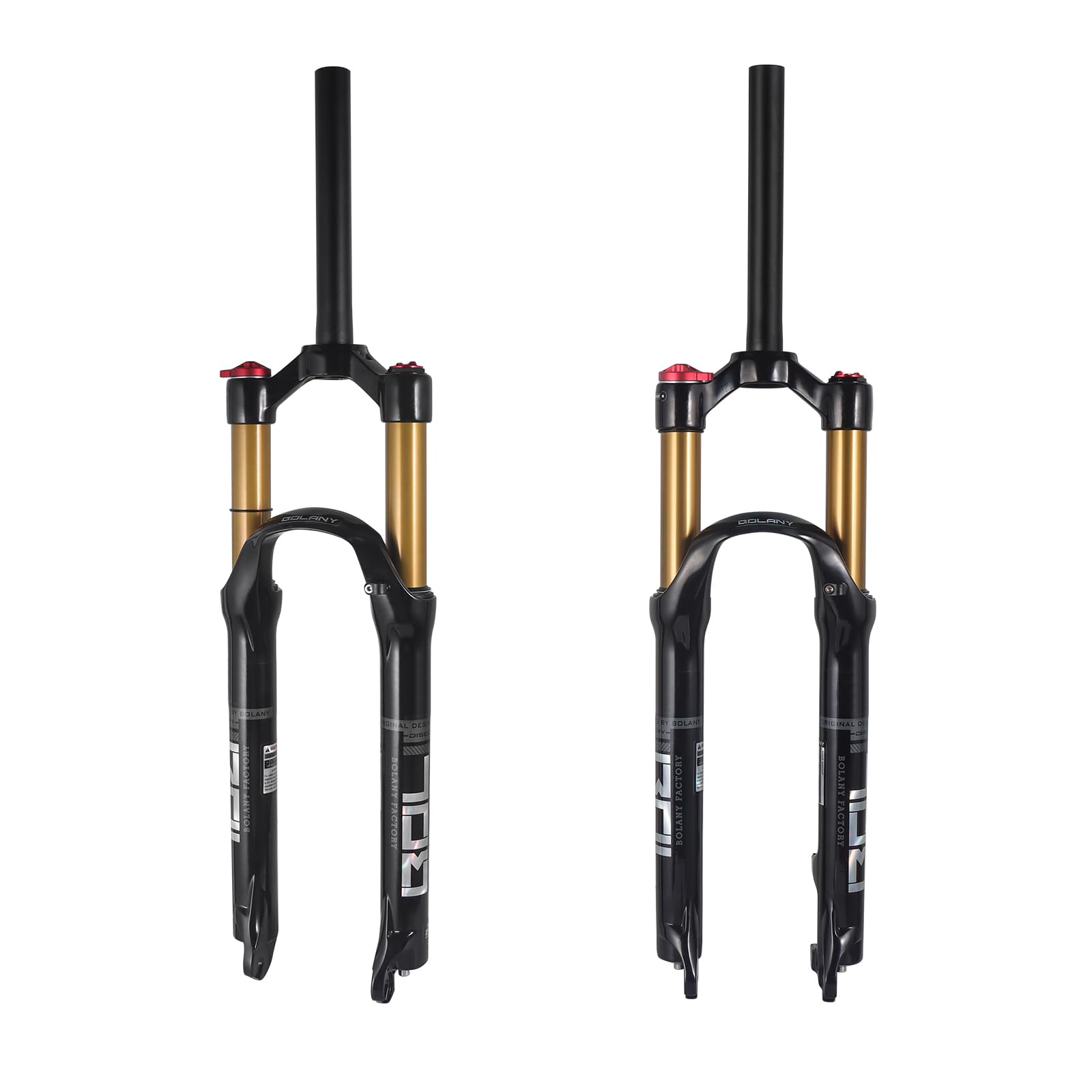
BOLANY Air Fork 120mm

BOLANY Air Fork 120mm

XC light trail

Our Score 9.0/10
Check Price

Worth Noting

Travel
120 mm
Axle Type
9 mm QR
Spring Type
Air
Steerer Type
28.6 mm straight
Read the full review

The BOLANY Air Fork combines a 120mm air spring with a 4.5-star average rating — a combination typically found at higher price points. Out-of-the-box function is smooth, with adjustments responding as expected for the price. Build quality feels solid for a budget component, though long-term durability under repeated heavy use is not yet established. This fork suits riders upgrading from coil forks on 27.5- or 29-inch XC bikes, especially those who want air suspension without spending over $150.

Bottom line: For budget-conscious riders seeking air suspension for light trail riding, this fork delivers the essential features at a low cost — just accept that its durability track record is still short.

7

BOLANY Air Fork 100mm

BOLANY Air Fork 100mm

Budget alternative

Our Score 8.6/10
Check Price

Worth Noting

  • Some units show bushing wear or lockout failure after months of use, making longevity unpredictable.
Travel
100 mm
Axle Type
9 mm QR
Spring Type
Air (oil/gas)
Steerer Type
Straight or tapered
Read the full review

This air fork offers a noticeable weight reduction and smoother action than basic coil forks, making it a cost-effective upgrade for light XC and trail riding. However, bushing wear and lockout failures have been noted in some units, so it is less consistent than ZTZ or RockShox forks for heavier or more aggressive use.

Bottom line: Best suited for budget-conscious riders who stick to smooth trails and are comfortable with possible unit-to-unit variation.

8

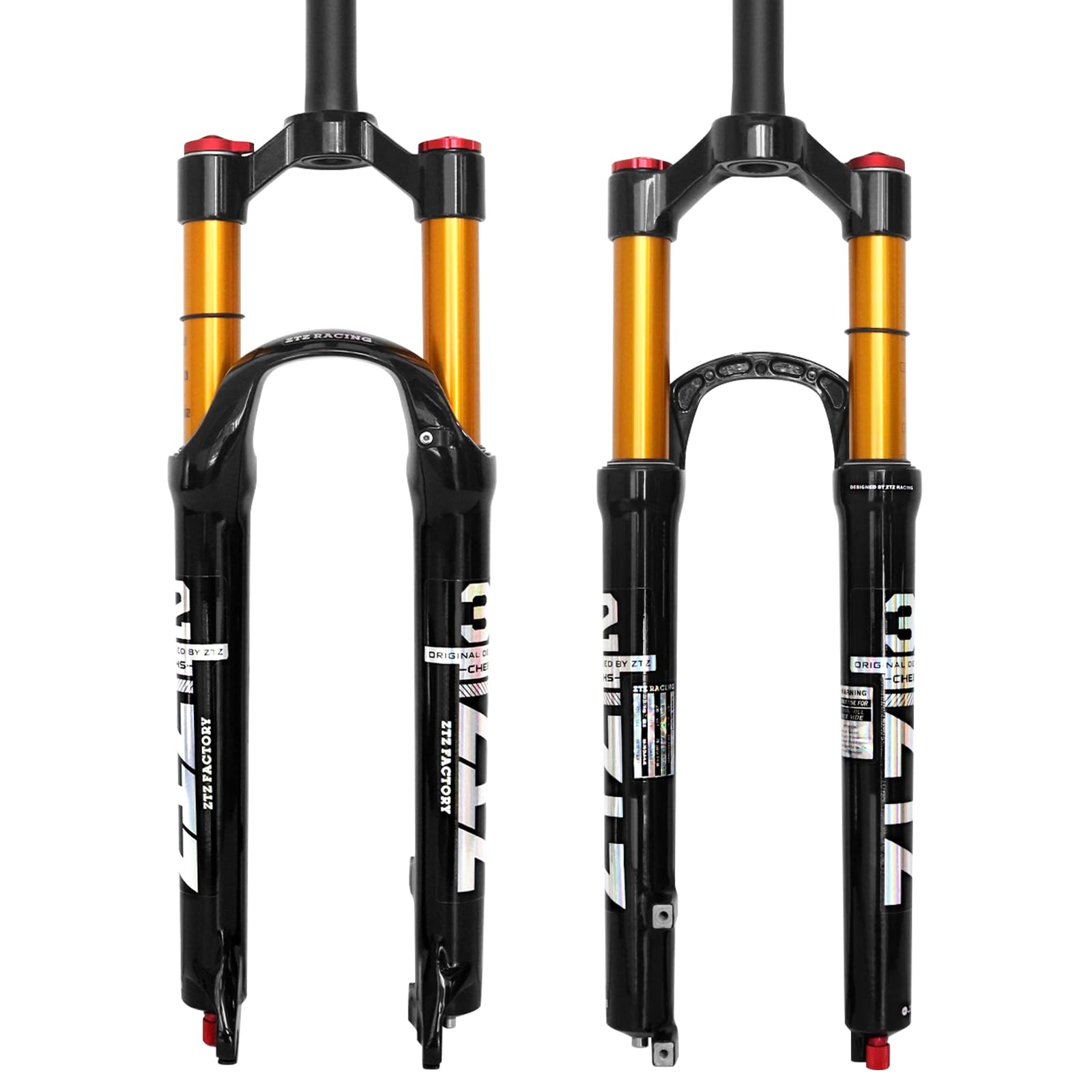
ZTZ Air Fork 120mm

ZTZ Air Fork 120mm

Budget XC builds

Our Score 8.4/10
Check Price

Worth Noting

  • Occasional coating wear on stanchions and potential lockout lever breakage in some units
Travel
120 mm
Axle Type
9 mm QR
Spring Type
Air (oil/gas)
Steerer Type
28.6 mm straight
Read the full review

The ZTZ Air Fork delivers rebound and air spring adjustability typically found on forks costing twice as much. Its 120mm travel and lightweight construction make it a strong contender for upgrading entry-level mountain bikes without breaking the bank.

Budget-minded XC and light trail riders who value tuning options over long-term durability will appreciate the features this fork offers. Quality control can be inconsistent -- some units may develop stanchion coating wear or lockout lever issues within weeks, so it suits those willing to roll the dice for a performance bargain.

Regularly inspect the stanchions and lockout lever -- early detection of wear can help extend the fork's usable life.

Bottom line: A solid choice if you want air spring and rebound adjustment on a tight budget, but be prepared for possible quality-control issues that make it a gamble for long-term use.

9

BUCKLOS Spring Fork 100mm

BUCKLOS Spring Fork 100mm

Pavement use

Our Score 8.4/10
Check Price

Worth Noting

  • Lacks the adjustability and air spring of better forks, limiting its use to very light off-road conditions
Travel
100 mm
Axle Type
9 mm QR
Spring Type
Oil spring (coil)
Steerer Type
28.6 mm straight
Read the full review

The BUCKLOS fork uses oil damping for decent small-bump absorption on gravel or pavement, an improvement over bare spring forks. But the coil spring and limited adjustability mean it is not suitable for technical trails. This fork is best for replacing broken stock units on entry-level bikes used for casual cruising.

Bottom line: A reasonable choice for reviving a cheap bike used only on pavement or gravel, but not a performance upgrade for trail riding.

10

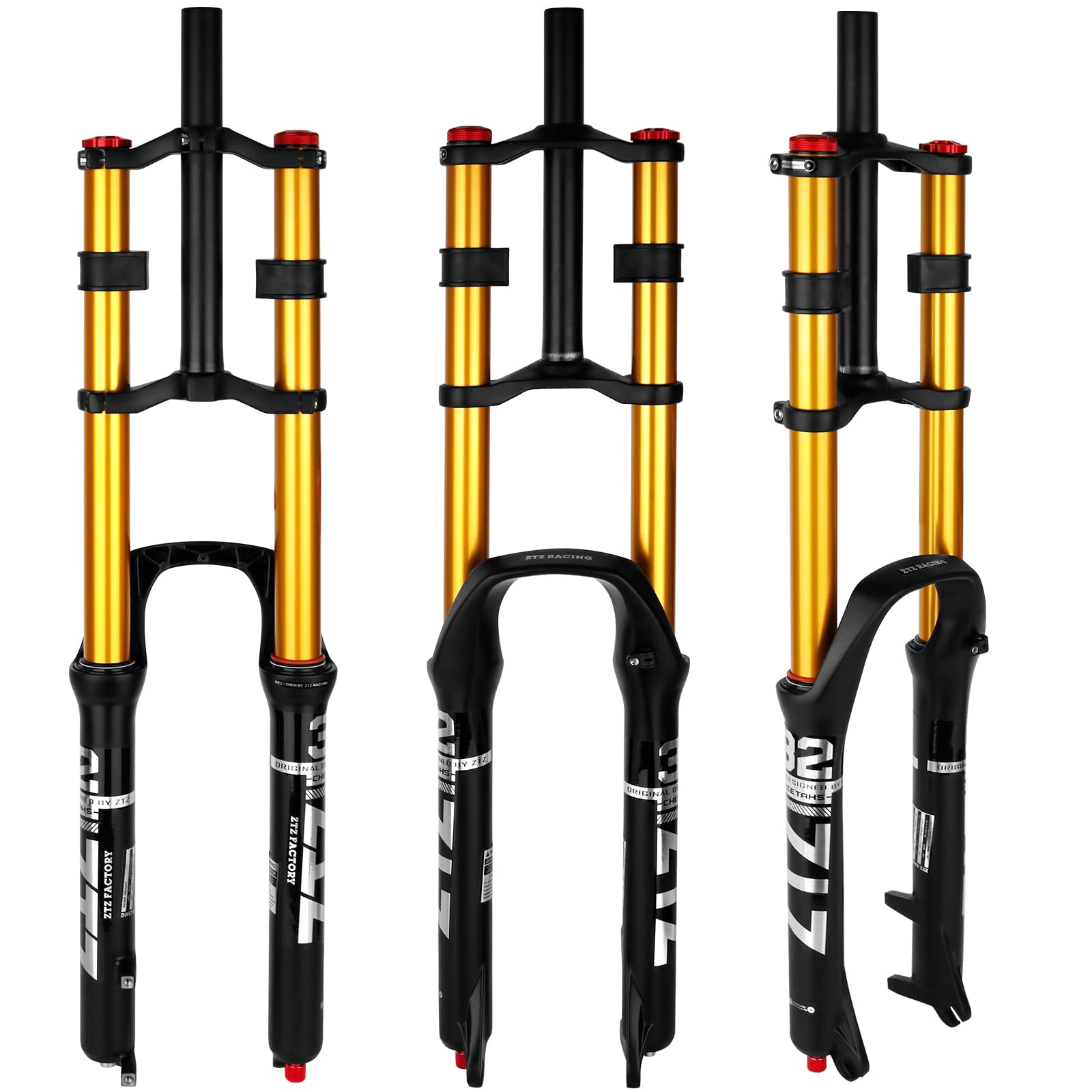
B Bolany DH Air Fork

B Bolany DH Air Fork

Budget DH builds

Our Score 8.4/10
Check Price

Worth Noting

  • Under regular trail use or for heavier riders, durability may be limited
Travel
Axle Type
9 mm QR
Spring Type
Air
Steerer Type
28.6 mm straight
Read the full review

The double shoulder construction adds stiffness and a sturdy feel for light downhill riding. The air spring and basic rebound adjustment work well out of the box. However, for heavier riders or regular trail use, durability becomes a concern — some units may lose damping or develop rebound issues within months. This fork fits someone building a budget downhill bike for low-impact sessions where weight isn't critical.

Bottom line: Only worth considering if you need a cheap double-shoulder fork for very occasional, low-impact downhill riding and accept the durability trade-off.

11

BUCKLOS Thru-Axle Air Fork

BUCKLOS Thru-Axle Air Fork

QR to thru-axle

Our Score 8.0/10
Check Price

Worth Noting

  • Some units have developed stanchion wear, lockout lever problems, or structural cracks over time.
Travel
120 mm
Axle Type
15 mm thru-axle
Spring Type
Air
Steerer Type
Straight or tapered
Read the full review

This fork delivers a rare combination: air spring adjustability and a 15 mm thru-axle at an entry-level price. The chassis feels reasonably light and well-constructed for the money, and the manual lockout adds useful control on climbs. For riders converting from a quick-release to a thru-axle setup on a tight budget, few alternatives exist at this price point.

Durability has been a question mark in some cases. Occasional reports mention stanchion scratches, lockout lever issues, or structural damage after moderate use. This fork is best suited for light trail riding, gravel paths, or cross-country loops where impacts stay moderate. Riders planning aggressive off-road or heavy landings should look at a more established option like the Recon Silver RL.

Check the steerer type (straight or tapered) before ordering — the fork is available in both variants, and compatibility matters.

Bottom line: A viable pick for budget-conscious riders who need a thru-axle fork for light duty, but not a choice for regular trail bashing or riders who need long-term certainty.

How to Choose

Spring Type: Air vs Coil

Air springs use compressed air to support your weight, letting you adjust sag with a shock pump. They are significantly lighter than coil springs and offer fine-tuned support for different rider weights.

Coil forks use a steel spring, which is heavier and non-adjustable. They can feel more linear and plush for smooth trails but lack the tunability needed for climbing or varied terrain. For most mountain bikers, an air fork is the better long-term investment.

Travel: How Much Do You Need?

Travel is the maximum distance the fork compresses. For cross-country riding, 100 mm is sufficient for efficiency and climbing. Trail riding benefits from 120–130 mm for absorbing roots and drops without excessive weight.

More travel adds weight and raises the front end, which slackens the head angle. For general riding, 100–120 mm offers a versatile balance. Going beyond 130 mm without frame geometry designed for it can ruin handling.

Steerer Type: Straight vs Tapered

The steerer tube connects the fork to the headset. Straight 1-1/8 steerers are common on older frames and budget hardtails. Tapered steerers (1.5 to 1-1/8) are stiffer and used on modern frames.

You cannot fit a tapered fork into a straight headset without a special headset adapter, which may not be available. Always measure your current fork's steerer diameter and tube length before ordering.

Axle Type: Quick Release vs Thru-Axle

Quick release (9 mm QR) is the standard on older and entry-level bikes. It is easier to remove but less rigid under heavy braking or cornering. Thru-axles (15 mm or 20 mm) pass through the hub and thread into the fork, providing much stiffer steering.

If your frame has a thru-axle dropout, you must use a thru-axle fork. Converting a QR frame to thru-axle is not possible without replacing the hub or wheel.

Damper Quality: Beyond Lockout

The damper controls how the fork compresses and rebounds. Basic dampers offer only a lockout for climbing. Better dampers like RockShox Motion Control provide low-speed compression adjustment and more consistent damping across rough terrain.

Budget forks often omit proper damping circuits, leading to a pogo-stick feel or harsh top-out. For predictable handling on real trails, a fork with a sealed damper cartridge and adjustable rebound is worth the extra cost.

Frequently Asked Questions