Components

8 Best Mountain Bike Disc Brakes of 2026: Find Reliable Brakes That Fit Your Frame

Avoid brakes that fail or don't fit. This guide helps you choose mountain bike disc brakes that actually work and match your bike's setup.

A new set of disc brakes can transform your mountain bike's stopping power. But the bargain options often come with a catch: hoses too short for your frame, pistons that leak after a few rides, or levers that arrive wired for European bikes. What looks like a deal on paper can leave you stranded on the trail.

The real challenge isn't choosing between hydraulic and mechanical — it's finding a brake that fits your bike's measurements and won't fail when you need it most. Many budget hydraulic sets cut corners on hose length and build quality, while proven mechanicals like the Avid BB7 offer reliable modulation for a fraction of the price of premium hydraulics.

This guide cuts through the noise by focusing on what actually matters: brake type compatibility, hose length requirements, and the difference between a smart upgrade and a safety risk. You'll walk away knowing exactly which brakes belong on your bike — and which ones to avoid entirely.

1

Avid BB7

Top Pick
Avid BB7

Mechanical enthusiasts

Our Score 9.4/10
Check Price

Worth Noting

  • Rotor and mounting bracket sold separately, increasing total cost for a complete setup.
  • Piston may seize in cold, salted conditions, requiring occasional maintenance.
Pistons
2 (one active, one static)
Pre-bled
N/A (mechanical)
Brake Type
Mechanical disc
Mount Type
Post mount
Read the full review

The BB7's independent pad adjustment and sealed bearings give it a level of control that basic calipers can't match. This caliper is ideal for mechanical brake enthusiasts and long-distance touring riders who value consistent modulation over hydraulic simplicity. Note that the rotor and mounting bracket are sold separately, which adds to the upfront cost — not a concern for those who already have compatible rotors but a factor for new builds.

In cold winter climates, periodic lubrication of the piston can help prevent seizing.

Bottom line: For riders who prefer mechanical brakes and want maximum adjustability, the BB7 is the clear choice — just budget for the missing rotor.
2

Shimano M375 Caliper

Shimano M375 Caliper

Budget builds

Our Score 9.2/10
Check Price

Worth Noting

  • Spring mechanism can lose tension over time, leading to inconsistent pad retraction.
Pistons
2 (one active, one static)
Pre-bled
N/A (mechanical)
Brake Type
Mechanical disc
Mount Type
Post mount 74mm
Read the full review

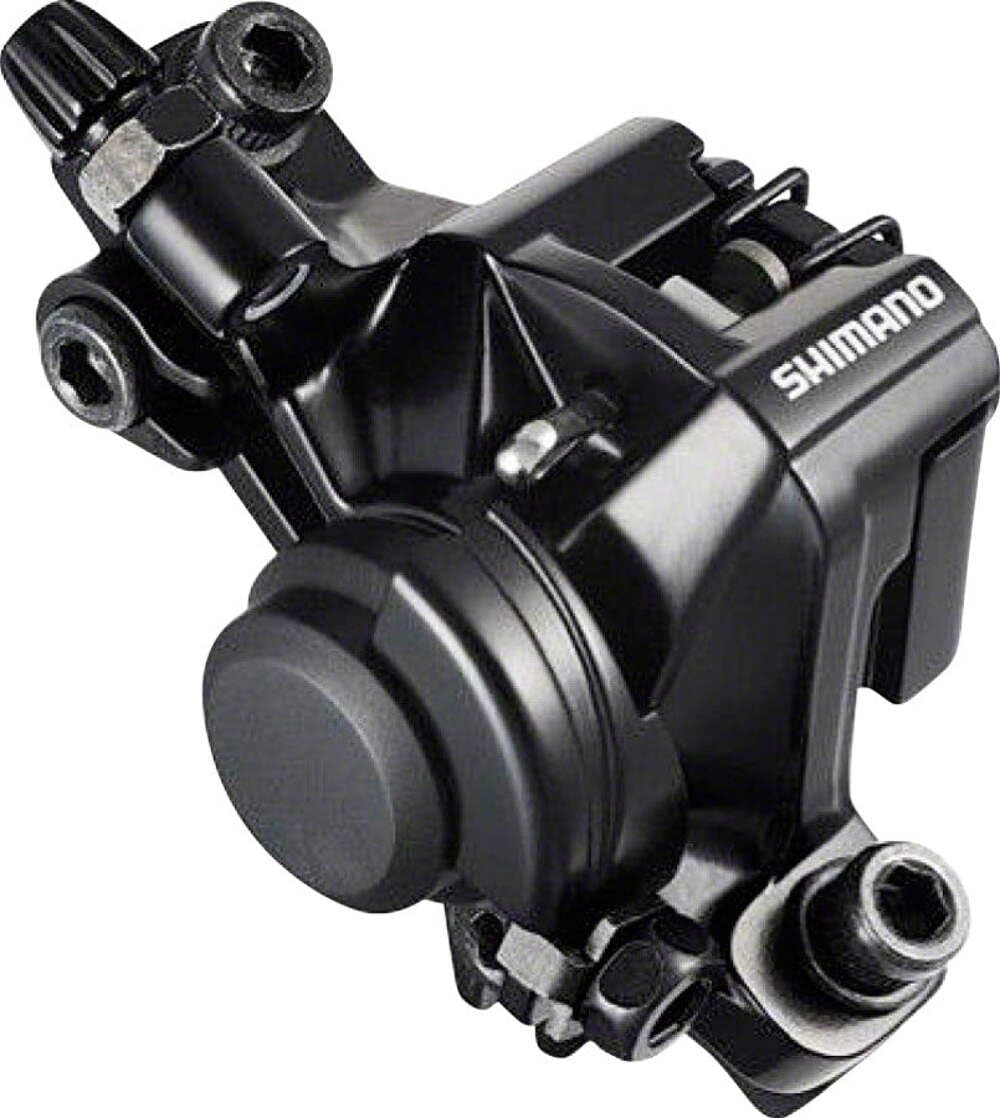
The Shimano M375 delivers consistent stopping power that suits entry-level trail riding and commutes. Its aluminum construction and straightforward design make it a staple for upgrading cheap stock brakes. Some units have shown spring mechanism wear after extended use, so riders logging heavy miles may want to monitor that area. This caliper is best for budget builders who value mechanical simplicity and don't need the adjustability of premium mechanical brakes like the Avid BB7.

If your frame uses a post-mount standard not compatible with the included caliper, a separate mounting bracket is required.

Bottom line: A solid, no-frills choice for riders upgrading from rim brakes on a tight budget, provided you are comfortable with mechanical actuation.

3

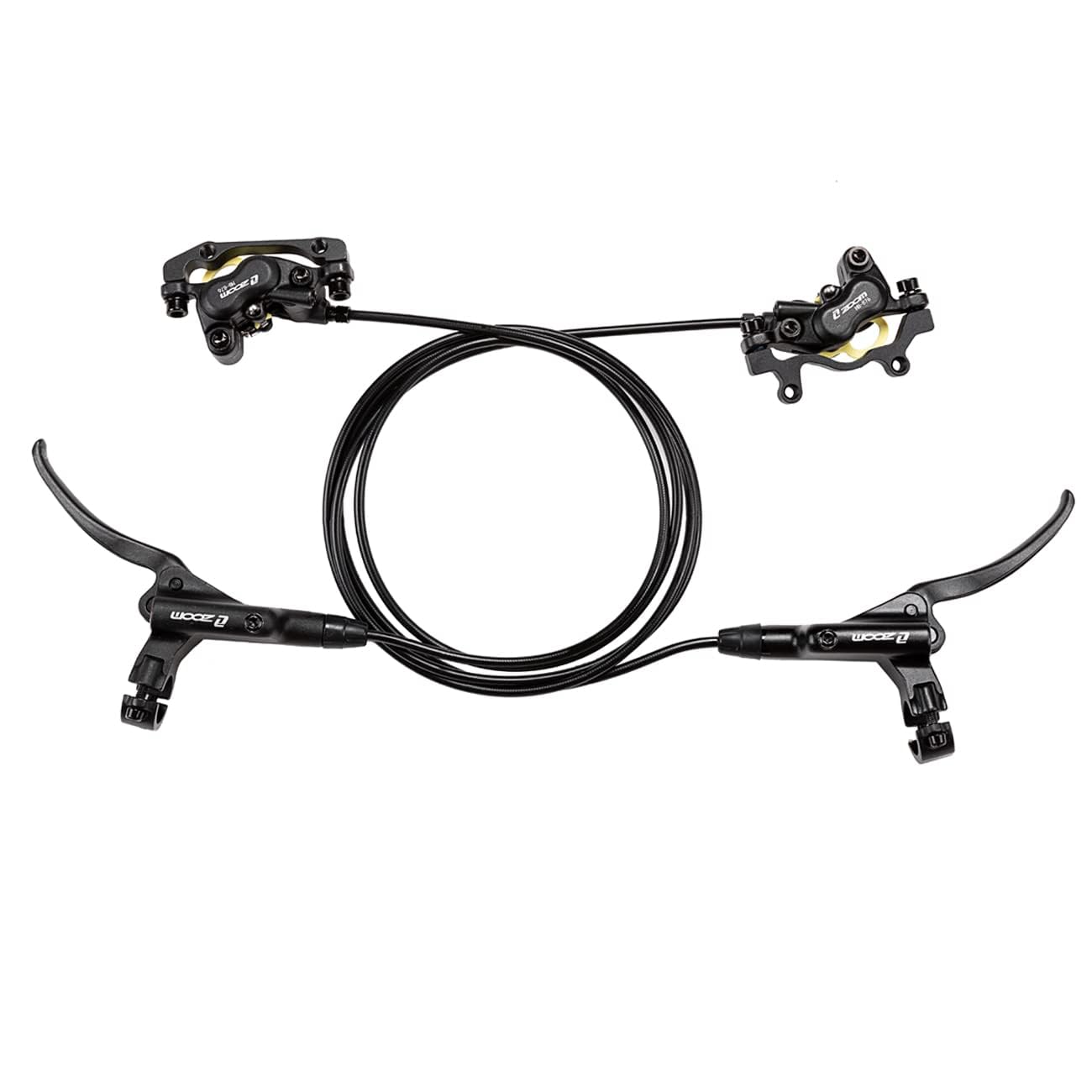
JFOYH HB876 4-Piston

JFOYH HB876 4-Piston

Budget 4-piston (caution)

Our Score 9.2/10
Check Price

Worth Noting

  • On large frames, the 1400mm rear hose may need an extension for proper fit.
Pistons
4
Pre-bled
Yes, mineral oil
Brake Type
Hydraulic disc
Mount Type
Post mount
Read the full review

Powerful four-piston braking from this pre-bled set makes it a cost-effective upgrade for smaller frames. However, reliability can be inconsistent — early pad wear or caliper issues may arise in some units, so this suits riders willing to accept that risk.

Bottom line: A budget-friendly 4-piston option if you're comfortable with occasional part replacement and have a compact frame.

4

Hycline HB-100 Pair

Hycline HB-100 Pair

E-bikes, MTB upgrades

Our Score 9.0/10
Check Price

Worth Noting

  • Braking power is not sufficient for aggressive downhill use where full hydraulic systems are preferred.
Pistons
2 (per caliper)
Pre-bled
Pre-filled oil
Brake Type
Cable-actuated hydraulic
Mount Type
Post mount
Read the full review

The HB-100 calipers mount to post mount frames in under half an hour using standard Allen keys. No hydraulic bleeding or special tools required. Once installed, the cable-actuated hydraulic mechanism provides smooth modulation and noticeably stronger braking than typical mechanical calipers, especially on e-bikes and heavier mountain bikes.

This set suits riders upgrading from stock mechanical brakes who want hydraulic-like modulation without the complexity of full hydraulic systems. The cable actuation means existing shift cables can be reused, and the calipers come pre-filled with oil. However, the braking power is not equivalent to high-end full hydraulic systems – for extreme downhill descents requiring maximum raw power, a full hydraulic setup remains the better choice.

Bottom line: For most mountain bikers and e-bike owners looking to improve stopping power without overhauling their cables or learning to bleed brakes, the HB-100 delivers exactly what’s needed.

5

BUCKLOS 4-Piston Set

BUCKLOS 4-Piston Set

Budget 4-piston upgrade

Our Score 8.8/10
Check Price

Worth Noting

  • Heavier than premium brakes; not ideal for weight-conscious builds
Pistons
4
Pre-bled
Yes, mineral oil
Brake Type
Hydraulic disc
Mount Type
IS/PM adapter included
Read the full review

This BUCKLOS set arrives pre-bled with mineral oil and includes IS/PM adapters, reducing installation friction. Its four-piston calipers deliver strong stopping power — a step up from two-piston designs for heavier e-bikes or aggressive mountain terrain. It doesn't match the modulation of premium hydraulic brakes, but the braking force is there when you need it.

Best for riders who want hydraulic stopping power at a budget price without worrying about weight or brand prestige. It suits e-bikes, trail bikes, and entry-level builds. Riders who demand the lightest setup or silky lever feel should look to more expensive options. Long-term durability under sustained heavy use is still being tested, as the user base is smaller than established brands.

Bottom line: A solid budget 4-piston set that prioritizes stopping power over weight and polish — a safe choice for riders on a budget who don't need premium feel.

6

CNC Hydraulic Set

CNC Hydraulic Set

Low-use bikes

Our Score 8.8/10
Check Price

Worth Noting

  • Long-term durability data is absent, making it uncertain for regular trail use
Pistons
2
Pre-bled
Yes, mineral oil
Brake Type
Hydraulic disc
Mount Type
Post mount, IS/PM
Read the full review

This CNC set delivers basic hydraulic braking at the lowest entry price. Build quality and installation are straightforward, and braking performance is adequate for casual use. However, long-term durability under regular riding is unknown, and limited user feedback makes it a gamble for anything beyond a low-use build or a project bike.

Bottom line: Works for a budget project bike or low-use build where the priority is getting hydraulic brakes at the lowest possible cost, but opt for a brake set with more user feedback if you ride frequently.

7

Deore M6100 Rear

Deore M6100 Rear

Rear replacement

Our Score 8.8/10
Check Price

Worth Noting

  • Sold as a single rear brake
Pistons
2
Pre-bled
Yes, pre-bled hose
Brake Type
Hydraulic disc (single)
Mount Type
Post mount
Read the full review

The Shimano Deore M6100 rear brake delivers smooth hydraulic modulation from its Servo Wave lever and ICE TECHNOLOGIES caliper. This is a single rear unit only — the front must be purchased separately, making a complete system cost higher than an equivalent set. It fits best as a replacement rear brake on an existing Deore setup, not as a budget full-system upgrade.

Bottom line: For riders replacing a worn rear brake on an existing Deore system who already have a front brake, this is a direct match.

8

Magura MT Trail Sport

Magura MT Trail Sport

Trail, enduro riding

Our Score 8.6/10
Check Price

Worth Noting

  • Plastic lever and caliper components feel less premium than all-metal alternatives.
Pistons
Front 4, Rear 2
Pre-bled
Yes (mineral oil)
Brake Type
Hydraulic disc
Mount Type
Post mount
Read the full review

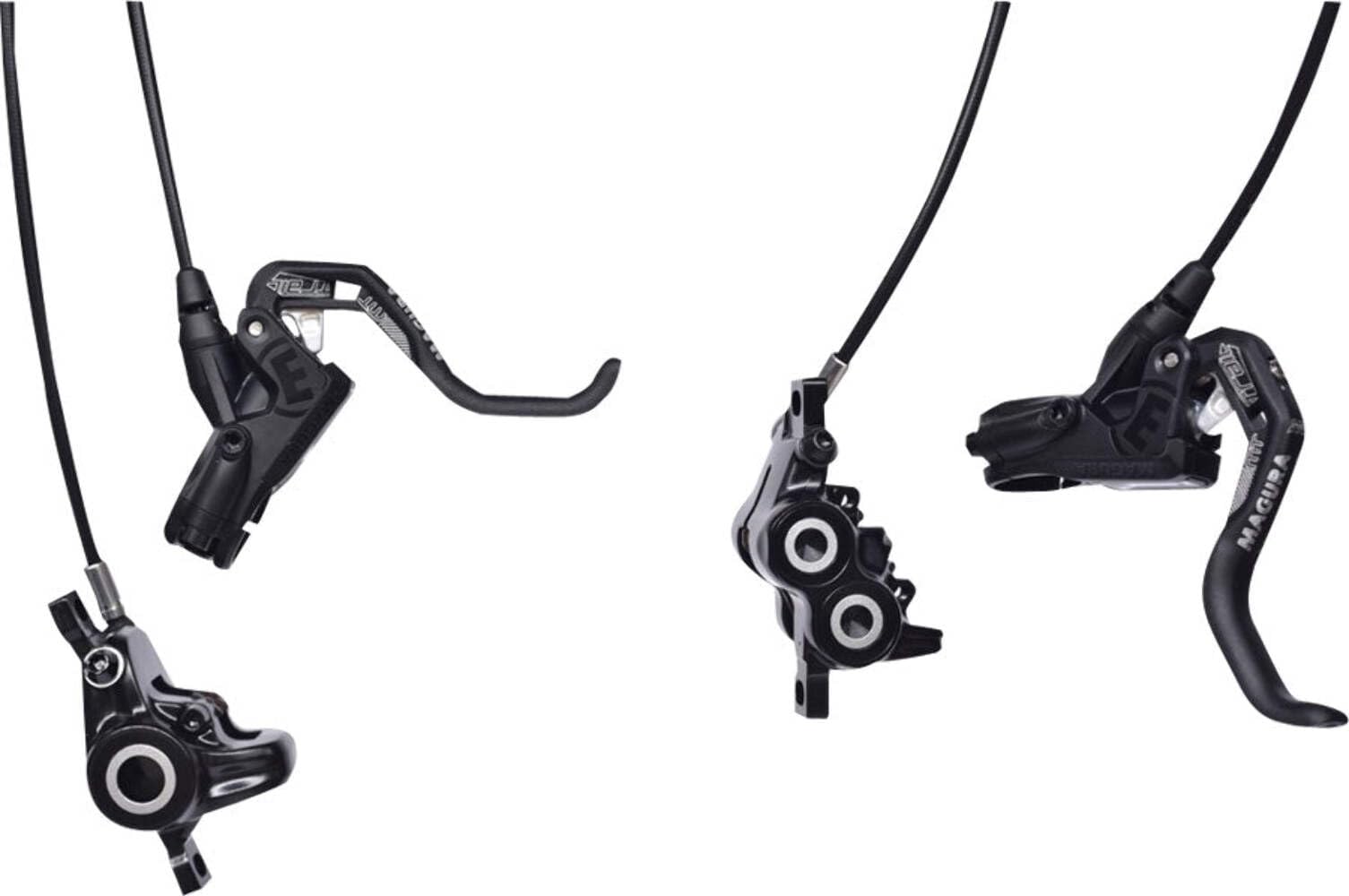
The mixed piston setup gives the MT Trail Sport a distinct character: the front grabs hard when you need it, while the rear lets you ease into corners without locking up. Carbotecture construction keeps weight low (255g front, 230g rear) without sacrificing stiffness.

This brake set suits trail and enduro riders who want balanced power and are comfortable performing a bleed before install — some units arrive with a spongy front lever that resolves with bleeding. The premium price and plastic lever components (compared to all-metal rivals) mean casual riders or budget-conscious builders should look elsewhere.

Bottom line: A rewarding brake set for riders who understand the setup requirements and prioritize balanced stopping power over all-metal bling.

How to Choose

Hydraulic vs Mechanical vs Cable-actuated Hydraulic

Full hydraulic brakes deliver the best modulation and require the least hand effort, but they demand bleeding every year or two. Mechanical brakes use a simple cable that can be replaced trailside, though they lack the self-adjusting feel of hydraulics. Cable-actuated hydraulic calipers combine a cable pull with a sealed hydraulic chamber — they offer hydraulic feel without bleeding but add a few moving parts.

Number of Pistons

Two-piston calipers are standard for cross-country and trail riding. Four-piston designs clamp a wider pad area, generating more stopping power for heavier bikes or aggressive descending. The trade-off is added weight and a firmer lever feel — a four-piston front combined with a two-piston rear (as seen on the Magura MT Trail Sport) provides balanced control without overwhelming the rear wheel.

Hose Length

Hose length is the most common fitment oversight. Many budget hydraulic sets ship with a front hose of 800mm and rear of 1400-1500mm. Full-suspension frames or long top tubes often require longer lines. Measure your existing hose route from lever to caliper before ordering. If the hose is too short, you'll need to either buy a longer hose kit or return the brakes — not all sets allow easy hose replacement.

Pre-bled or Easy Installation

Pre-bled systems come with the hydraulic line filled and sealed, ready to bolt on. They save time and avoid mess but often use mineral oil, which is less aggressive than DOT fluid but incompatible with some aftermarket hoses. Non-bled hydraulic brakes require a bleed kit and some mechanical skill. For most riders, pre-bled is the smarter choice unless you already own a bleed kit and are comfortable using it.

Mount Type

Post mount is the current standard on most mountain bikes. IS (International Standard) is an older standard found on some frames and forks. Many calipers include adapters to convert between the two. Check whether your frame uses post mount or IS, and verify that the caliper includes the necessary bracket. The Shimano M375, for example, does not include a mounting bracket, so you may need to reuse your existing one or buy separately.

Frequently Asked Questions