Components

4 Best Mountain Bike Wheelset of 2026: Find the Right Upgrade for Your Ride

Budget MTB wheelsets often cut corners. We highlight the ones that deliver real weight savings, reliable hubs, and true wheels for your riding style.

Plenty of sub-$200 mountain bike wheelsets promise lightweight and performance, but too many arrive with wobbly spokes or a freehub that sounds like a swarm of bees. The real problem isn't finding a cheap set — it's finding one that actually stays round and rolls smoothly after the first few rides.

Loud hubs, rim seam leaks, and inconsistent spoke tension are common corners cut at this price point. That doesn't mean you have to live with them or spend triple to avoid them. A handful of wheelsets manage to deliver sealed bearings, decent rim width, and reliable build quality without the premium price tag.

This guide focuses on the specs that matter — hub compatibility, rim width, spoke count, and bearing quality — and matches them to the riding you actually do. Whether you ride cross-country, trail, or just need a durable replacement, the right wheelset is out there without the hype.

1

ZTZ MTB Wheelset

Top Pick
ZTZ MTB Wheelset

XC & light trail

Our Score 8.8/10
Check Price

Worth Noting

  • Freehub is loud in quiet environments
Hub Type
QR 9x100/10x135
Rim Width
25mm aluminum
Spoke Count
32H steel
Compatibility
Cassette
Read the full review

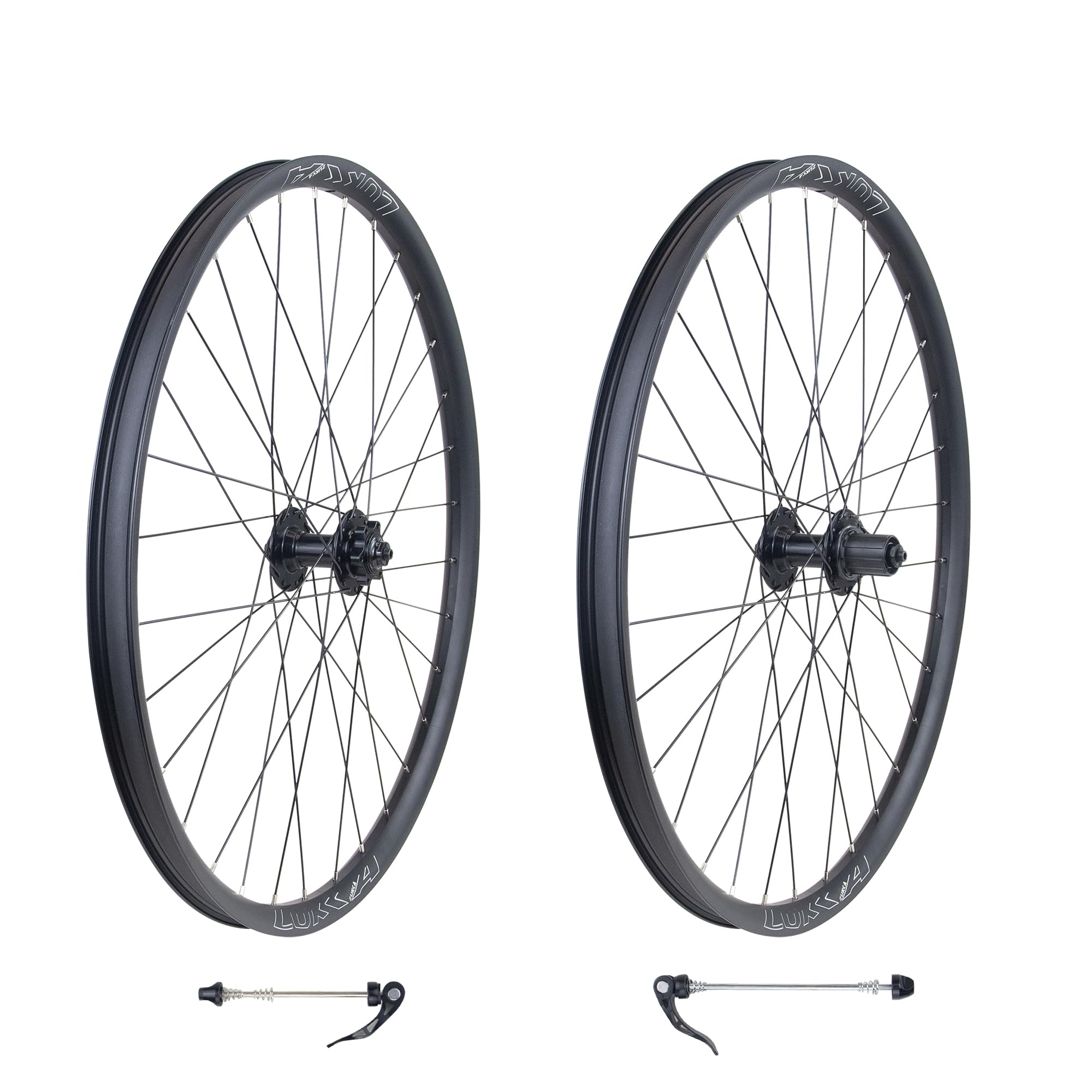
This wheelset sheds noticeable weight from most stock builds while the sealed bearings roll with low friction from the first ride. Spoke tension is even and the rims hold true trail after trail – a level of consistency rare in this price range.

Cross-country and light trail riders looking for a budget upgrade without sacrificing durability will find a solid match here. The freehub engagement is loud – a deliberate tradeoff that benefits trail awareness but may be distracting in quiet settings.

If you ride where noise is a concern, the freehub click may draw attention – it is a feature for some, a flaw for others.

Bottom line: A genuine upgrade for budget-conscious XC and trail riders who prioritize weight savings and smooth bearings over silent hubs.
2

WEEROCK MTB Wheelset

WEEROCK MTB Wheelset

Casual, commuting

Our Score 8.8/10
Check Price

Worth Noting

  • Some wheels arrive with lateral or radial wobble requiring truing out of the box
  • Rim seam is not welded, causing air leakage in tubeless setups
Hub Type
QR 9x100/10x135
Rim Width
25mm aluminum
Spoke Count
32H
Compatibility
Cassette
Read the full review

This WEEROCK wheelset delivers double-wall rims and sealed bearings at the lowest price among budget MTB options. Some wheels arrive with lateral or radial wobble that needs truing, and the rim seam isn’t welded, so tubeless setups may leak. Best for riders replacing damaged wheels or upgrading entry-level bikes on a tight budget who are comfortable with basic wheel truing.

Wheels may need truing; a spoke wrench and basic truing stand make this a minor task.

Bottom line: For riders comfortable with basic wheel truing, this is the most cost-effective way to upgrade to double-wall rims and sealed bearings on a QR bike.

3

BUCKLOS Boost Wheelset

BUCKLOS Boost Wheelset

Aggressive trail

Our Score 8.8/10
Check Price

Worth Noting

  • Hub spline deformation and spoke breakage can occur under sustained hard use.
  • Freehub produces a loud buzzing sound when coasting.
Hub Type
Boost TA 15x110/12x148
Rim Width
30mm aluminum
Spoke Count
32H stainless steel
Compatibility
Cassette
Read the full review

With 30mm internal width and a 120-point engagement hub, this wheelset delivers responsive power transfer and room for aggressive tires up to 3.0 inches. It's the only boost-compatible option here for modern frames, but getting the most longevity requires regular spoke tension checks and hub service.

Periodic spoke tension inspection and hub bearing maintenance help extend the wheelset's lifespan.

Bottom line: A fit for boost-frame owners needing wide rims and high engagement, but expect to stay on top of hub and spoke maintenance to avoid premature wear.

4

BUCKLOS Carbon Hub

BUCKLOS Carbon Hub

Weight weenies

Our Score 8.4/10
Check Price

Worth Noting

  • Freehub is noticeably loud and may have bearing drag
Hub Type
QR 9x100/10x135
Rim Width
25mm aluminum
Spoke Count
24H flat spokes
Compatibility
Cassette
Read the full review

The BUCKLOS wheelset delivers the lowest rotating mass in this price range thanks to its carbon hub and 24 flat spokes. The tradeoff: spoke tension tends to loosen after the first ride, so truing is needed early on, and frame clearance can be tight on some models. This setup fits riders who prioritize climbing speed and acceleration over durability in rough terrain — ideal for light trail riding, commuting, or gravel paths, but not for aggressive trail or enduro use.

Check spoke tension after the first few rides and consider a professional truing — it keeps the wheels running true.

Bottom line: A lightweight wheelset for riders who value reduced rotating mass and are willing to handle initial spoke adjustment and loud hub noise.

How to Choose

Hub Type: QR vs Thru-Axle vs Boost

Your frame and fork dictate which hub standard you need. Quick release (QR) is common on older and entry-level mountain bikes, with 9mm front and 10mm rear axles. Thru-axle wheels use a larger diameter (usually 15mm front, 12mm rear) and are stiffer, reducing flex under hard cornering. Boost is a wider thru-axle standard (15x110mm front, 12x148mm rear) that allows shorter chainstays and wider tire clearance.

Choosing the wrong standard means the wheel simply won't fit. Measure your existing axle spacing and diameter before buying. If you plan to upgrade your frame later, note that boost wheels are not backward-compatible with QR or non-boost thru-axle frames.

Rim Width

Rim width directly affects tire shape and traction. A 25mm internal rim (common on budget wheelsets) works well for tires up to about 2.3 inches. Go wider (30mm) and you can run 2.5-3.0 inch tires with better sidewall support and lower pressure for grip. Narrow rims pinch tires more easily on sharp impacts and reduce the volume of air cushion available.

For aggressive trail or enduro riding, a 30mm rim width is a meaningful upgrade. For cross-country and light trail, 25mm keeps weight down and still rolls fast. If you ride a mix, 27-29mm internal width strikes a good balance.

Spoke Count and Material

More spokes generally means stronger wheels, but adds weight. 32 straight-gauge steel spokes are the standard for durability and easy truing. 24 spokes (often in lighter, flat aero profiles) save a few hundred grams but are more prone to fatigue and require careful tension maintenance. Some budget wheelsets use thin spokes that loosen after the first ride, leading to wobbles.

Stainless steel spokes resist corrosion and hold tension better than uncoated steel. If you're heavy or ride rough terrain, stick with 32H and consider upgrading to butted spokes (thicker at the ends, thinner in the middle) for a mix of strength and weight savings.

Hub Bearing Quality

Sealed cartridge bearings keep dirt and water out and spin smoothly for thousands of miles. Budget wheelsets often use basic cup-and-cone or unsealed bearings that wear quickly and develop play. Look for double-sealed cartridge bearings — the more bearings, the better the load distribution.

A rear hub typically has 2-5 bearings. More bearings (e.g., 5 on the drive side) handle lateral loads from pedaling and cornering better. Also pay attention to freehub engagement: louder, higher-tooth-count pawl systems (120 pt or more) give faster power transfer but are noisier and can drag slightly. Some riders prefer the simplicity of a lower-engagement hub for quieter coasting.

Cassette vs Freewheel

Nearly all modern mountain bikes use a cassette hub, which accepts a separate cassette lockring. Freewheel hubs (thread-on) are limited to 7 speeds and are found on very old or budget hybrid bikes. If your bike has a freewheel, you must buy a freewheel-specific wheelset — they are not interchangeable.

Check your current rear wheel: if you see a threaded cluster with notches for a chain whip, it's a freewheel. If you see a splined body with a lockring tool interface, it's a cassette. The wrong choice will not fit your drivetrain.

Frequently Asked Questions