Tires & Tubes

12 Best Mountain Bike Tires of 2026: Match Your Terrain and Budget

Which mountain bike tires deliver the grip and durability for your trails without breaking the bank? This guide matches the right tire to your riding style.

Mountain bike tires walk a tightrope between grip, weight, and durability. Aggressive treads hook up on loose trails but drag on pavement and wear fast. Budget tires keep costs low but often puncture on sharp rocks or crack after a season.

The real challenge is matching a tire to your specific terrain and riding intensity. A rear-focused tire with ramped knobs stops hard and climbs well, while a front tire with tall side knobs holds corners. XC riders need low rolling resistance; enduro riders need protection from cuts.

This guide breaks down the trade-offs by use case — from hardcore trail to casual pavement — so you know exactly what grip, casing, and tread pattern fits your trails and your wallet.

1

Maxxis Minion DHR II

Top Pick
Maxxis Minion DHR II

Aggressive trail

Our Score 9.6/10
Check Price

Worth Noting

  • Noticeable weight on long, steep climbs, especially on lighter trail bikes.
Wheel Size
29x2.30
Casing Type
EXO
Tubeless Ready
Yes
Tread & Compound
Aggressive, Dual
Read the full review

The DHR II's directional tread uses ramped center knobs for efficient rolling and tall, supported side knobs for cornering grip. On loose-over-hardpack and rocky terrain, the tire hooks up predictably when braking and leaning into turns. The EXO casing resists cuts and abrasion, and the tire seats easily on tubeless rims with a standard floor pump. The dual compound rubber balances grip and wear for decent tread life under aggressive use. This combination results in a strong rear tire option for aggressive trail and enduro riding.

This tire suits aggressive trail and enduro riders who prioritize traction over low weight. On long, steep climbs, the tire's heft becomes noticeable, especially on lighter trail bikes. Many riders run this as the rear complement to a DHF up front, a common pairing for balanced cornering. Riders focused on cross-country speed or pavement-only use should consider other options. The weight pays off in downhill control and braking confidence; for those who descend frequently, the extra heft is a worthwhile trade. It is not intended for riders seeking the lightest possible setup.

Pair with a lighter front tire like the DHF to balance overall weight on climbs.

Bottom line: The DHR II's rear-specific tread and EXO casing make it the tire to start with when building a confident trail and enduro setup.

2

Maxxis Minion DHF

Maxxis Minion DHF

Front tire all-mtn

Our Score 9.6/10
Check Price

Worth Noting

  • Some tires may arrive with bead defects causing wheel wobble
Wheel Size
29x2.30
Casing Type
EXO
Tubeless Ready
Yes
Tread & Compound
Aggressive, Dual
Read the full review

The Maxxis Minion DHF is the industry standard for front-end grip, using a directional tread that rolls fast in the center yet digs in hard on the side knobs when leaned over. It pairs naturally with a Minion DHR II rear tire to create a balanced aggressive setup for enduro and all-mountain riding. Riders who prioritize cornering confidence over absolute weight savings will find it nearly unmatched – though unit-to-unit quality can vary, so a quick roundness check is recommended before mounting.

Roll the tire on a flat surface before installation to check for out-of-round issues; Maxxis warranty covers replacement.

Bottom line: The Minion DHF remains the go-to front tire for aggressive trail riding – just be aware of the small possibility of a QC defect and inspect before mounting.

3

Maxxis Ardent 27.5x2.4

Maxxis Ardent 27.5x2.4

Trail all-mountain

Our Score 9.6/10
Check Price

Worth Noting

  • Heavier build; best for riders who prioritize traction and durability over weight savings
Wheel Size
27.5x2.4
Casing Type
EXO
Tubeless Ready
Yes
Tread & Compound
Trail, Dual
Read the full review

The Maxxis Ardent 27.5x2.4 hits a sweet spot between rolling efficiency and grip for all-mountain riding — faster than the aggressively treaded Assegai while still providing confident cornering on loose and hardpack. The EXO casing resists punctures on rocky trails, and the dual compound balances wear and traction. Tubeless setup is straightforward, with good bead hold. This tire fits trail riders who want a do-it-all option without the sluggishness of heavier downhill casings, though the weight penalty makes it less ideal for weight-conscious XC builds.

Bottom line: A well-rounded trail tire that emphasizes durability and grip over minimal weight — right for riders who ride varied terrain and want one tire that handles most conditions without sacrificing sidewall protection.

4

Maxxis Assegai 29x2.50

Maxxis Assegai 29x2.50

Enduro/downhill

Our Score 9.4/10
Check Price

Worth Noting

  • High rolling resistance on flat sections can make it feel draggy during long pedally stretches.
Wheel Size
29x2.50WT
Casing Type
EXO
Tubeless Ready
Yes
Tread & Compound
Aggressive, Dual
Read the full review

Delivers outstanding grip on loose, steep terrain with easy tubeless setup. However, the aggressive tread creates noticeable drag on pedally sections, making it a specialized front tire rather than an all-rounder.

Bottom line: Best for gravity riders who prioritize front-end traction over pedaling efficiency.

5

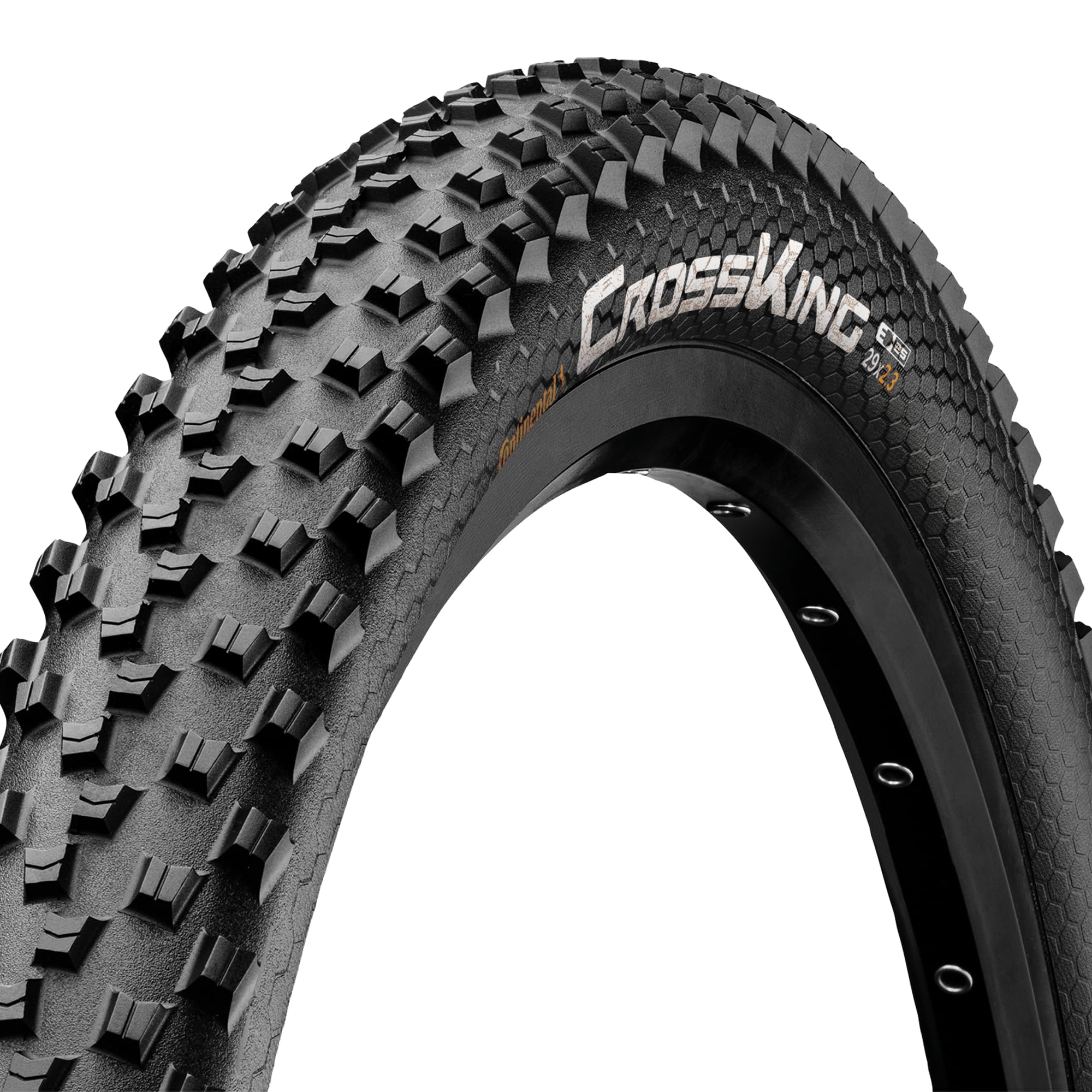
Continental Cross King

Continental Cross King

XC and trail

Our Score 9.2/10
Check Price

Worth Noting

  • Sidewall tears may occur on sharp rocks, limiting use on rocky trails.
  • Installation can require significant effort on some rims.
Wheel Size
29x2.20
Casing Type
ShieldWall
Tubeless Ready
Yes
Tread & Compound
All-round, PureGrip
Read the full review

The Cross King’s low rolling resistance and versatile tread make it a natural fit for cross-country and trail riders who cover a mix of hardpack, loose, and damp conditions. The PureGrip compound delivers reliable traction without the drag of aggressive knobs, and the E25 rating means it handles ebike use without issue. Where it steps back: the ShieldWall casing offers light sidewall protection that can tear on sharp rocks, so riders hitting technical or rocky terrain should look elsewhere. Mounting may also be snug on certain rims, but this is manageable with careful technique.

Using tire levers and soapy water can ease mounting on tight rims.

Bottom line: A capable all-rounder for XC and trail riders who value rolling speed; sidewall protection is the limiting factor on rocky terrain.

6

Schwinn All-Terrain Puncture Guard

Schwinn All-Terrain Puncture Guard

Light trail/pavement

Our Score 9.2/10
Check Price

Worth Noting

  • Bead seating can require extra effort on some rims, with a possible wobble afterward.
Wheel Size
26x1.95
Casing Type
Steel Bead
Tubeless Ready
No
Tread & Compound
Blocky, —
Read the full review

The Schwinn All-Terrain Puncture Guard delivers better flat protection than basic replacement tires thanks to an extra layer under the tread, keeping rolling resistance low on pavement while offering decent grip on hardpack or gravel. This is a solid choice for commuter mountain bikes or casual riders who want a tough 26x1.95 tire without spending Maxxis money. Note that bead seating can be tricky on some rims, occasionally requiring extra effort to avoid a wobble after installation.

If wobble appears after installation, deflate, apply soapy water to the bead, and re-inflate to 60 psi to help it seat evenly.

Bottom line: If your mountain bike sees mostly pavement, gravel paths, and the occasional dirt trail, this Schwinn offers dependable puncture defense at a fair price — just budget a few extra minutes for installation.

7

WTB Trail Boss 29x2.25

WTB Trail Boss 29x2.25

XC / light trail

Our Score 9.2/10
Check Price

Worth Noting

  • Sidewall puncture resistance is moderate; can be an issue on rocky trails.
Wheel Size
29x2.25
Casing Type
Wire Bead
Tubeless Ready
No
Tread & Compound
Directional, —
Read the full review

Mid-range clincher with predictable grip and easy installation for budget trail riding. Best suited for riders using inner tubes on smoother to moderate trails, as the wire bead prevents tubeless setup and sidewall puncture resistance is moderate.

Using a thicker inner tube can help reduce puncture risk in rocky terrain.

Bottom line: A capable budget-friendly trail tire for smoother conditions, but not for harsh terrain.

8

Schwinn 26x1.95 MTB Tire

Schwinn 26x1.95 MTB Tire

Casual pavement

Our Score 9.2/10
Check Price

Worth Noting

  • Sidewall cracking or premature wear has been noted over time, limiting long-term use.
Wheel Size
26x1.95
Casing Type
Steel Bead
Tubeless Ready
No
Tread & Compound
Blocky, —
Read the full review

This Schwinn tire is an affordable option for riders who stick to pavement or smooth gravel and need a simple replacement. Installation is straightforward with hand tools, and the tread rolls quietly on hard surfaces. Its durability, however, is limited — sidewall cracking or premature wear has been noted over time, making it a better fit for occasional use or budget builds rather than aggressive off-road riding.

Bottom line: Works for casual pavement or light gravel use where budget is the priority and occasional tire replacement is acceptable.

9

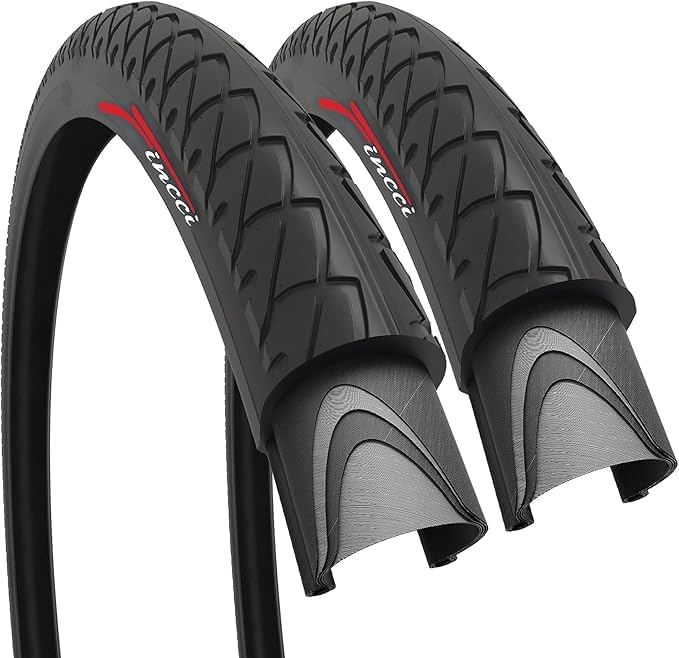
Fincci Leno Semi-Slick 26x1.95

Fincci Leno Semi-Slick 26x1.95

City commuting

Our Score 9.2/10
Check Price

Worth Noting

  • On loose dirt or mud, the semi-slick tread lacks traction
Wheel Size
26x1.95
Casing Type
Kevlar Bead
Tubeless Ready
No
Tread & Compound
Semi-slick, —
Read the full review

This pair of 26-inch semi-slick tires delivers a smooth, quiet ride on pavement and hardpack, with a lightweight Kevlar-bead construction that makes installation easy. The tread pattern is designed for rolling efficiency, not off-road grip – on loose dirt or mud it lacks the traction of a knobby tire, limiting its use to urban and light gravel routes.

Bottom line: Best suited for budget-conscious commuters on pavement or light gravel; not a trail tire.

10

Schwinn 20x1.95 Kids Tire

Schwinn 20x1.95 Kids Tire

Kids' bikes

Our Score 9.2/10
Check Price

Worth Noting

  • Tread wears quickly on pavement
Wheel Size
20x1.95
Casing Type
Steel Bead
Tubeless Ready
No
Tread & Compound
Blocky, —
Read the full review

This Schwinn tire fits kids' 20-inch mountain bikes with an aggressive tread pattern that handles loose dirt, mud, and light snow. On pavement, the softer rubber compound wears faster — a tradeoff that matters less for off-road use. Only available in 20-inch size, limiting its use to children's bikes and small-wheeled cycles.

Bottom line: Best for kids who ride off-road trails and gravel; less suited for pavement-heavy use.

11

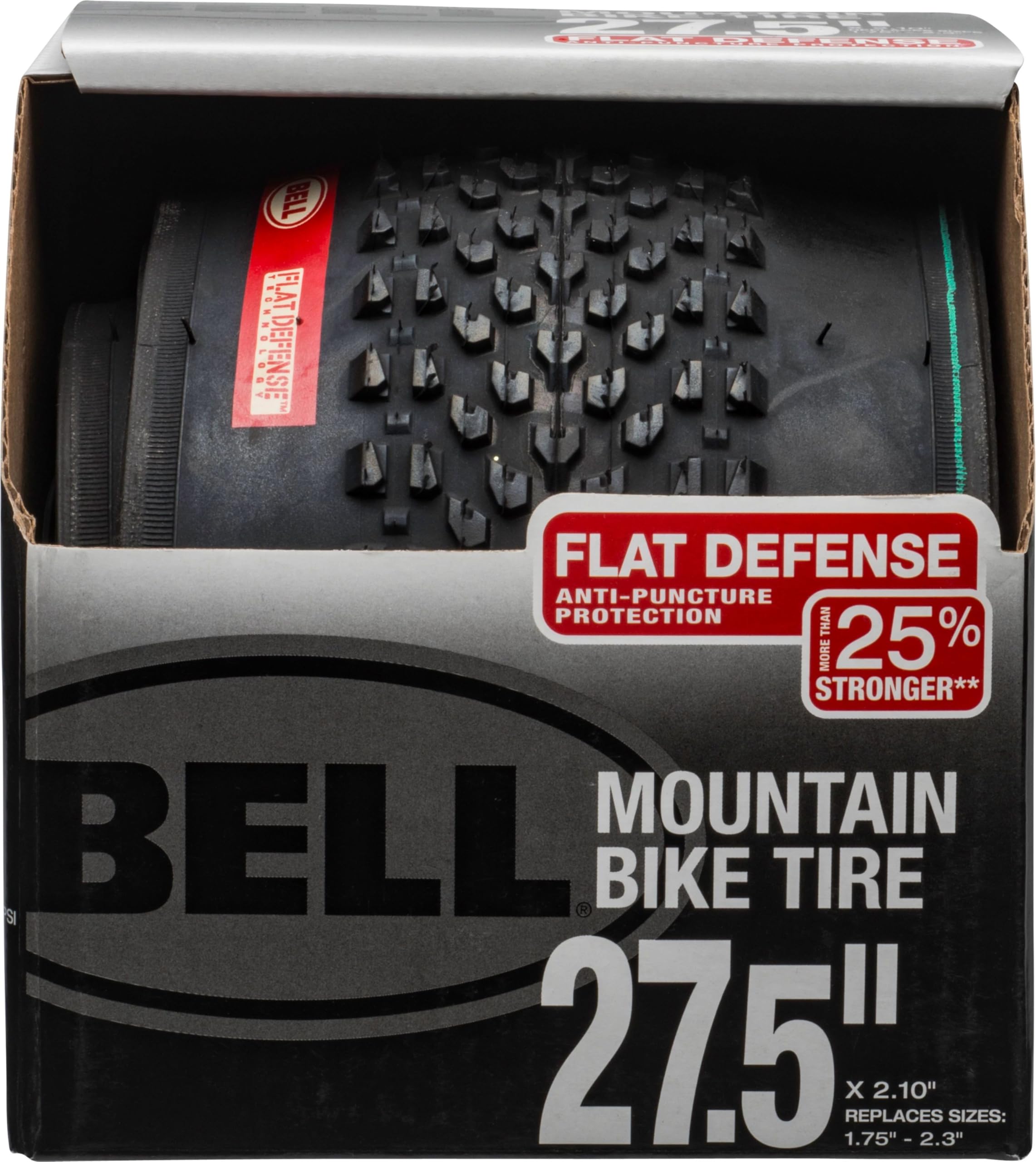
Bell Flat Defense 27.5

Bell Flat Defense 27.5

Light trails

Our Score 9.2/10
Check Price

Worth Noting

  • Sidewall ruptures can occur despite the Flat Defense layer.
Wheel Size
27.5x1.95-2.10
Casing Type
Carbon Steel
Tubeless Ready
No
Tread & Compound
Tall knobby, —
Read the full review

The Bell Flat Defense 27.5 adds a puncture-resistant layer for casual gravel and light trail riding at a reasonable price. Mounting is straightforward on most rims. However, sidewall ruptures and faster-than-expected tread wear limit its appeal for more demanding off-road use.

Bottom line: Works for riders sticking to smooth gravel and light trails who prioritize basic flat protection over long-term durability.

12

Hycline 24x1.95 Set

Hycline 24x1.95 Set

Quick replacement

Our Score 9.0/10
Check Price

Worth Noting

  • Included tubes are prone to blowing out during installation or shortly after.
Wheel Size
24x1.95
Casing Type
30tpi
Tubeless Ready
No
Tread & Compound
Knobby, —
Read the full review

This kit bundles two tires, tubes, and levers for 24-inch wheels — ideal for quick kids' bike refreshes or budget builds. The tubes, however, can blow out during installation; the tires themselves offer smooth rolling and good value. Plan to use your own tubes.

Bottom line: Best for budget kids' bike refreshes if you have spare tubes ready to swap in.

How to Choose

Wheel Diameter and Width

Wheel size determines compatibility with your frame and fork. 29-inch rolls over obstacles efficiently, while 27.5-inch accelerates quicker and feels more nimble. Width affects traction and air volume: wider tires (2.3-2.5 inches) provide more grip and lower pressure, but add weight and slow the bike on smooth trails.

Check your bike's maximum tire clearance before buying. A tire that rubs the frame under load is a safety hazard, not a performance upgrade.

Tubeless Compatibility

Tubeless tires seal punctures smaller than 3mm, reduce pinch flats, and allow lower air pressures for better traction. But they require specific tubeless-ready rims, rim tape, valves, and sealant. A floor pump often struggles to seat the bead; a compressor or high-volume pump makes the job easier.

If you rarely ride rocky terrain or want the simplest maintenance, a tube-type tire with a puncture-resistant layer can be a reliable, no-fuss choice.

Tread Pattern and Compound

Tread knobs determine where the tire grips. Center knobs roll; edge knobs corner. Aggressive patterns with tall, widely spaced knobs excel in loose soil, mud, and roots but hum loudly and wear fast on asphalt. Semi-slicks and fast-rolling treads are quieter and more efficient on hardpack and pavement, but slide on wet roots or loose gravel.

Rubber compound affects grip and wear: softer compounds (e.g., Maxxis 3C MaxxGrip) stick better but wear quickly; harder durometers (e.g., dual compound) last longer but offer less traction. Choose a compound that matches your typical trail moisture and rockiness.

Puncture Protection Layer

Casing layers like Maxxis EXO, Continental ShieldWall, or Schwinn's Puncture Guard add a woven fabric under the tread to resist cuts and punctures. A thicker layer adds weight and stiffens the tire, which can reduce small-bump compliance and traction on rough trails.

For rocky, techy terrain, a tire with a robust puncture layer is worth the weight penalty. For smooth XC trails, a lighter casing is more enjoyable to pedal and still offers adequate protection from thorns and glass.

Casing Weight and Sidewall Strength

Casing materials range from thin, flexible 60 TPI to tough 120 TPI with added reinforcement. A heavier casing (e.g., Maxxis EXO+) resists sidewall cuts and supports aggressive cornering without burping, but every 100 grams of added weight is felt on climbs and acceleration.

Riders who frequently ride sharp rock gardens or steep, loose corners should prioritize sidewall strength over weight savings. XC riders and those on smooth trails can opt for lighter casings for better climbing efficiency and compliance.

Frequently Asked Questions