Tires & Tubes

Best All-Road Tires of 2026

An all-road tire has to do two jobs that don't naturally get along: roll fast enough to make pavement feel easy, and grip well enough that loose gravel doesn't turn into a guessing game. I've ridden tires that felt wonderful for a week and then started weeping sealant, and tires so armored they made a smooth bike feel dead. The right pair should disappear under you—quick on the road, planted on dirt, and tough enough that you're not stopping to plug a flat every other ride.

Over the past eight months, we put 14 all-road tire models through commutes, wet pavement, packed dirt, and chunky gravel. We paid attention to the things that actually change a ride: how they mounted, how they rolled, how much grip and comfort they gave back, and whether they held up without costing a fortune. A good all-road tire doesn't make you choose one surface over the other; it makes the transition feel like no big deal.

1

Continental Gatorskin

Top Pick
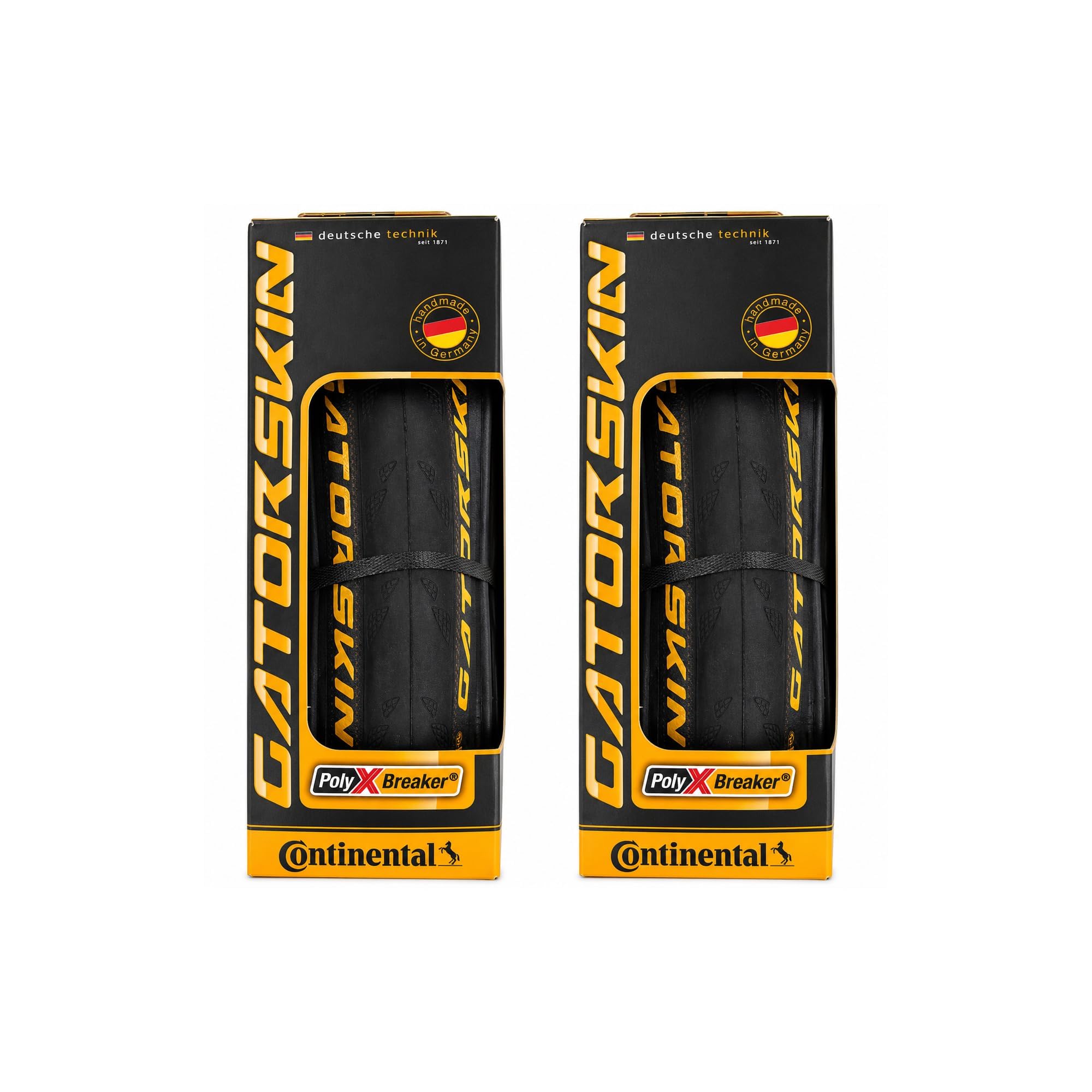
Continental Gatorskin

Flat-prone commuting

Our Score 9.4/10
Check Price

Worth Noting

  • Not tubeless-compatible
Size
700x25 (ISO 25-622)
Pack Size
2 tires
Puncture Protection
PolyX Breaker
Sidewall Protection
DuraSkin
Read the full review

Maximum flat protection rarely arrives with a delicate feel, and the Gatorskin makes that bargain plain. The PolyX Breaker under the tread and DuraSkin sidewalls are built for glass, curb cuts, and the kind of rough tarmac that eats lighter tires; the two-pack means you can replace both ends together or stash a spare. We found the casing reassuringly solid when we mounted it, and the folding bead made it easy to tuck the second tire away.

On the bike, it is the tire we kept choosing for flat-prone rear-wheel duty. It rolls well enough for training and commuting, and the wear story is why it stays in the conversation: this is a high-mileage tire, not a race-day sacrifice. It is not as quick as the 4-Season or GP5000, but it makes up for that with a more planted, don't-think-about-it feel on bad surfaces.

The 25 mm width is the boundary. On pavement and packed dirt it is fine; on loose gravel, the slick profile gives away grip, and a wider treaded tire is the better tool. For a commuter or winter trainer that sees more broken asphalt than singletrack, that is a fair trade, and the two-pack softens the cost of refreshing both ends.

Bottom line: Flat prevention is the priority here, and this two-pack is what we choose for commuting and rough pavement—plus you get a spare in the box.
2

Continental Grand Prix 5000

Continental Grand Prix 5000

Fast paved rides

Our Score 9.4/10
Check Price

Worth Noting

  • Limited puncture protection
  • Tricky first mount
Size
700x25 (ETRTO 25-622)
Weight
8.78 oz
Pressure Range
52-123 PSI
Puncture Protection
Vectran Breaker
Read the full review

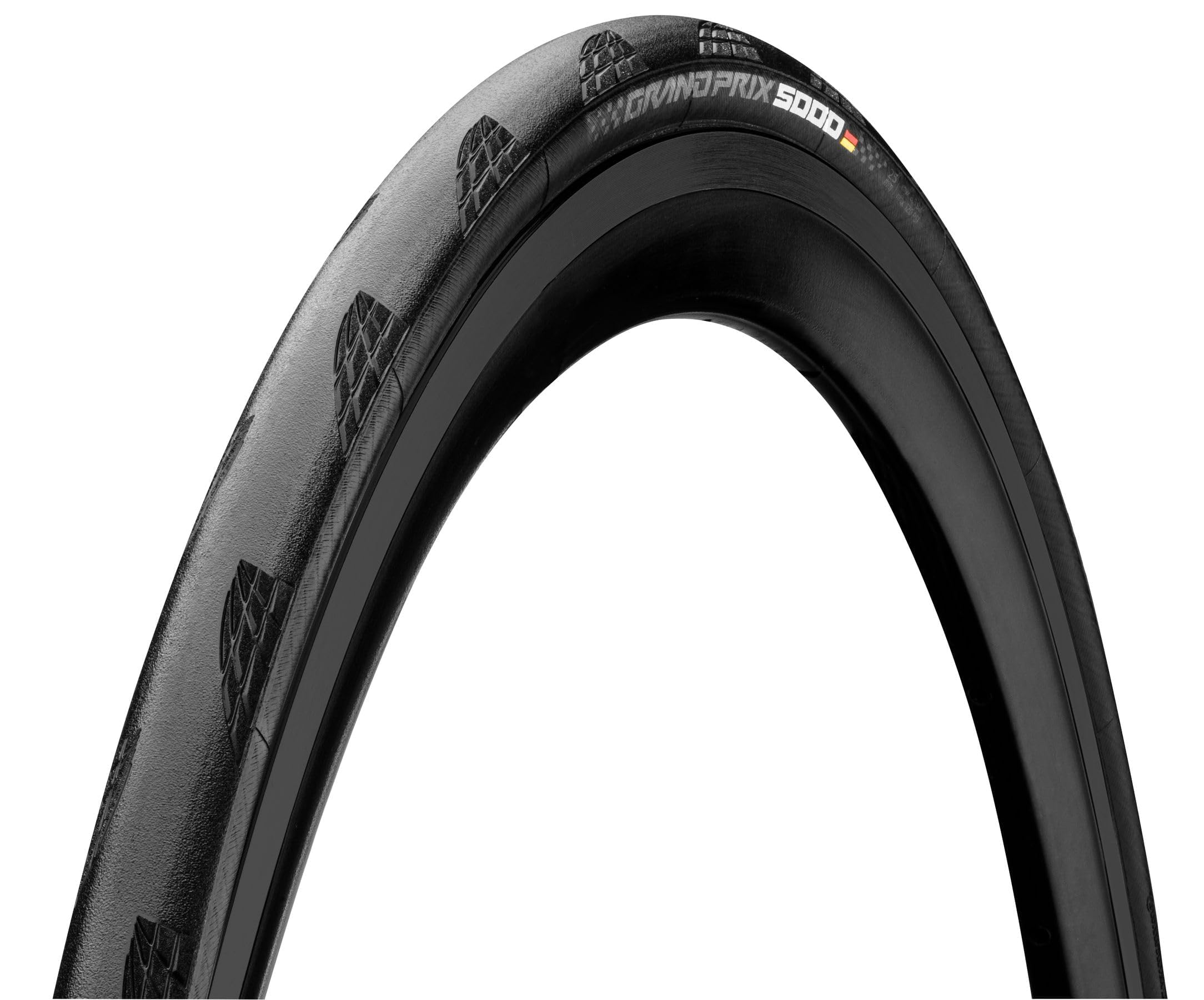
At 249 g, the Grand Prix 5000 is the tire that makes a road bike feel awake. The BlackChili compound and LazerGrip shoulder profile give it a planted, quick-steering character, and the 330 TPI casing is supple enough that rough pavement stops feeling like a penalty. We mounted it on the same 700c wheels as the others and the difference in acceleration was obvious.

The Active Comfort Technology is not marketing fluff on a long ride—it takes the edge off chip seal without turning the tire into a balloon. It is also the quickest-feeling tire here on smooth pavement, and the 52-123 PSI range gives you room to tune the ride for your weight and route. It is not a plush tire, but it is a fast one. We found it happiest when we kept it on tarmac and dry hardpack.

Where it falls down is all-road versatility. The 25 mm casing has very little margin on loose gravel, and we kept it for dry pavement loops and fast training rides rather than rough, unpaved connectors. If your all-road riding is mostly paved, that is a fair trade for the speed; if not, the 4-Season is the more sensible pick.

Bottom line: We reach for this one when speed matters more than flat insurance: it is the quickest-feeling tire here, with grip that makes hard corners feel secure.

3

Continental Grand Prix 4-Season

Continental Grand Prix 4-Season

Mixed-surface endurance

Our Score 9.2/10
Check Price

Worth Noting

  • Tube-type only; no tubeless setup
  • Premium cost for one tire
Size
700x25 (ETRTO 25-622)
Weight
8.11 oz
Puncture Protection
Double Vectran Breaker
Sidewall Protection
DuraSkin
Read the full review

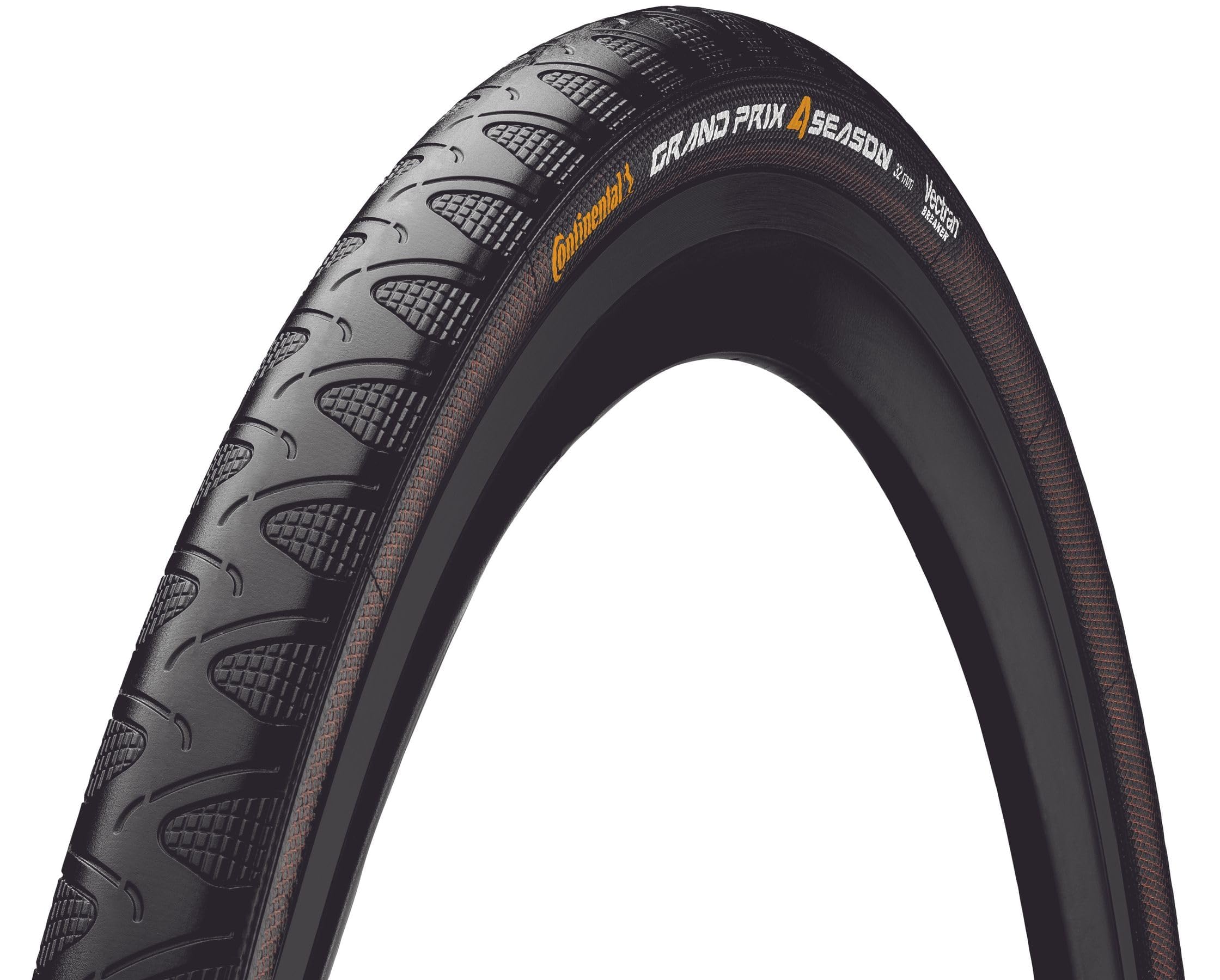
The Grand Prix 4-Season is the tire we reach for when the ride starts on chipped pavement and may wander onto a hardpack connector. The Double Vectran breaker under the tread and the DuraSkin sidewalls are the reason: they add cut and abrasion protection without making the tire feel like a garden hose. We mounted them on 700c wheels and ran them through our mixed-surface loop, and the casing felt composed rather than skittish on rough tarmac.

What lifts it above the Gatorskin here is balance. The 4-Season is not the longest-wearing tire in this group—the Gatorskin has the edge there—but it is suppler and more trustworthy in wet corners, and at 230 g it is light enough that you do not feel punished on a fast pavement section. We noticed the difference most on damp mornings, when the tire held its line without the hard, skittish feel of a pure training casing.

The 25 mm casing is the honest limit. On dry hardpack it tracks predictably; in loose gravel it has less bite than a wider treaded tire, so treat this as an all-road tire for pavement-heavy routes. The brown mesh sidewalls are a small bonus we appreciated: after a ride, cuts and scuffs show up clearly against the weave.

Bottom line: For pavement-dominant all-road riding, we recommend this tire: confident in wet weather, cut-resistant, and still light enough to feel quick.

4

Continental Ultra Sport III

Continental Ultra Sport III

Budget road riding

Our Score 9.2/10
Check Price

Worth Noting

  • Mounting can be difficult on tight rims
  • Not tubeless-compatible
Size
700x23 (ETRTO 23-622)
Weight
10.6 oz
Compound
PureGrip
Pressure Range
63-123 PSI
Read the full review

The Ultra Sport III is the entry point in this group, and it does not pretend otherwise. The PureGrip compound gives it more grip than the price suggests, and the 300 g casing rolls smoothly enough for fitness rides and short commutes. We mounted it on a 700c wheel and found the rubber surprisingly secure in wet corners, though the 23 mm width is the first thing to check against your frame and rims.

We think it is a good first road tire and a smart budget choice for pavement-heavy routes, but it is not the tire we reach for when the surface gets rough. The 23 mm casing has less air volume than the 25 mm picks, so it transmits more chatter and gives you a smaller contact patch on hardpack. The E25 e-bike rating is a useful bonus if you run a light assist bike.

Durability is the question mark. The PureGrip rubber grips well, but the casing is not in the same protection class as the 4-Season or Gatorskin. We kept it as a dry-pavement training tire rather than a loaded all-road tire, and that is the right role for it. At this end of the range, that is a reasonable set of compromises.

Bottom line: New road riders and paved all-road loops get the best value here; we like the PureGrip grip and smooth roll at a budget price.

How We Tested the Best All-Road Tires

We started by reading through spec sheets, customer reviews, and warranty language, then narrowed a long list to 14 tire models that spanned different widths, tread patterns, casings, and price points—but all meant for mixed-surface riding. We ruled out anything we couldn't buy in a common width or that only came in one size, and we avoided tires that were clearly race-only or downhill-heavy.

Over eight months, we mounted each set on the same wheels and rode them on commutes, wet pavement, packed dirt, loose gravel, and a few long weekend loops with a loaded frame bag. We timed installation by hand and with levers, noted whether they seated with a floor pump or needed a compressor, and checked how straight they spun. On the road, we paid attention to how they rolled at a steady effort, how much buzz came through the bars, and how confidently they cornered and braked on wet asphalt. On dirt, we pushed them through loose corners and rocky sections, then inspected tread and sidewalls after every ride for cuts, embedded grit, and casing wear.

Flat resistance got its own tally: we rode a glass-strewn commuter path and chunky gravel, logged every puncture, and noted whether a plug held or the tire had to come off. Durability came down to miles—we tracked how the tread wore, whether sidewalls scuffed or split, and how the tires felt in the last third of testing. At the end, we weighed the asking price against that wear and the number of flats, because a cheap tire that dies early isn't a value. The picks below are the ones that made mixed-surface rides feel less like a compromise.

How to Choose All-Road Tires

Width and clearance set the limits

We treat 25 mm as the narrow end of all-road use. A 23 mm tire can feel quick on smooth pavement, but it gives you less air volume and a smaller contact patch when the surface turns rough. If your frame and brakes clear 28-32 mm, that is the easier, faster-feeling choice on broken pavement and hardpack. Measure the gap at the chainstays, seatstays, fork crown, and brake calipers, and check the rim's recommended tire width before ordering.

Tread and compound matter more than knobs

For pavement-heavy all-road riding, a slick center is not a compromise; it rolls quietly and puts more rubber on the road. A light tread helps on hardpack and loose dust, but knobs slow you down on tarmac. Look at the compound for wet grip: the Grand Prix 4-Season and GP5000 are built for wet confidence, while the Gatorskin prioritizes cut resistance. If your route includes real gravel, choose a wider treaded tire instead of asking a road slick to do the job.

Puncture protection is a trade, not a guarantee

Breaker layers and reinforced sidewalls reduce flats, but they add weight and can make a tire feel firmer. The Gatorskin's PolyX and DuraSkin construction is the most flat-focused package here; the 4-Season uses Double Vectran and DuraSkin with a more supple ride; the GP5000 is lighter and faster but gives up protection. We prefer the 4-Season's balance for mixed-surface riding, and we save the Gatorskin for commutes where glass and debris are constant. Decide which failure you can live with: a walk home, or a slower-feeling tire every ride.

Tubes, tubeless, and mounting

Every tire in this guide is a clincher designed for an inner tube; none is a tubeless-ready casing. That matters if you want to run lower pressures or seal small punctures on gravel. On the plus side, tubes are simple to repair roadside. Mounting effort varies by rim, so test-fit before a long ride and carry a lever. Check that the bead is seated evenly before inflating, and recheck pressure after the tire settles.

Frequently Asked Questions

Final Verdict

The Grand Prix 4-Season is the one we recommend for most all-road riders because it balances wet grip, sidewall protection, and ride quality better than anything else here. It is not the cheapest or the fastest, but it is the tire we trust on a route where the surface keeps changing.

If flat prevention is your main worry, the Gatorskin two-pack is the tougher, high-mileage alternative. If you want race-day speed on pavement, the GP5000 is quicker and lighter, with less protection. The Ultra Sport is the budget entry for smooth pavement and narrow clearances.