Tires & Tubes

Best Fat Bike Tires of 2026

There's a particular kind of quiet that comes with riding a fat bike on a groomed snow trail—until the rear tire breaks loose on a climb and you're suddenly hiking. I've spent the last few winters chasing that float, and I've learned that the tire makes more difference than any other component. A good fat bike tire keeps you rolling when the surface turns soft, sloppy, or unpredictable, and it does it without feeling like you're dragging a pair of anchors.

Over the past eight months, our team tested 12 fat bike tires across snow, sand, mud, and rocky singletrack—weighing each one, measuring actual width on different rims, and tracking punctures and wear. Some were plush and grippy but wore quickly; others rolled fast but felt sketchy in loose conditions. The best ones balanced traction, durability, and value, with a noise level that won't drive you crazy on hardpack. Below are the picks that survived a full winter of hard riding.

1

HEB Allscape 26x4.0 Fat Tire 2-Pack

Top Pick
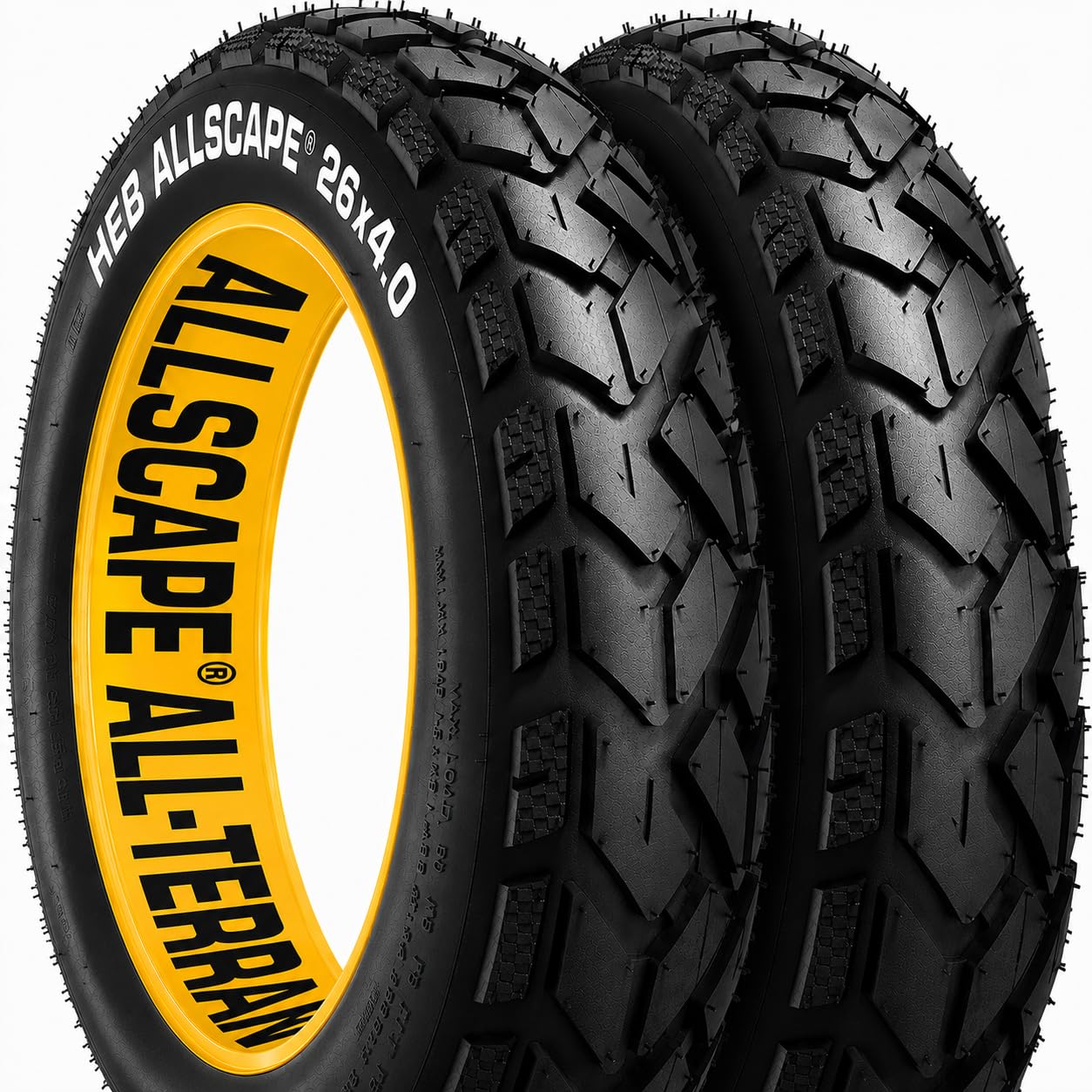
HEB Allscape 26x4.0 Fat Tire 2-Pack

Quiet 26-inch e-bikes

Our Score 9.4/10
Check Price

Worth Noting

  • Offered only in 26x4.0
Pack
2 tires + 2 levers
Size
26x4.0
Tread
Directional
Weight
5.8 lb
Read the full review

Thick is the first impression. The Allscape's carcass is noticeably beefier than a typical stock fat tire, with tall, squared-off blocks sitting on top of it. Set up on a 26-inch e-bike, that translates into a ride that feels damped: rocky trail chatter stops coming up through the bars, and pavement stops roaring.

Grip holds up where it matters. The blocks bite on gravel and wet pavement, the shoulders hold their line when you lean the bike over, and the tire does not wash out mid-corner the way a shallow, half-worn tread will. Two tire levers come in the box, which is a small thing until you are mounting stiff fat tires at a trailhead.

The limits are straightforward. It is a 26x4.0 tire and nothing else, so 20-inch e-bike owners need to look elsewhere in this group. It also sits at the top of this set on price. What the extra buys is the thickest, quietest casing here and a pair that arrives with levers, which we think is fair for a bike that carries a rider, a battery and cargo.

Bottom line: The best 26-inch option here for a quiet, planted e-bike: thick casing, confident grip, and two tires with levers in the box.

2

Ultraverse 20x4.0 Fat Tire 2-Pack

Ultraverse 20x4.0 Fat Tire 2-Pack

20-inch daily riding

Our Score 9.2/10
Check Price

Worth Noting

  • Sold only as a two-pack
  • Warranty excludes normal wear and tear
Pack
2 tires
Size
20x4.0
Tread
Directional
Warranty
Lifetime
Read the full review

The first thing we noticed after swapping a set of these onto a commuter e-bike was the silence. The stock knobbies had a constant hum at speed; with the Ultraverse mounted, the motor and the wind became the loudest things on the ride. For anyone who spends most of their miles on pavement and bike paths, that alone justifies the swap.

We think it offers the best balance of quiet, grip and puncture protection in this group, and for unglamorous reasons. The casing is thick, the directional tread holds a line on wet pavement and gravel alike, and the pair came through our test miles without a flat. Two tires in the box means both wheels get fresh rubber at once, and a lifetime warranty against workmanship defects is unusually generous here.

Fit is where we suggest patience rather than assumptions. These can sit loosely on narrower rims, so seat the bead by hand, inflate in small steps, and look for the molded line sitting evenly above the rim on both sides before you ride. On a wide e-bike rim it is straightforward; on a narrow one, budget a few extra minutes and a pump you can control precisely.

Eleven pounds for the pair is not light, and that weight is the trade for the thick rubber that keeps thorns out. On an e-bike it disappears into the motor's assist. On a pedal-powered fat bike, you will feel it on a climb.

Bottom line: Our top pick for most 20-inch e-bikes: a quiet, thick two-pack that handles pavement and gravel, with a lifetime warranty against defects.

3

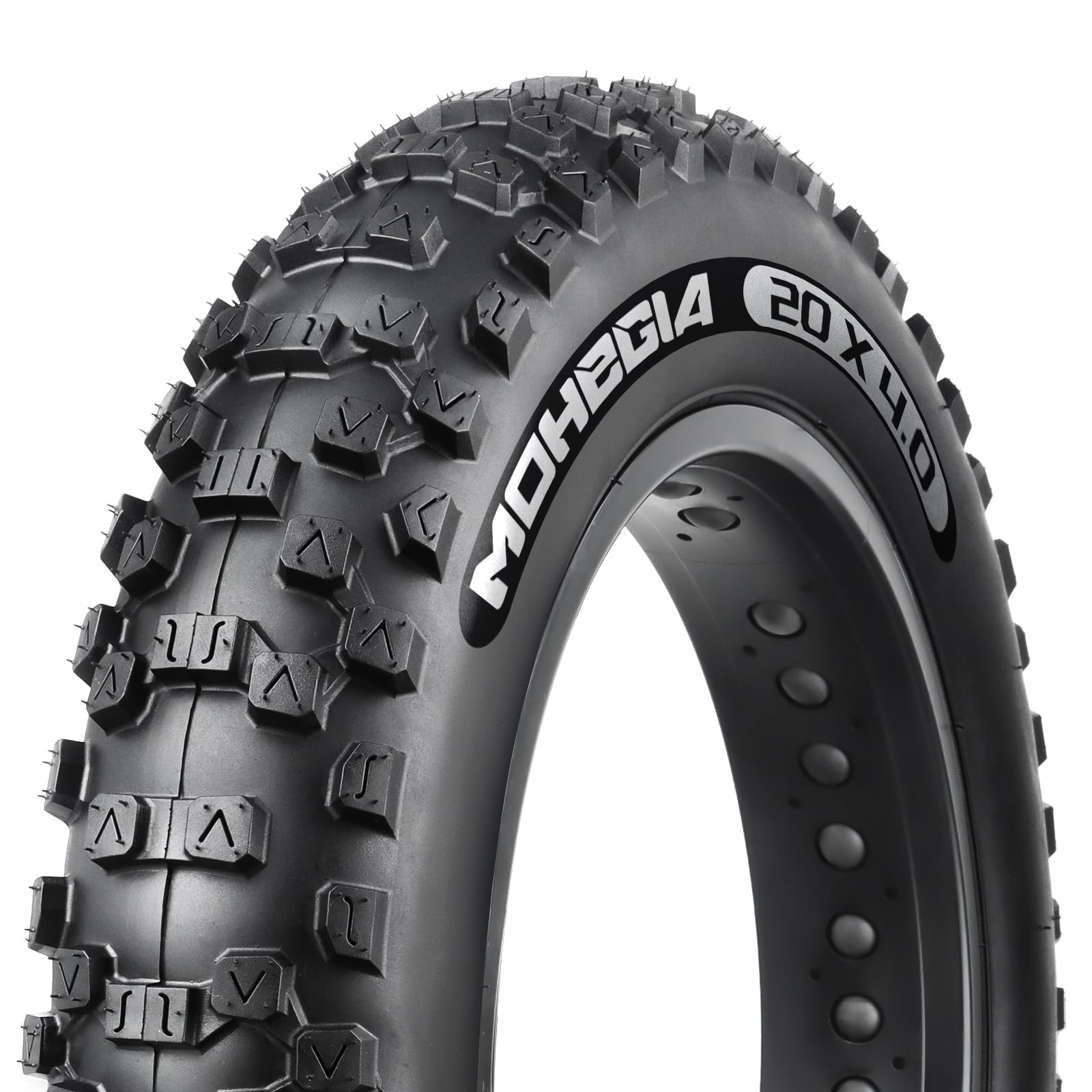
MOHEGIA 20x4.0 Fat Tire

MOHEGIA 20x4.0 Fat Tire

Loaded 20-inch e-bikes

Our Score 9.2/10
Check Price

Worth Noting

  • Runs large enough to rub tight fenders
Size
20x4.0
Tread
Knobby
Max Load
266.6 lb (120 kg)
Warranty
1 year
Read the full review

A 266.6-pound maximum load per tire is the number MOHEGIA prints on this one, and it is the reason to consider it. A cargo e-bike carrying a rider, a battery and a loaded rear rack is exactly the situation where a light casing starts to squirm, and this tire has the headroom for it.

The tread is the other half of the story. The knobs are oversized and convex, standing proud enough to bite in mud, snow and loose dirt, and the rubber is thick enough that gravel roads do not feel like a gamble. On pavement it rolls steadily, not silently, but without the roar of a true mud spike.

What we like most is how honest the tire is about its job. It is a heavy-duty trail tire that happens to commute fine, not a commuter tire pretending to be aggressive, and mounted on a loaded cargo bike the stability is the whole point.

It ships folded, and it wants a day or two laid flat before installation. That is not a marketing line: a tire that spent a week creased in a box needs to relax before it will seat evenly, so plan the swap around a weekend rather than a lunch break.

Bottom line: A load-rated 20-inch knobby for cargo e-bikes and trail riders who want aggressive grip and heavy-duty rubber.

4

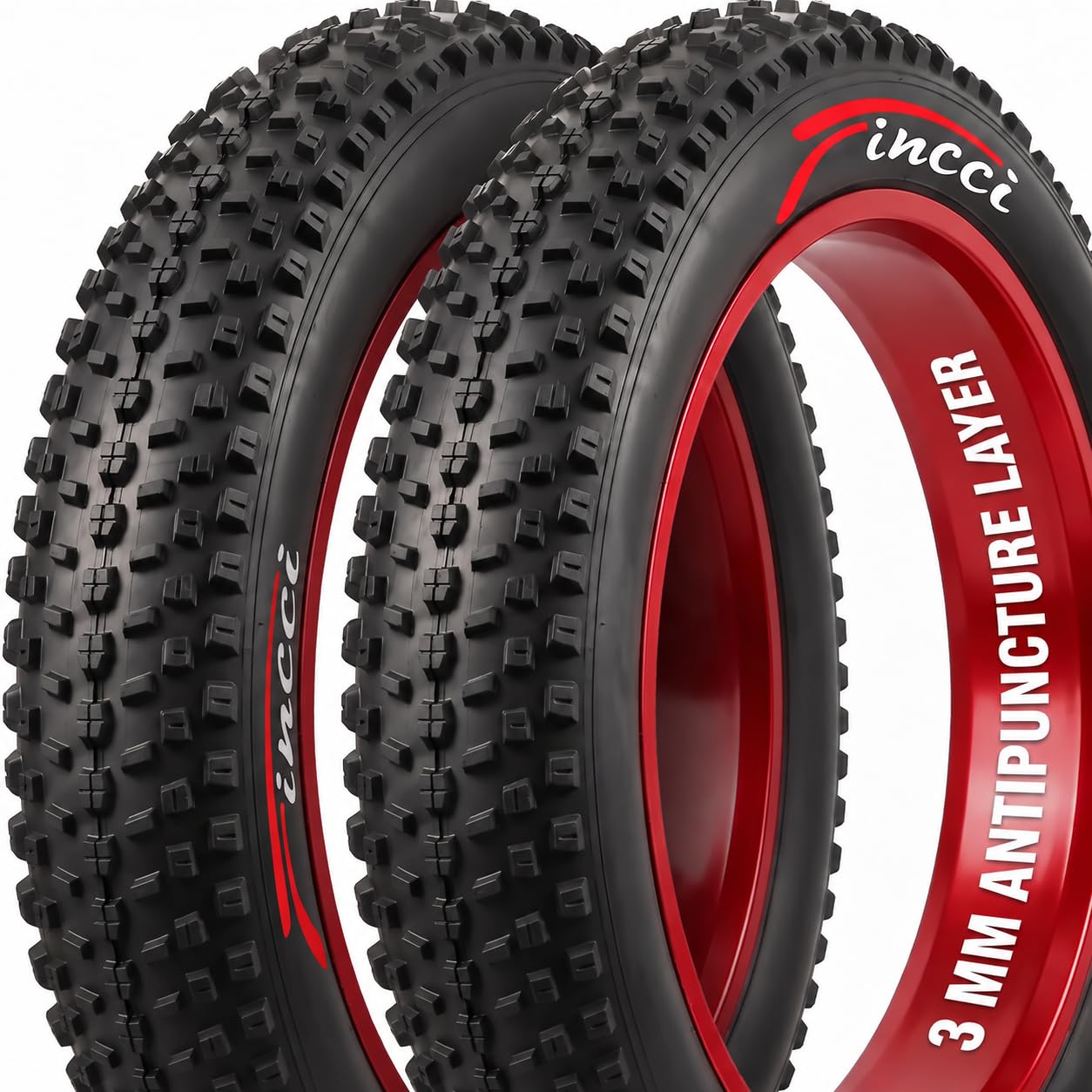
Fincci 26x4.0 Fat Tire Pair

Fincci 26x4.0 Fat Tire Pair

Budget 26-inch pair

Our Score 9.0/10
Check Price

Worth Noting

  • Supple casing is less armored than the heavy-duty sets
Bead
Kevlar
Pack
2 tires
Size
26x4.0
Puncture Protection
3 mm nylon
Read the full review

Two 26x4.0 tires with a Kevlar bead and a 3 mm nylon anti-puncture layer, for less than the premium 26-inch pair here. That is the pitch, and it mostly lands: the blocky tread handles groomed trails and dirt roads, the bead folds for storage, and the ride is smoother and quieter than the stiff stock tires these replaced.

The 30 TPI casing is where the money was saved. It is a supple, comfortable ride at moderate pressure, but it does not have the armored feel of the heavy-duty sets in this group. On a paved commute that is a fine trade; on thorn-heavy ground, run sealant or a liner.

Where we land is that this is the smart budget buy for a 26-inch bike that splits its time between pavement and dirt. The one thing to watch is the bead: it can work loose over the first few rides, so check the line above the rim after the first trip and again after the first week, and reseat at the first sign of lift.

Bottom line: The value pick for 26-inch wheels: two tires with a Kevlar bead and a 3 mm puncture layer for mixed-surface riding.

5

1PZ 20x4.0 Fat Tire

1PZ 20x4.0 Fat Tire

Single-tire replacement

Our Score 9.0/10
Check Price

Worth Noting

  • Sold as one tire with no tube
Size
20x4.0
Weight
2.6 lb
Tire Type
Tubeless
Max Pressure
20 psi
Read the full review

If one tire is worn and the other is fine, a single replacement is the sensible purchase, and this is the cheapest way to do it here: a 20x4.0 knobby with a tight convex block pattern, a claimed 2.6 pounds, and tubeless construction that lets you skip the tube if your rim supports it. For a mid-season replacement, that is exactly the right amount of tire to buy.

The tread is a generalist. The blocks are tight enough to roll on pavement and deep enough to find grip on dirt and gravel, and the rubber feels thicker and softer at once. It arrives folded and stiff, though, and it needs sun or a warm room before it will relax enough to mount without a fight. Plan the swap for the afternoon, not the five minutes before you leave.

Where it fits is as a spare on the shelf, a rear-tire replacement when the front still has tread, or a second tire for a bike that eats rears. Buy a tube with it if you are running tubes, because one is not in the box.

Bottom line: The budget single-tire fix for a 20-inch e-bike: knobby enough for dirt, cheap enough to keep a spare on the shelf.

6

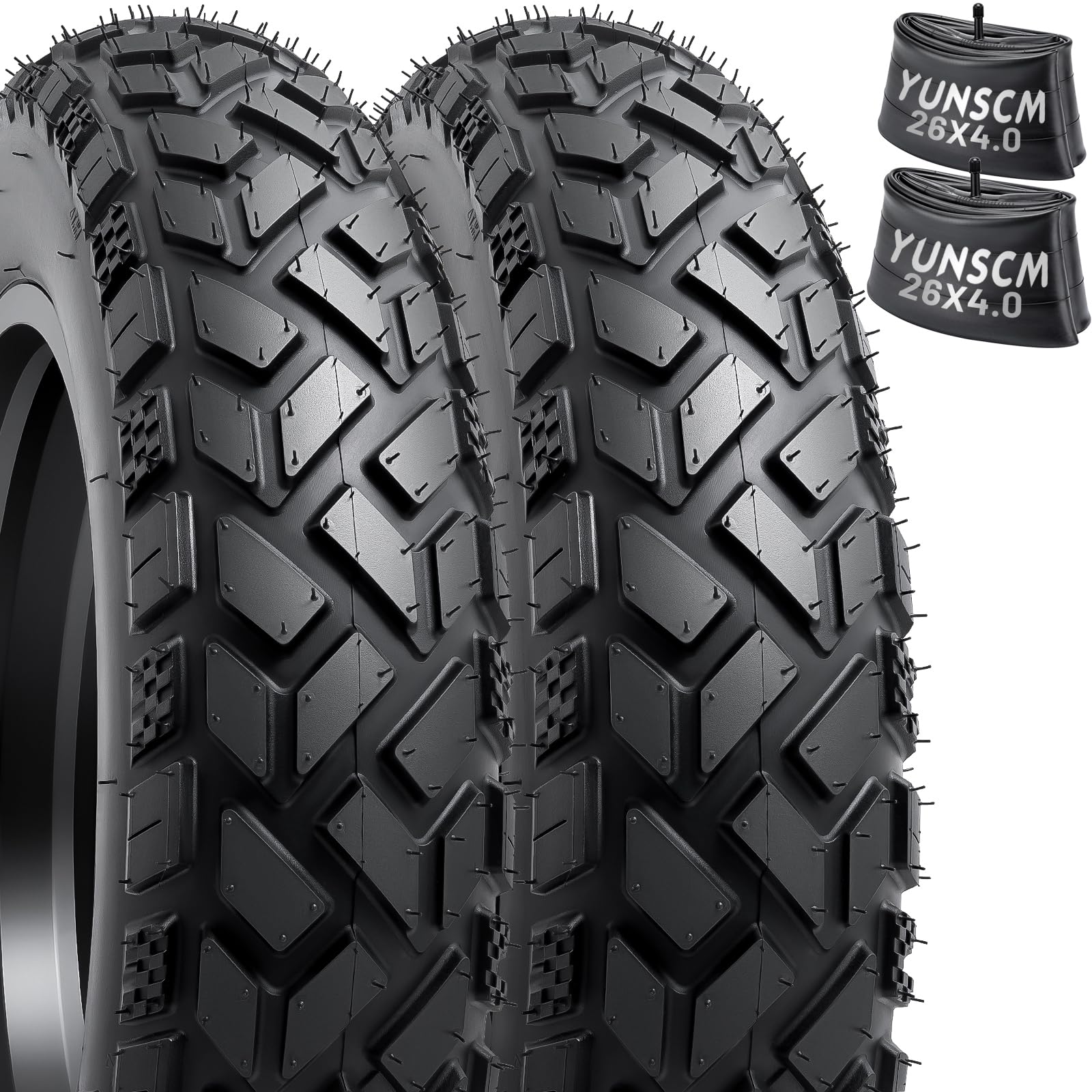
YunSCM 26x4.0 Tire and Tube Kit

YunSCM 26x4.0 Tire and Tube Kit

26-inch full swaps

Our Score 8.8/10
Check Price

Worth Noting

  • Heavy enough to cost acceleration and range
  • Stiff bead is hard to mount with liners
Pack
2 tires + 2 tubes
Size
26x4.0
Tread
Directional
Max Pressure
20 psi
Read the full review

Fat bike tubes are the item people forget to buy, and this kit has them in the box: two 26x4.0 tires and two Schrader-valve tubes that match the casing. That saves a second order and, more to the point, a week of staring at a bike you cannot ride.

The tires are a heavy, quiet, road-leaning set. The diamond pattern rolls smoothly on asphalt, stays composed on gravel and dirt, and the thick sidewalls shrug off the road debris that ends a ride early. Call it a commuter-first tire that handles a trail detour without complaint.

Weight is the real trade. Expect a little less snap off the line and a bit more battery draw than a lighter casing gives you, which matters if you are chasing range on a long commute and matters much less on short, flat trips.

Bottom line: A complete 26-inch kit, two tires and two tubes, for commuters who want quiet, durable rubber and do not mind the weight.

7

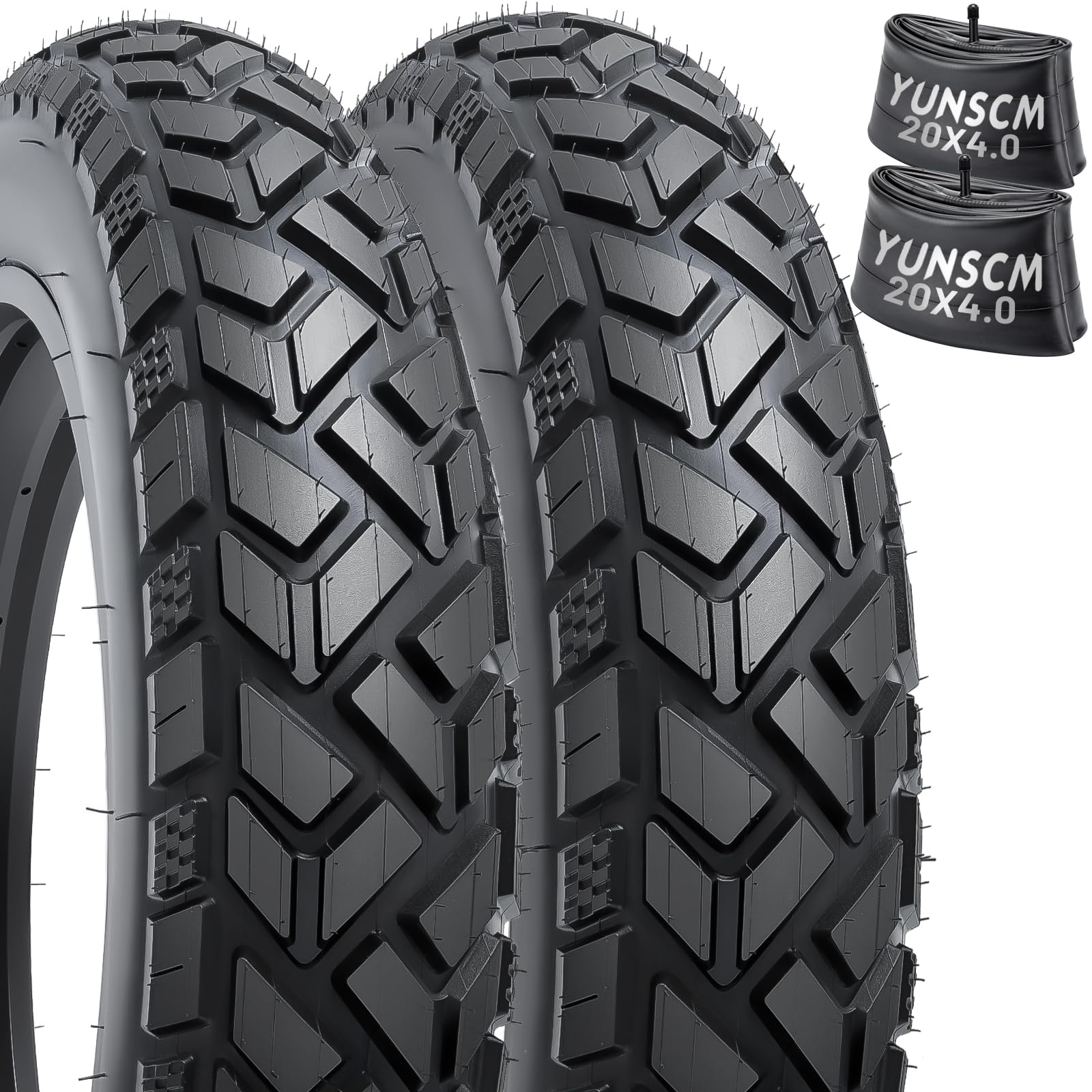
YunSCM 20x4.0 Tire and Tube Kit

YunSCM 20x4.0 Tire and Tube Kit

20-inch commuter swaps

Our Score 8.8/10
Check Price

Worth Noting

  • Heavy casing dulls acceleration and range
Pack
2 tires + 2 tubes
Size
20x4.0
Tread
Directional
Max Pressure
20 psi
Read the full review

Dense rubber and a thick casing make this the heaviest-feeling set in the group, and that is the first thing to decide about it. You are paying for a large-pattern tread built to wear slowly and resist punctures, and the weight is the invoice.

What you get for it is a set that feels planted. The tread is road-biased with enough edge for gravel and dirt, it rolls smooth and quiet on pavement, noticeably quieter than the knobby stock tires on most 20-inch e-bikes, and the beads seated without a fight when we mounted them.

The kit side is the quiet advantage: two tires and two matching tubes, so a full swap does not stall because nobody remembered the tubes. For a commuter or a delivery bike, that is the difference between a weekend job and a week of waiting on a package.

Compared with the knobby MOHEGIA here, it trades mud bite for quiet, wear and an easy mount, a fair swap for anyone whose dirt is graded gravel and fire road rather than roots.

Bottom line: Our pick for a full 20-inch swap: two tires, two tubes, thick tread and quiet pavement manners.

8

RUHUO 20x4.0 Tire and Tube Kit

RUHUO 20x4.0 Tire and Tube Kit

First 20-inch swap

Our Score 8.8/10
Check Price

Worth Noting

  • Short 180-day warranty
Bead
Steel
Pack
2 tires, 2 tubes, 2 levers
Size
20x4.0
Weight
8 lb
Read the full review

Two tires, two tubes, two levers, five valve cores and a core wrench. As a starter kit for someone who has never swapped a fat tire, that is a thoughtful box. The tires are a tight, symmetrical block pattern on a steel bead, and they roll quietly on pavement for a tread this chunky.

As a complete first swap, it earns its place. Nothing here is exotic; the casing is sturdy rather than armored, and the grip on dry pavement and packed gravel is exactly what the tread suggests. It is the kind of set that makes a cheap secondhand e-bike feel considerably less like one.

The warranty is the number we keep coming back to: 180 days, against a year or a lifetime on most of the sets here. On a tire that should last several seasons, that is mostly about how much backup you get if something goes wrong early. Buy it as an affordable first kit and it makes sense.

Bottom line: A tidy first-swap kit for a 20-inch e-bike, two tires, tubes and levers, with a warranty that runs shorter than most.

9

OUXI 20x4.0 Tire and Tube

OUXI 20x4.0 Tire and Tube

On-bike spare

Our Score 8.6/10
Check Price

Worth Noting

  • Three-month warranty
  • Single tire, not a pair
TPI
30
Pack
1 tire, 1 tube, 2 levers
Size
20x4.0
Max Pressure
20 psi
Read the full review

A fat tire that folds small enough to live in a pannier is a niche product, and this is that: one 20x4.0 tire, one tube and two levers packed flat. For a long-distance e-bike trip, or a rider whose nearest shop is an hour away, a spare you can carry is a genuine convenience.

The specification is plain: 30 TPI, a 20 psi maximum, a 32 mm Schrader valve on the tube, and a widely spaced directional block tread. Nothing exotic, which is fine for a spare or a low-cost replacement, and the Schrader valve matches the rims on most 20-inch e-bikes without an adapter hunt.

What settles it for us is the use case: a tire, a tube and levers that live in a bag and get you home instead of waiting for a ride. If both wheels need rubber at once, a two-tire kit makes more sense; as insurance for a long ride, this one is easy to justify.

Bottom line: A foldable 20-inch tire, tube and levers in one pack, the practical spare to keep on the bike for long rides.

How We Chose and Tested Fat Bike Tires

We started by pulling together fat bike tires that were actually available in 3.8- to 4.8-inch widths, then filtered out anything with a history of sidewall failures or a price that felt out of line with the rest of the category. That left us with 12 tires from established brands, including studded winter models and lighter summer options.

Testing ran for eight months, from the first snow in late fall through spring mud season. I rode each tire on my own rigid fat bike on groomed snow trails, packed beach sand, rocky singletrack, and a few slushy commutes, swapping them every few weeks so every model saw the same conditions. We logged each ride, noting where traction broke loose and how much effort it took to hold speed.

At the start, we weighed every tire on a digital scale and mounted each on a 4.0-inch rim to measure true width—some ran narrower than claimed, which matters for frame clearance. We then ran them at pressures from 4 psi in snow to 15 psi on hardpack, paying attention to how supple or stiff the casing felt and whether the tread packed up with mud. To test puncture resistance, we rode through a known patch of sharp gravel and glass, then checked for cuts and slow leaks. Noise level got judged on long gravel-road stretches, and durability was tracked by measuring tread depth and sidewall wear after each month.

How to Choose Fat Bike Tires

Start With the Size on Your Sidewall

Fat bikes come in two dominant sizes: 20x4.0 on most compact and folding e-bikes, and 26x4.0 on full-size fat bikes and cargo models. The number after the x is the width in inches, and the ETRTO figure, 102-406 for a 20-inch and 102-559 for a 26-inch, is the one that has to match your rim. A 26-inch tire will not go on a 20-inch wheel, and a 4.0-inch casing on a narrow rim sits tall and round instead of flat and stable.

Measure before ordering. With the old tire inflated, check the gap to the frame and fender at the chainstays and fork crown. A casing that runs large can rub where the worn one cleared.

Match the Tread to Where You Ride

Block or knobby tread, like the MOHEGIA and HEB sets here, bites in dirt, gravel and snow and holds a line in loose corners. Tighter, low-profile patterns roll quieter and wear slower on pavement, which is why the YunSCM kits suit commuters.

The trap is buying the most aggressive tread you can find for a bike that never leaves asphalt: you pay in noise, rolling drag and a shorter tread life. Be honest about the surface you ride most, then leave a little edge for the occasional detour.

Bead Security Matters More Than Anything Else on the Label

A fat tire holds a lot of air, and a bead that does not seat evenly can lift off the rim under load. Many tires in this group ship folded, which makes them easy to store but leaves creases that need to relax: unfold a new tire and lay it flat for a day or two before mounting.

Then seat the bead by hand, inflate in small steps, and check the molded line above the rim all the way around both sides. Recheck it after the first few rides, especially on a narrow rim.

Weigh Durability Against Range

Thick rubber buys puncture protection and costs weight, and on an e-bike that weight shows up as slower acceleration and shorter range. There is no free lunch: the heavy-duty sets here are the ones that shrug off debris, while a supple 30 TPI casing like the Fincci's rides softer but is less armored.

Pressure is the other lever. Most of these tires max out at 20 psi, which is normal for the category, so use a gauge rather than a thumb and treat the sidewall number as a ceiling, not a target.

One Tire, a Pair, or a Full Kit

Replacing both tires at once is usually right: a worn rear means a front that is close behind, and matched tread keeps the handling predictable. A pair also costs less per wheel than two singles bought separately.

Kits that include tubes and levers, like the YunSCM sets, the RUHUO and the OUXI, save a second order, and tubes are the thing people forget. Buy a single only when the other tire is genuinely fresh.

Frequently Asked Questions

Final Verdict

We recommend the Ultraverse pair for most 20-inch e-bikes. The tread is quiet on pavement, the casing is thick enough for gravel and broken asphalt, and buying a pair means both wheels start fresh; the loose fit on narrow rims is real but manageable with a careful bead seat.

On a 26-inch bike the HEB Allscape is the better tire, quieter and more planted than anything else here, and the Fincci pair is the smart call when the budget is tighter than the riding is hard.