Tires & Tubes

Best Winter Road Bike Tires of 2026

The first slick patch on a winter training ride is a bad place to discover your tires were designed for dry July asphalt. Cold roads, salt grit, and wet painted lines ask a different job of a tire: you want grip you can trust before the speed comes. A good winter road tire doesn't just keep you upright — it makes the whole season feel less like a gamble, so you keep riding instead of retreating to the indoor trainer.

We've spent the last six months riding 12 winter road tires through everything from dark, wet commutes to long weekend base miles, paying attention to the things that matter once the temperature drops: grip on cold asphalt, puncture resistance over gritted lanes, ride quality, and how easily each one mounts. We also tracked tread wear, timed installation on the same wheelset, and checked whether each tire measured true to its stated width. The picks below are the ones that made the cold, wet miles feel less like a gamble.

1

Continental Grand Prix 5000 AS TR

Top Pick
Continental Grand Prix 5000 AS TR

Tubeless winter setup

Our Score 9.4/10
Check Price

Worth Noting

  • Most expensive pair in this guide
  • Slower to spin up than a race tire
Size
700x35
Included
Two tires
Tire Type
Tubeless ready
Protection
Vectran Breaker, reinforced sidewalls
Read the full review

Two 35 mm tubeless tires in one box is a commitment: rims that seat and seal, sealant on the shelf, and a frame that will take a tire this wide. The payoff arrives the first time a flint works into the tread on a cold morning and the sealant closes it before you've stopped to look.

Wet grip is where this one separates itself from everything else here. The BlackChili compound is tuned for cold and wet, the tread is thicker than the race version with a Vectran breaker underneath, and the Lazer Grip shoulders hold a line through corners taken faster than you intended. We were also taken with the Black-Reflex strip on the sidewall — in a season of low sun and early dusk, being seen from the side is worth more than a few grams.

The practical costs are real. Seating them the first time can take soapy water, patience and a compressor, and the 35 mm casing simply won't fit a lot of road frames, so check before you commit. On hookless rims, stay at or below 58 PSI on 17–27 mm internal widths. Once they're on, though, they feel planted rather than skittish in the wet, which is the whole point in January.

Bottom line: It's the tire we choose when the wheels are already tubeless: all-season grip, a reinforced sidewall, and a reflective strip for dark commutes.
2

Continental Grand Prix 4-Season

Continental Grand Prix 4-Season

Wet winter roads

Our Score 9.2/10
Check Price

Worth Noting

  • Premium price for a single tire
Size
700x32
Tread
All-weather
Tire Type
Clincher, tube-type
Protection
Vectran Breaker, DuraSkin
Read the full review

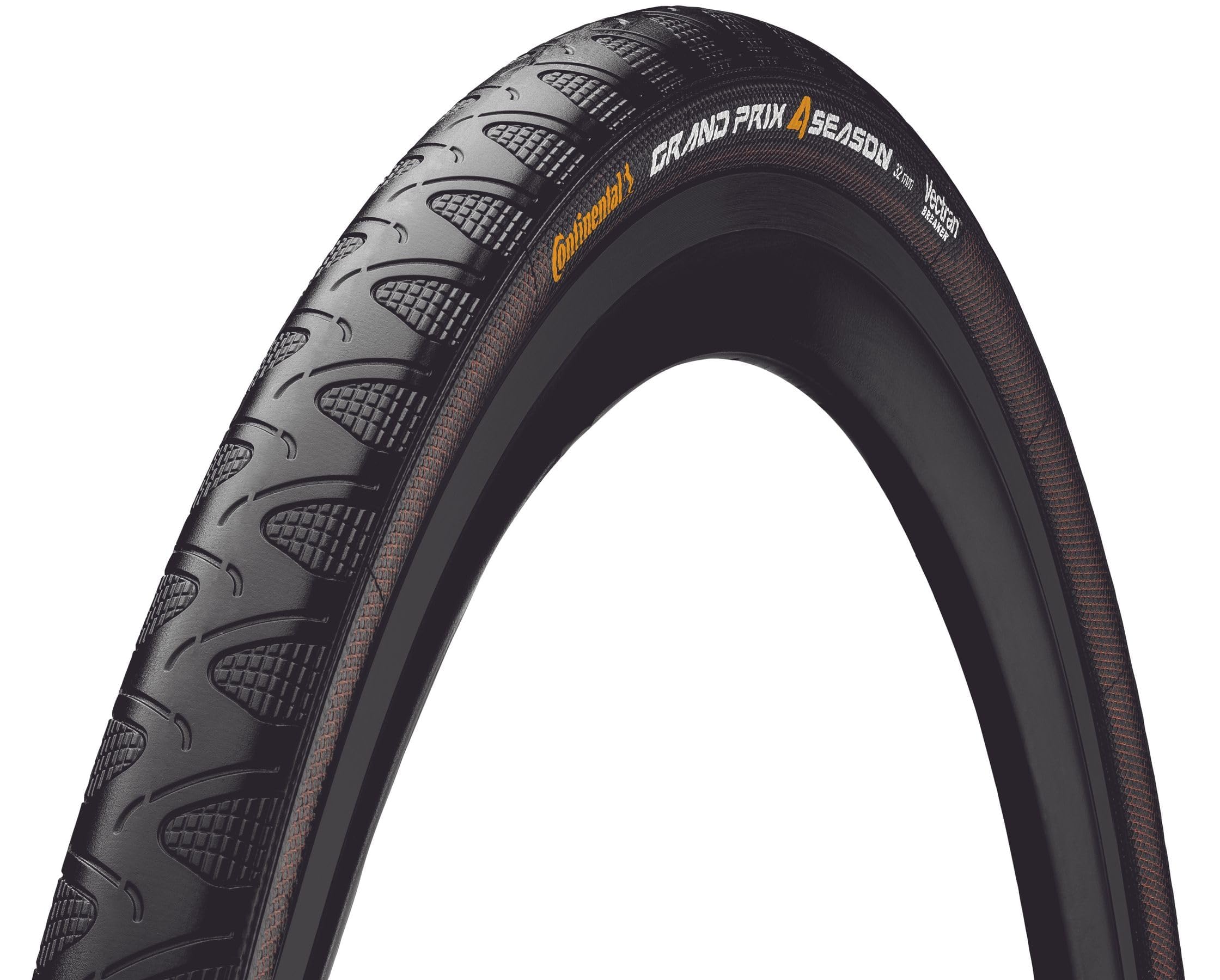
Most road tires get called all-season; the Grand Prix 4-Season is the one here that Continental builds for it, with a general all-weather tread, a Vectran breaker under the rubber and DuraSkin fabric wrapped around the casing. That's the winter brief in a single tire: something under the tread to stop glass and flint, something on the sidewall to survive pothole edges and grit. It's the tire we point winter riders to first, and the 700x32 size is half the reason — more air volume means lower pressure and a contact patch that copes with wet, broken tarmac.

What we watched for was whether the grip survived the cold. It does: the rubber keeps a tacky feel when the temperature drops instead of going wooden, and the shoulders hold a line through greasy corners rather than washing wide. Wear has been uneventful too, with the tread staying square and the casing intact over miles that leave a softer race tire looking tired.

Fit is the thing to check before you order. A 32 mm casing needs clearance at the fork crown, brake bridge and chainstays, and older race frames can be tight; measure with the current tire on and drop to a 28 if it's close. Get that right and it's the least fussy tire here — you fit it in autumn and forget about it until spring.

Bottom line: The Grand Prix 4-Season is what we point winter riders to: cold- and wet-weather grip with a Vectran breaker and sidewall armor underneath.

3

Fincci 700x25c Road Tires

Fincci 700x25c Road Tires

Budget commuter pair

Our Score 9.0/10
Check Price

Worth Noting

  • 1 mm nylon belt, not a Vectran breaker
Size
700x25c
Casing
60 TPI
Included
Two tires
Protection
1 mm nylon anti-puncture layer
Read the full review

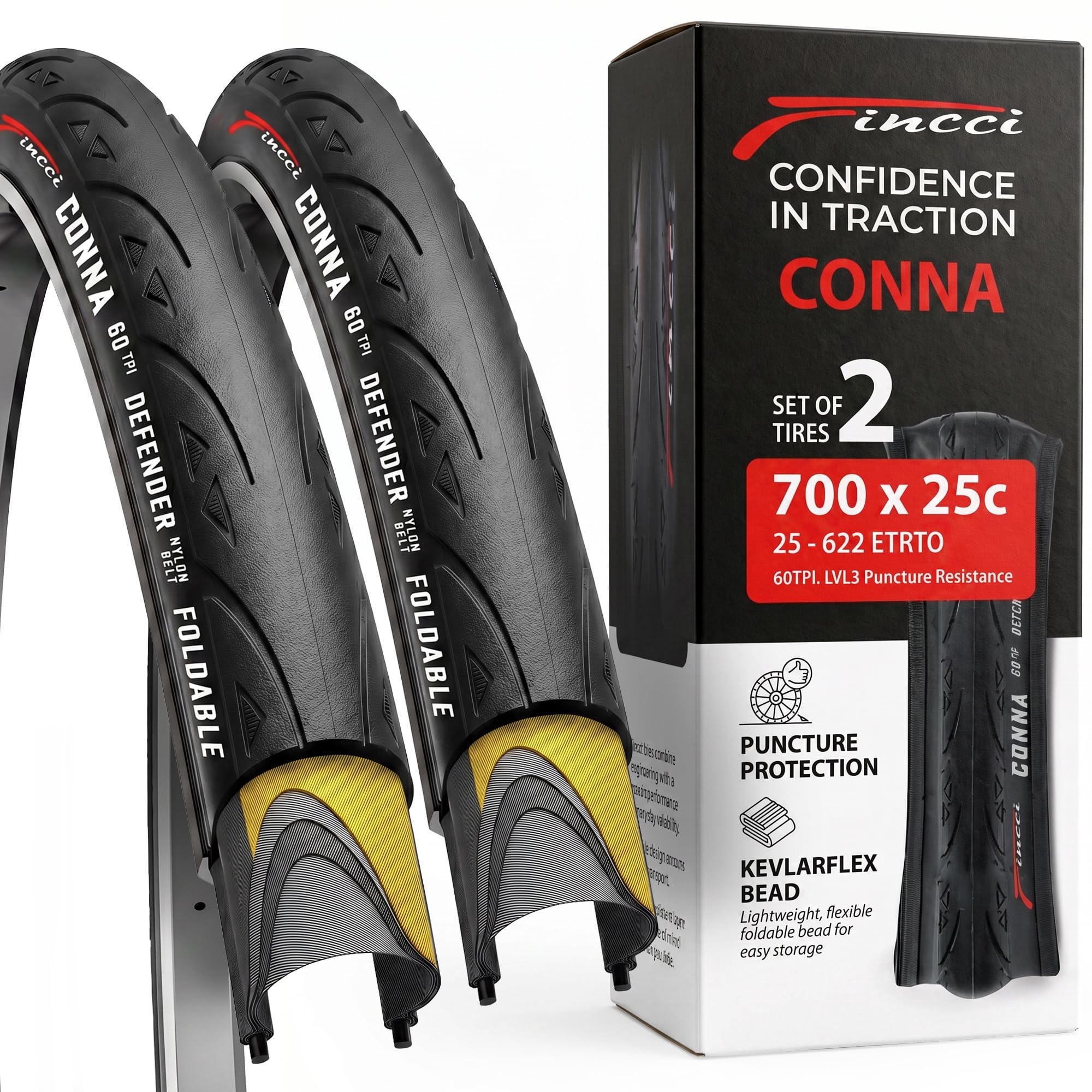
A winter commuter usually needs both tires at once, and Fincci sells them that way: two folding 700x25c tires, each with a Kevlar bead, a 60 TPI casing and a nylon anti-puncture layer under the tread. That pairing is the appeal — you replace front and rear together, keep the wear even, and have nothing odd left over on the shelf. For a bike that lives outside and gets ridden wet, we think that's a better buy than one expensive tire paired with a tired one.

Mounting is where the pair earns its keep. The folding bead and slightly generous sizing go on without a fight, and a spell in the sun before fitting makes them more pliable still. On the road they roll smoothly and quietly, with a slick tread that grips predictably on wet asphalt; keep an eye on the sidewalls, which are the part most likely to suffer if you clip debris.

One thing to check before the first ride is that the bead sits evenly all the way around. A bead that isn't seated can let the tube work its way out, and that's the sort of thing that happens at the worst moment. Get it right and these are honest winter tires you can replace without wincing.

Bottom line: Two decent winter tires in one box for less than one premium tire — the budget pair we reach for when both ends need replacing.

4

YunSCM 700x25C Tire Set

YunSCM 700x25C Tire Set

Reviving a winter bike

Our Score 8.8/10
Check Price

Worth Noting

  • Urban tread, not built around winter grip
Size
700x25C
Included
Two tires, two tubes, two rim strips
Pressure
80–100 PSI
Tire Type
Clincher
Read the full review

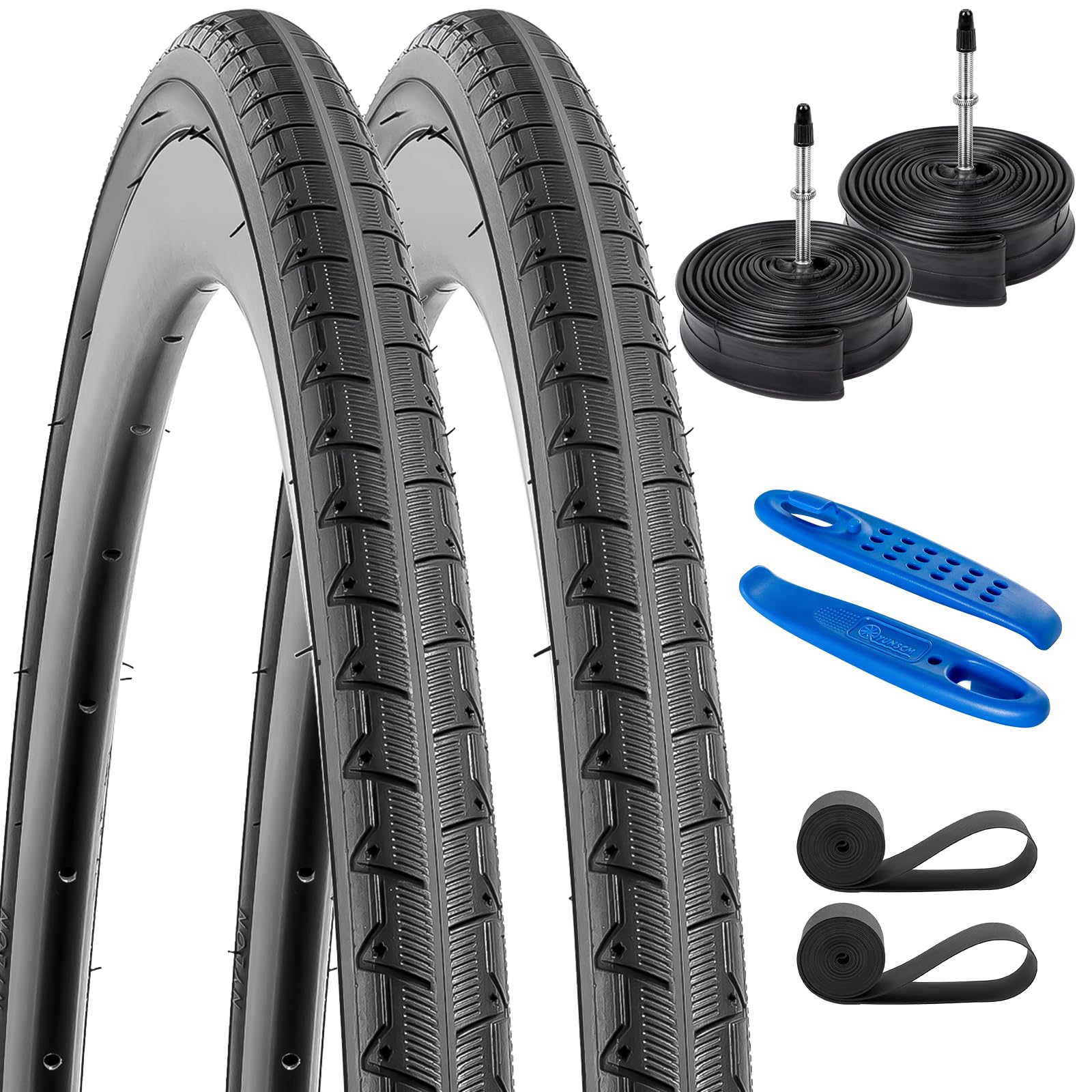
Open the box and you get two 700x25C tires, two 60 mm Presta tubes and two rim strips — everything except the tools. For a bike that's been sitting in the shed with perished rubber, that's one afternoon's work and no second shopping trip.

The tires themselves are straightforward: smooth urban tread, nylon cord, a folding soft-wire bead that survives being packed flat, and an 80–100 PSI window. They mount with some persuasion and roll smoothly once they're on, and they look neat on an older steel frame.

We keep the set on the list because of what it solves. If the alternative is a winter bike with dry-rotted rubber and no spare tubes, this box puts it back on the road for the least money here, and you'd be buying tubes and rim strips separately anyway. Think of it as the set that gets a neglected bike back into service, not an upgrade for one that already has decent tires.

Bottom line: The cheapest way to get a neglected winter bike rolling again, as long as you're not asking it for cold-weather grip.

5

Vittoria Zaffiro Pro G2.0

Vittoria Zaffiro Pro G2.0

High-mileage training

Our Score 8.4/10
Check Price

Worth Noting

  • Sidewalls can crack before the tread is done
Size
700x25c
Weight
12 oz
Compound
Graphene
Tire Type
Clincher
Read the full review

If your winter bike is an older frame with tight clearances, the narrowness here is a feature rather than a fault: mounted, the labeled 25 measures closer to a 23, which is a genuine millimeter or two of extra room at the brake bridge. If you wanted a plush 25, order a size up instead and treat this one as the tight-fit option.

At base-mile money the Zaffiro Pro is hard to argue with. The graphene compound and the alternating slick-and-shoulder profile give it a secure feel on wet tarmac, and it rolls quietly at pressure without turning harsh — the kind of tire you stop thinking about four hours into a ride, which is the nicest thing we can say about a training tire.

Mounting is the other variable. Some rims take these by hand; others need levers, warm rubber and a second pair of hands, so fit them at home rather than at the roadside and check the bead line all the way around before you inflate.

Bottom line: Cheap, comfortable base-mile rubber, provided you know it fits narrow and that the sidewalls may not last the season.

How We Tested Winter Road Tires

To build the shortlist, we looked at winter-specific road tires from several brands, filtering for claimed wet-weather compounds, puncture-belts, and sizes that fit modern road frames. We ruled out anything that came in only one width or looked like a summer tire with a new label, then settled on 12 tires to test.

Over six months, I rode those 12 tires on my own wheelset through wet morning commutes, gritty lanes after the salt trucks, and longer weekend loops on cold, leaf-strewn roads. Each tire got the same 10-mile loop mixing smooth asphalt, chip seal, and a stretch of patched pavement, plus at least one deliberately rough section to see how the casing held up.

I timed installation with two tire levers and noted whether each tire seated by hand or needed a track pump, then measured actual width with calipers at the recommended pressure. On the bike, I paid attention to rolling speed, grip and cornering stability on wet painted lines and metal drain covers, and how much buzz came through over broken surfaces. After every ride I inspected the casing for cuts and glass, logged punctures and whether they sealed, and checked the bead and sidewall quality. At the end, I looked at tread wear to judge durability.

How to Choose Winter Road Bike Tires

Grip Starts With the Compound, Not the Tread

Rubber stiffens as the temperature drops, and a compound tuned for warm tarmac can feel wooden and skittish at 40°F. On the road, a slick contact patch is fine as long as the rubber stays soft, so start with what the maker tuned the compound for rather than counting tread blocks. Shoulder texture and a wider casing both help once you're leaning into a wet corner, because they let you run lower pressure over a bigger, more forgiving patch.

We happily trade a little rolling speed for a corner that holds. The Grand Prix 4-Season is built around that trade; the cheapest slicks here are built for dry city miles, which is a different job.

Protection Has to Reach the Sidewall

The tread gets the attention, but a breaker belt — Vectran, aramid or a dense nylon layer — is what stops a flint or a shard of glass before it reaches the tube. Winter roads are worse than summer ones for exactly that debris, washed off the verge by rain and spread across the lane where you ride.

Sidewalls are the part people forget. Curb edges, potholes and grit cut casings, and a fabric wrap such as Continental's DuraSkin exists for that. Given the choice between a good belt with a thin sidewall and a tire with both covered, take both. The Fincci's 1 mm nylon belt is the sort of protection that handles glass but not a squared-off pothole edge.

Width and Clearance, Measured Rather Than Guessed

Twenty-five millimeters was the road default for years; for winter, 28 to 32 is the more sensible zone, and 35 edges into all-road territory. A wider casing carries more air, which means lower pressure, more grip on wet tarmac and less punishment from broken surfaces — and no penalty worth worrying about on a winter bike.

The trap is clearance. A tire that clears the fork crown can still rub the brake bridge, the chainstay or a fender, and fenders eat several millimeters on each side. Measure the narrowest gap with your current tire fitted and leave a few millimeters spare, remembering that the same tire measures differently on different rim widths.

Tubes or Tubeless

Tubeless with sealant suits winter better for most riders who keep one bike going all season: a flint that would mean a roadside tube change seals itself, often before you notice. It asks more of you — rims that seat and hold, sealant refreshed every few months, and a pressure ceiling on hookless rims, where the Grand Prix 5000 AS TR is capped at 58 PSI on 17–27 mm internal widths.

Tubes stay simpler and repair anywhere. Whichever you choose, mount the tire at home, indoors, before you're doing it at the roadside in the rain — the tightest beads here are the ones that punish cold hands.

Frequently Asked Questions

Final Verdict

Buy the Continental Grand Prix 4-Season if you want to fit one set of tires in autumn and stop thinking about them. It grips when the rubber is cold, it has a breaker under the tread and fabric on the sidewalls, and it wears slowly enough that the price stops stinging by February.

If your wheels are already tubeless, or your frame clears 35 mm, the Grand Prix 5000 AS TR is the more planted choice in genuinely awful weather. And if the budget is the binding constraint, the Fincci pair will see a commuter through a season — just check the bead line before you ride.