Tires & Tubes

Best Road Bike Tires of 2026

A road tire can make a bike feel quick and calm, or nervous and sluggish, and the difference is usually obvious within the first few miles. The tricky part is that the fastest-feeling tires often trade away flat protection, while the tough ones can ride like garden hoses. The right tire fixes that equation: it rolls easily, smooths chip-seal and rough pavement, and holds its line when you brake hard or lean into a wet corner.

Over the past seven months, I’ve ridden a dozen road tires across weekday commutes, long weekend club rides, and a few rain-soaked descents, with my team tracking how quickly they spin up, how much road buzz comes through, how they wear, and whether they survive glass-strewn shoulders. The best ones mounted without a fight, held their shape on the same rims, and stayed stable under hard cornering. My usual width bias didn’t survive this test. The picks below are the ones I’d keep riding—and value is easier to judge once you know how a tire wears.

1

Continental Grand Prix 5000

Top Pick
Continental Grand Prix 5000

Fast road riding

Our Score 9.4/10
Check Price

Worth Noting

  • Sidewall cuts are a weak point
  • Tight first mount on some rims
Size
700x28 (28-622)
Tire Type
Folding clincher
Pressure Range
52–116 PSI
Puncture Protection
Vectran Breaker
Read the full review

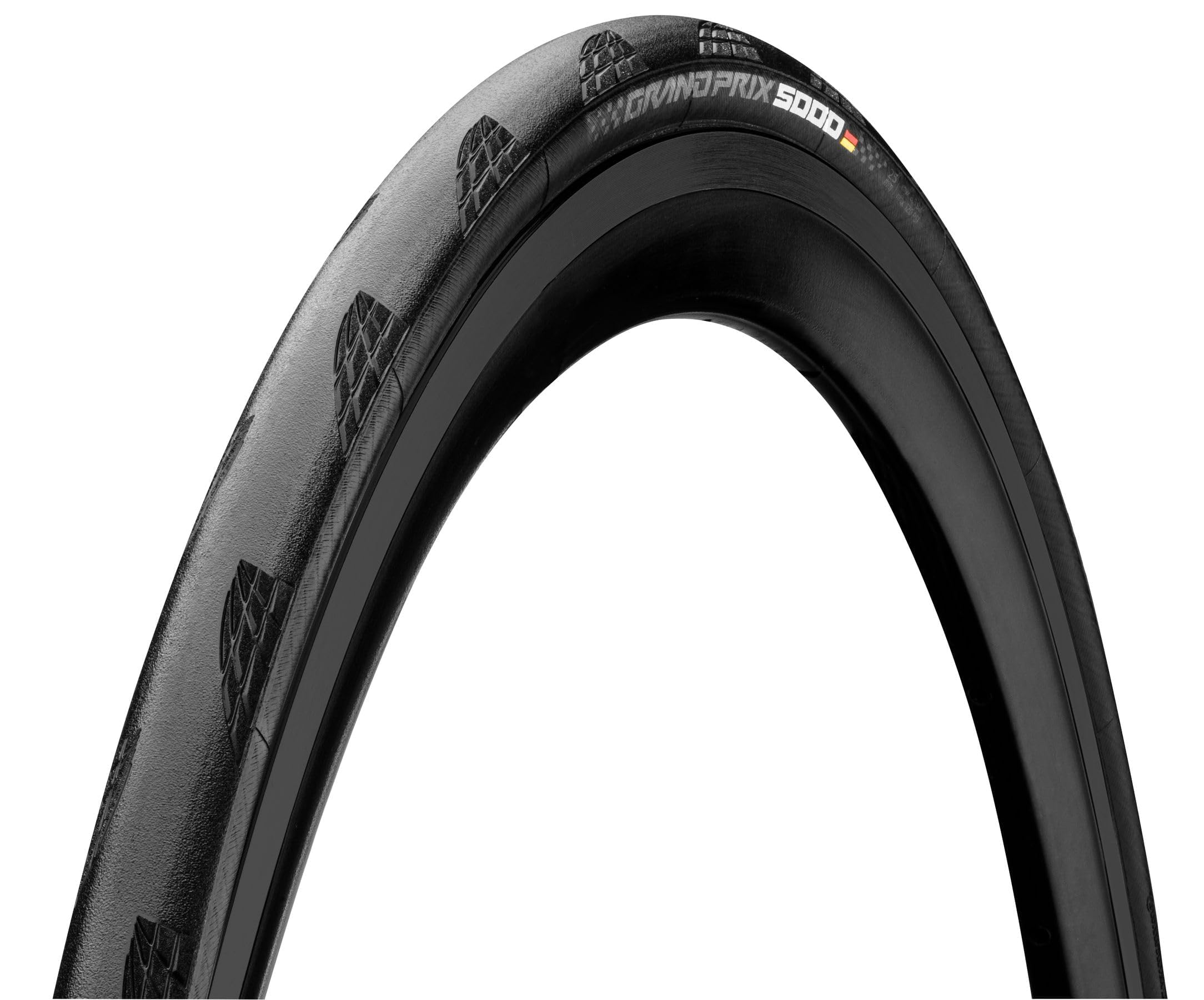
The Grand Prix 5000 is the tire we keep coming back to when the ride is mostly pavement and we want to go quickly without babysitting the bike. The 700x28 clincher uses Continental's BlackChili compound and a Vectran breaker under the tread, and at a listed 240 grams it is light enough to feel eager without being fragile in normal road use. The 52–116 PSI range gives you room to tune it.

What we like most is the balance: the 28c casing takes the sting out of broken pavement, the shoulder tread feels planted in fast corners, and wet grip is reassuring for a tire this quick. It is not a cushy touring tire, though; you still feel the road, which is the point. The Vectran breaker sits under the tread, where most road debris hits, and the 28c volume gives the tire a more forgiving shape than a narrow race tire.

We recommend it to riders who want one tire for fast group rides, training, and the occasional fondo, and who accept that a race-oriented tire needs more attention to pressure and debris. If your roads are glass-strewn and you hate fixing flats, the Gatorskin is the better tool; if you want to spend less, the Fincci pair is the budget route. The 28c width is the detail that makes this tire easier to live with than a 23c race tire, and it is why this is our default.

Bottom line: If you want one fast, grippy tire for paved-road riding and can live with a little more puncture care, this is the road tire we recommend first.
2

Continental Gatorskin

Continental Gatorskin

Flat-prone commuting

Our Score 9.4/10
Check Price

Worth Noting

  • Clincher only; no tubeless version
Pack
2 tires
Size
700x25 (25-622)
Tire Type
Folding clincher
Puncture Protection
PolyX Breaker and DuraSkin
Read the full review

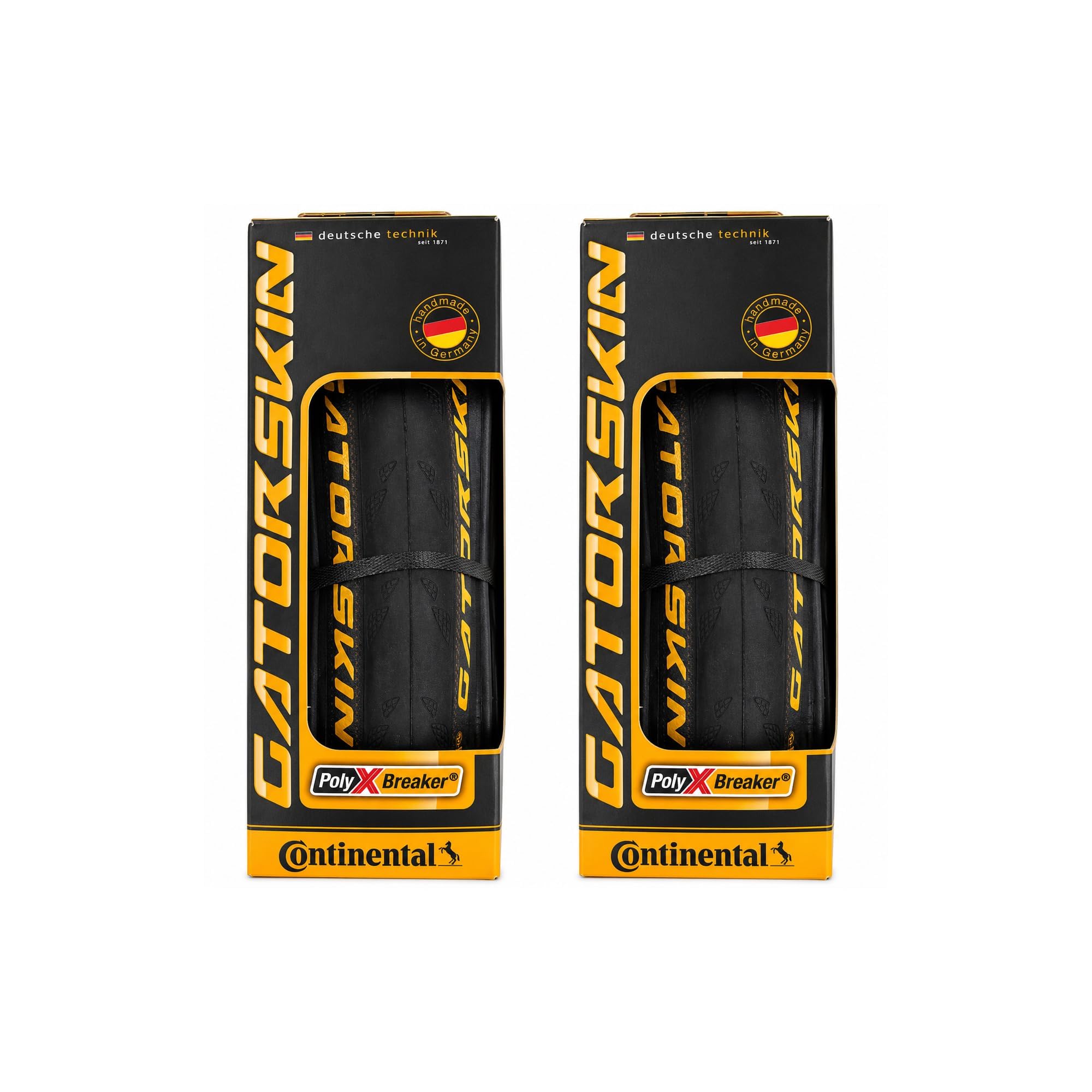
When a flat would derail the ride more than a few lost watts, the Gatorskin is the tire we fit. This two-pack of 700x25 clinchers uses Continental's PolyX Breaker under the tread and DuraSkin fabric on the sidewalls, the combination that makes it a favorite for commutes, training miles, and rough tarmac.

The ride is not race-day lively—there is more rubber here, and you feel it when you accelerate—but that is the trade we are happy to make on a bike that has to get us to work. The DuraSkin sidewall is the detail we appreciate most on glass-strewn shoulders; it adds a layer where race tires often give up. The 25c width is the classic training size, and the folding bead makes a spare easy to stash.

We like that the two-pack lets you replace both ends together, rather than pairing a fresh rear with a worn front. For riders who want maximum flat resistance and do not mind a heavier feel, this is the one. If you want a livelier ride and can accept more puncture care, the Grand Prix 5000 is the better choice; if your priority is simply fewer interruptions, the Gatorskin earns its place.

Bottom line: For commutes and training on rough, debris-strewn pavement, this two-tire set trades a little speed for the flat protection we want.

3

Fincci 700x25c Road Tire Pair

Fincci 700x25c Road Tire Pair

Budget training

Our Score 9.0/10
Check Price

Worth Noting

  • Durability is inconsistent on rough roads
  • Basic puncture protection for glass and debris
Size
700x25c (25-622)
Weight
280 g per tire
Tire Type
Folding clincher
Puncture Protection
1 mm nylon layer
Read the full review

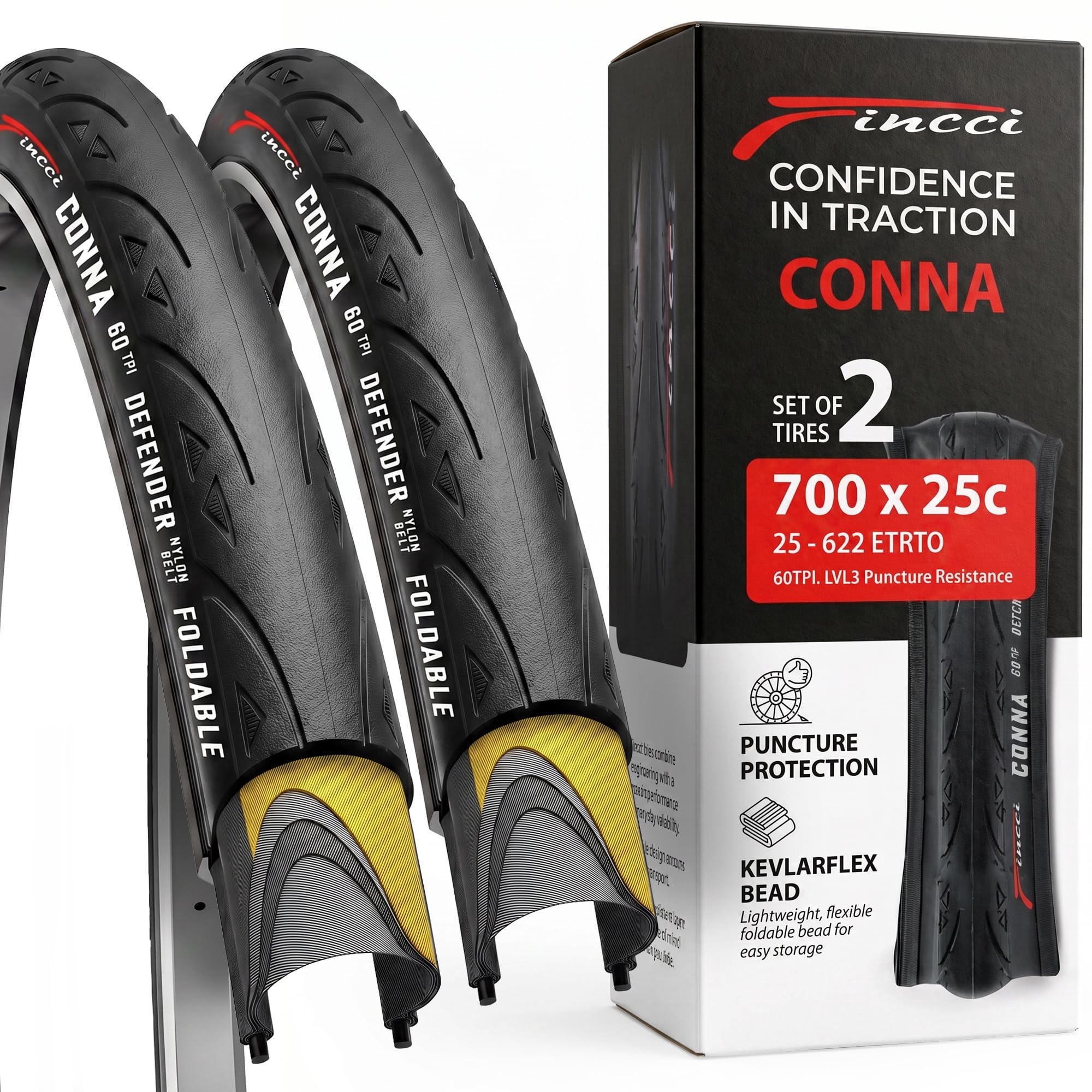
The Fincci pair is the budget option we hand to riders who want to keep a road bike rolling without turning tire shopping into a project. You get two 700x25c folding clinchers, each listed at 280 grams, with a 60 TPI casing and a 1 mm nylon anti-puncture layer. The Kevlar bead is the practical part: the tires fold flat for storage and are easier to carry as spares than a wire-bead pair.

Mounting was the pleasant surprise. The pair went on without a fight in our testing, and the 60 TPI casing gives a smoother ride than the price suggests—not as supple as the 110 TPI Grand Prix 5000, but comfortable enough for daily asphalt. Grip is secure in dry conditions and predictable in the wet, though we do not push a slick tire like this hard on a cold, wet descent.

These are not the tires we choose for a loaded tour or a race where every watt counts, but they make a sensible second set, a winter training pair, or a first upgrade for a new rider. The 25c size fits most modern road frames, and the folding bead means you can keep a spare under the saddle without a bulky loop.

Bottom line: A low-cost pair for daily road miles, with easy mounting and a smooth ride that makes it a smart budget choice.

4

Fincci 700x23c Tire & Tube Set

Fincci 700x23c Tire & Tube Set

23c spare setup

Our Score 8.8/10
Check Price

Worth Noting

  • Puncture protection is modest for debris-heavy roads
  • Durability can be inconsistent
Size
700x23c (23-622)
Included
2 tires and 2 60 mm Presta tubes
Tire Type
Folding clincher
Puncture Protection
1 mm nylon layer
Read the full review

The first thing to notice about this Fincci set is the 23c size. That is not an accident: it is aimed at older road frames, narrow rims, and riders who still prefer a traditional 23 mm profile. You get two folding clinchers, two 60 mm Presta tubes, a 60 TPI casing, and a 1 mm nylon anti-puncture layer. Each tire is listed at 290 grams.

The 60 mm valves are the detail that makes the kit more useful than a bare pair of tires. They reach through deeper rims without valve extenders, and the included tubes mean you can swap both ends in one session. Mounting was straightforward in our testing, and the slick tread rolls smoothly on pavement.

This is not the set we choose for a modern 28c bike, but for an older 23c road bike, a trainer, or a spare wheelset, the complete kit saves the second order. The 23c width is the boundary: if your frame clears 25c or 28c, the wider Fincci pair is the more comfortable buy.

Bottom line: A complete 23c tire-and-tube set for older road bikes and spare-wheel duty, as long as you do not expect premium flat protection.

5

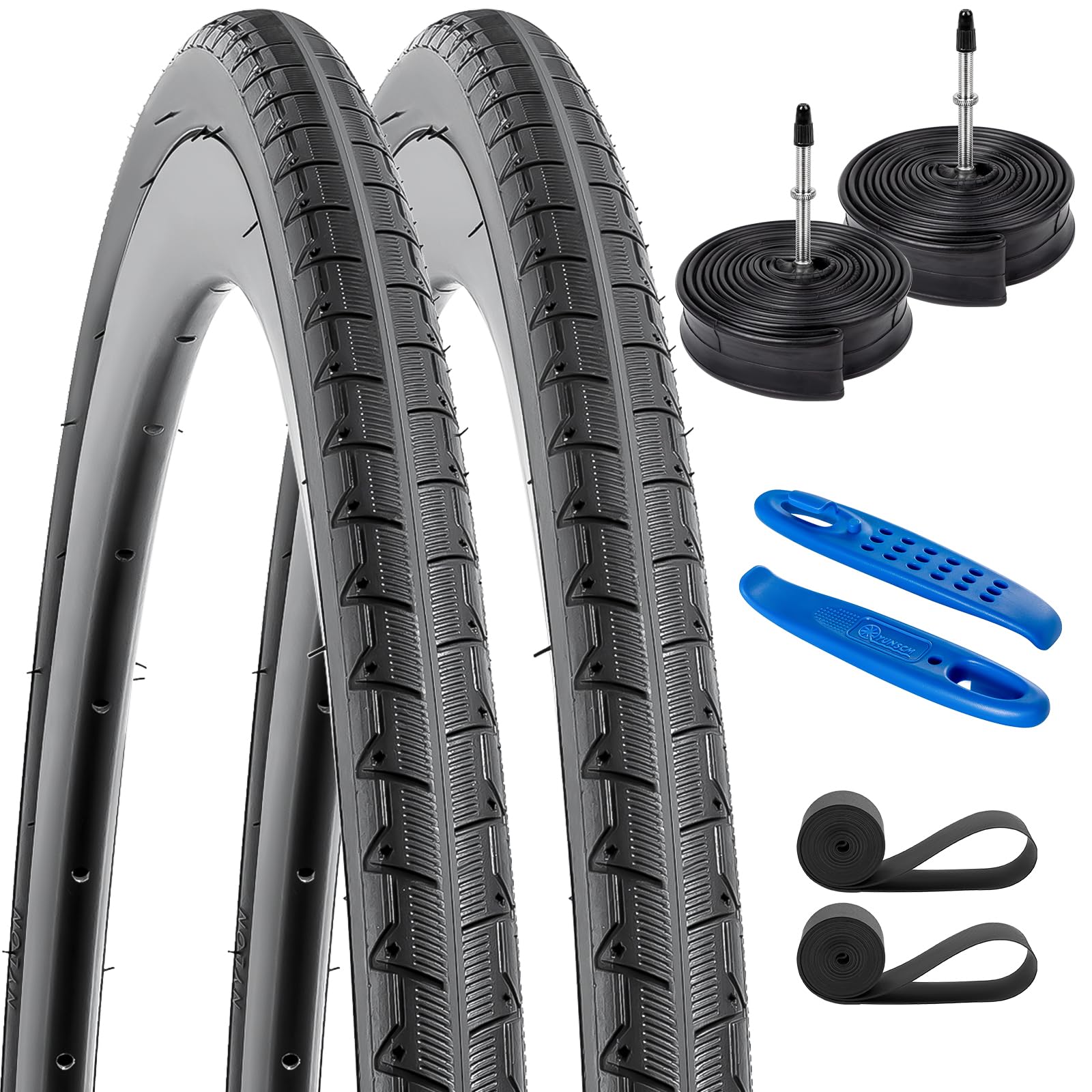
YunSCM 700x28c Tire Kit

YunSCM 700x28c Tire Kit

Value 28c kit

Our Score 8.6/10
Check Price

Worth Noting

  • Smooth tread is pavement-only
Size
700x28C (28-622)
Tread
Smooth
Included
2 tires, 2 tubes, rim strips, levers
Tire Type
Folding clincher
Read the full review

The YunSCM kit is less a tire upgrade than a one-box reset for a bike that has been sitting in the garage. You get two 700x28C folding clinchers, two Presta tubes, rim strips, and tire levers—the small parts that turn a tire swap into a single job. The smooth tread and 28c profile put it squarely in urban and paved-road territory.

We like the kit for a commuter or a budget build because it removes the usual second order. The tires mount like basic clinchers, and the ride is smooth enough for flat city roads. The 28c size can run large on tight frames, though, so dry-fit both wheels before you inflate; a tire that rubs the chainstay is not a tire you can fix with pressure.

This is not a performance tire, but as a complete set for a beater bike or a first road bike, it is the practical choice. The included rim strips and levers are the sort of detail you notice only when you are already halfway through the job—and by then, you are glad they are in the box.

Bottom line: A practical 28c kit for budget-minded riders who want tires, tubes, rim strips, and levers in one order.

How We Tested the Best Road Bike Tires

We started with a shortlist of road tires in the widths most riders actually run, filtering by claimed flat protection, weight, tread pattern, construction quality, and intended use, then narrowed it to 12 tires for seven months of riding. That mix covered training tires, all-around tires, and faster treads meant for good pavement, so we could compare the tradeoffs rather than just crown one flavor.

Each tire went onto the same wheelset. We timed installation by hand and with levers, measured mounted width with calipers, and checked frame clearance, since a tire that measures wider than expected can rub. On weekday commutes and weekend club rides, we noted how much vibration reached the bars over chip-seal and broken pavement, how eagerly each tire spun up to speed, and whether it held a line under hard braking and wet-cornering. We also ran a fixed loop for repeated timed efforts to compare rolling resistance and speed.

To judge flat resistance, we rode the same glass-strewn shoulder and inspected tread after every ride, logging cuts, punctures, and actual flats. Every few weeks we checked tread wear, sidewall scuffs, and squared-off profiles; at the end, we compared each tire’s wear and flat record against its cost and ride quality. That is how value shook out—not by one heroic ride, but by which tires still felt quick and steady after months of use.

How to Choose Road Bike Tires

Start With Width and Clearance

Width changes the whole feel of the bike. A 25c tire turns in quickly and leaves more room around the frame; a 28c tire usually adds comfort and grip, which is why it has become the default for all-round road riding. The catch is that a 28c tire can measure wider than its label once mounted on a wide rim. Check frame, brake, and fender clearance with the tire inflated, and measure the actual width at your riding pressure if you are close.

Our top pick and the Gatorskin show the split: the Grand Prix 5000 is our 28c benchmark, while the Gatorskin pack sticks with 25c for tighter frames and tougher duty. Neither width is inherently faster; the right one is the one that fits.

Choose Clincher or Tubeless

Clinchers with inner tubes are the simpler choice: easy to source, easy to repair on the road, and they work on hooked rims without sealant. Tubeless tires can run at lower pressure, self-seal small punctures, and feel supple, but they need compatible rims, sealant, and a clean bead-seating routine. Hookless rims add their own pressure limit, so follow the wheel maker's maximum rather than the tire's.

For most riders, the deciding question is not which is faster in theory but which you will maintain. If you ride weekly and want fewer interruptions, tubeless is worth the setup; if you prefer a tube in your saddlebag and a pump at home, a clincher is the lower-fuss choice. Our picks here are clinchers, which keeps the repair kit simple.

Balance Puncture Protection Against Speed

More puncture protection usually means more material under the tread or along the sidewall, and that can dull the ride and add weight. A race-oriented tire like the Grand Prix 5000 puts a Vectran breaker under the tread and saves the sidewall for weight savings; a commuter tire like the Gatorskin adds DuraSkin sidewall fabric and accepts a heavier feel. Neither approach is universally better.

Match the protection to the debris you actually meet. Glass-strewn shoulders and winter grit favor a tougher casing and sidewall; smooth, clean asphalt makes a faster tire the better trade. If you want one tire for everything, lean toward the faster tire and carry a spare tube—or choose the tougher tire and accept that it will not feel as eager.

Check Mounting and Rim Compatibility

A tire that is fast on paper is useless if it will not seat. Folding beads are lighter and easier to store, but some tire-and-rim combinations are tight on the first mount. Tubeless setups are less forgiving: the bead must snap into place, and a poor seal can weep air or burp in corners. Check that the stated size matches your rim width and that your frame has clearance for the inflated tire.

A little preparation goes a long way: let a folded tire relax in the sun, use the direction arrow, and inflate slowly to seat the bead. The Fincci pair is the easier first mount of our budget picks; the race-oriented Grand Prix 5000 can be tighter. If a tire needs levers and a struggle at home, it will be worse at the roadside.

Think About Wear, Value, and Spares

Road tires wear from the rear first, and a squared-off profile or exposed wear indicator is the signal to replace. A two-tire pack can be better value than buying singles, especially if you replace both ends together; a complete kit with tubes and rim strips saves another order. But the cheapest tire is not a bargain if it cuts easily or wears out before the tread is gone.

We look at the casing and the intended mileage as much as the pack count. A 60 TPI budget tire can be a smart training choice, while a 110 TPI race tire gives more supple feel and less durability. Buy for the miles you ride, not the miles in the marketing copy.

Frequently Asked Questions

Final Verdict

The Continental Grand Prix 5000 is the road tire we recommend first for paved riding: fast, grippy, and supple enough for long days, with the 28c version the width most riders should start with. It asks for more care around debris than a dedicated commuter tire, but that is the trade for its ride.

If flat protection matters more than snap, choose the Gatorskin two-pack; if you want to spend less, the Fincci 25c pair is the budget route. The 23c Fincci set and the YunSCM kit make sense for older frames, spare wheels, or a complete one-box refresh.