Lights & Electronics

9 Best Cycling Speed and Cadence Sensor of 2026: Get Accurate Data Without the Guesswork

Find the right speed and cadence sensor for your bike – whether you need two dedicated sensors or a budget single unit – and avoid common pitfalls like broken bands and spotty connectivity.

Many cycling sensors promise dual connectivity and long battery life, but real-world performance often falls short. You might end up with jumpy speed readings or a unit that quits after a few months.

The real challenge is balancing cost with reliability. A cheap sensor can be a great intro to cadence training, but if you ride regularly outdoors, investing in a proven setup saves frustration later.

This guide helps you choose based on your riding habits and tolerance for maintenance – not just the sticker price. Because the right sensor is the one that actually delivers the data you need ride after ride.

1

Garmin Speed/Cadence 2

Top Pick
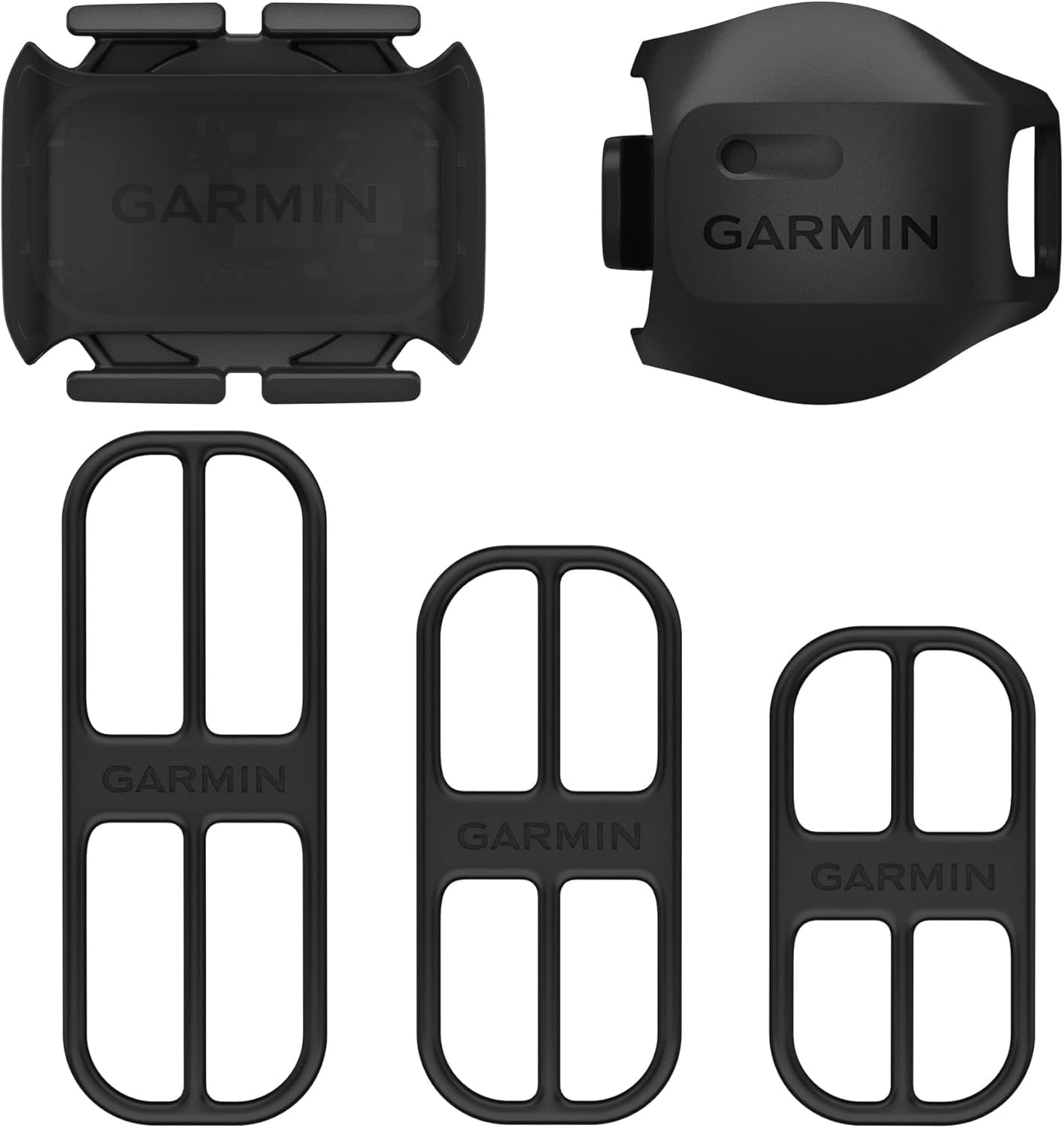
Garmin Speed/Cadence 2

Serious cyclists

Our Score 9.2/10
Check Price

Worth Noting

  • Speed readings can be off if the wheel circumference is not entered exactly.
  • Bluetooth pairing may drop out occasionally, requiring a reconnection.
Sensors
Dual separate
Mounting
Wireless
ANT+, Bluetooth
Battery Life
Read the full review

With a strong track record of consistent performance across thousands of rides, the Garmin Speed/Cadence 2 set is the standard-bearer for dedicated cyclists. The separate speed and cadence sensors pair quickly via ANT+ or Bluetooth, and once configured, deliver data that matches GPS estimates closely. Build quality is solid: the mounts hold firm and the sensors resist road spray without issue.

This set suits riders who want a long-term investment and already use Garmin Edge computers or Fenix watches, where the sensors integrate without extra setup. Speed accuracy depends on entering the correct wheel circumference — a one-time step that some overlook. Occasional Bluetooth sync delays have been noted, but for most owners, the system works without further intervention.

Enter your exact wheel circumference in the sensor settings to avoid inaccurate speed readings.

Bottom line: For cyclists who want consistent data without ongoing hassle, the Garmin set is a sound investment — especially if you are already inside the Garmin ecosystem.
2

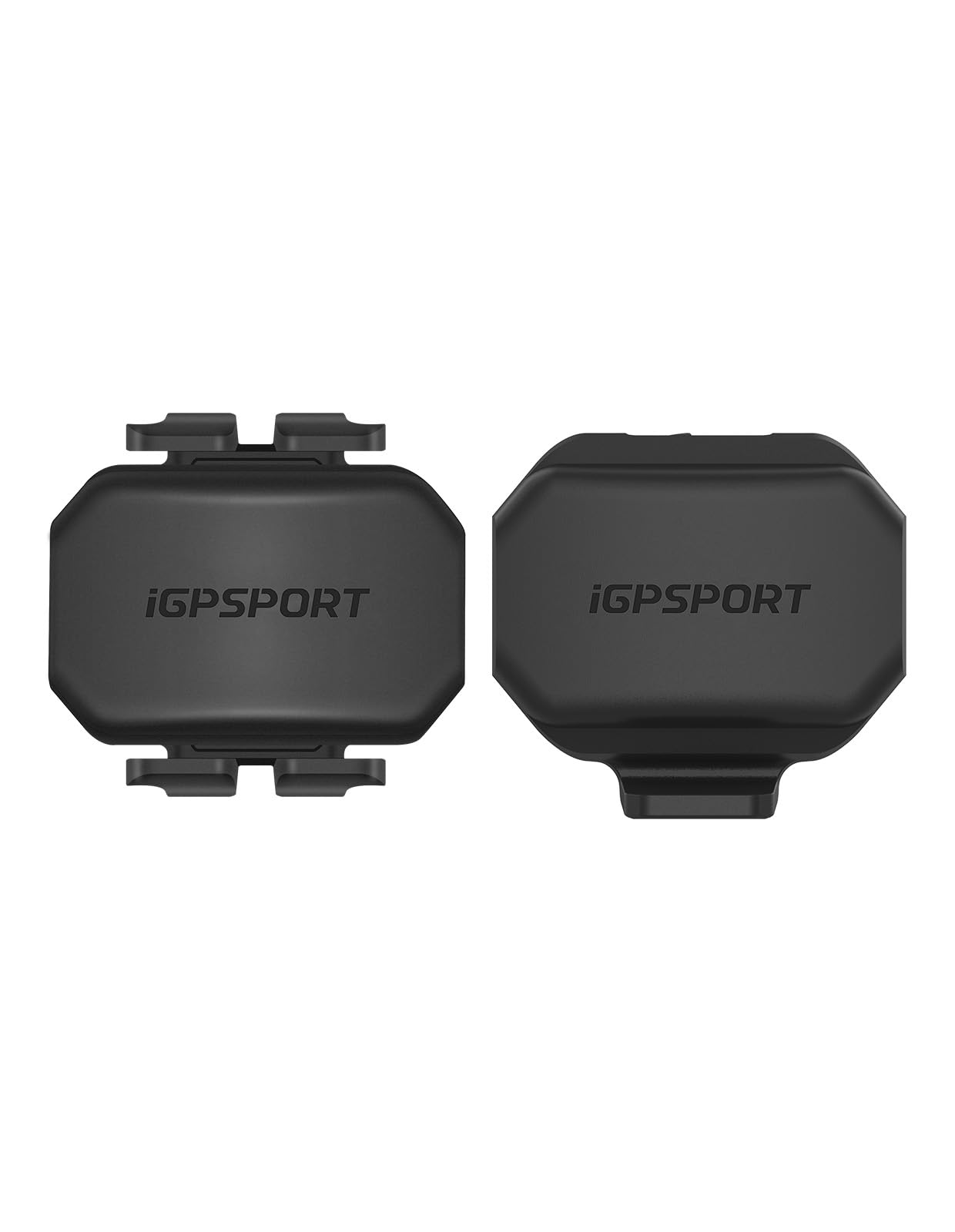
iGPSPORT Dual Set

iGPSPORT Dual Set

Garmin alternative

Our Score 9.2/10
Check Price

Worth Noting

Sensors
Dual separate
Mounting
Wireless
ANT+, Bluetooth 5.0
Battery Life
300 hrs
Read the full review

The iGPSPORT Dual Set bundles dedicated speed and cadence sensors with ANT+ and Bluetooth 5.0 connectivity and an IPX7 water-resistance rating, offering a rare combination of features at a mid-range price. The sensors deliver consistent readings and feel well-constructed.

This set is a natural fit for riders who regularly encounter rain and prefer separate sensors for more flexible placement on the bike. For those who do not need the ecosystem integration of the top pick, this kit provides the essential metrics with added weather protection.

Bottom line: A solid mid-range option for cyclists who need water resistance and dual sensors without paying a premium for the Garmin badge.

3

CooSpo BK9C

CooSpo BK9C

Add-on cadence

Our Score 8.8/10
Check Price

Worth Noting

  • For riders who need speed data, this sensor only tracks cadence
Sensors
Cadence-only
Mounting
Wireless
ANT+, Bluetooth 5.0
Battery Life
300 hrs
Read the full review

The CooSpo BK9C delivers consistent cadence readings and pairs easily via ANT+ and Bluetooth. Its IP67 water resistance and 300-hour battery suit regular use. However, it cannot measure speed at all — this is a cadence-only sensor. It works well as an add-on for cyclists who already get speed from GPS or have a dedicated speed sensor.

Bottom line: Fits best as an add-on for cyclists already tracking speed via GPS or another sensor, but not a complete solution.

4

CooSpo BK467 Set

CooSpo BK467 Set

Dual-sensor value

Our Score 8.6/10
Check Price

Worth Noting

  • Sensor function may stop after a few months of use
  • Cadence or speed data can be inconsistent on certain bike setups
Sensors
Dual separate
Mounting
Magnet-free
Wireless
ANT+, Bluetooth
Battery Life
Read the full review

The CooSpo BK467 set delivers separate speed and cadence sensors at a price that undercuts most single-sensor options. For riders who need consistent data day after day, some units may develop intermittent readings or stop working altogether — worth considering if you rely on metrics for structured training. This set is best for indoor training on Zwift or Rouvy where setup is quick and the risk of losing a sensor is low.

Ensure the sensors are mounted securely and wheel size is configured in your app for consistent data.

Bottom line: If you need basic cadence and speed data for indoor workouts and want to spend under $30, this pair works well — just keep an eye on sensor performance.

5

CYCPLUS C3 Single

CYCPLUS C3 Single

Indoor/new riders

Our Score 8.6/10
Check Price

Worth Noting

  • Included rubber bands can stretch or break, risking sensor loss
  • Speed readings may be jumpy or inconsistent on rear hub mounts
Sensors
Single switchable
Mounting
Rubber band
Wireless
ANT+, Bluetooth
Battery Life
300 hrs
Read the full review

The CYCPLUS C3 is an ultra-budget single sensor that tracks cadence reliably once paired via Bluetooth or ANT+. Speed readings can be jumpy in some setups, and the included rubber bands may stretch or break in use — a known tradeoff at this price point. For indoor training or casual riders wanting to experiment with cadence without a big investment, this sensor gets the job done. Outdoor use on rough roads carries a higher risk of sensor loss, so it's best kept on a trainer or smooth pavement.

Zip ties provide a more durable mount than the included rubber bands.

Bottom line: A capable budget sensor for indoor use, but outdoor riders should look elsewhere for secure mounting and consistent speed data.

6

Moofit Single Sensor

Moofit Single Sensor

Close-range bikes

Our Score 8.6/10
Check Price

Worth Noting

  • Signal can drop when the sensor is more than a few feet from the head unit.
Sensors
Single switchable
Mounting
Rubber band
Wireless
ANT+, Bluetooth
Battery Life
300 hrs
Read the full review

The Moofit delivers reliable cadence readings and pairs smoothly with Garmin devices — a cost-effective option for riders who can mount the sensor close to their head unit. It switches between speed and cadence modes, though not simultaneously, making it a straightforward upgrade for bikes with short chainstays.

This sensor works best for cyclists who keep their computer within a few feet of the sensor; longer distances or wheelbases can cause signal dropouts. For tight setups, the accuracy and battery life (300 hours, IP67) match sensors costing twice as much.

Position the sensor on the chainstay nearest your head unit to minimize dropouts.

Bottom line: A solid budget pick for short-chainstay bikes where the sensor sits close to the computer — avoid if your setup requires long-range signal.

7

GEOID CS600

GEOID CS600

Occasional riders

Our Score 8.6/10
Check Price

Worth Noting

  • Reliability can be short; some units may stop working within months
Sensors
Single (speed or cadence)
Mounting
Rubber band
Wireless
ANT+, Bluetooth
Battery Life
CR2032
Read the full review

The GEOID CS600 delivers speed or cadence data at a rock-bottom price, and the rubber band mount makes installation quick. However, some units can stop transmitting after a few months of use, and connectivity with ANT+ may require patience. This sensor suits occasional indoor Zwift sessions or as a backup, not daily outdoor riding where consistent data matters.

Bottom line: Works as an ultra-budget option for casual rides or indoor trainers, but only if you can accept the gamble on longevity.

8

CooSpo BK805

CooSpo BK805

Patient setup users

Our Score 8.2/10
Check Price

Worth Noting

  • Magnetic alignment can be picky on some bikes, causing missed cadence readings.
Sensors
Single magnetic both
Mounting
Magnetic
Wireless
ANT+, Bluetooth
Battery Life
500 hrs
Read the full review

The CooSpo BK805 uses a single sensor to track speed and cadence via magnets, simplifying setup for riders who want both metrics without buying two separate units. However, magnetic alignment can be finicky on certain bike frames, and some units may arrive non-functional, making it a gamble for those seeking hassle-free installation. Its budget-friendly price is appealing, but the separate BK467 dual-sensor set offers more consistent performance for a similar overall investment.

Bottom line: Best suited for patient tinkerers who want a single-sensor solution and are willing to accept occasional alignment tweaking.

9

Magene S3+

Magene S3+

Budget replacement

Our Score 8.0/10
Check Price

Worth Noting

  • Mounting bands may snap, data can drop out, and some units stop working within months.
Sensors
Single (speed/cadence)
Mounting
Rubber band
Wireless
ANT+, Bluetooth
Battery Life
CR2032
Read the full review

The Magene S3+ offers a low-cost way to add speed and cadence tracking to any bike. Mounting is straightforward, and the price is among the lowest for dual-mode Bluetooth/ANT+ sensors. However, some units may stop working within months, the rubber mounting bands can snap, and speed/cadence data can drop out intermittently. For riders who can accept these tradeoffs and are willing to buy a backup, it remains an entry-level option. But for anyone wanting a sensor they can count on for regular riding, spending a bit more on a better-built alternative avoids these issues.

Bottom line: Best suited for casual riders who can tolerate occasional replacement, not for daily commuters or long-tour cyclists.

How to Choose

Sensor Count: Separate vs. Dual-Mode

Separate speed and cadence sensors are the most reliable setup. Each sensor is optimized for its task and can be placed independently for best signal.

Dual-mode single sensors switch between metrics but can't log both simultaneously. For indoor trainers where you only need cadence, a dual-mode works fine. For outdoor training with a bike computer, separate sensors avoid data gaps.

Wireless Protocols

ANT+ and Bluetooth are both common. ANT+ is more stable when connecting to multiple devices like a bike computer and power meter, while Bluetooth is the standard for smartphone apps.

If you ride in crowded areas (group rides, events), Bluetooth can drop out from interference. A dual-protocol sensor gives you flexibility.

Water Resistance

IPX7 and IP67 ratings mean the sensor can handle heavy rain and even submersion. IP54 only protects against splashes and light rain. For regular wet-weather riding, aim for IPX7 or IP67.

Cheaper sensors often use IP54 — fine for occasional damp rides but not for committed cyclists who ride in all conditions.

Mounting Method

Most budget sensors rely on rubber bands that stretch and break over time, leading to sensor loss mid-ride. Magnet-free designs with O-rings or twist-locks are more secure.

If you buy a rubber-band sensor, carry zip ties as a backup. For rough roads or mountain biking, opt for a sensor with a positive-lock mount.

Battery Life

Claimed battery life ranges from 300 to 500 hours, but real-world performance varies. Cold temperatures and frequent usage reduce runtime. CR2032 batteries are standard and cheap to replace.

Check user reviews for actual battery longevity. If you ride several times a week, expect to change the battery every few months.

Frequently Asked Questions