Lights & Electronics

12 Best Heart Rate Monitor for Cycling 2026: Chest Strap vs Armband

Struggling to choose between chest strap accuracy and armband comfort? This guide helps you find the heart rate monitor that fits your cycling style and budget.

A heart rate monitor can make or break your training. Choosing between a chest strap and an armband often means trading accuracy for comfort — or vice versa. Many cyclists end up with a monitor that slips mid-ride or produces erratic readings when sweat builds up.

Battery life is another hidden friction point. Rechargeable units are convenient until the battery stops holding a charge after a year. Replaceable coin cells last longer but require a yearly swap. The right choice depends on your riding frequency and tolerance for maintenance.

The picks here focus on real-world reliability, consistent connectivity, and the trade-offs that matter most for cyclists.

1

Garmin HRM 600

Top Pick
Garmin HRM 600

Premium Garmin

Our Score 9.2/10
Check Price

Worth Noting

  • Removing the sensor pod for charging can be difficult and carries a risk of damage.
  • Premium price offers no benefit for cyclists who only need basic heart rate during rides.
Type
Chest strap
Battery
Rechargeable 2mo
Connectivity
ANT+ & Bluetooth
Compatibility
Garmin Edge, Fenix
Read the full review

The Garmin HRM 600 adds running dynamics and swim-proof water resistance to the same accurate ECG sensor found in the HRM 200, making it a solid choice for multi-sport athletes. Its seamless pairing with Garmin watches and computers is identical to the cheaper model. However, cyclists who never run or swim pay a premium for features they won't use — the HRM 200 delivers identical heart rate performance at half the price. Additionally, the sensor pod can be difficult to detach from the strap, creating a risk of damage during removal for charging.

Gently twist the sensor pod rather than prying it off — this may reduce the chance of damage.

Bottom line: Best for multi-sport athletes who run and swim with a Garmin watch; cyclists focused on riding alone get the same accuracy for less with the HRM 200.

2

Garmin HRM 200

Garmin HRM 200

Best Overall

Our Score 8.6/10
Check Price

Worth Noting

  • Occasional connectivity dropouts have been noted with certain Garmin watch models during rides.
Type
Chest strap
Battery
Replaceable CR2032
Connectivity
ANT+ & Bluetooth
Compatibility
Garmin Edge, Wahoo
Read the full review

The Garmin HRM 200 delivers ECG-accurate heart rate data to Garmin Edge computers with instant pairing and no calibration fuss. Cyclists switching from wrist-based sensors will notice the difference in consistency during hard efforts and intervals, where optical sensors tend to lag or pick up cadence noise.

Battery life is a practical win: the user-replaceable CR2032 cell lasts roughly a year of regular riding, so there is no charging cable to lose or battery degradation to worry about. The strap is machine-washable and the sensor snaps off for easy cleaning, which helps maintain hygiene and sensor contact over time.

This chest strap is best suited for cyclists who pair primarily with a Garmin Edge computer and value straightforward maintenance. The standard strap fits most riders, but those with a chest circumference over 44 inches may find it too short — an XL version is worth checking if available, or consider the Wahoo TRACKR for a longer strap. Swimmers and multisport athletes should look at the HRM 600 for full waterproofing and running dynamics.

When used with Garmin watches, some riders have noted occasional signal dropouts mid-ride. This is less of a concern with Edge computers, which maintain a steady connection throughout. For watch-first users, testing the pairing early is a reasonable precaution.

Bottom line: For cyclists who want a no-fuss chest strap with accurate ECG data and Garmin integration, the HRM 200 delivers without the battery degradation or rechargeable fuss of alternative models.

3

Wahoo TICKR FIT

Wahoo TICKR FIT

Best Armband

Our Score 8.6/10
Check Price

Worth Noting

  • Strap material can delaminate or break within 6–12 months of regular use.
  • Battery life may degrade over time, with some units unable to hold a charge after a year.
Type
Armband
Battery
Rechargeable 35h
Connectivity
ANT+ & Bluetooth
Compatibility
Garmin, Wahoo, Peloton
Read the full review

The Wahoo TICKR FIT stands apart from chest straps by offering an armband design that many cyclists find far more pleasant for long rides. Its optical sensor pairs via both ANT+ and Bluetooth, so it connects seamlessly to Garmin Edge units, Wahoo computers, Peloton bikes, and phone apps without needing an adapter or switching modes.

For steady-state riding at moderate effort, the optical sensor delivers heart rate readings that match a chest strap’s accuracy. Riders who stick to endurance-paced miles or casual group rides will get consistent data without the chafing or chest discomfort that often comes with traditional elastic straps. However, during high-intensity intervals or sprints, optical HRMs can lag behind ECG sensors — something to keep in mind if you live for threshold efforts.

This armband suits cyclists who dislike chest straps and want a hassle-free setup that works across indoor and outdoor gear. The tradeoff is durability: the soft strap material can delaminate or break within 6–12 months of regular use, making it more of a 1–2 year purchase than a long-term investment. Battery life also degrades over time, with some units losing charge capacity after a year. If you prioritize comfort over multi-year longevity and don’t mind replacing it every couple of seasons, the TICKR FIT is a solid fit.

Rinse the armband after sweaty rides and let it dry fully to maximize strap life.

Bottom line: If chest straps are a deal-breaker and you want a simple, comfortable HR monitor that connects to everything, the TICKR FIT delivers — just plan on replacing it after a year or two.

4

Wahoo TRACKR

Wahoo TRACKR

Best Rechargeable Chest Strap

Our Score 8.6/10
Check Price

Worth Noting

  • Some units may experience random heart rate dropouts or fail to wake from sleep
  • Rechargeable battery can degrade or stop holding a charge after several months of use
Type
Chest strap
Battery
Rechargeable 200h
Connectivity
ANT+ & Bluetooth
Compatibility
Garmin, Zwift, Peloton
Read the full review

The Wahoo TRACKR stands out with its 200-hour rechargeable battery and dual connectivity (ANT+ and Bluetooth), letting you pair with Zwift, Garmin, and Peloton without worrying about battery changes mid-ride. The slim strap keeps the sensor secure during intense efforts, and the ECG-based readings track heart rate accurately once connected.

This strap suits cyclists who prefer the convenience of a rechargeable battery over coin-cell replacements, especially those using indoor training apps that rely on multiple simultaneous connections. However, some units have shown battery degradation or occasional dropouts after several months of use, so it carries more unit-to-unit variation compared to the top pick’s replaceable-battery design.

For riders who prioritize rechargeability and plan to keep the monitor as a secondary unit or use it primarily indoors, the tradeoff in long-term consistency is manageable. The connectivity works reliably across platforms, and the battery life genuinely lasts weeks between charges in normal use.

Condition the battery by recharging every few weeks even when not in use — partial charges help maintain long-term capacity.

Bottom line: A capable rechargeable chest strap for cyclists who want long battery life and dual connectivity, as long as they are comfortable with the possibility of unit-to-unit variability in long-term reliability.

5

Garmin HRM-Fit

Garmin HRM-Fit

Best for Women

Our Score 8.6/10
Check Price

Worth Noting

  • On longer rides, some users experience skin chafing under the sensor pod.
Type
Clip-on
Battery
Replaceable CR2032
Connectivity
ANT+ & Bluetooth
Compatibility
Garmin devices
Read the full review

The Garmin HRM-Fit clips onto the center front of a medium- or high-support sports bra, offering a secure alternative to elastic chest straps for female cyclists. This design eliminates the band that many riders find irritating, while keeping the sensor stable during high-intensity efforts.

This heart rate monitor suits women who already wear high-support sports bras with a flat front panel and want accurate data without a chest strap. The clip-on design does not work with longline, front-zip, or low-support bras — so it requires checking your bra collection before purchase.

The sensor uses ECG technology to deliver accurate heart rate and heart rate variability data, pairing seamlessly with Garmin Edge computers and watches through ANT+ and Bluetooth. The replaceable CR2032 battery runs for up to a year, so there is no recharging needed.

Ensure your bra has a flat front center panel and at least medium support for the clip to hold securely.

Bottom line: If you ride with a high-support sports bra and want to avoid chest straps, the HRM-Fit offers accurate data in a comfortable clip-on format — but check for skin sensitivity on longer efforts.

6

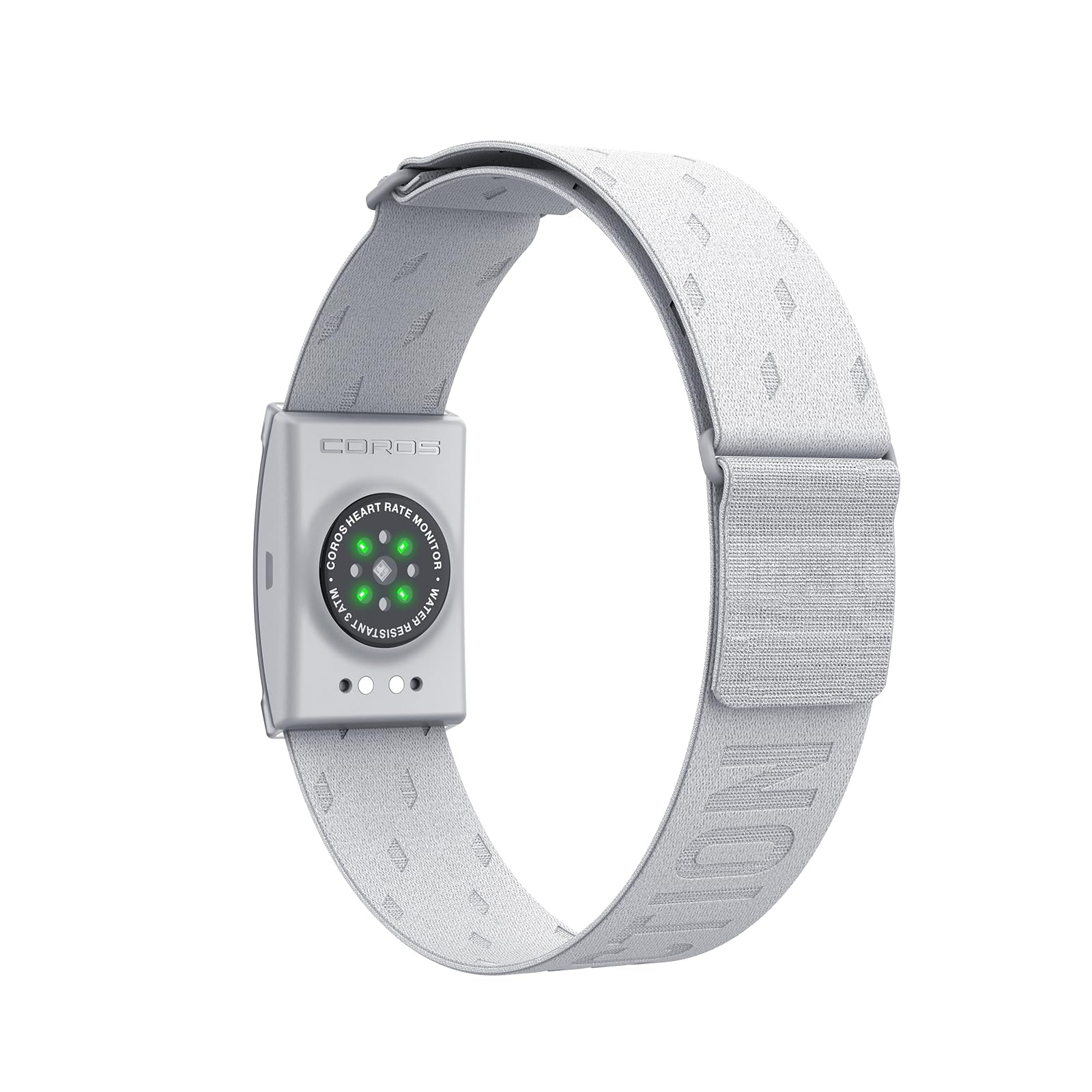
COROS Heart Rate Monitor

COROS Heart Rate Monitor

Best Bluetooth-Only Armband

Our Score 8.4/10
Check Price

Worth Noting

  • Metal buckle can rub against the arm during movement, causing irritation for some riders
  • Bluetooth-only connection limits pairing with ANT+-dependent devices like certain Garmin Edge computers
Type
Armband
Battery
Rechargeable 38h
Connectivity
Bluetooth only
Compatibility
Bluetooth devices
Read the full review

The COROS heart rate monitor focuses on making daily wear effortless with auto-wear detection and a soft fabric band that stays comfortable during long rides. Compared to the best-selling armband that offers dual connectivity, the COROS keeps things simpler and lighter, though it sacrifices device compatibility in the process.

This armband fits riders who use Bluetooth-compatible bike computers from Wahoo, phone apps like Zwift, or COROS watches. It won't connect to ANT+-only units such as older Garmin Edge models, so cyclists in the Garmin ecosystem should look elsewhere. The auto-wear detection means the monitor activates when you put it on and pauses when removed, cutting down on battery drain between sessions.

Heart rate tracking matches the consistency of many chest straps once the band is positioned properly. The rechargeable battery delivers 38 hours of active use, which covers weeks of daily training on a single charge. For riders who value convenience and comfort over universal connectivity, the COROS delivers a focused experience.

Rotate the band slightly outward to minimize buckle contact with the inner arm during intense effort.

Bottom line: This armband works best for COROS ecosystem users or cyclists who prioritize comfort and auto-wear detection over universal device support.

7

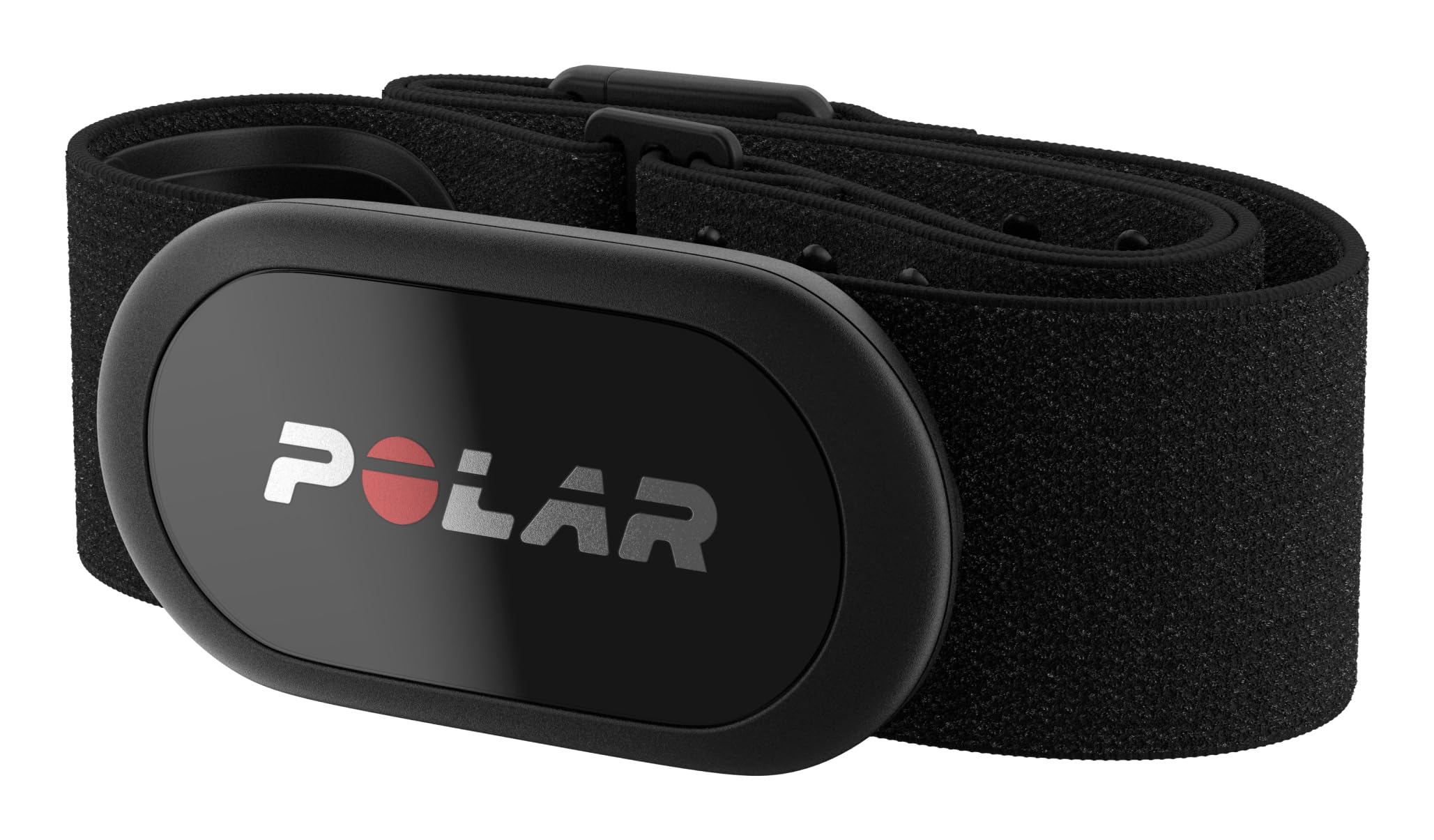
Polar H10

Polar H10

Max Accuracy

Our Score 8.4/10
Check Price

Worth Noting

  • Pairing and disconnection issues can occur, especially when strap tension or placement is off.
  • Sensor may stop functioning after several months despite battery changes.
Type
Chest strap
Battery
Replaceable CR2025
Connectivity
ANT+ & Bluetooth (dual)
Compatibility
Garmin, Polar, Peloton
Read the full review

The Polar H10 delivers lab-grade ECG accuracy and can pair with two Bluetooth devices plus one ANT+ device at the same time — a useful setup for cyclists who stream HR to both a bike computer and a phone. The replaceable coin cell battery lasts hundreds of hours. However, the sensor is sensitive to positioning and strap tension, and some units develop pairing dropouts or stop working within a year. This makes the H10 a reasonable choice for data-driven riders who accept occasional tinkering, but a poor fit for anyone wanting a set-and-forget daily driver.

Bottom line: Best suited for cyclists who demand maximum accuracy and are willing to manage occasional connectivity quirks — not a worry-free choice for everyday training.

8

CooSpo H6

CooSpo H6

Cheapest Dual-Band

Our Score 8.4/10
Check Price

Worth Noting

  • Some units may lose function after a few months of regular use.
  • Connectivity can be finicky; occasional re-pairing may be needed.
Type
Chest strap
Battery
Replaceable CR2032
Connectivity
ANT+ & Bluetooth 4.0
Compatibility
Peloton, Garmin
Read the full review

CooSpo H6 delivers dual connectivity at a budget-friendly price, pairing without issue with Peloton and Garmin for steady-state cycling. Accuracy stays within ±1 BPM when the strap is moistened. However, some units may lose function after a few months of use, and connectivity can occasionally require re-pairing — this is a sensible backup rather than a primary daily driver.

Bottom line: Best suited as a backup strap for indoor cycling sessions where low cost matters more than long-term reliability.

9

CYCPLUS H1

CYCPLUS H1

New Budget Armband

Our Score 8.4/10
Check Price

Worth Noting

  • Strap velcro can detach during rides
  • Optical sensor may lose signal briefly when moving across heart rate zones.
Type
Armband
Battery
Rechargeable 110h
Connectivity
ANT+ & Bluetooth 5.1
Compatibility
Garmin Edge, Wahoo
Read the full review

The CYCPLUS H1 armband delivers a 110-hour battery life from a 30-minute charge, dual connectivity via Bluetooth 5.1 and ANT+ for Garmin and Wahoo devices, and a compact design that stays unnoticed during rides. At a budget price, these specs are competitive. However, the armband’s limited user history (only a few months on the market) leaves long-term durability uncertain. Some users have reported the strap velcro can loosen during rides, and like most optical armbands, the sensor may drop signal briefly when transitioning between heart rate zones. This is a capable option for those willing to test a newer brand, but not for riders who need a proven monitor for race days.

Bottom line: Best for casual cyclists or early adopters who prioritize battery life over proven long-term reliability.

10

CooSpo HW807

CooSpo HW807

Budget Armband

Our Score 8.2/10
Check Price

Worth Noting

  • Battery runtime of 20 hours is shorter than chest strap competitors; charging issues may appear after months
  • Optical sensor can lose accuracy during high-intensity efforts if placement is off
Type
Armband
Battery
Rechargeable 20h
Connectivity
ANT+ & Bluetooth 5.0
Compatibility
Peloton, Garmin, Wahoo
Read the full review

The CooSpo HW807 delivers dual ANT+ and Bluetooth 5.0 connectivity at a budget-friendly price, with a comfortable armband that includes two strap sizes. Accuracy is good for steady-state cycling, though the optical sensor may show erratic readings during high-intensity intervals if placement shifts or the armband moves. Battery runtime of 20 hours is shorter than most chest straps, and some units have experienced charging issues after a few months of use. This makes the HW807 a reasonable option for cyclists who want armband comfort without spending $80+, but less suited for riders needing precise interval data or long battery life.

Charge the unit after each use to avoid unexpected power loss on longer rides.

Bottom line: Fits best for budget-conscious cyclists who prioritize armband comfort and dual connectivity over battery longevity and absolute interval accuracy.

11

Polar H9

Polar H9

Polar Budget

Our Score 8.2/10
Check Price

Worth Noting

  • Pairing with smartphones can be inconsistent, which may matter if you rely on phone-based cycling apps.
  • Some units may cease transmission after a few months of use.
Type
Chest strap
Battery
Replaceable CR2025
Connectivity
ANT+ & Bluetooth
Compatibility
Garmin, Polar, gym
Read the full review

The Polar H9 delivers the same ECG-based heart rate accuracy as the H10 in a more cost-effective package, making it a solid option for cyclists who prioritize accurate readings over advanced connectivity. However, its Bluetooth pairing can be inconsistent, and some units have ceased transmitting after a few months — similar traits noted with the H10. This makes the H9 best suited for those who find it at a good discount and are comfortable with occasional connection hiccups, rather than riders who need flawless daily performance.

Bottom line: Choose the Polar H9 if you find it at a significant discount and are comfortable with potential connectivity quirks and variable longevity — otherwise, the H10 or Garmin HRM 200 offer more consistent performance.

12

Powr Labs HRM

Powr Labs HRM

Best Budget Chest Strap

Our Score 8.0/10
Check Price

Worth Noting

  • Some units may arrive with dead batteries or stop working within months
  • The plastic sensor clip can break or detach, causing the module to fall off the strap during use.
Type
Chest strap
Battery
Replaceable CR2032
Connectivity
ANT+ & Bluetooth
Compatibility
Garmin, Peloton, Wahoo
Read the full review

At under $40, the Powr Labs HRM delivers both ANT+ and Bluetooth connectivity in a comfortable chest strap – a feature set usually reserved for more expensive models. The soft strap avoids chafing on long rides, and after initial pairing, it connects reliably to Garmin, Peloton, and most cycling apps.

This strap suits cyclists on a tight budget who need ANT+ for a head unit, riders wanting a spare or backup monitor, or newcomers trying a chest strap for the first time. The tradeoff is inconsistent quality control: some units arrive with dead batteries or stop working within a few months, so treat it as a possible short-term purchase rather than a long-term investment.

Once paired, connectivity is solid across devices. The plastic sensor clip, however, can detach from the strap during use – check the fit before hard efforts to avoid losing the module mid-ride.

Before each ride, ensure the sensor clip is securely attached to the strap – it can come loose.

Bottom line: For the cyclist who needs a cheap dual-band strap and is willing to treat it as a potential short-term buy, the Powr Labs delivers the essentials at a low entry cost.

How to Choose

Chest Strap vs Armband

Chest straps use ECG electrodes that measure electrical signals from the heart. This gives them near-medical-grade accuracy, especially during high-intensity intervals or when sweat is heavy. Armbands use optical sensors that shine light through the skin to detect blood flow — they are comfortable and easy to put on, but can lag during sprints or produce erratic readings if the sensor shifts.

For steady-state riding or indoor training, an armband is often sufficient. For race-day precision or lactate threshold tests, a chest strap is the safer choice. Some riders keep both: a chest strap for hard efforts and an armband for recovery rides.

Connectivity

ANT+ and Bluetooth are the two standards for connecting to bike computers and apps. ANT+ is the older, more reliable protocol used by Garmin Edge units and many gym machines. Bluetooth is universal with phones and newer devices like Wahoo ELEMNT. Most modern monitors include both, but some budget or armband models drop one or the other.

If you have a Garmin Edge computer, you need ANT+ capability. If you use a phone app like Zwift or Peloton, Bluetooth is enough. Dual connectivity lets you pair with multiple devices at once — useful for recording to both a computer and a watch simultaneously.

Battery Life and Charging

Rechargeable batteries are convenient but degrade over time. Many users report that after 6–12 months, the battery no longer holds a full charge or the unit stops working entirely. Replaceable coin-cell batteries (CR2032 or CR2025) last 400–500 hours and can be swapped in seconds for a few dollars.

If you ride daily and want a device that lasts multiple seasons, a replaceable battery chest strap is the better long-term buy. Rechargeable monitors are fine for occasional use, but plan on replacing the whole unit every 1–2 years.

Water Resistance

Sweatproofing is the bare minimum — any monitor sold for cycling should handle sweat. IPX7 or higher means it can survive rain and splashes. 3 ATM or 5 ATM ratings allow for submersion, which matters if you ride in heavy downpours or want to use the monitor for swimming.

Most chest straps are at least IPX7. Armbands vary more; check the fine print. A monitor that fails due to sweat is a waste of money, so aim for IPX7 or better even if you don't plan to swim.

Compatibility with Cycling Computers

Not all monitors work with all bike computers. Garmin Edge units rely on ANT+, so a Bluetooth-only armband like the COROS will not pair. Wahoo ELEMNT supports both ANT+ and Bluetooth, giving you more flexibility. Some monitors like the Polar H10 can connect to two Bluetooth devices and one ANT+ simultaneously — useful for live streaming to a computer and recording to a watch.

Before buying, check your bike computer's supported protocols. If you use multiple devices (e.g., Edge + phone), look for dual connectivity or a monitor that supports simultaneous connections.

Frequently Asked Questions