Lights & Electronics

5 Best Smartwatch for Cycling 2026: Training Depth and Battery Life That Match Your Rides

Choosing a cycling smartwatch that accurately tracks rides, lasts long enough, and fits your riding style – road, gravel, or commute.

Every cyclist faces the same trade-off: watches that pack advanced training metrics often fall short on battery life, while those with marathon endurance skip the data serious riders need. The difference shows mid-ride when your watch goes flat during a 100-mile route or fails to log interval data accurately.

The right fit comes from understanding your riding priorities. Long-distance tourers need a watch that can track GPS for 20+ hours without a charge. Fast road riders want multi-band GPS for accurate pacing and recovery insights. Casual commuters may prioritize a bright display and all-day battery over complex analytics.

This guide matches each watch to the rider who will actually benefit from its strengths, not just its spec sheet. Because a watch that dies before your ride ends is worse than no watch at all.

1

Garmin Forerunner 265

Top Pick
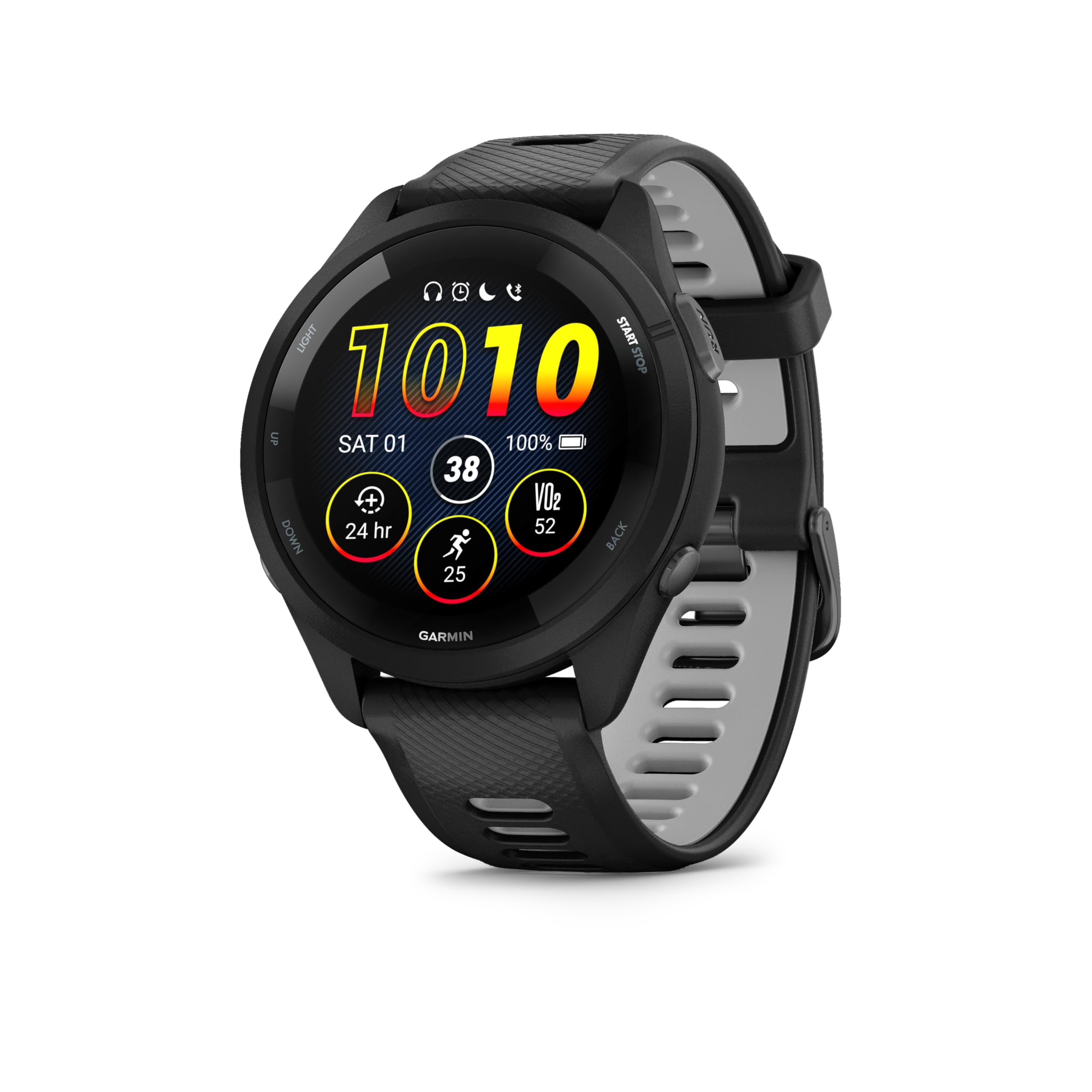
Garmin Forerunner 265

Serious cyclists

Our Score 9.4/10
Check Price

Worth Noting

  • Accessing specific data screens during a ride requires familiarity with the menu navigation
GPS Accuracy
Multi-band GNSS SatIQ
Cycling Metrics
Training readiness, HRV
GPS Battery Life
20 hours
Display Brightness
Bright AMOLED
Read the full review

The Forerunner 265's multi-band GNSS with SatIQ locks onto satellite signals faster than most watches, maintaining accuracy through tree-lined roads and urban canyons. Beyond positioning, the watch calculates training readiness each morning based on HRV and sleep, suggesting a workout intensity that aligns with your recovery.

For cyclists logging long weekend rides, the 20-hour GPS battery means no anxiety about mid-ride drains. The smartwatch mode stretches to 13 days between charges, enough for daily wear without fuss. The AMOLED touchscreen stays legible in bright sunlight, a practical advantage when glancing at data during a ride.

This watch is built for cyclists who train with purpose — tracking HRV, monitoring training load, and following daily suggested workouts. It suits triathletes who switch between swim, bike, and run with quick transition modes. The tradeoff: the user interface packs a lot of options, and navigating to specific metrics during a ride requires some upfront learning. For data-focused athletes who invest time in setup, the depth is worth the effort.

Spend 15 minutes customizing the data pages before your first ride — the default layout may not show the metrics you need at a glance.

Bottom line: The Forerunner 265 rewards cyclists who want to see more than speed and distance — it connects training load, sleep, and stress into actionable daily guidance.

2

Garmin Forerunner 165

Garmin Forerunner 165

Recreational cyclists

Our Score 9.4/10
Check Price

Worth Noting

GPS Accuracy
Single-band GPS
Cycling Metrics
Adaptive weekly workouts
GPS Battery Life
19 hours
Display Brightness
AMOLED 1.2 inch
Read the full review

The Forerunner 165 tracks GPS routes and heart rate with enough accuracy for recreational cycling, matching the core tracking of Garmin's higher-priced models while skipping the advanced multi-band GPS and training readiness metrics that competitive road cyclists rely on. Its adaptive workout suggestions — based on recent effort and recovery — guide training without overwhelming new riders.

The 1.2-inch AMOLED display stays readable in direct sunlight, and the 19-hour GPS battery covers long weekend rides. In smartwatch mode, the battery lasts up to 11 days with daily use, and the quick recharge adds hours of GPS life in under 15 minutes.

This watch fits recreational cyclists who want dependable distance and pace data without the premium price tag. It also works well for runners who cycle occasionally and want a single watch for both. For high-intensity interval sessions, heart rate readings can lag behind a chest strap — a tradeoff that doesn't affect steady-paced rides but is worth noting if you push hard during interval training.

Bottom line: If you cycle recreationally and want capable tracking without the premium price, the Forerunner 165 hits the mark.

3

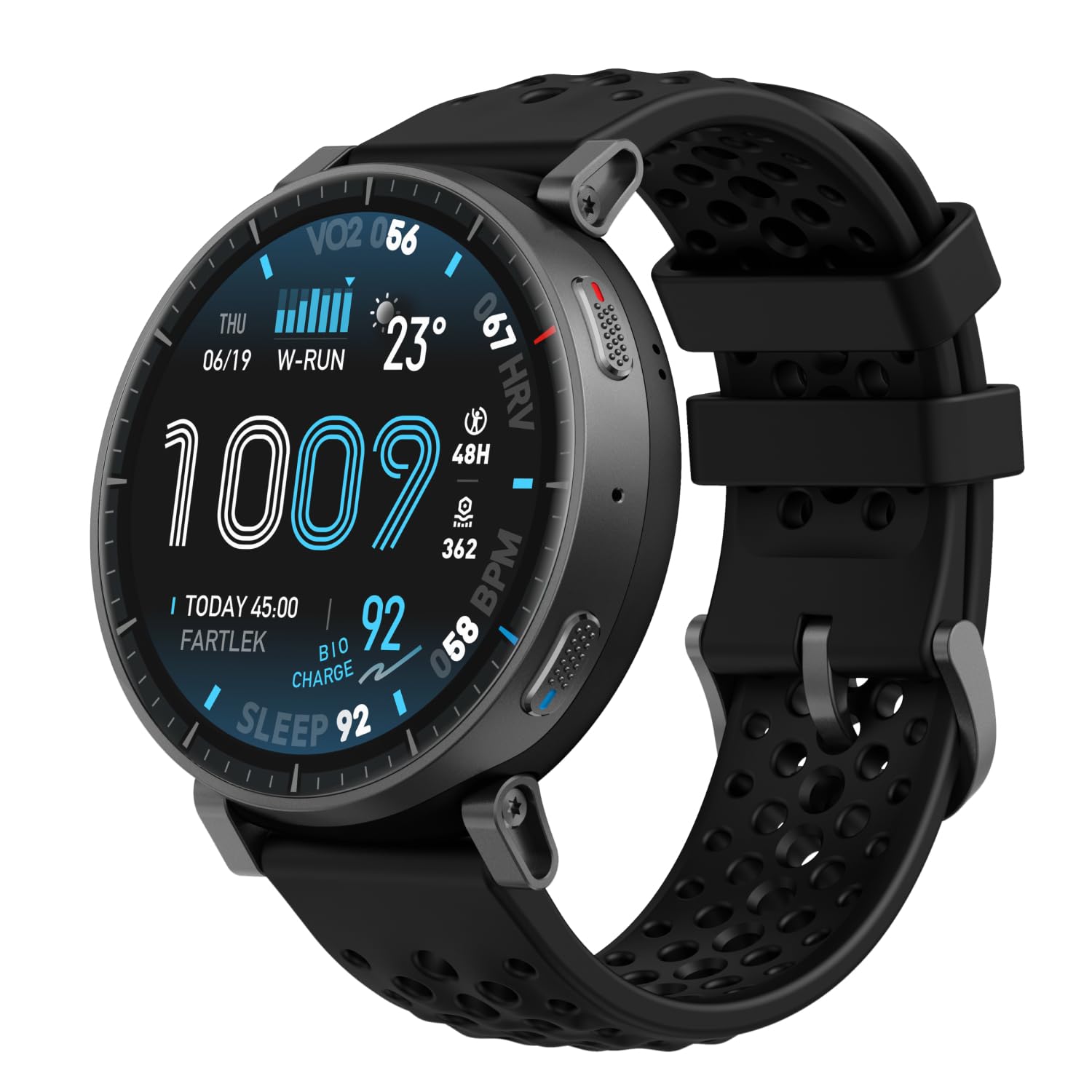
Amazfit Active Max

Amazfit Active Max

Budget-conscious riders

Our Score 9.2/10
Check Price

Worth Noting

GPS Accuracy
Built-in GPS
Cycling Metrics
170+ sport modes
GPS Battery Life
~24 hrs typical
Display Brightness
3000 nits AMOLED
Read the full review

The Amazfit Active Max delivers a 25-day smartwatch battery life and a 3000-nit AMOLED display that stays sharp under direct sunlight — two features that directly address the most common complaints about GPS watches for cyclists: constant charging and poor screen readability on bright days. While the Garmin Forerunner 265 leads in training accuracy and metrics, the Active Max focuses on endurance and visibility at a fraction of the cost.

This watch suits budget-focused cyclists who value long battery, clear display, and basic GPS tracking over advanced power metrics or multi-band GPS. Commuters and casual riders who rarely want to think about charging will appreciate the weeks-long battery. However, the activity auto-detection can occasionally misclassify driving as cycling — if you start your rides manually, this is a non-issue, but for those relying on auto-detection, occasional manual correction may be needed.

With 4GB of storage for offline maps, 170+ sport modes, 5 ATM water resistance, and heart rate tracking, the Active Max packs features typically found in watches twice its price. The 3000-nit brightness is noticeably better than many Garmin models in the same budget range, making route checking effortless even on sunny rides.

Bottom line: If your cycling needs center on battery life, display visibility, and a broad feature set without the premium price, the Active Max is a strong choice for everyday riding and commuting.

4

Amazfit T-Rex 3

Amazfit T-Rex 3

Adventure cyclists

Our Score 9.0/10
Check Price

Worth Noting

  • The touchscreen may become unresponsive during a ride, requiring a forced restart.
GPS Accuracy
Dual-band 6 satellites
Cycling Metrics
Offline maps, route nav
GPS Battery Life
180 hrs low-power
Display Brightness
2000 nits AMOLED
Read the full review

The T-Rex 3 sets itself apart from slimmer fitness watches like the Active Max with its military-grade build and built-in offline maps for navigation without cellular signal. Its dual-band GPS tracks accurately through canyons and forests, and the 180-hour low-power GPS mode supports multi-day bikepacking trips. While it lacks the refined training metrics of a Garmin Forerunner, its toughness and navigation capability suit riders who venture beyond paved paths.

This watch fits mountain bikers, gravel riders, and bikepackers who need a device that can handle falls, water, and extended time between charges. The occasional software freeze requiring a restart is a tradeoff for its durability — riders who rely on real-time data during intense intervals may find this disruptive, but for backcountry explorers, the ruggedness and battery life outweigh that inconvenience.

If the screen freezes, press and hold the crown for 10 seconds to force a restart.

Bottom line: The T-Rex 3 is best for riders who need a rugged watch with offline maps and extreme battery life, and can accept a less polished software experience.

5

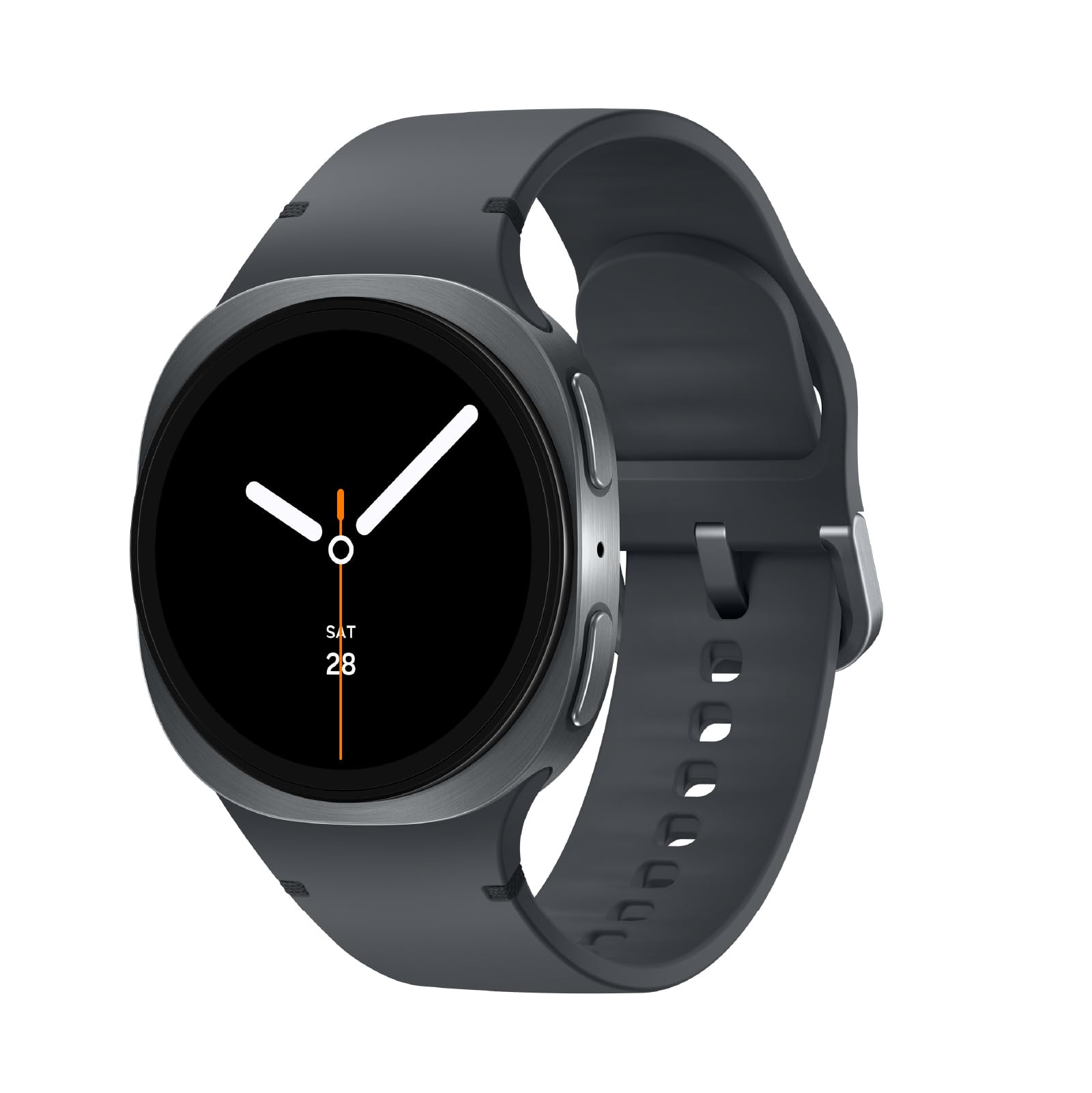
Samsung Galaxy Watch 8

Samsung Galaxy Watch 8

Occasional riders

Our Score 9.0/10
Check Price

Worth Noting

  • Battery life may require daily charging, insufficient for long GPS rides
  • Connectivity issues with non-Samsung Android phones and iPhones
GPS Accuracy
Built-in GPS
Cycling Metrics
Wear OS apps
GPS Battery Life
8-12 hrs typical
Display Brightness
500 nits AMOLED
Read the full review

The Samsung Galaxy Watch 8 offers a full Wear OS experience with ECG, blood pressure monitoring, and a wide range of apps, making it a strong daily companion for Samsung phone users. However, its battery life of roughly two days drops significantly with GPS tracking, limiting it to short rides of a few hours. Connectivity can also be inconsistent when paired with non-Samsung Android phones. For cyclists who prioritize smartwatch features over cycling-specific training metrics and only ride occasionally, this watch works well. But anyone needing reliable GPS for longer rides or multi-day tours should look at options with more endurance.

Bottom line: Best suited for Samsung phone owners who want a full-featured smartwatch and cycle only occasionally; avoid for serious cycling or multi-day trips.

How to Choose

GPS Accuracy & Multi-Band

Multi-band GPS uses two or more frequency bands to lock onto satellites faster and maintain a steady signal under tree cover or between tall buildings. Single-band watches can lose track in wooded trails or urban canyons, causing gaps in your ride data. For gravel road cyclists and mountain bikers, multi-band is a significant advantage. For open-road riders on paved routes, single-band GPS usually suffices.

GPS Battery Life

GPS battery life is often a fraction of smartwatch battery life. A watch rated for 11 days of general use may only offer 15-20 hours of GPS tracking. For a century ride lasting 8-10 hours, you need a watch with at least 20 hours of GPS endurance to avoid running out mid-route. Riders who do multi-day tours should consider watches with power-saving GPS modes that can stretch to 100+ hours.

Screens kept always-on or using optical heart rate continuously further drain the battery. Plan to charge between long rides if you pick a watch with shorter GPS runtime.

Cycling Metrics

Advanced cycling metrics like power output, cadence, and route navigation require compatibility with external sensors via ANT+ or Bluetooth. Many watches support basic speed and distance tracking but lack the data channels for power meters or smart trainers. If you train with power, verify the watch can pair with your pedals or crank-based sensor. Offline map navigation is a separate feature found in adventure watches and some premium Garmins.

Display Readability

AMOLED displays offer vivid colors but need high brightness (2000+ nits) to stay clear in direct sunlight. Watches with 500-1000 nits can be hard to read on bright roads. Transflective MIP displays (older Garmin Forerunners) are always readable in sun without a backlight, but lack color and contrast indoors. If you ride mostly in sunny conditions, prioritize a display rated at 1000 nits or higher.

Durability & Water Resistance

Water resistance is measured in ATM: 5 ATM is fine for rain, sweat, and a quick dunk, but 10 ATM (100m) is recommended for bikepackers who may cross streams or get caught in heavy downpours. Rugged watches with metal bezels and reinforced lenses survive falls on gravel better than fitness-oriented designs. For daily road riding, 5 ATM is sufficient; for off-road adventure, look for 10 ATM and MIL-STD-810 certification.

Frequently Asked Questions