E-Bikes

Best Electric Cargo Bikes of 2026

A cargo bike earns its keep on the days it replaces the car — the wet school run, the hardware store trip, the grocery haul that used to be two trips. It has to do all of that with 80 pounds of cargo sitting high over the rear wheel, which is exactly where a cheap frame and weak brakes show themselves. What you're buying is stability under load, a motor that doesn't fade halfway up a hill, and hardware that stays tight after a season of daily use.

I've been hauling kids and lumber on cargo bikes for a few years, and over the past eight months my team and I put seven of them through loaded starts, steep grades, rain, and constant loading and unloading. The most useful thing I can tell a first-time buyer is that the published range figure assumes the lowest assist level, flat pavement, and a 165-pound rider — double the weight, add hills, and roughly halve it. Assembly matters more than people expect, too, since these ship heavy and awkward, and a bike that arrives out of true tends to stay that way. The picks below are the ones that never made me reach for the car keys instead.

1

Freesky M540 Ranger

Top Pick
Freesky M540 Ranger

Heavy hauling

Our Score 9.4/10
Check Price

Worth Noting

  • Display failures can sideline the bike
  • Thin manual slows the build
Motors
Dual 2500W, 5000W peak
Battery
1200 watt-hours
Certification
UL 2271 and UL 2849
Payload Rating
400 lb
Read the full review

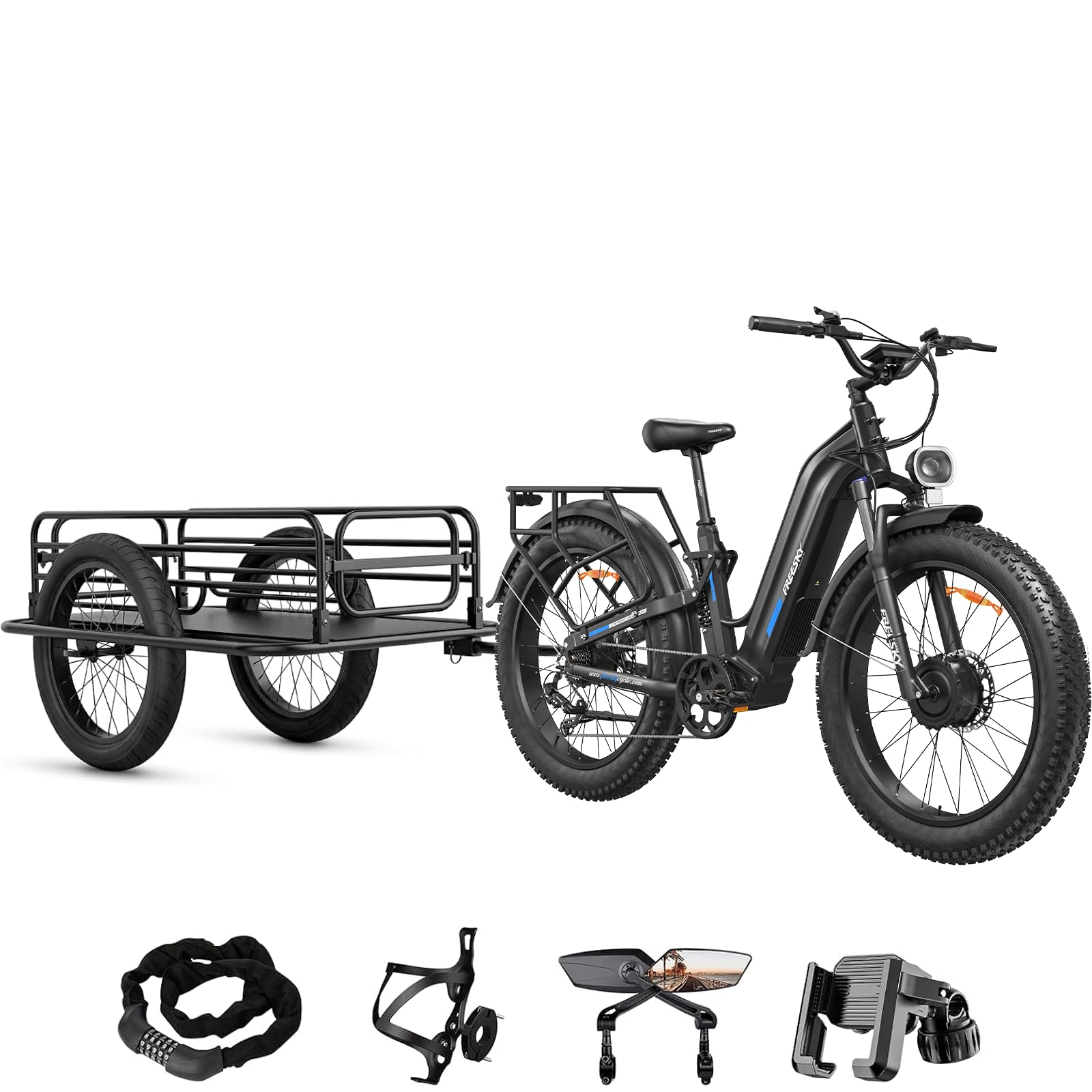
At the top of the price range sits the only dual-motor bike in this group, and the money buys something concrete: 2,500W front and 2,500W rear for 250 newton-meters combined, a 400-pound payload rating, and UL 2271 and UL 2849 certification from TÜV. For a second adult on the back or a route that ends in a hill, we think it's money well spent.

Everything else is built for weight rather than speed. The 26-inch fat tires and full suspension keep a loaded bike planted, the 1,200 watt-hour battery is the largest here by a wide margin, and the step-through aluminum frame fits riders from 5'4" up. Seven riding modes let you run the front hub alone on the flat and bring both motors in for the climb, which is a smarter use of battery than it first sounds.

The electronics are where it gets less tidy. The display is the component that can quit and need replacing, and it's the one that will sideline an otherwise working bike. Coverage is generous where it counts — 24 months on motor, battery and frame — but consumables such as pads and tires aren't covered, and the fork gets 12 months.

Assembly is the other soft spot. The bike arrives most of the way built, but the manual is thin and the first hour runs slower than it should for a bike at this price.

Bottom line: Worth the premium when loads are heavy and hills are real: dual motors, a 400-pound rating and UL certification nothing else here carries.
2

Funhang EB-C2

Funhang EB-C2

Budget errands

Our Score 8.8/10
Check Price

Worth Noting

  • 374.4 Wh battery limits range under load
  • Soft assist at low settings with weight aboard
Wheels
26 inches
Battery
48V 374.4 watt-hours
Bike Weight
62 lb
Certification
UL 2849
Read the full review

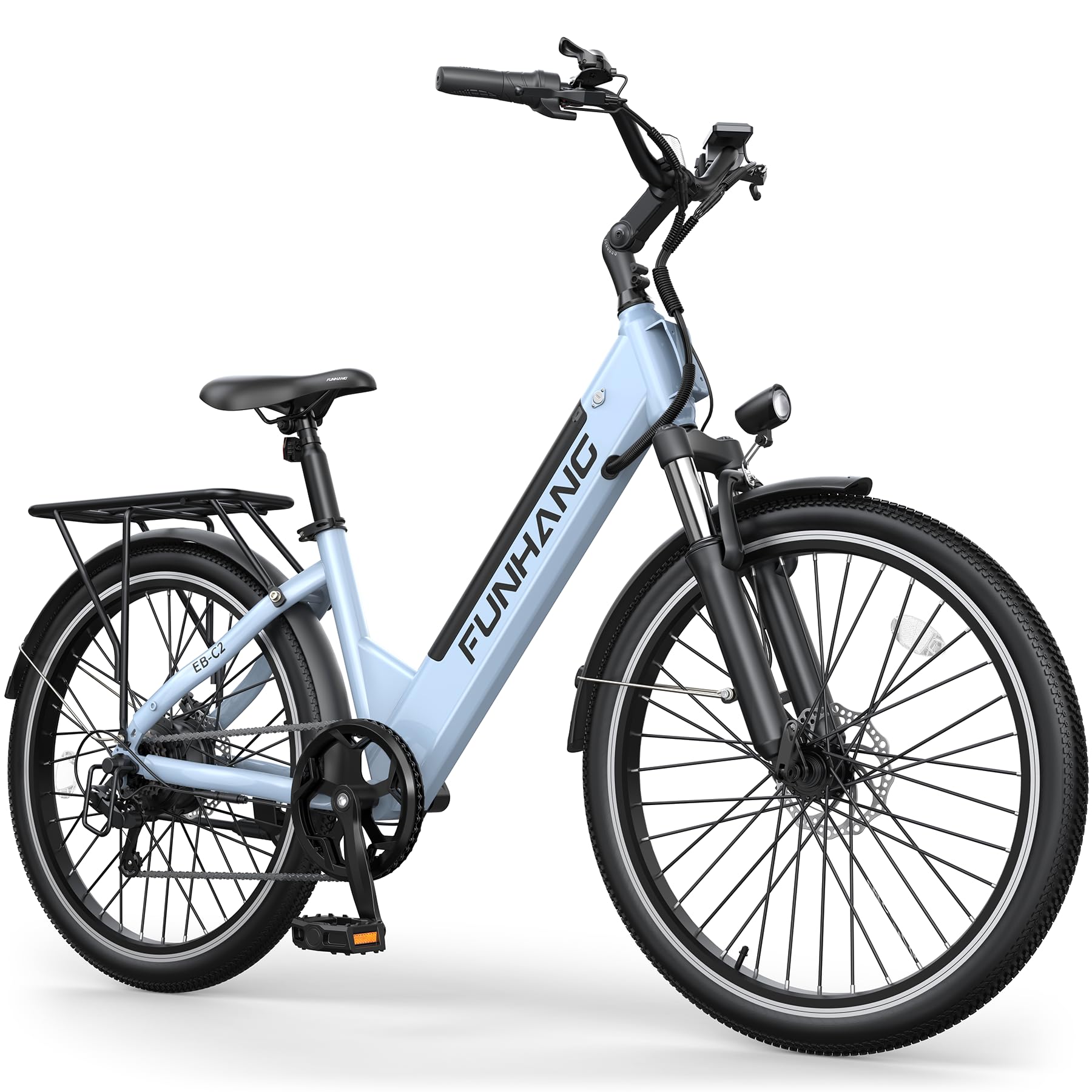
The least expensive bike in this group is also one of only two carrying a UL 2849 certification, which tells you the electrical system has been through a recognized test rather than just a spec sheet. That alone makes it the sensible entry point.

It's a commuter at heart: a step-through steel frame on 26-inch wheels, 62 pounds, with a rear rack, fenders, a headlight and disc brakes in the box. As a load carrier it's the lightest-duty option here. The 48V 374.4 watt-hour battery is about half the capacity of our top pick's, and Funhang doesn't publish a rack limit — keep loads modest until the seller gives you one.

Where it earns its place is the cost of entry. Five hundred watts nominal and 1,000 peak is enough for flat-town errands, and the assist comes in softly at the low settings. We didn't mind that with a bag on the rack; it isn't a bike that surges away from a stop with weight aboard, so plan your starts.

Expect the battery to be the limiting factor. Funhang quotes 40 to 50 miles in pedal assist; run it at full assist with a load and you're looking at a fraction of that. Assembly is a one-person job, the stem and seat adjust across a range of riders, and the disc brakes are a real advantage at this price.

Bottom line: A UL-certified step-through with a rack for light errands, at the lowest price in this group — just don't expect it to haul like the others.

3

TST R002 Electric Bike

TST R002 Electric Bike

Passenger duty

Our Score 8.6/10
Check Price

Worth Noting

  • 180-day warranty is short for a working bike
Wheels
20 inches
Battery
48V 15Ah
Seating
Dual seat with rear footrests
Claimed Range
60 miles (pedal assist)
Read the full review

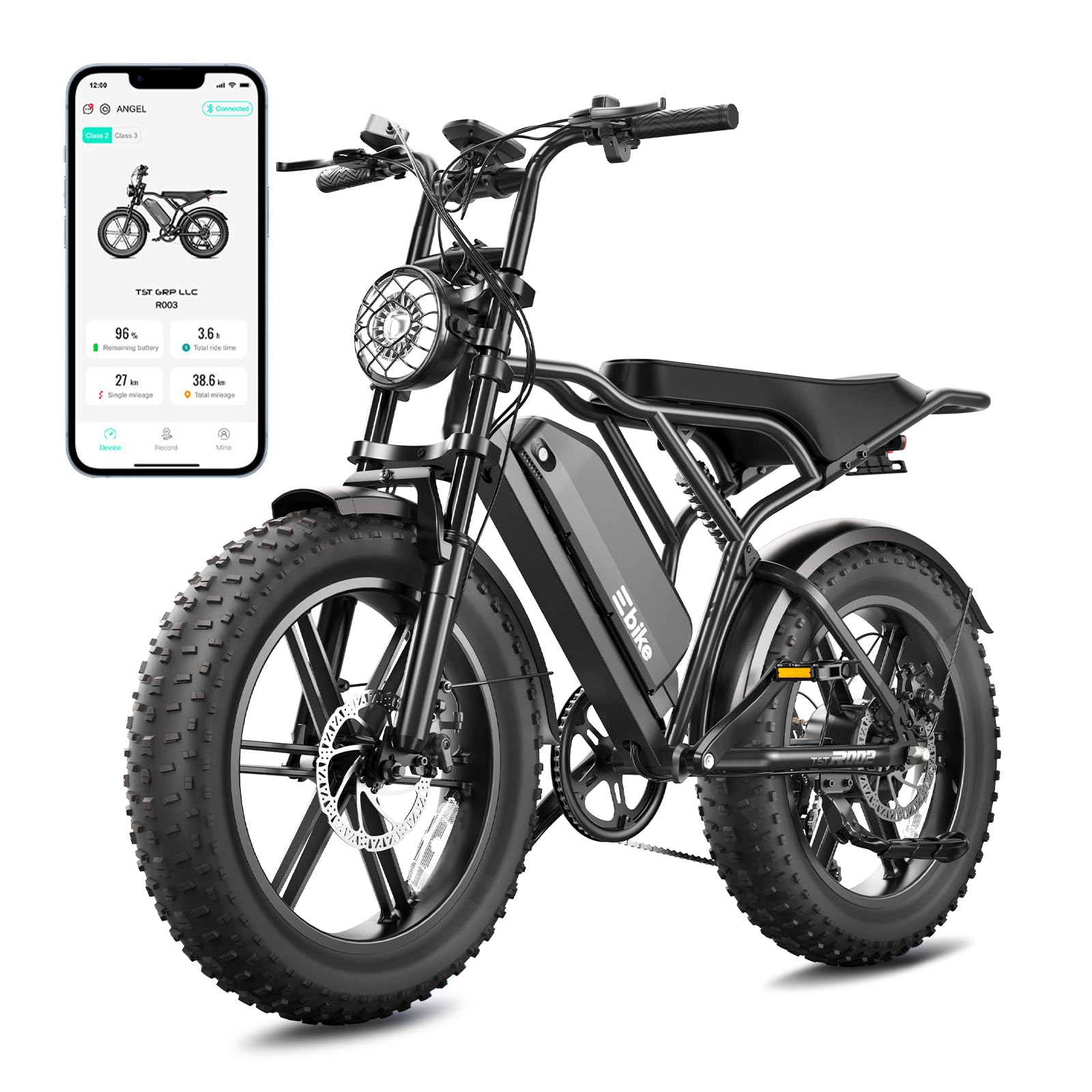
Two seats and a set of rear footrests are what put this TST at the top of our list. Plenty of bikes in this group will take a rack and call themselves cargo-ready; this one is built around a second rider, and the step-through aluminum frame still lets you swing a leg over when the rear seat is already taken. That's the difference between a bike that can carry someone and a bike that was designed to.

The numbers behind it are sensible rather than spectacular, which is what we want under a load. A 48V 15Ah battery — 720 watt-hours — feeds a 749W motor that peaks at 1,500W, and TST claims 60 miles in pedal assist. Treat that as a light-load, low-assist figure: with a passenger aboard you'll be plugging in far more often, and the 6-to-7-hour charge time makes it an overnight routine rather than a lunchtime top-up.

The 20-inch wheels keep the deck low, and that matters more than it sounds when there's weight on the back and you're paddling to a stop at a light. Seven speeds, a headlight and a taillight, and suspension at both ends round out a package that's set up for errands rather than trail riding.

Two cautions before you order. The brakes are linear-pull rather than discs, so keep the pads fresh and leave extra room when the bike is loaded and the road is wet. And TST doesn't publish a weight limit for this model — if two-up riding is the plan, get that number from the seller in writing first.

Bottom line: If you want to carry a passenger or the week's groceries without a big spend, this is the one: the only bike here with a purpose-built second seat and footrests.

4

TST R004 Electric Bike

TST R004 Electric Bike

Maximum payload

Our Score 8.6/10
Check Price

Worth Noting

  • Ships with tools only; a rack is extra
  • 180-day warranty is the shortest here
Brakes
Linear-pull
Wheels
20 inches
Battery
48V 15Ah
Payload Rating
450 lb
Read the full review

Four hundred and fifty pounds is the highest weight rating in this group, and it's the only reason this TST made the list. On that single number it beats every bike here, including the dual-motor Freesky.

We're of two minds about it. The 2,000W peak motor and 48V 15Ah battery tell the same hardware story as our top pick, and the dual suspension and 20 x 4.0 tires are the right shape for a loaded bike. But TST fits linear-pull rim brakes to a bike it rates for 450 pounds, and that's the pairing we trust least here: rim brakes fade when they get hot and they're at their weakest in the wet, which is exactly when a loaded bike needs them most.

Two more details to weigh. The frame is iron rather than the aluminum used on the R002, so it's a handful to move around when it's parked and full. And the 60-mile figure is a pedal-assist claim made without a load; ride it hard with weight aboard and you'll be charging far more often than that suggests, on a 6-to-7-hour charge.

None of that makes it a bad bike — it makes it a specific one. Buy it for the rating, keep the trips short and flat, and it will move things nothing else here will.

Bottom line: Buy it only if the 450-pound rating is the thing you actually need; on brakes and finish, our R002 is the better bike for the money.

5

Jasion RetroVolt

Jasion RetroVolt

Short passenger trips

Our Score 8.4/10
Check Price

Worth Noting

  • Rear pad suits short trips only
Tires
20 x 4.0 inches
Torque
99 Nm
Battery
48V 15Ah
Payload Rating
330 lb
Read the full review

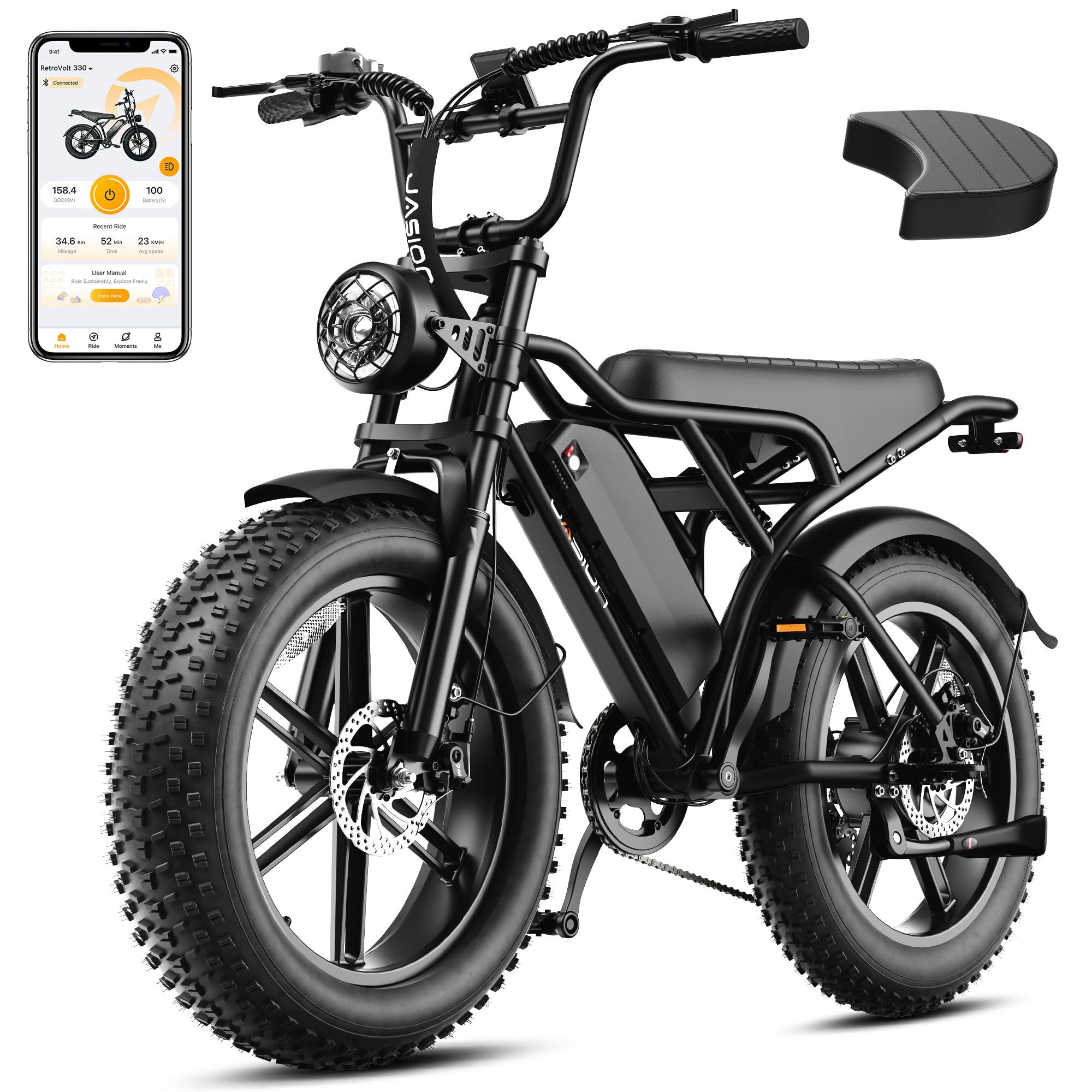
Ninety-nine newton-meters of torque from a 2,000W peak motor is a lot of shove for a bike in this bracket, and it's the number to focus on if your route has hills and your loads have a passenger in them.

We think the RetroVolt is the passenger bike to choose when the riding is mostly paved. The rear seat pad paired with a 330-pound payload rating is a more deliberate arrangement than a bare rack, and the 20 x 4.0 fat tires and dual suspension take the edge off the broken pavement that makes a rear passenger complain.

That 330 pounds is a total, not a cargo allowance. A 190-pound rider leaves roughly 140 pounds for whoever is on the back and whatever is in the bags — enough for an adult on a school run, not an adult plus a week of shopping. Decide where a passenger's feet go before you promise anyone a lift, because a flat pad on its own leaves legs dangling and that gets old inside a mile.

Range deserves the same arithmetic. Jasion quotes 70 miles, which assumes pedal assist and a light load; add a passenger and fat-tire drag and the 15Ah battery empties quickly. Five assist modes and seven speeds give you room to ration it, the battery comes off for indoor charging, and the frame fits riders from 5'4" up.

Bottom line: For paved errands with one passenger aboard, the RetroVolt's 330-pound rating and 99 Nm of torque earn it a place — provided the trips stay short.

What Eight Months and Seven Cargo Bikes Taught Us

We started with every cargo bike we could find that's rated to carry at least 100 pounds of cargo on top of the rider, then cut anything missing hydraulic disc brakes, a frame genuinely rated for that load, or a battery you can lift off and carry inside to charge. That left seven bikes, from value-priced direct-to-consumer models to shop-brand options.

Each one came out of a box and was assembled by one person using the included tools, and we timed it and wrote down what went wrong: loose headset bearings, a rotor that rubbed no matter how it was adjusted, instructions that skipped the torque spec for the rack bolts. Before any real riding, we loaded every bike to its rated limit with sandbags, because a frame that flexes at 100 pounds feels fine at 20. We also tallied what came in the box — racks, lights, kickstand, child-seat mounts — since a bike that needs several hundred dollars of accessories to carry a kid isn't the bargain its sticker suggests.

For eight months, each bike ran the same rotation: a three-mile school run with two kids on the rear, a weekly grocery haul, one long steep hill home, and a stretch of wet weather we didn't dodge. We re-torqued rack and seatpost bolts at one month and again at four, watched for motor cutouts and error codes, listened for brake rub after hard loaded stops, and rode each bike empty and loaded back to back to feel how the weight changed the steering and the ride. The ones that scored highest weren't the lightest or the fastest — they were the ones that still felt tight in month eight.

How to Choose Electric Cargo Bikes

Payload Ratings Cover Everything

Every weight limit here is a total: rider, passenger, bags and the rack itself. A 330-pound rating with a 190-pound rider aboard leaves about 140 pounds for whoever or whatever sits behind them — one grocery run, not a week's worth. Run that arithmetic before you get excited about a big motor. If two adults need to ride together regularly, you want the most rating you can get: the Freesky's 400 pounds and the TST R004's 450 are the ones with real margin.

Look at the Rear End Before the Motor

Racks, decks, seat pads and footrests are what turn a bicycle into a cargo bike, so check them first. A pad with no footrests and no backrest is a short-trip perch, not a passenger seat — settle where a rider's feet go before you promise anyone a lift. Look for pannier clearance at the heels, and watch how the kickstand behaves with a load, because a loaded bike leans hard on it at every stop. Bikes with rear suspension often lack standard rack mounts, so confirm the mounting points before ordering racks or child seats.

Torque and Brakes Matter More Than Peak Watts

Peak wattage sells bikes; torque and brakes get them started and stopped with weight aboard. The Jasion's 99 Nm and the Freesky's 250 Nm are the figures that predict a confident start on a hill with a passenger, and a hub motor with modest torque feels strained at exactly that moment. On the stopping side, discs are worth insisting on as loads grow: the TST R004 is rated to 450 pounds on rim brakes, a combination worth thinking through before you load it up.

Range Claims Assume an Empty Bike

Compare batteries in watt-hours, not miles: 374 on the Funhang, 720 on our top pick, 1,200 on the Freesky. Range figures are quoted in pedal assist with a light rider, and weight, hills and throttle use all eat into them, so halve a quoted number for a loaded commute that includes a child and the shopping. A removable battery matters more on a cargo bike than on a commuter, because you'll charge more often and may not have an outlet where you park.

Service, Storage and Warranty

These are direct-to-consumer bikes, so the shop that fixes your brakes may never have seen the brand. Warranty length varies widely — 180 days on both TSTs, a year on the Funhang and Jasion, 24 months on the Freesky's motor, battery and frame — and it's a fair signal of how the maker expects the bike to hold up. Storage matters as much: a 60-pound-plus bike with a rack on it needs a ground-level spot, not a hook in the garage ceiling.

Frequently Asked Questions

Final Verdict

Buy the TST R002 if you want to carry a passenger or a week of groceries without spending a fortune. It's the only bike here with a purpose-built second seat and footrests, and that's the difference between promising someone a lift and guessing at it.

If the loads are heavier than a person or the hills are steeper, the Freesky M540's dual motors, 400-pound rating and UL certification justify the step up. If the budget is firm, the UL-certified Funhang handles light errands at the lowest price in this group — just don't ask it to haul like the others.