Bikes

3 Best Hardtail Mountain Bike 2026: Real Trail Specs on a Budget

Find a hardtail that handles real trails on a budget. Which models deliver hydraulic disc brakes and lightweight frames at entry-level prices.

A hardtail under $500 often looks like a bargain on paper. But after a few rides, cheap cranks can loosen, derailleurs drift out of adjustment, and wheels develop wobbles that no truing stand can fix. The real cost isn't the purchase price — it's the time and money spent tuning a bike that wasn't built to ride right away.

That doesn't mean every budget hardtail is a gamble. A few models put their budget into the parts that matter: hydraulic disc brakes that stop in the wet, a light aluminum frame with internal cable routing, and a drivetrain that stays where you set it. This guide focuses on those exceptions — hardtails that can handle actual trail miles without needing immediate upgrades.

1

Mongoose Tyax 29

Top Pick
Mongoose Tyax 29

Trail riding

Our Score 8.4/10
Check Price

Worth Noting

  • Some units may arrive with minor cosmetic scuffs, dents, or frayed cable ends
Brake Type
Hydraulic disc
Drivetrain
24-speed trigger shift
Wheel Size
29 inches
Frame Material
Aluminum, internal routing
Read the full review

The Mongoose Tyax 29 brings hydraulic disc brakes and internal cable routing to a hardtail that tips the scales under 27 pounds — a combination usually reserved for bikes costing several hundred dollars more. The aluminum frame feels stiff and responsive, and the 100-millimeter suspension fork absorbs moderate trail chatter without excessive weight penalty.

On moderate singletrack and cross-country loops, the 24-speed drivetrain shifts crisply and the brakes offer consistent stopping power even in wet conditions. Riders report the bike handles root sections and small rock gardens well for a hardtail, with the 29-inch wheels rolling over obstacles smoothly. The lightweight build makes climbing easier and maneuvering through tight turns more predictable than heavier budget alternatives.

This bike suits entry-level to intermediate trail riders who want a capable machine without stepping up to a full-suspension rig. The exact retail price is not publicly listed, but based on component level, it falls in the mid-range tier — a strong value given the spec. Some units may arrive with minor cosmetic scratches or cable routing that needs adjustment, so a full inspection on delivery is worthwhile. If you are looking for the absolute lowest upfront cost or plan to ride aggressive downhill lines, a heavier hardtail or full-suspension model would be a better fit.

Unpack and inspect the frame and cables upon arrival — minor adjustments or a quick cable trim may be needed before the first ride.

Bottom line: If you are a trail rider who values capable brakes and a light frame over flashy extras, the Tyax delivers where most budget hardtails cut corners.

2

Mongoose Switchback 27.5

Mongoose Switchback 27.5

Casual paths

Our Score 8.0/10
Check Price

Worth Noting

  • Some units arrive with missing pedals or axle hardware, delaying first use
  • Gears and brakes typically need adjustment after assembly
  • Crank arms and pedals may wear faster than expected under regular trail use
Brake Type
Mechanical disc
Drivetrain
21-speed trigger shift
Wheel Size
27.5 inches
Frame Material
Aluminum
Read the full review

The 27.5-inch wheels make the Switchback feel agile on loose gravel and packed dirt, and the mechanical disc brakes offer consistent stopping power in dry conditions. Most buyers find the frame straightforward to assemble, with the aluminum build keeping weight manageable for casual rides.

On easy trails and fire roads, the ride is smooth enough for a budget hardtail — the suspension fork absorbs moderate bumps. However, the gears and brakes often arrive out of adjustment, requiring tuning before the bike rides as expected. A small number of units also arrive with missing hardware or minor cosmetic damage from shipping.

This bike suits budget-minded riders who plan to ride mostly on gravel paths and light trails, and who are comfortable with basic bike maintenance. Expect to inspect every part upon arrival and be prepared to tighten spokes, adjust derailleurs, and replace pedals if needed. For riders wanting a ready-to-ride experience or tackling aggressive terrain, the top pick in this set with hydraulic disc brakes and more consistent build quality is the better choice.

Open the box carefully and check for all hardware — missing pedals or axle nuts are a possible speed bump before the first ride.

Bottom line: A budget-friendly hardtail that rewards a hands-on owner — best for casual gravel rides where you can handle post-assembly tuning and occasional part swaps.

3

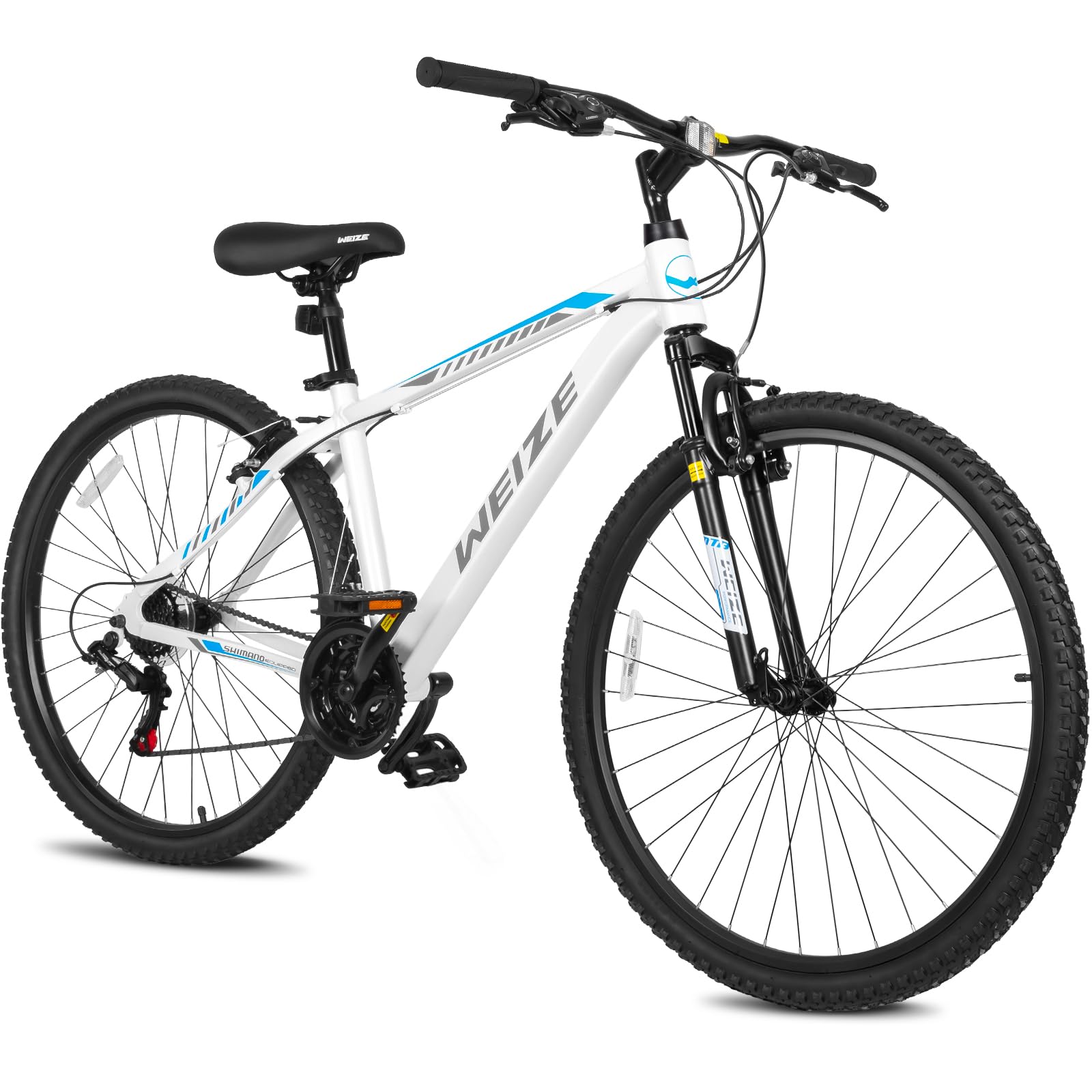
WEIZE 29" 21-Speed

WEIZE 29" 21-Speed

Budget starter

Our Score 8.0/10
Check Price

Worth Noting

  • On uneven terrain, spokes can loosen and the chain may come off
  • Front wheel may develop a wobble that requires truing; stability depends on keeping the wheel true.
Brake Type
V-brake
Drivetrain
21-speed trigger shift
Wheel Size
29 inches
Frame Material
Aluminum
Read the full review

The WEIZE hardtail assembles quickly with basic tools and arrives at a price that is hard to beat – ideal for someone wanting a simple bike for paved pathways or light gravel. That entry-level cost comes with corner cutting: spokes can loosen, the chain may slip, and the front wheel may develop a wobble after moderate use. The V-brakes stop adequately in dry weather but lose bite in rain. For occasional flat-terrain rides and a tight budget, this bike works; for anything resembling actual trail riding, the compromises become noticeable.

Bottom line: This bike suits a first-time rider who sticks to paved paths and accepts that some adjustments will be needed within the first few months.

How to Choose

Wheel Size

Wheel size dictates how the bike rolls over obstacles and how it responds to steering. 29-inch wheels roll over roots and rocks more easily but make the bike feel less nimble in tight turns. 27.5-inch wheels accelerate faster and feel more playful, making them a better choice for riders who prioritize agility over momentum.

For most adult trail riders, 29-inch wheels are the standard for cross-country and trail use. 27.5-inch wheels suit riders who want a more responsive, fun feel on twisty singletrack. Avoid 24-inch wheels unless the rider is under 5'0" — they are designed for youth, not adult trail riding.

Brake Type

V-brakes are the cheapest option and work fine on dry pavement, but they lose stopping power in mud or rain. Mechanical disc brakes offer consistent performance in wet conditions but require occasional cable adjustment. Hydraulic disc brakes provide the strongest, most reliable stopping power with minimal hand effort and self-adjust for pad wear.

At budget price points, hydraulic disc brakes are rare and signal a better-quality build. If you plan to ride trails in variable weather, prioritize a bike with hydraulic discs. The extra cost upfront saves money on brake upgrades later.

Drivetrain Speeds and Shifters

The number of speeds (e.g., 21-speed vs 24-speed) indicates the gear range and the ratio between low gears for climbing and high gears for flat sections. A wider range makes climbing steep hills easier. Trigger shifters are more precise and durable than twist shifters, which can slip or break under heavy use.

On budget hardtails, the drivetrain is often the first component to cause trouble. Plan to adjust the derailleur after assembly — most bikes arrive with the cable tension off. A 24-speed trigger shift setup like the Mongoose Tyax provides a good gear spread and reliable shifting for trail riding.

Suspension Fork Travel

Suspension fork travel (measured in mm) determines how much bump absorption the front wheel has. For light trail and cross-country riding, 80-100 mm of travel is sufficient. More travel (100-120 mm) adds weight and can make the front end feel mushy on climbs but offers better control on descents.

Budget forks often use coil springs rather than air, which are heavier and less adjustable. If you ride rocky or rooty trails, look for a fork with at least 100 mm travel and a lockout feature to save energy on climbs.

Frame Material

Almost all hardtails in this price range use aluminum frames due to its light weight and low cost. The main variation is in the quality of the welds and the cable routing. Internal cable routing (cables run inside the frame) looks cleaner and reduces maintenance from mud and debris.

Aluminum is a solid choice for trail riding — it's stiff and responsive. Avoid steel frames at this budget unless you need a specific riding feel or want to prioritize durability over weight, as most budget steel frames are heavier.

Frequently Asked Questions